THE ORIGINAL COLLECTION · SINCE 2010

Science
press releases.

Research announcements from universities, hospitals and scientific institutions. Explore the stories, people and discoveries behind the headlines.

Original publication datesPage 304
FIND A STORY

Find a past release.

Dates and source material belong to the original release.

Read our research explainers

Browse the collection · original publication order

Science

Chocolate’s tasty flavors might pose a risk in other desserts

What makes chocolate taste and smell so delicious? Chemistry, of course! A variety of molecules work together to create that unmistakable aroma, but those same molecules might carry some unwanted health effects if there are too many around. According to research published in ACS’ Journal of Agricultural and Food Chemistry, while many of the compounds appeared in chocolate in low enough concentrations to be safe, higher amounts were found in some baked sweet treats. When making chocolate, cocoa beans are roasted to help their chocolatey flavors shine. During this process, new molecules ...

Read the release


The once-welcomed Rohingya refugees now face hostility from the hosts in Bangladesh
Science

The once-welcomed Rohingya refugees now face hostility from the hosts in Bangladesh

The number of refugees has sharply increased in recent decades, reaching 37.8 million in 2022. Amidst this surge, host communities—locals residing in areas where refugee camps are situated—are also positively and negatively impacted by the refugee influxes. The negative impacts include competition over scarce resources and in the unskilled labor market. While the international media and aid organizations put the spotlight on assisting refugees, the challenges faced by host communities are frequently sidelined. In 2017, over ...

Read the release
The mind after midnight: Study shows disrupted sleep increases risk for suicide and homicide
Science

The mind after midnight: Study shows disrupted sleep increases risk for suicide and homicide

An analysis by researchers in the Department of Psychiatry at the University of Arizona College of Medicine – Tucson showed that risks for death by suicide and homicide peak at night, with nocturnal wakefulness, age, alcohol use and relationship conflicts being especially prevalent as contributing factors. Nearly 19% of suicides and 36% of homicides occur at night. Suicide and homicide share little in common, but their highly concordant overnight risk patterns suggest a common feature: nocturnal ...

Read the release
Science

Are there racial inequities in naloxone administration during fatal overdoses?

Pennsylvania has been disproportionately affected by the opioid epidemic, having the fourth highest number of overdose deaths in the country in 2020. Also, the rate of overdose deaths among Black persons is significantly higher than that of white persons in the state. A recent analysis published in Addiction reveals that compared with white people in Pennsylvania, Black individuals are less likely to receive naloxone—a medication that rapidly reverses an opioid overdose. In the analysis of 2019–2021 data collected from death ...

Read the release
Science

Does recreational marijuana legalization affect a state’s college enrollment?

New research has revealed up to a 9% increase in college freshmen enrollments in US states that have legalized recreational marijuana compared with states without such legalization. The study, which is published in Economic Inquiry, found that the increase was from out-of-state enrollments, with early adopter states and public non-research institutions experiencing the most pronounced increases. Recreational marijuana legalization did not negatively impact degree completion or graduation rate, and it did not affect ...

Read the release
Science

Is a train’s risk of derailment affected by its length?

Longer freight trains are more likely to derail compared with shorter trains, according to new research published in Risk Analysis. The increased risk held even after accounting for the need for fewer trains if more cars were on each train. For the study, investigators assessed information on US freight train accidents between 2013–2022 from Federal Railroad Administration databases. The team found that running 100-car trains would lead to an 11% higher risk of derailment compared with running 50-car trains, even when accounting for the fact that only half as many 100-car trains would need to run. For 200-car trains, the risk was 24% higher than ...

Read the release
Research to uncover the impact of water use in the Colorado River Basin
Science

Research to uncover the impact of water use in the Colorado River Basin

The Colorado River is a lifeline for many cities and farms in the Southwest United States. It flows for about 1,448 miles before reaching the Gulf of California in Mexico and supplies water to numerous cities and farms along the way. However, over the past 60 years, the amount of water in the Colorado River has been shrinking. In fact, in some years, the river’s water has been used up completely before it reaches the gulf. Landon Marston, assistant professor in civil and environmental engineering, teamed up with researchers from multiple universities and ...

Read the release
The secret sex life of coral revealed
Science

The secret sex life of coral revealed

Corals play an essential role in ocean ecosystems, and like many organisms, they are under threat from climate change and other human activities. To better protect coral, it’s first necessary to understand them, in particular their reproductive life cycle, which only happens once a year. For the first time, researchers have produced a model for coral spawning, based on various environmental factors. They achieved this by tapping an often overlooked source of aquatic knowledge, an aquarium. Given their branching shapes or waving tendrils, you would be ...

Read the release
Smarter foragers do not forage smarter
Science

Smarter foragers do not forage smarter

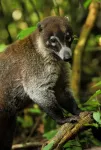
Primates, including humans, have larger brains than most other mammals, but why? Scientists searching for the answer have long followed a trail pointing to diet—specifically fruit—as the reason for why primates evolved larger brains. A team from the Max Planck Institute of Animal Behavior and the Smithsonian Institute of Tropical Research tested this idea for the first time—finding that the fruit-diet theory might be out of juice. The researchers used drone imaging, GPS tracking, and fine-scale behavioral analyses to test how four species of fruit-eating mammals solved the same natural foraging puzzle in a Panamanian rainforest. They ...

Read the release
Science

A unified account of Darwinism’s varieties

A new paper published in The Quarterly Review of Biology examines the question of what Darwinism is and how its nonscientific uses relate to the scientific theory of evolution. Charles Darwin published On the Origin of Species in 1859 as a work in biology. However, in the past century and a half, Darwin’s ideas have impacted a broad range of domains and stimulated scientists and scholars to advance "evolutionary approaches" in domains as diverse as economics, engineering, psychology, and history. The ideas have been used (and abused) to undermine religiously inspired ideas about the origin of humans and their status concerning other species, ...

Read the release
Science

Marketers can manage 'feature creep'

AUSTIN, Texas — Wifi-enabled washing machines. Voice-controlled microwaves. App-enabled TVs, vacuum cleaners, and even window blinds you can control from the comfort of your couch. Many of the technological features now included in everyday products are useful and accessible. But research has shown that having too many can overwhelm potential buyers, making them less likely to make a purchase. In new research, Wayne Hoyer, marketing professor and James L. Bayless/William S. Farrish Fund Chair for Free Enterprise at Texas McCombs, digs into the phenomenon of “feature creep” and its impact on consumer sentiment. ...

Read the release
Scientists identify gene that could lead to resilient ‘pixie’ corn
Science

Scientists identify gene that could lead to resilient ‘pixie’ corn

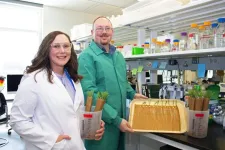
AMES, Iowa – A widely found gene in plants has been newly identified as a key transporter of a hormone that influences the size of corn. The discovery offers plant breeders a new tool to develop desirable dwarf varieties that could enhance the crop’s resilience and profitability. A team of scientists led by Iowa State University spent years working to pinpoint the functions of the gene ZmPILS6. Now, they have been able to characterize it as an important driver of plant size and architecture, a carrier for an auxin hormone that helps govern growth in roots below ground and shoots, or stalks, above ground. Their findings were published in the Proceedings ...

Read the release
Science

The wall of evidence for continuity of care

Background: A long-term relationship between a patient and their doctor, known as continuity of care, has seen a decline in recent decades in both the UK and the U.S. This decline has negatively impacted patient and physician health outcomes and well-being. Editorial Stance: Building on Terrence McDonald and colleagues' research, which distinguishes between the continuity contributions of a practice and an individual clinician, increased physician continuity has been linked to reduced emergency department ...

Read the release
Bringing back an ancient bird
Science

Bringing back an ancient bird

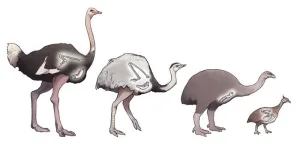
Using ancient DNA extracted from the toe bone of a museum specimen, Harvard biologists have sequenced the genome of an extinct, flightless bird called the little bush moa, shedding light into an unknown corner of avian genetic history. Published in Science Advances, the work is the first complete genetic map of the turkey-sized bird whose distant living cousins include the ostrich, emu, and kiwi. It is one of nine known species of moa, all extinct for the last 700 years, that inhabited New Zealand before the late 1200s and the arrival of Polynesian human settlers. “We’re pulling ...

Read the release
Why do Dyeing poison frogs tap dance?
Science

Why do Dyeing poison frogs tap dance?

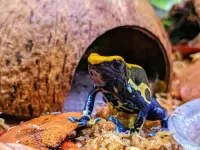
The toe tapping behavior of various amphibians has long attracted attention from researchers and pet owners. Despite being widely documented, the underlying functional role is poorly understood. In a new paper, researchers demonstrate that Dyeing poison frogs modulate their taps based on specific stimuli. Dyeing poison frogs, Dendrobates tinctorius, have been shown to tap their posterior toes in response to a range of prey sizes, from small fruit flies to large crickets. In the present study, ...

Read the release
Science

When should you neuter or spay your dog?

Researchers at the University of California, Davis, have updated their guidelines on when to neuter 40 popular dog varieties by breed and sex. Their recent paper in Frontiers in Veterinary Science adds five breeds to a line of research that began in 2013 with a study that suggested that early neutering of golden retrievers puts them at increased risk of joint diseases and certain cancers. That initial study set off a flurry of debate about the best age to neuter other popular breeds. Professors Lynette and Benjamin Hart of the School of Veterinary Medicine, the study’s lead authors, set out to add more breed studies by examining more than a decade ...

Read the release
Science

Wind farms are cheaper than you think – and could have prevented Fukushima, says global review

Offshore wind could have prevented the Fukushima disaster, according to a review of wind energy led by the University of Surrey. The researchers found that offshore turbines could have averted the 2011 nuclear disaster in Japan by keeping the cooling systems running and avoiding meltdown. The team also found that wind farms are not as vulnerable to earthquakes. Suby Bhattacharya, Professor of Geomechanics at the University of Surrey’s Department of Civil and Environmental Engineering, said: “Wind power gives us plentiful clean energy – now we know that it could also make other facilities safer and more reliable. The global review finds ...

Read the release
Finnish Vole fever spreading further south
Science

Finnish Vole fever spreading further south

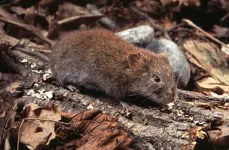
Researchers have discovered that bank voles in southern Sweden (Skåne) carry a virus that can cause hemorrhagic fever in humans. This finding was made more than 500 km south of the previously known range. The virus strain discovered in Skåne appears to be more closely related to strains from Finland and Karelia than to the variants found in northern Sweden and Denmark. This is revealed in a new study from Uppsala University, conducted in collaboration with infectious diseases doctors in Kristianstad and published ...

Read the release
A cleaner way to produce ammonia
Science

A cleaner way to produce ammonia

– By Rachel Berkowitz Ammonia is the starting point for the fertilizers that have secured the world’s food supply for the last century. It’s also a main component of cleaning products, and is even considered as a future carbon-free replacement for fossil fuels in vehicles. But synthesizing ammonia from molecular nitrogen is an energy-intensive industrial process, due to the high temperatures and pressures at which the standard reaction proceeds. Scientists from the Department of Energy's Lawrence Berkeley ...

Read the release
Science

Mortality risk among women with premenstrual disorders in Sweden

About The Study: The findings of this matched cohort study suggest that women with premenstrual disorders are not at increased risk of early death overall. However, the risk was elevated among young women and for death by suicide. This supports the importance of careful follow-up for young patients and highlights the need to develop suicide prevention strategies for all women with premenstrual disorders. Corresponding Author: To contact the corresponding author, Marion Opatowski, Ph.D., email marion.opatowski@ki.se. To access the embargoed ...

Read the release
Science

Early vs late anticoagulation in minor, moderate, and major ischemic stroke with atrial fibrillation

About The Study: The treatment effect of early direct oral anticoagulant initiation did not differ in people with minor, moderate, or major stroke assessed by brain imaging. Early treatment was not associated with a higher rate of adverse events, especially symptomatic intracranial hemorrhage, for any infarct size, including major stroke. Corresponding Author: To contact the corresponding author, Urs Fischer, M.D., M.Sc., email urs.fischer@insel.ch. To access the embargoed study: Visit our For The Media website at this link https://media.jamanetwork.com/ (doi:10.1001/jamaneurol.2024.1450) Editor’s ...

Read the release
Introducing peanut in infancy prevents peanut allergy into adolescence
Science

Introducing peanut in infancy prevents peanut allergy into adolescence

Feeding children peanut products regularly from infancy to age 5 years reduced the rate of peanut allergy in adolescence by 71%, even when the children ate or avoided peanut products as desired for many years. These new findings, from a study sponsored and co-funded by the National Institutes of Health’s National Institute of Allergy and Infectious Diseases (NIAID), provide conclusive evidence that achieving long-term prevention of peanut allergy is possible through early allergen consumption. The results were published today in the journal NEJM Evidence. “Today’s findings should reinforce parents’ and caregivers’ ...

Read the release
Science

Does the requirement to offer retirement plans help workers save for retirement?

A study published in Contemporary Economic Policy reveals significant benefits gained from the first implementation of the state-run retirement savings program in Oregon, known as OregonSaves, in 2017. OregonSaves is available to Oregon workers whose employers do not offer a workplace retirement plan, self-employed individuals, and others. Businesses that do not offer retirement plans are required to automatically enroll employees, but workers can opt out at any time. The analysis found that the program substantially boosted retirement savings among previously ...

Read the release
Nonlinear photochromic properties in a perylene-substituted rhodamine spirolactam
Science

Nonlinear photochromic properties in a perylene-substituted rhodamine spirolactam

Photochromic compounds, which change their color when exposed to light, have been widely used as photoswitches to control different properties of materials. Nonlinear photochromic compounds, characterized by a nonlinear response to the intensity of incident light, have attracted special attention among researchers as the nonlinearity leads to enhanced contrast and improved spatial resolution in photochromic reactions. It also allows for multiple photochromic properties in a single molecule with a single light source. These qualities have made them valuable in nonlinear optical and holographic elements, super-resolution microscopy, and biomedical applications. The simplest ...

Read the release
Science

Binge-eating disorder not as transient as previously thought

BELMONT, Mass. (May 28, 2024) Binge-eating disorder is the most prevalent eating disorder in the United States, but previous studies have presented conflicting views of the disorder’s duration and the likelihood of relapse. A new five-year study led by investigators from McLean Hospital, a member of the Mass General Brigham healthcare system, showed that 61 percent and 45 percent of individuals still experienced binge-eating disorder 2.5 and 5 years after their initial diagnoses, respectively. These results contradict previous ...

Read the release
From the original Press-News collection. Issuers of news releases are responsible for the accuracy of their content.