THE ORIGINAL COLLECTION · SINCE 2010

Science
press releases.

Research announcements from universities, hospitals and scientific institutions. Explore the stories, people and discoveries behind the headlines.

Original publication datesPage 339
FIND A STORY

Find a past release.

Dates and source material belong to the original release.

Read our research explainers

Browse the collection · original publication order

Science

Suppressing boredom at work hurts future productivity, study shows

Boredom is more common at work than in any other setting, studies show, and employees are bored at work for more than 10 hours per week on average. Even astronauts and police officers get bored on the job. No occupation is immune. Boredom serves an important purpose — it signals the need to stop an action and find an alternative project. But boredom becomes problematic when it’s ignored. New research from the University of Notre Dame shows that trying to stifle boredom prolongs its effects and that alternating boring and meaningful tasks helps to prevent the effects of one boring task from ...

Read the release


Wild plants face viral surprise
Science

Wild plants face viral surprise

Just as many people battle seasonal colds and flu, native plants face their own viral threats. People have long known that plants can succumb to viruses just like humans. Now, a new study led by Michigan State University and the University of California, Riverside reveals a previously unknown threat: non-native crop viruses are infecting and jeopardizing the health of wild desert plants. “For years, the ecological field assumed wild plants were immune to invasive viruses that damage crops,” said Carolyn ...

Read the release
Kessler Foundation secures $770,000 in grants to advance leading-edge spinal cord research
Science

Kessler Foundation secures $770,000 in grants to advance leading-edge spinal cord research

East Hanover, NJ – March 28, 2024 – Kessler Foundation received two grants from The New Jersey Commission on Spinal Cord Research that will fuel innovative research in the field of spinal cord injury (SCI). These grants will fund efforts aimed at improving the cognitive assessment of individuals with traumatic SCI and pilot-testing the first-of-its-kind Spinal Cord Injury Personal Assistance Services Survey (SCI-PASS). Traumatic spinal cord injury (tSCI) often leads to cognitive impairment, affecting up to 60 percent of individuals living with this condition. “The challenge lies in assessing cognitive functions in people with tSCI, as many existing tests rely on upper limb ...

Read the release
MSK Research Highlights, March 28, 2024
Science

MSK Research Highlights, March 28, 2024

Low recurrence seen with cryoablation for large breast tumors Cryoablation, a minimally invasive technique used to freeze and destroy small tumors, is effective for breast cancer patients with larger tumors, according to research presented by MSK interventional radiologist Yolanda Bryce, MD, at the 2024 Society of Interventional Radiology Annual Scientific Meeting. The retrospective study assessed outcomes for 60 patients who underwent cryoablation because they were not candidates for surgery or declined surgery due to other health concerns. The average size of their tumors was 2.5 centimeters. In a follow-up after 16 months, only 10% of patients experienced a recurrence ...

Read the release
Science

USDA, Nueta Hidatsa Sahnish College collaborate to support Indigenous Seed Sovereignty

MANDAN, N.D., March 28, 2024—The U.S. Department of Agriculture (USDA) Agricultural Research Service (ARS) announces a cooperative agreement with the Nueta Hidatsa Sahnish (NHS) College to conduct research supporting Indigenous Seed Sovereignty. This collaborative effort will increase the number of traditional varieties of seeds of the Mandan, Hidatsa, and Arikara (MHA) Nation crops within NHS College's traditional seed cache. This agreement builds upon USDA’s strengthened partnerships with ...

Read the release
Science

Missed opportunity: AEDs near cardiac arrests rarely used by bystanders

Automated external defibrillators (AEDs) are a common resource in public buildings, yet a new analysis reveals that they are rarely used to help resuscitate people suffering cardiac arrest. Research, which will be presented at the American College of Cardiology’s Annual Scientific Session, found that AEDs were only used in 13 of nearly 1,800 cases of out-of-hospital cardiac arrest, even though many of the incidents occurred near a public AED. Cardiac arrest occurs when the heart suddenly stops beating. It is different from a heart attack, which is when a blockage prevents blood ...

Read the release
TTUHSC announces new center for nursing research
Science

TTUHSC announces new center for nursing research

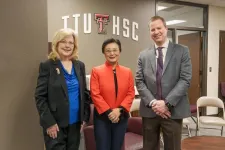
The Texas Tech University Health Sciences Center (TTUHSC) School of Nursing announced March 27 the establishment of the TTUHSC Center for Nursing Research, Collaboration and Innovation. “Interprofessional collaboration is essential for advancing research in health care,” TTUHSC School of Nursing Dean and Professor Holly Wei, Ph.D., said. “By bringing together professionals from various disciplines, we can harness a wide range of perspectives and skills to develop innovative solutions that significantly impact patient care and outcomes.” For years, the TTUHSC School of Nursing has been recognized for its ability to educate ...

Read the release
Adding just enough fuel to the fire
Science

Adding just enough fuel to the fire

How much fuel can we add to the fire while still maintaining control? Metaphorically speaking, that’s the question one team at the U.S. Department of Energy’s Princeton Plasma Physics Laboratory (PPPL) has been asking themselves lately. Now, they believe they have the answer for one particular scenario. It’s all a part of the Lab’s work to bring energy from fusion to the power grid. Building upon recent findings showing the promise of coating the inner surface of the vessel containing a fusion plasma in liquid lithium, the researchers have determined the maximum density of uncharged, or neutral, particles at the edge of a plasma before the edge ...

Read the release
Promising advances in organosilica membranes for separating organic liquid mixtures
Science

Promising advances in organosilica membranes for separating organic liquid mixtures

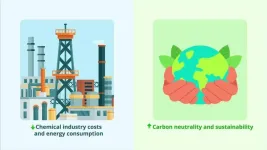
In many chemical-related industries, such as pharmaceuticals, oil refineries, and food and beverage factories, separating organic liquid mixtures is an essential step. A staple method to achieve this is distillation, which involves heating a mixture to a specific temperature so that only one of its components vaporizes. Though widely used, distillation fails to separate organic liquid mixtures in which both components have the same boiling point. Moreover, it’s an energy- and resource-intensive process, ...

Read the release
Science

Taking a closer look at pulmonary fibrosis genetics

PHOENIX, Ariz. — March 28, 2024 — Regulators of gene expression are thought to play an outsized role in disorders from cancers to heart disease. But how exactly do variations in gene regulation translate into a disease’s biology? A team of scientists led by researchers from the Translational Genomics Research Institute (TGen), part of the City of Hope, together with investigators at St. Vincent’s Institute of Medical Research and Vanderbilt University Medical Center, now have a better answer for this question when it comes to pulmonary fibrosis (PF), an incurable respiratory disease. Their study, published today in Nature Genetics, is the first to look at these ...

Read the release
IOP Publishing and IPEM mandate reporting of sex and gender in research
Science

IOP Publishing and IPEM mandate reporting of sex and gender in research

IOP Publishing (IOPP) and the Institute of Physics and Engineering (IPEM) have introduced checks for sex and gender equality for all manuscripts submitted to their jointly published journal Physiological Measurement. In line with the Sex and Gender Equity in Research (SAGER) guidelines, which were introduced to ensure that sex and gender considerations are appropriately reported in scholarly literature, all research published in Physiological Measurement must declare the sex and gender balance of subject groups. Authors are ...

Read the release
Science

Dogs trained to detect trauma stress by smelling humans’ breath

Dogs’ sensitive noses can detect the early warning signs of many potentially dangerous medical situations, like an impending seizure or sudden hypoglycemia. Now, scientists have found evidence that assistance dogs might even be able to sniff out an oncoming PTSD flashback, by teaching two dogs to alert to the breath of people who have been reminded of traumas. “PTSD service dogs are already trained to assist people during episodes of distress,” said Laura Kiiroja of Dalhousie University, first author of the paper ...

Read the release
Connecting the dots to shape growth forces
Science

Connecting the dots to shape growth forces

Kyoto, Japan -- Branching patterns are prevalent in our natural environment and the human body, such as in the lungs and kidneys. For example, specific genes that express growth factor proteins are known to influence the development of the lungs' complex branches. Still, until now the mechanics behind this phenomenon have remained a mystery. Kyoto University researchers have unveiled a regulatory system linking signal, force, and shape in mouse lung structure development. The team recognized that the signal protein ERK plays an active role in causing growing lung tissue to curve. "ERK signals the cell tissue to stretch outward to smoothen its ...

Read the release
Science

Parental avoidance of toxic exposures could help prevent autism, ADHD in children, new study shows

SAN ANTONIO, March 27, 2024 – Autism and attention deficit hyperactivity disorder (ADHD) may be preventable if parents avoid toxic exposures and adopt interventions such as environmental house calls, according to a published study led by researchers from The University of Texas Health Science Center at San Antonio (UT Health San Antonio). Using a validated, self-administered questionnaire now used worldwide to identify individuals with chemical intolerance – the Quick Environmental ...

Read the release
Science

Olympics not likely to swallow up skateboarding’s subversive nature into its corporate spectacle, study says

The subversive nature of skateboarding is not likely to be affected by its continuing place in the corporate world of the Olympics, experts have predicted. The inclusion of the street sport – which happened for the first time in Tokyo 2020 – could help to promote pacifism and egalitarianism and help to combat sexism, homophobia and racism, research suggests. Some had suggested the subversive sport and its links to rebellion, pools, ramps, and skateparks, as well as less typical type of competition, would not fit easily into a world ...

Read the release
Science

Looking after the NHS workforce must be a top priority, say experts

Looking after the NHS workforce is not only an ethical imperative but also a sound investment and must be a top priority, say experts in the third report of The BMJ Commission on the Future of the NHS. From improving basic working conditions to planning for the impact of AI, the authors set out a bold vision to enhance the stewardship of the NHS workforce. In the most recent (2023) NHS Staff Survey only a quarter (26.4%) of respondents said there were enough staff at their organisation for them to do their job properly, just over a quarter (25.6%) are satisfied with their pay, and only 42% say they are satisfied with the extent to which their organisations ...

Read the release
Can metalens be commercialized at a fraction of the cost?
Science

Can metalens be commercialized at a fraction of the cost?

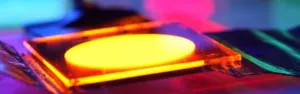
Metalenses, nano-artificial structures capable of manipulating light, offer a technology that can significantly reduce the size and thickness of traditional optical components. Particularly effective in the near-infrared region, this technology holds great promise for various applications such as LiDAR which is called the ‘eyes of the self-driving car’, miniature drones, and blood vessel detectors. Despite its potential, the current technology requires tens of millions of won even for fabricating a ...

Read the release
Science

Around half of people living with HIV in developed countries are now aged 50 years and over and at higher risk of becoming frail and having multiple comorbidities

*Please mention the European Congress of Clinical Microbiology and Infectious Diseases (ECCMID 2024, Barcelona, 27-30 April) if using this material* A new research review to be presented at a pre-congress day for this year’s European Congress of Clinical Microbiology & Infectious Diseases (ECCMID 2024) will focus on the growing prevalence of HIV in older adults, with, using England as an example, half of adults accessing care aged now 50 years and older, and around 1 in 11 aged 65 years and older. Similar trends exist in Italy and other ...

Read the release
Science

Long-period oscillations control the Sun’s differential rotation

The Sun’s differential rotation pattern has puzzled scientists for decades: while the poles rotate with a period of approximately 34 days, mid-latitudes rotate faster and the equatorial region requires only approximately 24 days for a full rotation. In addition, in past years advances in helioseismology, i.e. probing the solar interior with the help of solar acoustic waves, have established that this rotational profile is nearly constant throughout the entire convection zone. This layer of the Sun stretches ...

Read the release
Science

Understanding why people sell their kidneys

A systematic review of 35 years of global medical literature finds a spectrum of reasons why people sell kidneys. The study, by Bijaya Shrestha of the Center for Research on Education, Health and Social Science, Kathmandu, Nepal, finds limited efforts toward mitigating the problem as well as a lack of evidence around the impact of policy and biotechnology. It is published in the open access journal PLOS Global Public Health. Demand for kidney donation is higher than supply, and it has become one of the most saleable human ...

Read the release
Lighting up the future
Science

Lighting up the future

New multidisciplinary research from the University of St Andrews could lead to more efficient televisions, computer screens and lighting. Researchers at the Organic Semiconductor Centre in the School of Physics and Astronomy, and the School of Chemistry have proposed a new approach to designing efficient light-emitting materials in a paper published this week in Nature (27 March). Light-emitting materials are used in organic light-emitting diodes (OLEDs) that are now found in the majority of mobile ...

Read the release
Sweet success: researchers crack sugarcane’s complex genetic code
Science

Sweet success: researchers crack sugarcane’s complex genetic code

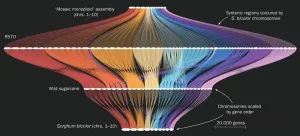
Modern hybrid sugarcane is one of the most harvested crops on the planet, used to make products including sugar, molasses, bioethanol, and bio-based materials. It also has one of the most complex genetic blueprints. Until now, sugarcane’s complicated genetics made it the last major crop without a complete and highly accurate genome. Scientists have developed and combined multiple techniques to successfully map out sugarcane’s genetic code. With that map, they were able to verify the specific location that provides resistance to the impactful brown rust disease ...

Read the release
Discovery has potential to solve the billion-dollar global cost of poorly managed wound healing
Science

Discovery has potential to solve the billion-dollar global cost of poorly managed wound healing

Scientists have uncovered a key step in the wound healing process that becomes disabled in diseases like diabetes and ageing, contributing to a global healthcare cost of managing poorly healing wounds exceeding $250 billion a year. Importantly, the research published in Nature reveals a molecule involved in the healing of tissues that – when injected into animal models – leads to a drastic acceleration of wound closure, up to 2.5 times faster, and 1.6 times more muscle regeneration. Lead researcher, Associate Professor Mikaël Martino, from Monash University’s Australian Regenerative Medicine Institute (ARMI) in Melbourne, Australia, said the discovery ...

Read the release
Science

Anastasopoulos studying machine translation for Austronesian languages

Anastasopoulos Studying Machine Translation For Austronesian Languages Antonios Anastasopoulos, Assistant Professor, Computer Science, received funding for: "Machine Translation for Austronesian Languages." He is helping to develop a solution that can automatically translate languages of the southeast Asia and Pacific regions, with a particular focus on languages of lndonesia and the Philippines. Anastasopoulos received $63,680 from Barron Associates, Inc., on a subaward from the U.S. Department of the Army for this project. Funding began ...

Read the release
Improving the safety of HED LIBs by co-coating separators with ceramics and solid-state electrolytes
Science

Improving the safety of HED LIBs by co-coating separators with ceramics and solid-state electrolytes

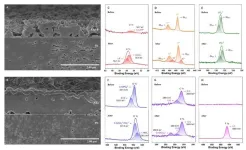
They published their work on Mar. 20, 2024, in Energy Material Advances. "TR poses a critical safety concern for HED LIBs," said paper author Jiantao Wang, the general manager of National Power Battery Innovation Center, the general manager of China Automotive Battery Research Institute Co., Ltd, professor in General Research Institute for Nonferrous Metals. "It hinders HED LIBs wide application in electric vehicles." Wang explained that TR can occur during various ...

Read the release
From the original Press-News collection. Issuers of news releases are responsible for the accuracy of their content.