THE ORIGINAL COLLECTION · SINCE 2010

Science
press releases.

Research announcements from universities, hospitals and scientific institutions. Explore the stories, people and discoveries behind the headlines.

Original publication datesPage 340
FIND A STORY

Find a past release.

Dates and source material belong to the original release.

Read our research explainers

Browse the collection · original publication order

Implantable batteries can run on the body’s own oxygen
Science

Implantable batteries can run on the body’s own oxygen

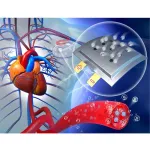
From pacemakers to neurostimulators, implantable medical devices rely on batteries to keep the heart on beat and dampen pain. But batteries eventually run low and require invasive surgeries to replace. To address these challenges, researchers in China devised an implantable battery that runs on oxygen in the body. The study, published March 27 in the journal Chem, shows in rats that the proof-of-concept design can deliver stable power and is compatible with the biological system. “When you think about it, oxygen is the source of our life,” says corresponding author Xizheng Liu, who specializes in energy materials and devices at Tianjin University of Technology. “If ...

Read the release

Sap beetles vs wind: what pollinates screw pines?
Science

Sap beetles vs wind: what pollinates screw pines?

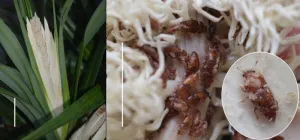
Researchers Toru Miyamoto, Ko Mochizuki, and Atsushi Kawakita of the University of Tokyo have discovered the first species pollinated by sap beetles in the genus Pandanus, a group of palm-like plants native to the tropics and subtropics of Africa and Eurasia. The discovery overturned the long-held belief that these plants were pollinated by wind. The researchers also found that fragrant screw pines’ male and female flowers produced heat at night stably, making them the first such species in the family Pandanaceae. The findings were published in ...

Read the release
The ISSCR announces 2024 election results
Science

The ISSCR announces 2024 election results

Evanston, IL – The International Society for Stem Cell Research (ISSCR) is pleased to announce the results of its 2024 election. Lorenz Studer, MD, founding director of the Center for Stem Cell Biology and member of the Developmental Biology Program, Memorial Sloan Kettering Cancer Center, USA, will become the next Vice President. All terms of office for the new leaders will begin on 1 July 2024. The following three members were newly elected to the ISSCR Board of Directors for a three-year term: Jacqueline Barry, PhD, ...

Read the release
Science

USDA completes laboratory modernization to advance pecan breeding and research

SOMERVILLE, TEXAS, March 27, 2024- The Pecan Breeding and Genetics Program of the U.S. Department of Agriculture's Agricultural Research Service (USDA-ARS) recently completed a $2.5 million laboratory modernization to accelerate pecan breeding through innovations in genetics and plant disease research. A ribbon-cutting ceremony was held on March 26 to commemorate the completion of the project. Pecan trees represent North America's native nut tree and a multimillion-dollar crop. These trees have been cultivated commercially for less than 150 years. It takes an average of 28 years from planting ...

Read the release
Looking to the past to prevent future extinction
Science

Looking to the past to prevent future extinction

During the Late Pleistocene, California — at least at its lower elevations — was teeming with vegetation. While much of North America was covered in Ice Age glaciers, here, mastodons lumbered across verdant meadows, stopping to feed on brush, warily eyeing the forest’s edge for saber-tooth cats on the prowl for their calves. Humans also flourished along the coastline, which extended hundreds of feet below where it is today. But by 11,000 years ago, mastodons were extinct. Today, scientists are still debating the reasons for their demise: did human hunting do them in? Climate change? ...

Read the release
Science

Want to feel young? Protect your sleep

Feeling sleepy can make you feel ten years older. Researchers at Stockholm University have discovered that sleep affects how old you feel. The study is published in the scientific journal Proceedings of the Royal Society B. Do you ever find yourself longing for the energy and vitality of your younger years? Feeling young is not just a matter of perception – it is actually related to objective health outcomes. Previous studies have shown that feeling younger than one’s actual age is associated with longer, healthier lives. There is even support for subjective age to predict actual brain age, ...

Read the release
Scientists discover how caterpillars can stop their bleeding in seconds
Science

Scientists discover how caterpillars can stop their bleeding in seconds

Blood is a remarkable material: it must remain fluid inside blood vessels, yet clot as quickly as possible outside them, to stop bleeding. The chemical cascade that makes this possible is well understood for vertebrate blood. But hemolymph, the equivalent of blood in insects, has a very different composition, being notably lacking in red blood cells, hemoglobin, and platelets, and having amoeba-like cells called hemocytes instead of white blood cells for immune defense. Just like blood, hemolymph clots quickly outside the body. How it does so has long remained an enigma. Now, materials scientists have shown in Frontiers in Soft ...

Read the release
Scientists warn: The grey seal hunt is too large
Science

Scientists warn: The grey seal hunt is too large

Researchers at the University of Gothenburg warn that today's hunting quotas of about 3,000 animals pose a risk to the long-term survival of the grey seal in the Baltic Sea. The conclusions of this new study are based on statistics from 20th century seal hunting and predictions of future climate change. After decades of hard hunting and environmental contamination by toxins such as PCBs, there were only 5,000 grey seals left in the entire Baltic Sea by the 1970s, falling from an initial size of more than 90,000 at the ...

Read the release
Small Aussie mammal's bite 'packs a punch'
Science

Small Aussie mammal's bite 'packs a punch'

Australian rock-wallabies are ‘little Napoleons’ when it comes to compensating for small size, packing much more punch into their bite than larger relatives. Researchers from Flinders University made the discovery while investigating how two dwarf species of rock-wallaby are able to feed themselves on the same kinds of foods as their much larger cousins. Study leader Dr Rex Mitchell also coined the idea of ‘Little Wallaby Syndrome’ after examining the skulls of dwarf rock-wallabies to discover they can more than compensate for their size. “We already knew that ...

Read the release
Science

UK rabbit owners can recognize pain in their pets, study finds

Rabbits are popular family pets, with around 1.5 million* in the UK and it is important that owners can recognise when their animal is in pain, and know when to seek help to protect their rabbit’s welfare. New research by the University of Bristol Veterinary School has found the majority of rabbit owners could list signs of pain and could mostly identify pain-free rabbits and those in severe pain, but many lacked knowledge of the subtler sign of pain. The study, published in BMC Veterinary Research today [27 March], provides the first insight into how rabbit owners identify pain and their general ability to apply this knowledge to detect pain ...

Read the release
How will you age? World-leading Dunedin Study launches next phase
Science

How will you age? World-leading Dunedin Study launches next phase

The world-leading Dunedin Study is set to launch its age 52 assessments, delving into an understudied but important period of life and time of change. The Dunedin Multidisciplinary Health and Development Study is a longitudinal study that follows the lives of 1037 babies born in Queen Mary Maternity Hospital between 1 April 1972 and 31 March 1973. It is the most detailed study of human health and development in the world. Members have been assessed regularly throughout their lives, most recently at age 45. Study Director, Research Professor Moana Theodore is incredibly excited ...

Read the release
Science

Opportunistic emergency department stop smoking prompt helps smokers quit

An opportunistic emergency department stop smoking prompt, comprising brief advice by a trained professional, an e-cigarette starter kit, and referral to local stop smoking services can help smokers quit, with a significant proportion of them still not smoking 6 months later, finds research published online in Emergency Medicine Journal. Some 6.4 million people in the UK still haven’t stubbed out for good, and of the large numbers of people attending emergency departments, a substantial proportion are more likely to be smokers and have poorer overall health, explain ...

Read the release
Science

Consistently exercising 2-3 times a week over the long term linked to lower current insomnia risk

Consistently exercising 2-3 times a week over the long term is linked to a lower current risk of insomnia as well as the ability to clock up the recommended 6-9 hours of shut eye every night, suggests an international 10-year study published in the open access journal BMJ Open. Regular exercise is associated with better overall health, and several studies have suggested that physical activity promotes better quality sleep and may improve symptoms of chronic insomnia, note the researchers. But it’s not entirely clear how much gender, age, weight (BMI), overall fitness, general health and exercise ...

Read the release
Science

Handing out vapes in A&E helps smokers quit

Peer reviewed – randomised controlled trial - humans Giving out free e-cigarette starter packs in hospital emergency departments to people who smoke helps more people quit – according to research from the University of East Anglia. The trial, funded by the National Institute for Health and Care Research (NIHR), offered advice, an e-cigarette starter pack and referral to stop smoking services to people attending A&E for any reason, to help them to stop smoking. Six months later, almost one in four people given the starter packs said they had quit smoking. And those who received ...

Read the release
ARPA-H awards Columbia researchers nearly $39M to develop a living knee replacement
Science

ARPA-H awards Columbia researchers nearly $39M to develop a living knee replacement

A team of researchers from Columbia University Irving Medical Center (CUIMC) and Columbia Engineering has been awarded up to a $38.95 million contract from the Advanced Research Projects Agency for Health (ARPA-H) to build a living knee replacement from biomaterials and human stem cells, including a patient’s own cells. ARPA-H is a federal funding agency that funds transformative biomedical and health research breakthroughs, rapidly translating research from the lab to applications in the marketplace. The Award The award, part of the ARPA-H’s Novel Innovations for Tissue Regeneration ...

Read the release
Science

How genes work together to shape how much you smoke

Take a puff of nicotine for the first time, and your DNA plays an important role, alongside social and environmental factors, in shaping what happens next. In recent years, scientists have identified thousands of genetic variants believed to influence everything from when people first try smoking to how good that first cigarette feels to how often they light up and how hard it is to quit. Some variants influence how quickly we metabolize nicotine, while others underlie how sensitive we are to it. But little is known about how they interact with each other and with other genetic differences. A new University of Colorado Boulder study sheds unprecedented ...

Read the release
More than meets the eye: Researchers uncover the microbial secrets of dry eye
Science

More than meets the eye: Researchers uncover the microbial secrets of dry eye

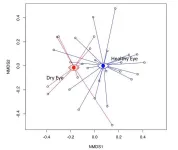
Researchers have used advanced sequencing technology to determine how the mix of microbes present in patients with healthy eyes differs from the mix found in patients with dry eye. The new work could lead to improved treatments for various eye problems and for diseases affecting other parts of the body. Microbial communities in and on our body — collectively referred to as the human microbiota — play an essential role in keeping us healthy. Although many studies have focused on microbial communities in our gut, understanding the microbiota present in other body sites is critical for advancing our knowledge of human health and developing targeted interventions ...

Read the release
Researchers identify microbes that help plants thwart parasite
Science

Researchers identify microbes that help plants thwart parasite

Bacteria that could help one of Africa’s staple crops resist a major pest have been identified by researchers at the University of California, Davis. Their findings, published March 26 in Cell Reports, could improve yields of sorghum, a mainstay of food and drink in West and East African countries. About 20 percent of Africa’s sorghum crop is lost due to witchweed (Striga hermonthica), a parasitic plant that steals nutrients and water by latching onto the plant’s roots. In the new study, UC Davis researchers show that soil microbes induce changes in sorghum roots that make the plant more resistant to infection by witchweed. They ...

Read the release
Science

Late surgical repair for preterm babies born with inguinal hernia shows better results compared to early repair, study finds

Delaying surgical inguinal hernia repair in preterm infants until after discharge from the neonatal intensive care unit (NICU) appears to reduce the likelihood of serious adverse events, according to researchers at UTHealth Houston. A study led by first and corresponding author Martin L. Blakely, MD, MS, MMHC, professor of surgery and pediatrics with McGovern Medical School at UTHealth Houston, analyzed the safety of early versus late surgical repair for preterm infants born with an inguinal hernia. The findings were published today in the Journal of the American Medical Association (JAMA). “The biggest question we wanted ...

Read the release
New genetic analysis tool tracks risks tied to CRISPR edits
Science

New genetic analysis tool tracks risks tied to CRISPR edits

Since its breakthrough development more than a decade ago, CRISPR has revolutionized DNA editing across a broad range of fields. Now scientists are applying the technology’s immense potential to human health and disease, targeting new therapies for an array of disorders spanning cancers, blood conditions and diabetes. In some designed treatments, patients are injected with CRISPR-treated cells or with packaged CRISPR components with a goal of repairing diseased cells with precision gene edits. Yet, while CRISPR has shown ...

Read the release
The fear of depression recurrence is potent but not universal, new Concordia research shows
Science

The fear of depression recurrence is potent but not universal, new Concordia research shows

Clinicians treating patients who live with or survive serious diseases such as cancer are familiar with the concept of fear of illness recurrence (FIR). FIR has been associated with greater avoidance of illness reminders, including medical appointments, ignoring symptom changes, social withdrawal and increases in anxiety and decreases in quality of life and mood. But as a Concordia research team led by Mark Ellenbogen, a professor in the Department of Psychology, points out in a new study published in the journal BMC Psychiatry, there is little research on FIR ...

Read the release
Joints that could heal themselves? Researchers could get there in five years
Science

Joints that could heal themselves? Researchers could get there in five years

Imagine a day when joints could heal themselves. At the first inkling of a creaky knee, patients could get a single shot in the joint that would not only stop their cartilage and bone from eroding, but kick start its regrowth. In more advanced cases, that shot might also deliver a biomaterial repair kit to patch holes in tissue. If multiple joints ached, an annual IV infusion could ferry regenerating therapies to all of them at once. This may seem like a dream to the 32.5 million people who suffer from osteoarthritis. ...

Read the release
Science

Corporations use government grants to lighten debt load

Local and state governments have a variety of tools at their disposal to attract businesses or entice them to stay. One is tax relief. Austin, for example, helped lure electric automaker Tesla in part with property tax rebates worth $14 million over 10 years. In a study released today from Texas McCombs, Dean and Accounting Professor Lillian Mills finds that another kind of government aid — cash grants — has a different kind of impact. It helps companies lighten their balance sheets by borrowing less. Corporations ...

Read the release
Science

C-Path launches consortium for alpha-1 antitrypsin deficiency

TUCSON, Ariz., March 26, 2024 — Critical Path Institute (C-Path) is excited to announce the launch of the Critical Path for Alpha-1 Antitrypsin Deficiency (CPA-1) Consortium. The CPA-1 consortium aims to accelerate drug development for alpha-1 antitrypsin deficiency (AATD), a rare disease that affects individuals and families worldwide. This will be achieved by integrating data through C-Path’s Rare Diseases Cures Accelerator–Data Analytics Platform (RDCA-DAP®) and leveraging those data for CPA-1 to collaboratively develop regulatory-grade solutions to continuously address unmet needs in drug development for this condition, including: Generating evidence to ...

Read the release
Chlorogenic acid prevents ovariectomized-induced bone loss by facilitating osteoblast functions and suppressing osteoclast formation
Science

Chlorogenic acid prevents ovariectomized-induced bone loss by facilitating osteoblast functions and suppressing osteoclast formation

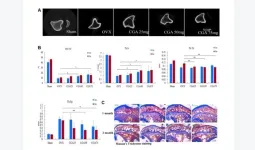
“[...] chlorogenic acid appears to be a promising candidate for the management of osteoporosis.” BUFFALO, NY- March 26, 2024 – A new research paper was published in Aging (listed by MEDLINE/PubMed as "Aging (Albany NY)" and "Aging-US" by Web of Science) Volume 16, Issue 5, entitled, “Chlorogenic acid prevents ovariectomized-induced bone loss by facilitating osteoblast functions and suppressing osteoclast formation.” Osteoporosis is a common bone disease in ...

Read the release
From the original Press-News collection. Issuers of news releases are responsible for the accuracy of their content.