THE ORIGINAL COLLECTION · SINCE 2010

Science
press releases.

Research announcements from universities, hospitals and scientific institutions. Explore the stories, people and discoveries behind the headlines.

Original publication datesPage 377
FIND A STORY

Find a past release.

Dates and source material belong to the original release.

Read our research explainers

Browse the collection · original publication order

Science

An update on a 2015 report shows that gabapentinoid usage in the U.S. has continued to climb

Gabapentinoids are commonly prescribed for an array of off-label conditions, including management of chronic pain. Updating their 2015 report on gabapentinoid usage in the U.S., researchers used the 2002–2021 Medical Expenditure Panel Survey (MEPS) to investigate the proportion of the adult population using gabapentinoids, medications, and diagnoses associated with users, and the likelihood of starting, stopping, or continuing gabapentinoids. They found that gabapentinoid use has increased from 4.0% in 2015 to 4.7% in 2021. ...

Read the release

Bone marrow adipocytes provide early sign of progression from MGUS to multiple myeloma
Science

Bone marrow adipocytes provide early sign of progression from MGUS to multiple myeloma

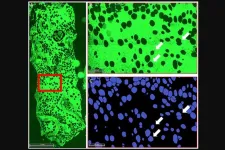
A new research perspective was published in Oncotarget's Volume 15 on January 16, 2024, entitled, “Bone marrow adipocytes provide early sign for progression from MGUS to multiple myeloma.” Multiple Myeloma (MM) is the second most common hematological malignancy and is characterized by clonal expansion of malignant plasma cells in the bone marrow. In spite of recent advances in the field of MM, the disease has remained incurable. MM is preceded by a premalignant state known as monoclonal gammopathy of undetermined significance (MGUS), with a risk of progression to MM of 1% per year. Establishing a scalable approach that refines ...

Read the release
Don’t blame the sharks: Research led by UMass Amherst reveals why more hooked tarpon are being eaten
Science

Don’t blame the sharks: Research led by UMass Amherst reveals why more hooked tarpon are being eaten

In wave-making research recently published in Marine and Coastal Fisheries, a team of researchers, led by biologists at the University of Massachusetts Amherst, has quantified the rate at which great hammerhead sharks are eating Atlantic tarpon hooked by anglers at Bahia Honda, Florida—one of the prime tarpon fishing spots in the Florida Keys. Called the “depredation rate,” the team found that 15.3% of tarpon that were hooked by anglers and fought for more than five minutes were eaten while still on the line. But the researchers also show that this is not necessarily a sign that the ecosystem is out of balance. To the contrary, increased reports ...

Read the release
Shallow soda lakes show promise as cradles of life on Earth
Science

Shallow soda lakes show promise as cradles of life on Earth

Charles Darwin proposed that life could have emerged in a “warm little pond” with the right cocktail of chemicals and energy. A study from the University of Washington, published this month in Communications Earth & Environment, reports that a shallow “soda lake” in western Canada shows promise for matching those requirements. The findings provide new support that life could have emerged from lakes on the early Earth, roughly 4 billion years ago. Scientists have known that under ...

Read the release
New biomarkers for active lupus nephritis discovered
Science

New biomarkers for active lupus nephritis discovered

New biomarkers with improved diagnostic performance for early detection of lupus nephritis have been discovered in the University of Houston lab of Chandra Mohan, a pioneer in lupus research. Early identification of renal involvement in lupus and prompt treatment are essential in reducing the pain, suffering and eventual mortality it causes. Systemic Lupus Erythematosus (SLE), commonly called lupus, is an autoimmune disease that occurs when the body attacks its own tissues and organs. Inflammation from the disease can impact many different parts of the body including joints, skin, kidneys, blood cells, brain and heart. Lupus nephritis is one ...

Read the release
Science

New candidate for universal memory is fast, low-power, stable and long-lasting

We are tasking our computers with processing ever-increasing amounts of data to speed up drug discovery, improve weather and climate predictions, train artificial intelligence, and much more. To keep up with this demand, we need faster, more energy-efficient computer memory than ever before. Researchers at Stanford have demonstrated that a new material may make phase-change memory—which relies on switching between high and low resistance states to create the ones and zeroes of computer data—an improved option for future AI and data-centric systems. ...

Read the release
Follow the salt: connecting salt concentrations and motion in roundworms
Science

Follow the salt: connecting salt concentrations and motion in roundworms

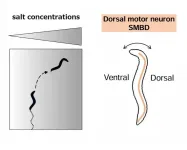
Joint research led by Ayaka Matsumoto and Yuichi Iino of the University of Tokyo demonstrated that temporal decrease in salt concentration leads to the activation of the neck motor neuron of roundworms only in a specific phase of its activity. The activation adjusts the roundworm's trajectory toward higher salt concentrations. The finding pinpoints the neural mechanism by which roundworms integrate sensory and motor information, a first step toward understanding the neural mechanisms of navigation in more complex animals. The findings were published in the journal Proceedings ...

Read the release
Manipulated hafnia paves the way for next-gen memory devices
Science

Manipulated hafnia paves the way for next-gen memory devices

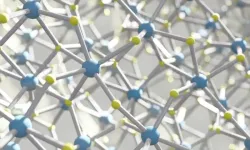
EMBARGOED: NOT FOR RELEASE UNTIL 3:00 P.M. U.S. EASTERN TIME ON JANUARY 22, 2024 Scientists and engineers have been pushing for the past decade to leverage an elusive ferroelectric material called hafnium oxide, or hafnia, to usher in the next generation of computing memory. A team of researchers including the University of Rochester’s Sobhit Singh published a Proceedings of the National Academy of Sciences study outlining progress toward making bulk ferroelectric and antiferroelectric hafnia available for use in a variety of applications. In a specific crystal phase, hafnia exhibits ferroelectric properties—that is, electric polarization that can be changed in one direction ...

Read the release
Science

Sexual minority young people in Canada more likely to experience harmful police contact

Toronto, ON – While there has been much public scrutiny and research on police interactions and violence towards sexual minorities in the United States, there is a gap in the current literature on how sexual minorities fare with law enforcement contact in Canada. A new study published in the Annals of Epidemiology aims to fill this research gap by examining the relationship between sexual orientation and experiences with police contact, including intrusion and harassment from the police, in Canada. Among a sample of 940 adolescents and young adults across Canada, the study found that the prevalence of police contact was highest among persons ...

Read the release
Science

Zeng researching techniques for achieving supply chain security for the Internet of Things

Qiang Zeng, Associate Professor, Computer Science, received funding for the project: "Towards Lifetime Supply Chain Security for Internet of Things: Testing an Update Before Trusting It." The global Internet of Things (IoT) market size is expected to rise substantially by 2029. IoT devices are manufactured by various companies around the world, and thus, should not be trusted by default. Zeng aims to ensure lifetime supply chain security of IoT devices. To attain this objective, he is proposing to test an IoT device and every firmware update through ...

Read the release
Good and bad news for people with low back pain
Science

Good and bad news for people with low back pain

Low back pain is a major cause of disability around the globe, with more than 570 million people affected. In the United States alone, health care spending on low back pain was $134.5 billion between 1996 and 2016, and costs are increasing. "The good news is that most episodes of back pain recover, and this is the case even if you have already had back pain for a couple of months," University of South Australia Professor Lorimer Moseley says. "The bad news is that once you have had back pain for more than a few months, the chance ...

Read the release
GIST researchers investigate strange transient responses of organic electrochemical transistors
Science

GIST researchers investigate strange transient responses of organic electrochemical transistors

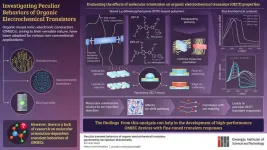
Organic mixed ionic–electronic conductors (OMIECs) are a highly sought-after class of materials for non-conventional applications, such as bioelectronics, neuromorphic computing, and bio-fuel cells, owing to their two-in-one electronic and ionic conduction properties. To ensure a much wider acceptance of these fascinating materials, there is a need to diversify their properties and develop techniques that allow application-specific tailoring of the features of OMIEC-based devices. A crucial aspect of this process is to develop strategies for evaluating the various properties of these ...

Read the release
Science

Navigating the ‘big little leap’ to kindergarten

COLUMBUS, Ohio – No matter how well children are prepared for kindergarten, their transition to the classroom during the first few months plays a key role in their success, a new study suggests. Researchers found that kids who made a more successful transition in the first 10-14 weeks of kindergarten scored higher than others on tests of academic and social-behavioral skills at the end of the school year. Important parts of the transition – what the researchers called a “big little leap” – included making new friends, ...

Read the release
Science

New study finds liquid laundry detergent packet exposure burden among young children remains; increase in exposures among older children, teens, and adults

(COLUMBUS, Ohio) – A new study conducted by researchers at the Center for Injury Research and Policy of the Abigail Wexner Research Institute at Nationwide Children’s Hospital and the Central Ohio Poison Center investigated trends in calls to poison centers across the country for exposures to liquid laundry detergent packets. The study investigators identified declines in the number, rate and severity of liquid laundry detergent packet exposures among children younger than 6 years. However, the exposure burden remained high. Additionally, exposures have increased among older children, teens and adults. The study, published in Clinical Toxicology, found that in the most recent ...

Read the release
Science

Researchers unveil new way to counter mobile phone ‘account takeover’ attacks

Computer science researchers have developed a new way to identify security weaknesses that leave people vulnerable to account takeover attacks, where a hacker gains unauthorized access to online accounts. Most mobiles are now home to a complex ecosystem of interconnected operating software and Apps, and as the connections between online services has increased, so have the possibilities for hackers to exploit the security weaknesses, often with disastrous consequences for their owner. Dr Luca Arnaboldi, from the University of Birmingham’s School of Computer Science, explains: “The ruse of looking over someone’s shoulder to find out their PIN is well known. ...

Read the release
The megalodon was less mega than previously believed
Science

The megalodon was less mega than previously believed

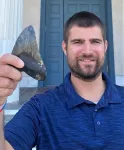
A new study shows the Megalodon, a gigantic shark that went extinct 3.6 million years ago, was more slender than earlier studies suggested. This finding changes scientists’ understanding of Megalodon behavior, ancient ocean life, and why the sharks went extinct. The Megalodon or megatooth shark is typically portrayed as a super-sized monster in popular culture, with recent examples in the sci-fi films “The Meg” (2018) and “Meg 2: The Trench” (2023). Previous studies assume that the shark likely reached lengths of at least 50 feet and possibly as much as 65 feet. However, the Megalodon is largely known only from its teeth and vertebrae in the ...

Read the release
Slender shark: Study finds Megalodon was not like a gigantic great white shark
Science

Slender shark: Study finds Megalodon was not like a gigantic great white shark

CHICAGO — A new scientific study shows that the prehistoric gigantic shark, Megalodon or megatooth shark, which lived roughly 15-3.6 million years ago nearly worldwide, was a more slender shark than previous studies have suggested. Formally called Otodus megalodon, it is typically portrayed as a super-sized, monstrous shark in novels and sci-fi films, including “The Meg.” Previous studies suggest the shark likely reached lengths of at least 50 to 65 feet (15 to 20 meters). However, ...

Read the release
Science

New criteria for sepsis in children based on organ dysfunction

Clinician-scientists from Ann & Robert H. Lurie Children’s Hospital of Chicago were among a diverse, international group of experts tasked by the Society of Critical Care Medicine (SCCM) with developing and validating new data-based criteria for sepsis in children. Sepsis is a major public heath burden, claiming the lives of over 3.3 million children worldwide every year. The new pediatric sepsis criteria – called the Phoenix criteria – follow the paradigm shift in the recent adult criteria that define sepsis as severe ...

Read the release
Science

Development and validation of the Phoenix criteria for pediatric sepsis and septic shock

About The Study: In this international, multicenter, retrospective cohort study including more than 3.6 million pediatric encounters, a novel score, the Phoenix Sepsis Score, was derived and validated to predict mortality in children with suspected or confirmed infection. The new criteria for pediatric sepsis and septic shock based on the score performed better than existing organ dysfunction scores and the International Pediatric Sepsis Consensus Conference criteria. Authors: Tellen D. Bennett, M.D., M.S., of the University of Colorado School of Medicine and Children’s Hospital Colorado in Aurora, is the corresponding author. To access the ...

Read the release
Science

CU researchers unveil modernized criteria for pediatric sepsis and septic shock

An international research team led by Tell Bennett, MD, MS, professor of biomedical informatics and pediatric critical care at the University of Colorado School of Medicine, released new diagnostic criteria for sepsis in children this week, marking the first update to the pediatric sepsis definition in nearly two decades. The updated criteria, presented at the 2024 Critical Care Congress of the Society for Critical Care Medicine (SCCM), will be utilized ...

Read the release
National champion tree program finds new home
Science

National champion tree program finds new home

The National Champion Tree Program started 83 years ago at American Forests to discover the largest, living trees in the United States. Now, the program is moving from the organization’s headquarters to a new home in the School of Natural Resources at the University of Tennessee Institute of Agriculture (UTIA). American Forests launched the Champion Tree Program in 1940. Its vision included establishing a nationwide laboratory for the study of forestry and trees. Being housed at Tennessee’s 1862 public land-grant university will advance the program’s understanding of big trees. “The National Champion Tree Program moving to UTIA means it can continue protecting ...

Read the release
From snack to science: Innovative grant brings popcorn into the classroom
Science

From snack to science: Innovative grant brings popcorn into the classroom

URBANA, Ill. — In a few years, popcorn could become a standard element in science classrooms across Illinois and the nation. With funding from a new USDA grant, a University of Illinois Urbana-Champaign crop scientist and collaborating educators are developing a popcorn-based curriculum to reinforce concepts around agricultural science, artificial intelligence, biotechnology, computer science, genomics, research methods, and more for 4-H and high school students. The funding may be new, but Tony Studer has proselytized ...

Read the release
Science

Why family businesses get more from women leaders

Family businesses account for more than 70 percent of global GDP, and survey data shows that they are much friendlier to female leadership: up to 55 percent have at least one woman on their board and 70 percent are considering a woman for their next CEO. Experts have attributed this outlier gender parity to an emphasis on long-term strategies or family values. But a new study, published in the Strategic Entrepreneurship Journal, suggests that women’s success as leaders in family businesses is deeply rooted in how employees interpret their leadership style. “Family firms tend to focus on being inclusive ...

Read the release
Science

Hiring globally mobile, highly specialized workers after their firm’s failure can be a strategic move, despite a loss of legitimacy

New research published in Global Strategy Journal identifies globally mobile workers with highly specialized skills as a strategic hiring strategy, due to the workers’ legitimacy and mobility after being laid off by a failure of their former employer. The study shows that laid-off workers experience comparatively high legitimacy loss if they worked in the unit or geographical location where other workers were suspected of being responsible for the corporation’s failure. As a result, their bargaining position with a prospective employer is weaker, even if their special skills ...

Read the release
Science

How firms frame training programs for gig workers boosts promotion and uptake of the programs, strengthening the bond between worker and company

General skills training programs for those hired under flexible arrangements can strengthen the relationship between firm and worker, thus benefiting both groups. But for that to happen, the programs need to have strong buy-in from both managers and workers. A new study published in Strategic Management Journal found the use of relational terms to frame training programs is key: Such phrasing makes managers more likely to promote the programs and increases uptake among the gig or contract workers. The research team included Thomaz Teodorovicz of Copenhagen Business School, Sérgio Lazzarini of Western ...

Read the release
From the original Press-News collection. Issuers of news releases are responsible for the accuracy of their content.