THE ORIGINAL COLLECTION · SINCE 2010

Science
press releases.

Research announcements from universities, hospitals and scientific institutions. Explore the stories, people and discoveries behind the headlines.

Original publication datesPage 385
FIND A STORY

Find a past release.

Dates and source material belong to the original release.

Read our research explainers

Browse the collection · original publication order

Science

Andalibi to receive funding for Perthera Tissue Bank

Andalibi To Receive Funding For Perthera Tissue Bank Ali Andalibi, Senior Associate Dean, College of Science, is set to receive funding for: "Perthera Tissue Bank." FFPE samples from Perthera will be housed in the cold room in the Institute for Advanced Biomedical Research (IABR). The Principal Investigator, Co-Investigator, and the staff member will be checking on the samples on a regular basis to ensure that the samples are safely stored and that the storage conditions, such as temperature, are appropriate. ...

Read the release
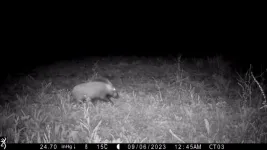

How did the bushpig cross the strait? A great puzzle in African mammal biogeography solved by genomics
Science

How did the bushpig cross the strait? A great puzzle in African mammal biogeography solved by genomics

In the ongoing biodiversity crisis, large terrestrial animals are more threatened by extinction than any other group of organisms. The African continent holds an impressively intact large-mammal community, but there is still a lot we do not know about how these species evolved, became diverse and adapted to the changing climate and habitats. Many of these questions can be addressed by investigating the genomes and genetic variation across species. New research, published in Nature Communications, uses genomics to answer ...

Read the release
Acute pediatric critical illness definition enables global research
Science

Acute pediatric critical illness definition enables global research

(MEMPHIS, Tenn. – January 05, 2023) St. Jude Children’s Research Hospital investigators collaborated with a global group of acute pediatric critical illness experts to reach a consensus definition of the condition. Research on how to improve care in low- and middle-income countries has been stymied because conventional pediatric critical illness definitions are not applicable in these settings. The new, more universal definition, reached by consensus among researchers and clinicians from 40 countries, will enable scientists to study pediatric critical illness more universally, which should lead to improvements in patient outcomes ...

Read the release
A new book provides a roadmap for food systems transformation in Kenya
Science

A new book provides a roadmap for food systems transformation in Kenya

The past few years have seen Kenya, along with many other countries, confronted with multifaceted and compounding challenges. The disruptions caused by COVID-19, high levels of food price inflation, and environmental crises, such as locust infestations and droughts, have severely tested the resilience of Kenya’s food systems and the affordability of food for its citizens. Against this backdrop of challenges and ongoing demographic shifts, urbanization, and stagnating agricultural production, ...

Read the release
Franco-German research funding in the field of biology
Science

Franco-German research funding in the field of biology

The joint funding program of the French National Research Agency (ANR) and the German Research Foundation (DFG) promotes Franco-German cooperation in the natural sciences, the life sciences, and the engineering sciences. Through this program, Johannes Gutenberg University Mainz (JGU) will receive support for two distinctive projects in the field of biology. The EVOMET project: Uncovering the evolution of metabolism in plants Tomatoes, cucumbers, and potatoes taste different due to the accumulation ...

Read the release
Science

Fastest swimming insect could inspire uncrewed boat designs

ITHACA, N.Y. – Whirligig beetles, the world’s fastest-swimming insect, achieve surprising speeds by employing a strategy shared by speedy marine mammals and waterfowl, according to a new Cornell University study that rewrites previous explanations of the physics involved. The centimeter-long beetles can reach a peak acceleration of 100 meters per second and a top velocity of 100 body lengths per second (or one meter per second). Not only do the results explain the whirligig’s Olympian speeds, but they also offer valuable insights for bio-inspired designers of near-surface water robots and uncrewed boats. Until ...

Read the release
Science

Why do we sleep? Researchers propose an answer to this age-old question

Sleep is a fundamental need, just like food or water. “You’ll die without it,” said Keith Hengen, an assistant professor of biology at Washington University in St. Louis. But what does sleep actually accomplish? For years, the best researchers could say is that sleep reduces sleepiness — hardly a satisfying explanation for a basic requirement of life. But by melding concepts from the fields of physics and biology, Hengen and a team of Arts & Sciences researchers have constructed a theory that could explain both the meaning of sleep and the complexity of the brain. As reported in a new study published ...

Read the release
Science

Putting your toddler in front of the TV? You might hurt their ability to process the world around them, new data suggests

Babies and toddlers exposed to television or video viewing may be more likely to exhibit atypical sensory behaviors, such as being disengaged and disinterested in activities, seeking more intense stimulation in an environment, or being overwhelmed by sensations like loud sounds or bright lights, according to data from researchers at Drexel’s College of Medicine published today in the journal JAMA Pediatrics. According to the researchers, children exposed to greater TV viewing by their second birthday were more likely to develop atypical sensory processing behaviors, such as “sensation seeking” and “sensation ...

Read the release
Science

Widespread population collapse of African Raptors

An international team of researchers has found that Africa’s birds of prey are facing an extinction crisis. The report, co-led by researchers from the School of Biology at the University of St Andrews and The Peregrine Fund, and published in the journal Nature Ecology & Evolution (4 January 2024), warns of declines among nearly 90% of 42 species examined, and suggests that more than two-thirds may qualify as globally threatened. Led by Dr Phil Shaw from St Andrews and Dr Darcy Ogada of The Peregrine ...

Read the release
A novel strategy for extracting white mycelial pulp from fruiting mushroom bodies
Science

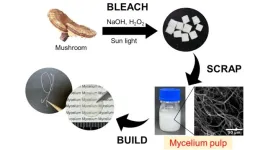
A novel strategy for extracting white mycelial pulp from fruiting mushroom bodies

Mycelial fibers, the fibrous cells found in fruiting mushroom bodies, have gained momentum as a sustainable material for making leather and packaging owing to their excellent formability. Recently, a team of researchers from Shinshu University, Japan, has found a simple way of obtaining mycelial fibers, called “mycelial pulp,” from fruiting mushroom bodies and bleaching them using sunlight while keeping their mycelial structures intact. Every year, humans generate millions of tons of waste, and almost 38% of that waste ends up in a landfill. A significant portion of it is made up of plastic or petroleum-based ...

Read the release
Some mosquitoes like it hot
Science

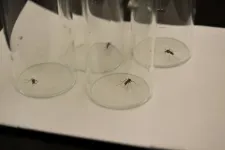
Some mosquitoes like it hot

Certain populations of mosquitoes are more heat tolerant and better equipped to survive heat waves than others, according to new research from Washington University in St. Louis. This is bad news in a world where vector-borne diseases are an increasingly global health concern. Most models that scientists use to estimate vector-borne disease risk currently assume that mosquito heat tolerances do not vary. As a result, these models may underestimate mosquitoes’ ability to spread diseases in a warming world. Researchers led by Katie M. Westby, a senior scientist at Tyson Research Center, Washington ...

Read the release
First ever scientific study on First World War crater reveals new details on its history
Science

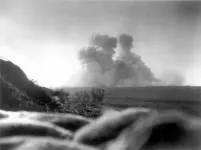
First ever scientific study on First World War crater reveals new details on its history

The spectacular explosion of the mine at Hawthorn Ridge – a fortified German front-line position in the First World War – marked the beginning of the Battle of the Somme, and remains one of the best-known pieces of film from the whole conflict. More than 60ft below the surface, British miners had dug a gallery for more than 900 metres from their lines and packed it with 40,000 lbs of explosives. It was one of 19 mines placed beneath German front positions that were detonated on 1st July, 1916 to mark the start of the offensive. But the detonation of the ...

Read the release
Science

Global scientific network highlights plant genera named for women

A network of scientists across the globe have identified more than 700 plant genera named for women. This is a nearly twenty-fold increase in the number of genera linked to women before the group started working on the list. The project, which aimed to highlight the contribution of women to botany, was the result of social media conversations about plants named for people. What began as a simple question about how many and which plant genera were named for women evolved into a global network of scientists who built ...

Read the release
Science

PTSD, depression, and anxiety nearly doubles in Israel in aftermath of Hamas attack

A study conducted by researchers at Ruppin Academic Center in Israel and Columbia University documents the broad impact on the mental health of Israelis, both Jews and Arabs, with sharp increases in post-traumatic stress disorder (PTSD), depression, and anxiety in the aftermath Hamas' attack in October. The study, published in the Lancet’s EClinicalMedicine Jan. 5, 2023, found the prevalence of probable PTSD, depression, and anxiety in the weeks following the attacks (29% for PTSD, ...

Read the release
Protected areas for elephants work best if they are connected
Science

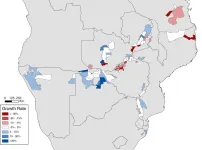
Protected areas for elephants work best if they are connected

PRETORIA, SOUTH AFRICA – Conservation measures have successfully stopped declines in the African savanna elephant population across southern Africa, but the pattern varies locally, according to a new study. The evidence suggests that the long-term solution to elephant survival requires not only that areas are protected but that they are also connected to allow populations to stabilize naturally, an international research team says. Their study, published on January 5th in the peer-reviewed journal Science Advances, collected survey estimates and calculated growth rates for ...

Read the release
nTIDE December 2023 Jobs Report: People with disabilities maintain strong employment levels through end of year, staying at historic highs
Science

nTIDE December 2023 Jobs Report: People with disabilities maintain strong employment levels through end of year, staying at historic highs

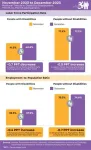
East Hanover, NJ – January 5, 2023 – Following a historic high in November, slight declines were seen in the employment-to-population ratio and the labor force participation rate in December 2023 for people with and without disabilities. However, numbers still remain near the record levels achieved the previous month, according to today’s National Trends in Disability Employment – semi-monthly update (nTIDE), issued by Kessler Foundation and the University of New Hampshire’s Institute on Disability (UNH-IOD). Month-to-Month nTIDE Numbers (comparing November 2023 to December 2023) Based on data from the U.S. Bureau of Labor Statistics (BLS) Jobs ...

Read the release
Science

Speech Accessibility Project begins recruiting people with ALS

The Speech Accessibility Project has expanded its recruitment and is inviting U.S. and Puerto Rican adults living with amyotrophic lateral sclerosis to participate. Those interested in participating can sign up online. Funded by Big Tech companies Amazon, Apple, Google, Meta, and Microsoft, the University of Illinois Urbana-Champaign aims to train voice recognition technologies to understand people with diverse speech patterns and disabilities. The project began recruiting people with Parkinson’s disease last ...

Read the release
Science

UofL study shows nicotine in e-cigarettes may not be harmless, as some claim

With the start of a new year, smokers and vapers may have resolved to quit or cut back on the habit to improve their health. They may want to use caution, however, if their strategy involves switching from cigarettes to e-cigarettes, considered by some to be a less harmful alternative. A new study from the University of Louisville shows the nicotine in certain types of e-cigarettes may be more harmful than others, increasing risk for irregular heartbeat, or heart arrhythmias. A popular claim is that nicotine in ...

Read the release
Science

Evaluation of changes in prices and purchases following implementation of sugar-sweetened beverage taxes across the US

About The Study: Sugar-sweetened beverage (SSB) taxes in Boulder, Colorado; Philadelphia, Oakland, San Francisco, and Seattle led to substantial, consistent declines in SSB purchases following price increases associated with those taxes. Scaling SSB taxes nationally could yield substantial public health benefits. Authors: Scott Kaplan, Ph.D., of the U.S. Naval Academy in Annapolis, Maryland, is the corresponding author. To access the embargoed study: Visit our For The Media website ...

Read the release
Science

Ancestors of primates lived in pairs

A study carried out by CNRS1 scientists working with an international team has revealed that around 70 million years ago, when dinosaurs existed, the ancestors of primates most commonly lived in pairs. Only 15% of them opted for a solitary lifestyle. This discovery — that our ancestors adopted variable forms of social organization — challenges the hitherto commonly accepted hypothesis that at the time of dinosaurs, the ancestors of primates lived alone, and that pair living evolved much later. Most likely, pair living offered significant benefits, such as easier reproduction and reduced costs of thermoregulation by huddling in pairs. While several studies have already been conducted ...

Read the release
Mysterious missing component in the clouds of Venus revealed
Science

Mysterious missing component in the clouds of Venus revealed

What are the clouds of Venus made of? Scientists know it’s mainly made of sulfuric acid droplets, with some water, chlorine, and iron. Their concentrations vary with height in the thick and hostile Venusian atmosphere. But until now they have been unable to identify the missing component that would explain the clouds’ patches and streaks, only visible in the UV range. In a new study published in Science Advances, researchers from the University of Cambridge synthesised iron-bearing sulfate minerals that are stable under the harsh chemical conditions in the Venusian clouds. Spectroscopic analysis revealed that a combination of two minerals, rhomboclase and acid ferric ...

Read the release
Asbestos: the size and shape of inhaled nanofibers could be exclusively responsible for the development of pulmonary fibrosis
Science

Asbestos: the size and shape of inhaled nanofibers could be exclusively responsible for the development of pulmonary fibrosis

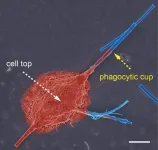
The pathogenic potential of inhaling the inert fibrous nanomaterials used in thermal insulation (such as asbestos or fibreglass) is actually connected not to their chemical composition, but instead to their geometrical characteristics and size. This was revealed by a study, published on 3 January 2024 in the journal Nature Nanotechnology, conducted on glass nanofibers by a French-Chinese team including a CNRS chemist.1 The reason for this is the inability of the macrophages2 naturally present in pulmonary alveolar tissue to eliminate foreign bodies that are too large. The study was initially conducted in vitro with electrochemical nanosensors, and revealed that when confronted ...

Read the release
Feathers from deceased birds help scientists understand new threat to avian populations
Science

Feathers from deceased birds help scientists understand new threat to avian populations

As concerns over the world’s declining bird population mount, animal ecologists developed an analytical approach to better understand one of the latest threats to feathered creatures: the rise of wind and solar energy facilities. “Bird mortality has become an unintended consequence of renewable energy development,” said Hannah Vander Zanden, an assistant professor of biology at the University of Florida. “If we want to minimize or even offset these fatalities, especially for vulnerable populations, we need to identify the geographic origin of affected birds. In other words, are the dead birds local or are they coming ...

Read the release
Study shows weed makes workouts more fun, but it's no performance enhancer
Science

Study shows weed makes workouts more fun, but it's no performance enhancer

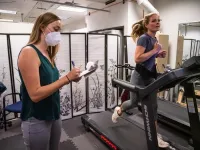
A bit of weed before a workout can boost motivation and make exercise more enjoyable. But if performance is the goal, it may be best to skip that joint. That’s the takeaway of the first ever study to examine how legal, commercially available cannabis shapes how exercise feels. The study of 42 runners, published Dec. 26 in the journal Sports Medicine, comes almost exactly 10 years after Colorado became the first state to commence legal sales of recreational marijuana, at a time when cannabis-users increasingly report mixing it with workouts. “The bottom-line finding is that cannabis before exercise seems ...

Read the release
Polarization-independent liquid-crystal phase modulators
Science

Polarization-independent liquid-crystal phase modulators

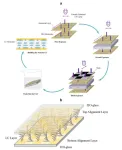
Liquid-crystal (LC) phase modulators are widely used in optical systems because of their advantages of low power consumption, light weight, flexible bandwidth adjustment, and non-mechanical movements. However, most LC phase modulators are polarization-sensitive, meaning that they affect the phase of light differently depending on its polarization. This can limit their performance and functionality in some applications. There are two main approaches to realizing polarization-independent LC phase modulators. The first approach is to use polarization-independent ...

Read the release
From the original Press-News collection. Issuers of news releases are responsible for the accuracy of their content.