THE ORIGINAL COLLECTION · SINCE 2010

Science
press releases.

Research announcements from universities, hospitals and scientific institutions. Explore the stories, people and discoveries behind the headlines.

Original publication datesPage 436
FIND A STORY

Find a past release.

Dates and source material belong to the original release.

Read our research explainers

Browse the collection · original publication order

Science

New method can improve assessing genetic risks for non-white populations

A team led by researchers at Johns Hopkins Bloomberg School of Public Health and the National Cancer Institute has developed a new algorithm for genetic risk-scoring for major diseases across diverse ancestry populations that holds promise for reducing health care disparities. Genetic risk-scoring algorithms are considered a promising method to identify high-risk groups of individuals who could benefit from preventive interventions for various diseases and conditions, such as cancers and heart diseases. ...

Read the release
Light and sound waves reveal negative pressure
Science

Light and sound waves reveal negative pressure

As a physical quantity pressure is encountered in various fields: atmospheric pressure in meteorology, blood pressure in medicine, or even in everyday life with pressure cookers and vacuum-sealed foods. Pressure is defined as a force per unit area acting perpendicular to a surface of a solid, liquid, or gas. Depending on the direction in which the force acts within a closed system, very high pressure can lead to explosive reactions in extrem cases, while very low pressure in a closed system can cause the implosion of the system itself. Overpressure ...

Read the release
Science

Access to marijuana by minors via online dispensaries

About The Study: This analysis of 80 online marijuana dispensaries based in 32 states found that most lacked adequate age verification features and most accepted nontraceable payment methods, enabling youth to hide their transactions. Almost 1 in 5 online dispensaries required no formal age verification at any stage of the purchasing process. Authors: Ruth L. Milanaik, D.O., of Steven and Alexandra Cohen Children’s Medical Center of New York in Lake Success, is the corresponding author. To access the embargoed study: Visit our For The Media website at this link https://media.jamanetwork.com/ (doi:10.1001/jamapediatrics.2023.3656) Editor’s ...

Read the release
New research reveals extreme heat likely to wipe out humans and mammals in the distant future
Science

New research reveals extreme heat likely to wipe out humans and mammals in the distant future

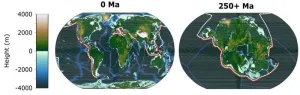
A new study shows unprecedented heat is likely to lead to the next mass extinction since the dinosaurs died out, eliminating nearly all mammals in some 250 million years time. The research, published today in Nature Geoscience and led by the University of Bristol, presents the first-ever supercomputer climate models of the distant future and demonstrates how climate extremes will dramatically intensify when the world’s continents eventually merge to form one hot, dry and largely uninhabitable supercontinent. The ...

Read the release
Theories about the natural world may need to change to reflect human impact
Science

Theories about the natural world may need to change to reflect human impact

New research, reported in Nature Ecology & Evolution, (25 September 2023) has for the first time validated at scale, one of the theories that has underpinned ecology for over half a century. In doing so, the findings raise further questions about whether models should be revised to capture human impacts on natural systems. Scientists working in the 50’s and 60’s developed theories to predict the ecological distribution of species. These theories could be applied across a broad range of environments and variables such as food supply or temperature and when tested on a small scale they were found to be accurate. Amongst the earliest examples of these ...

Read the release
Science

PSU study examines how weather patterns will change in the future

In a warming Pacific Northwest, summers are getting hotter and winters less cold, but the atmospheric patterns that influence the weather aren’t necessarily expected to become stronger or more frequent by the end of the century, according to a new Portland State University study. That means that in an overall warmer climate, models suggest we'll have the same variety of atmospheric patterns as we have now but the weather we experience from them will be warmer and, in some cases, wetter. Graham Taylor, a Ph.D. student in PSU’s ...

Read the release
Specially appointed Professor Katsumi Ida to receive the Chandrasekhar Award
Science

Specially appointed Professor Katsumi Ida to receive the Chandrasekhar Award

Research is being conducted around the world to confine high-temperature plasma in a magnetic field to realize nuclear fusion power generation. The most important issue is maintaining stable high-temperature plasma for a long time, which involves many challenges. The plasma confined by a magnetic field has a temperature gradient from the low-temperature periphery to the high-temperature center, where the fusion reaction takes place, with the temperature at the center being over 100 million degrees Celsius and that at the periphery being several hundred ...

Read the release
Two-of-a-kind strike oil
Science

Two-of-a-kind strike oil

Kyoto, Japan -- Not all yeasts are created equally. Unlike the yeast used by bakers and beer brewers for converting sugars to carbon dioxide and fermentation, oleaginous yeasts convert sugars from inedible biomass into fats and oils. A research group jointly led by Kyoto University and Ryukoku University has discovered two new species of oil-forming yeast in the soil of Shiga Prefecture. Their study also examines the relationship between the prefecture's diverse climate and microbial ecology. "We are gauging the potential benefits of applying oleaginous yeast to sustainable oil and fat production through isolation technology, particularly in reducing ...

Read the release
SwRI, UTSA collaborate to measure the felt heat on San Antonio’s West Side
Science

SwRI, UTSA collaborate to measure the felt heat on San Antonio’s West Side

SAN ANTONIO — Sept. 25, 2023 —Southwest Research Institute and The University of Texas at San Antonio (UTSA) are collaborating to study the “felt heat” of San Antonio’s historic West Side. The prevalence of paved surfaces creates an environment that feels considerably hotter than the rest of the city. The work, led by Principal Scientist Dr. Stuart Stothoff of SwRI’s Chemistry and Chemical Engineering Division and Dr. Esteban Lopez Ochoa of the Margie and Bill Klesse College of ...

Read the release
Science

Companies may benefit from transparency about racial diversity efforts

WASHINGTON – Companies that reveal their struggles to increase racial diversity in their workforces are perceived as more trustworthy and committed to diversity than companies that remain silent, according to research published by the American Psychological Association. “We suspect that many companies fear that revealing lagging diversity numbers will undermine their reputation and credibility, so they don’t disclose that information, but that strategy may be misplaced,” said lead researcher Evan ...

Read the release
New study sheds light on the impact of in-stream video advertising on ad information encoding
Science

New study sheds light on the impact of in-stream video advertising on ad information encoding

The effects of in-stream video advertising on ad information encoding have long remained a mystery. A recent study, led by Professor Sung-Phil Kim and his research team in the Department of Biomedical Engineering at UNIST sheds light on this subject. By integrating the negative emotion–memory model (NEMM) and the limited capacity model of motivated–mediated message processing (LC4MP), researchers investigated how advertising content is encoded within the context of in-stream video advertising. The ...

Read the release
Transforming the cacao sector: introducing the guide for the assessment of cacao quality and flavor
Science

Transforming the cacao sector: introducing the guide for the assessment of cacao quality and flavor

[Rome, 25 September] - The cacao sector has long grappled with challenges stemming from the absence of commonly agreed standardised protocols for evaluating cacao quality and flavour, as well as the lack of a common language to describe the sensory experience of cacao. These issues have impeded effective communication and understanding between producers and buyers, disproportionately affecting farmers in developing countries who strive to cultivate and sell superior quality cacao deserving of higher prices. Today, Cacao of Excellence is proud to unveil a groundbreaking initiative aimed at addressing these long-standing issues — the Guide for the Assessment of Cacao Quality and Flavour. ...

Read the release
Science

Holidays back to the home country could help bilingual children hold on to their family’s original language

It's hard to keep a language in the family. Many people who migrate to different countries find that their language of origin has become a heritage language, passed on to future generations with varying degrees of success. These languages come under pressure from the dominant language in a country as well as the lack of opportunities to practice and fluent speakers to practice with. So how do kids use or retain heritage languages? And can visits to their parents’ countries of origin help them increase their fluency? “The role of parental language use in the country of residence is well-established,” ...

Read the release
Science

Blue light from smartphones or tablets linked to early puberty

Exposure to blue light, like that from smartphones or tablets, may lead to early puberty in male rats, according to research presented at the 61st Annual European Society for Paediatric Endocrinology Meeting in The Hague. This study is the first to investigate the association between blue light exposure and early puberty in male rats, and sheds light on how environmental factors, such as screen time, impact early puberty and testicular tissue, which could eventually lead to future prevention strategies for children. Early puberty for most children does not have an obvious cause. Sometimes it is due to genetics, or there is a problem in the brain, such as an injury or tumour, or in the thyroid, ...

Read the release
Nanofluidic device generates power with saltwater
Science

Nanofluidic device generates power with saltwater

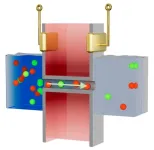
There is a largely untapped energy source along the world’s coastlines: the difference in salinity between seawater and freshwater. A new nanodevice can harness this difference to generate power. A team of researchers at the University of Illinois Urbana-Champaign has reported a design for a nanofluidic device capable of converting ionic flow into usable electric power in the journal Nano Energy. The team believes that their device could be used to extract power from the natural ionic flows at seawater-freshwater boundaries. “While our design is still a concept at this stage, it is quite versatile and already ...

Read the release
Solid-state NMR unveils fluoride ion channel permeation mechanism
Science

Solid-state NMR unveils fluoride ion channel permeation mechanism

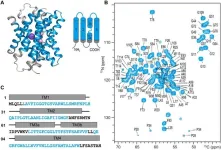
On August 23, 2023, a research team led by SHI Chaowei from the University of Science and Technology of China (USTC) of the Chinese Academy of Sciences (CAS) published a paper titled "Fluoride permeation mechanism of the Fluc channel in liposomes revealed by solid-state NMR" in Science Advances. The team adopted the fluoride ion channel protein Fluc-Ec1 combined with deuterium substitution and 19F labeling methods, paving a new path for membrane protein nuclear magnetic resonance (NMR) research. NMR not only provides insights into molecular structures ...

Read the release
Science

Five factors that assess well-being of science predict support for increasing US science funding

PHILADELPHIA – A study in the Proceedings of the National Academy of Sciences (PNAS) identifies five factors that Annenberg Public Policy Center (APPC) researchers say reflect public assessments of science and are associated with public support for increasing funding of science and support for federal funding of basic research. These factors are whether science and scientists are perceived to be credible and prudent, and whether their work is perceived to be untainted by bias, self-correcting, and beneficial. Drawing on 13 questions in APPC’s 2022 nationally representative ...

Read the release
Pollen analysis suggests peopling of Siberia and Europe by modern humans occurred during a major Pleistocene warming spell
Science

Pollen analysis suggests peopling of Siberia and Europe by modern humans occurred during a major Pleistocene warming spell

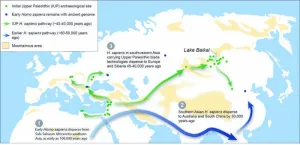
LAWRENCE — It’s an Ice Age mystery that’s been debated for decades among anthropologists: Exactly when and how did the flow of Homo sapiens in Eurasia happen? Did a cold snap or a warming spell drive early human movement from Africa into Europe and Asia? A new study appearing in Science Advances compares Pleistocene vegetation communities around Lake Baikal in Siberia, Russia, to the oldest archeological traces of Homo sapiens in the region. The researchers use the “remarkable evidence” to tell a compelling story from 45,000-50,000 years ago with new detail: how the first humans migrated across ...

Read the release
Probing the deep genetic structure of Africa
Science

Probing the deep genetic structure of Africa

Africa is the birthplace of modern humans and the continent with the highest level of genetic diversity. While ancient DNA studies are revealing some aspects of the genetic structure of Africa before the spread of food production, issues concerning DNA preservation have limited the insights from ancient DNA. Hoping to find clues in modern populations, researchers from a Portuguese-Angolan TwinLab ventured into the Angolan Namib desert – a remote, multi-ethnic region where different traditions met. “We were able to locate groups which were thought to have disappeared more than 50 years ago”, states Jorge ...

Read the release
Science

Discovery in mosquitoes could lead to new strategy against dengue fever and other mosquito-borne vectors

Researchers from the Johns Hopkins Malaria Research Institute at the Johns Hopkins Bloomberg School of Public Health have made an important finding about Aedes aegypti mosquitoes—one that could one day lead to better methods for reducing the mosquito-to-human transmission of dengue, yellow fever, Zika, and other harmful and sometimes deadly viruses. Ae. aegypti mosquitoes do not succumb to these viruses when infected and continue to move and feed normally. As such, the ...

Read the release
Brazilian researchers develop method of purifying water contaminated by glyphosate
Science

Brazilian researchers develop method of purifying water contaminated by glyphosate

Researchers at São Paulo State University (UNESP) in Brazil have developed a strategy for removing glyphosate, one of the world’s most frequently used herbicides, from water. Inspired by the concept of the circular economy, the technique is based on sugarcane bagasse, a waste material produced by sugar and ethanol plants. “Isolated and chemically functionalized sugarcane bagasse fibers can be used as adsorbent material. Glyphosate adheres to its surface and is removed as a water contaminant by filtration, decantation or centrifugation,” Maria ...

Read the release
Science

The role of the locus coeruleus. A blue stain linked to sleep

A study conducted by researchers at the University of Liège (BE) Institute, using ultra-high field 7 Tesla MRI, are providing a better understanding of how sleep is regulated. We've known for a long time that sleep is good for the brain. We also know that light is not just for seeing, but also plays an important role in other aspects such as mood. What we don't know is how all this happens in our brains. Two separate studies, carried out by researchers at the University of Liège using the 7 Tesla MRI on the GIGA-Centre de Recherche du Cyclotron platform, offer the ...

Read the release
Unraveling the mysteries of glassy liquids
Science

Unraveling the mysteries of glassy liquids

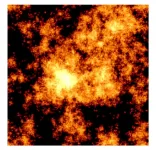
Glass, despite its apparent transparency and rigidity, is a complex and intriguing material. When a liquid is cooled to form a glass, its dynamics slows down significantly, resulting in its unique properties. This process, known as “glass transition”, has puzzled scientists for decades. But one of its intriguing aspects is the emergence of "dynamical heterogeneities," where the dynamics become increasingly correlated and intermittent as the liquid cools down and approaches the glass transition temperature. In a new study, researchers propose a new theoretical framework to explain these dynamical heterogeneities in glass-forming ...

Read the release
UNC-Chapel Hill research presents new development model for the world's third-longest river
Science

UNC-Chapel Hill research presents new development model for the world's third-longest river

A new research paper published in Science Advances reveals how changes in the size of the Yangtze River watershed may have led to the carving of deep canyons. In this study, UNC-Chapel Hill professor Eric Kirby and his co-authors explore the impact of drainage basin expansion on the growth of the Yangtze River. “This study presents a new model for when and how the Yangtze River was born,” said Kirby, “The Yangtze is one of the world’s great rivers, rising on the Tibetan Plateau at altitudes over 17,000 feet and descending ...

Read the release
Why are you better at recognizing upright faces? Clues from a person who sees the world differently
Science

Why are you better at recognizing upright faces? Clues from a person who sees the world differently

When you see a familiar face upright, you’ll recognize it right away. But if you saw that same face upside down, it’s much harder to place. Now researchers who’ve studied Claudio, a 42-year-old man whose head is rotated back almost 180 degrees such that it sits between his shoulder blades, suggest that the reason people are so good at processing upright faces has arisen through a combination of evolution and experience. The findings appear September 22 in the journal iScience. “Nearly everyone has far more experience with upright faces and ancestors whose reproduction ...

Read the release
From the original Press-News collection. Issuers of news releases are responsible for the accuracy of their content.