THE ORIGINAL COLLECTION · SINCE 2010

Science
press releases.

Research announcements from universities, hospitals and scientific institutions. Explore the stories, people and discoveries behind the headlines.

Original publication datesPage 480
FIND A STORY

Find a past release.

Dates and source material belong to the original release.

Read our research explainers

Browse the collection · original publication order

Why do we articulate more when speaking to babies and puppies?
Science

Why do we articulate more when speaking to babies and puppies?

Babies and puppies have at least two things in common: aside from being newborns, they promote a positive emotional state in human mothers, leading them to articulate better when they speak. This finding is the result of research by an international team1 that included Alejandrina Cristia, a CNRS Researcher at the Laboratoire de sciences cognitives et psycholinguistique (LSCP) (CNRS/EHESS/ENS-PSL). Scientists studied the vocal behaviour of ten mothers to better understand why mothers articulate more when speaking to infants. Participants were asked to ...

Read the release
Displays controlled by flexible fins and liquid droplets more versatile, efficient than LED screens
Science

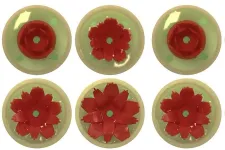
Displays controlled by flexible fins and liquid droplets more versatile, efficient than LED screens

CHAMPAIGN, Ill. — Flexible displays that can change color, convey information and even send veiled messages via infrared radiation are now possible, thanks to new research from the University of Illinois Urbana-Champaign. Engineers inspired by the morphing skins of animals like chameleons and octopuses have developed capillary-controlled robotic flapping fins to create switchable optical and infrared light multipixel displays that are 1,000 times more energy efficient than light-emitting devices. The new study led by mechanical science and engineering professor Sameh Tawfick demonstrates ...

Read the release
Scientists discover clues to aging and healing from a squishy sea creature
Science

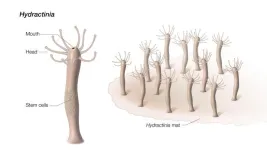
Scientists discover clues to aging and healing from a squishy sea creature

Insights into healing and aging were discovered by National Institutes of Health researchers and their collaborators, who studied how a tiny sea creature regenerates an entire new body from only its mouth. The researchers sequenced RNA from Hydractinia symbiolongicarpus, a small, tube-shaped animal that lives on the shells of hermit crabs. Just as the Hydractinia were beginning to regenerate new bodies, the researchers detected a molecular signature associated with the biological process of aging, also known as senescence. According to the study published in Cell Reports, Hydractinia demonstrates that the fundamental biological processes of healing and aging are intertwined, ...

Read the release
Electrosynthesis of 15N-labeled amino acids from 15N-nitrite and ketonic acids
Science

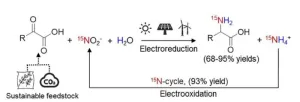
Electrosynthesis of 15N-labeled amino acids from 15N-nitrite and ketonic acids

15N isotope-labeled amino acids (15N-amino acids) provide a safe and effective tracer tool for studying the synthesis of natural products, protein metabolism, and disease diagnosis and treatment in living organisms. In addition, it is an important synthetic block for the synthesis of 15N-labeled drugs. Currently, 15N-labeled amino acids are generally synthesized by microbial fermentation and chemical reduction amination of ketoacids, but these methods usually require complex steps, high temperature conditions or the use of toxic cyanide, causing energy and environmental ...

Read the release
The device that can remotely and accurately monitor breathing: as tested on cane toads
Science

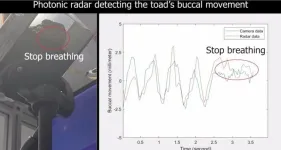
The device that can remotely and accurately monitor breathing: as tested on cane toads

Constant monitoring of vital health signs is needed in a variety of clinical environments such as intensive care units, for patients with critical health conditions, health monitoring in aged care facilities and prisons, or in safety monitoring situations where drowsiness can cause accidents. This is now mostly achieved via wired or invasive contact systems. However, these are either inconvenient or, for patients with burns or for infants with insufficient skin area, are unsuitable. Scientists at the University of Sydney Nano Institute and the NSW Smart Sensing ...

Read the release
Status of biobased production of succinic acid and derivatives
Science

Status of biobased production of succinic acid and derivatives

The current status and future perspectives on the successful industrialization of biobased succinic acid are discussed in a comprehensive review article in the peer-reviewed journal Industrial Biotechnology. Click here to read the article now. Succinic acid is one of the most important platform chemicals, with applications as a pharmaceutical ingredient, food additive, precursor of various chemicals, and raw material for biobased polymers. There is increasing demand for the sustainable production of succinic acid and its derivatives. Sang Yup Lee, from the Korea Advanced Institute of Science and Technology (KAIST), and coauthors, review ...

Read the release
Science

Nearly half of tuberculosis cases in prisons worldwide go undetected

In the first global assessment of TB among incarcerated people, a new study found consistently high TB case rates and low case detection in prisons, suggesting the need for health organizations to increase efforts to reduce the spread of TB among this high-risk population. In 2019, incarcerated people across the globe developed tuberculosis (TB) at nearly 10 times the rate of people in the general population, according to a new study led by Boston University School of Public Health (BUSPH). Published in The Lancet Public Health, the study found that 125,105 of the 11 million people incarcerated worldwide developed tuberculosis in 2019, ...

Read the release
Science

Non-invasive approach predicts retinopathy of prematurity earlier

Research from Ann & Robert H. Lurie Children’s Hospital of Chicago promises to spare many premature infants from undergoing invasive eye exams to detect retinopathy of prematurity (ROP), the most common cause of preventable lifelong blindness in children in the U.S. ROP is caused by an abnormal development of small blood vessels on the retina. Isabelle De Plaen, MD, and colleagues found that imaging the capillaries in the nailbed of preemies within the first month of life using a non-invasive technique, called nailbed capillaroscopy, can identify infants at high risk for developing ROP. This screening could eliminate the need to evaluate all premature infants with eye exams ...

Read the release
Science

Newly developed scoring system can correctly predict suicide risk after self harm

A newly developed risk calculator that is based on 11 key social, demographic, and clinical factors, can correctly predict suicide risk in those who have self-harmed within the following 6 to 12 months, suggests research published in the open access journal BMJ Mental Health. Pending further validation, OxSATS, short for Oxford Suicide Assessment Tool for Self-harm, may help inform treatment decisions and the most effective targeting of resources, suggest the researchers. Self-harm is associated with a heightened risk of suicide within the following 12 months that ...

Read the release
Science

1.3 million disabled workers trapped in insecure work in UK – and 430,000 want to work more hours

Disabled workers are 1.5 times more likely than non-disabled to be in severely insecure work Disabled women are more than twice as likely to be in severely insecure work than disabled men Autistic workers (38%) and those with mental health conditions (28%) are most likely to be severely insecure work New research by the Work Foundation at Lancaster University reveals 1.3 million* disabled workers are trapped in severely insecure work in the UK – and 430,000 say they want to work more hours. Disabled workers are 1.5 times ...

Read the release
Four firms receive ORNL small business awards
Science

Four firms receive ORNL small business awards

Four firms doing business with the Department of Energy’s Oak Ridge National Laboratory received ORNL Small Business Awards during an awards ceremony on June 29. The companies were recognized by the lab’s Small Business Programs Office for their specific capabilities, contributions and strategic problem-solving that often led to cost savings for ORNL. "Small businesses are essential to ORNL delivering on our mission each day,” interim ORNL Director Jeff Smith said. “It is important that ...

Read the release
Science

Historical Redlining May Be Linked to Current Kidney Failure

FOR IMMEDIATE RELEASE Contact: Jillian McKoy, jpmckoy@bu.edu Michael Saunders, msaunder@bu.edu ## Historical Redlining May Be Linked to Current Kidney Failure New study shows that long-term disinvestment in health and wealth resources in historically redlined neighborhoods likely contributes to a disproportionate rate of kidney failure among Black adults today. Living ...

Read the release
Honey bees more faithful to their flower patches than bumble bees
Science

Honey bees more faithful to their flower patches than bumble bees

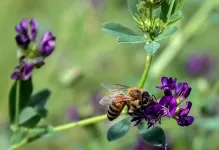
Kim Kaplan 301-588-5314 Kim.Kaplan@usda.gov Honey Bees More Faithful to Their Flower Patches Than Bumble Bees MADISON, WI, June 29, 2023—Honey bees are more faithful to their flower patches than bumble bees when it comes to returning to collect more pollen and nectar, according to a study by U.S. Department of Agriculture Agricultural Research Service scientists. Overall, 76 percent of honey bees in the study revisited the same plot of alfalfa flowers in contrast to just 47 percent of eastern bumble bees. But size does matter, especially to bumble bees. They were more faithful to larger flower patches, while the likelihood of honey bees returning to a flower patch ...

Read the release
Where there’s smoke, there’s fire – and normal numbers of national park visitors
Science

Where there’s smoke, there’s fire – and normal numbers of national park visitors

More Americans than ever are heeding the call of the outdoors – spending time recreating outside and enjoying national parks. Simultaneously, smoky skies are worsening as the size and severity of wildfires increase and adversely affect air quality across the country. Wildfire smoke threatens human health and welfare, especially if humans are exposed to smoke for long periods or while exercising – such as during a hiking trip to one of America’s beloved national parks. Matthew Clark, a doctoral student at Boise State University studying how social and environmental ...

Read the release
Science

Tobacco smoke exposure may increase heavy metal levels in children’s saliva

UNIVERSITY PARK, Pa. — Secondhand tobacco smoke continues to be a major source of indoor air pollution that causes more than 41,000 nonsmoking adults to die every year in the United States, according to the Centers for Disease Control and Prevention. The exposure is even more dire for children, who can be more affected by less smoke. It can increase frequency and severity of asthma attacks, respiratory infections, cancer, sudden infant death syndrome and behavioral problems. Now, for the first time, Penn State-led research has shown exposure to tobacco smoke increases the presence of heavy metals in children’s saliva. The ...

Read the release
Science

How the cat nose knows what it’s smelling

COLUMBUS, Ohio – Scientists have found the secret to felines’ finesse at sniffing out food, friends and foes. A complex collection of tightly coiled bony airway structures gets the credit, according to the first detailed analysis of the domestic cat’s nasal airway. The researchers created a 3D computer model of the cat nose and simulated how an inhalation of air containing common cat food odors would flow through the coiled structures. They found that the air separates into two flow streams, one that is cleansed and humidified and another delivering the odorant quickly and efficiently to the system responsible for ...

Read the release
Chemists develop new method to create chiral structures
Science

Chemists develop new method to create chiral structures

RIVERSIDE, Calif. -- Some molecules exist in two forms such that their structures and their mirror images are not superimposable, like our left and right hands. Called chirality, it is a property these molecules have due to their asymmetry. Chiral molecules tend to be optically active because of how they interact with light. Oftentimes, only one form of a chiral molecule exists in nature, for example, DNA. Interestingly, if a chiral molecule works well as a drug, its mirror image could be ineffective for therapy. In ...

Read the release
Science

Improvement to CRISPR gene editing could make it more effective

DURHAM, N.C. – CRISPR gene editing is a breakthrough that has been used to treat diseases such as sickle cell anemia, leukemia and genetic disorders, but it has challenges that limit its broad utility. Identifying the root of those issues led a research team at Duke Health to find an improved approach to gene editing that expands its functionality. In work appearing online June 29 in the journal Cell Chemical Biology, the researchers lay out a new way to identify diverse CRISPR RNA variants that can specifically home in on challenging areas of DNA to target for editing. The new approach opens up more of the genome for editing, ...

Read the release
Science

Water fasts can help you lose weight, but you might gain it back quickly

Water fasts — where people consume nothing but water for several days — might help you lose weight, but it’s unclear how long you’ll keep it off, according to research from the University of Illinois Chicago. And the other metabolic benefits of water fasts, such as lower blood pressure and improved cholesterol, seem to disappear soon after the fast ends, the researchers found. However, there do not appear to be any serious adverse effects for those who do a water fast or a similar kind of fast where people consume a very small number of calories a day, said Krista Varady, professor of kinesiology and nutrition, who led the research, ...

Read the release
Faster, safer target prep
Science

Faster, safer target prep

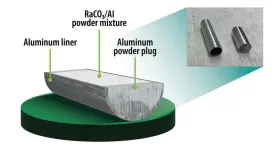
Oak Ridge National Laboratory researchers have developed a method to simplify one step of radioisotope production — and it’s faster and safer. ORNL produces several radionuclides from irradiated radium-226 targets, including actinium-227 and thorium-228, both used in cancer treatments. Continuously improving isotopes for human health is one of the lab’s missions. Currently, it takes workers two weeks to prepare radium-226 targets for irradiation in the High Flux Isotope Reactor. The targets are exposed to radiation throughout the process, which involves pressing radium carbonate aluminum composite into 10 pellets — one each day — and sealing ...

Read the release
Transferring data with many colors of light simultaneously
Science

Transferring data with many colors of light simultaneously

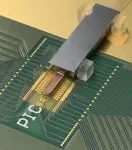
New York, NY—June 29, 2023—The data centers and high-performance computers that run artificial intelligence programs, such as large language models, aren’t limited by the sheer computational power of their individual nodes. It’s another problem — the amount of data they can transfer among the nodes — that underlies the “bandwidth bottleneck” that currently limits the performance and scaling of these systems. The nodes in these systems can be separated by more than one kilometer. Since metal wires dissipate electrical signals as heat when transferring data at high speeds, these systems transfer data via fiber-optic ...

Read the release
Cracking the tubulin code
Science

Cracking the tubulin code

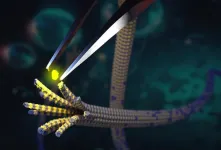
Tubulin is a protein that plays a crucial role in the structure and function of cells. It is the main component of microtubules, which are long, hollow fibers that provide structural support, help the cell divide, give it its shape, and act as tracks for moving molecular cargo around inside the cell. There are two types of tubulin: alpha-tubulin and beta-tubulin. Together, they form dimeric (two-part) building blocks, spontaneously assembling into microtubules that undergo further continuous cycles of assembly and disassembly. The tubulin code To fine-tune microtubules, the dimers undergo various post-translational modifications (PTMs), which are chemical modifications that occur ...

Read the release
Amander T. Clark takes on new role as President of the ISSCR
Science

Amander T. Clark takes on new role as President of the ISSCR

Skokie, IL – The ISSCR is pleased to announce Amander T. Clark, PhD, Professor of Molecular, Cell and Developmental Biology, University of California, Los Angeles (UCLA), USA, as its President. Dr. Clark’s one-year term of office leading the global society begins 1 July 2023. “I will work to ensure that the society continues to defend stem cell science and the researchers working to transform lives,” Dr. Clark said at the ISSCR 2023 Annual Meeting in Boston this month. “We will expand our engagement with the public ...

Read the release
City of Hope appoints David W. Craig, Ph.D., as founding chair of its new Department of Integrative Translational Sciences within its Beckman Research Institute
Science

City of Hope appoints David W. Craig, Ph.D., as founding chair of its new Department of Integrative Translational Sciences within its Beckman Research Institute

LOS ANGELES — City of Hope, one of the largest cancer research and treatment organizations in the United States and a leading research center for diabetes and other life-threatening illnesses, today announced that effective June 30, David W. Craig, Ph.D., will be professor and founding chair of its newly created Department of Integrative Translational Sciences within Beckman Research Institute of City of Hope. Craig also will serve as deputy director of translational sciences at Beckman Research Institute and associate ...

Read the release
Science

A seed survival story: How trees keep ‘friends’ close and ‘enemies’ guessing

UNIVERSITY PARK — Around the globe, forests are facing unprecedented challenges. They're grappling with wildfires, diseases, droughts and deforestation. The survival of these great forests hinges on their ability to regrow — and for many trees, a process called "masting" is key to this regeneration. Masting — the unpredictable boom-and-bust cycle of seed production — can have profound consequences for plant populations and the food webs that are built on their seeds. But the complex relationship between seed-production cycles and seed consumers ...

Read the release
From the original Press-News collection. Issuers of news releases are responsible for the accuracy of their content.