THE ORIGINAL COLLECTION · SINCE 2010

Science
press releases.

Research announcements from universities, hospitals and scientific institutions. Explore the stories, people and discoveries behind the headlines.

Original publication datesPage 479
FIND A STORY

Find a past release.

Dates and source material belong to the original release.

Read our research explainers

Browse the collection · original publication order

Investigational three-month TB regimen is safe but ineffective, NIH study finds
Science

Investigational three-month TB regimen is safe but ineffective, NIH study finds

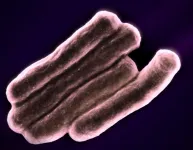
The first clinical trial of a three-month tuberculosis (TB) treatment regimen is closing enrollment because of a high rate of unfavorable outcomes with the investigational course of treatment. AIDS Clinical Trials Group 5362, also known as the CLO-FAST trial, sought to evaluate the safety and efficacy of a three-month clofazimine- and high-dose rifapentine-containing regimen. An interim data analysis showed that participants taking the investigational regimen experienced ongoing or recurring TB at rates above thresholds set in the study protocol. Based on these findings, ...

Read the release
Public support for militarily defending NATO allies
Science

Public support for militarily defending NATO allies

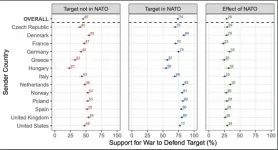
Voters in North Atlantic Treaty Organization (NATO) member states are far more willing to militarily defend another country if the country joins NATO, versus if the same country does not join NATO, according to a study. To explore the possible consequences of expanding NATO membership, Michael Tomz and colleagues surveyed 14,000 voters in 13 NATO countries. Each survey participant was presented with a hypothetical Russian attack on one of four possible targets: Bosnia, Finland, Georgia, or Sweden—the four countries (other than Ukraine) furthest along in their bids for NATO accession at the time of ...

Read the release
Researchers map Austria's pig trade network for the first time
Science

Researchers map Austria's pig trade network for the first time

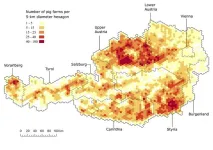
The transfer of pigs from one place to another poses the risk of spreading infectious diseases. Knowing how holdings (e.g., farms, markets, etc.) are connected is therefore of crucial importance. In a study by the Complexity Science Hub, the University of Veterinary Medicine Vienna, and the Austrian Agency for Health and Food Safety (AGES), researchers are now drawing a map of the Austrian pig trade for the first time. Every year, around 250,000 transfers of pigs take place in Austria. Each of these transfers carries a certain risk of spreading swine infectious diseases. To identify possible risks of disease spread and ...

Read the release
Science

Similar to humans, elephants also vary what they eat for dinner every night

PROVIDENCE, R.I. [Brown University] — Elephants eat plants. That’s common knowledge to biologists and animal-loving schoolchildren alike. Yet figuring out exactly what kind of plants the iconic herbivores eat is more complicated. A new study from a global team that included Brown conservation biologists used innovative methods to efficiently and precisely analyze the dietary habits of two groups of elephants in Kenya, down to the specific types of plants eaten by which animals in the group. Their findings on the habits of ...

Read the release
Apex predator of the Cambrian likely sought soft over crunchy prey
Science

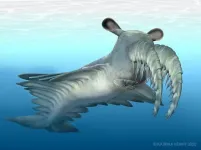
Apex predator of the Cambrian likely sought soft over crunchy prey

Biomechanical studies on the arachnid-like front “legs” of an extinct apex predator show that the 2-foot (60-centimeter) marine animal Anomalocaris canadensis was likely much weaker than once assumed. One of the largest animals to live during the Cambrian, it was probably agile and fast, darting after soft prey in the open water rather than pursuing hard-shelled creatures on the ocean floor. The study is published today in the journal Proceedings of the Royal Society B. First discovered in the late 1800s, Anomalocaris canadensis—which means “weird shrimp from Canada” in Latin—has long been thought to be responsible ...

Read the release
Warmer and murkier waters favour predators of guppies, study finds
Science

Warmer and murkier waters favour predators of guppies, study finds

Changes in water conditions interact to affect how Trinidadian guppies protect themselves from predators, scientists at the University of Bristol have discovered. Known stressors, such as increased temperature and reduced visibility, when combined, cause this fish to avoid a predator less, and importantly, form looser protective shoals. The findings, published today in the journal Proceedings of the Royal Society B, show guppies’ responses are more affected by the interaction of these stressors than if they acted independently. Natural ...

Read the release
Vineyard fungicides pose a threat to survival of wild birds
Science

Vineyard fungicides pose a threat to survival of wild birds

New research reveals that wild birds living in vineyards can be highly susceptible to contamination by triazole fungicides, more so than in other agricultural landscapes. Exposure to these fungicides at a field-realistic level were found to disrupt hormones and metabolism, which can impact bird reproduction and survival. “We found that birds can be highly contaminated by triazoles in vineyards,” says Dr Frédéric Angelier, Senior Researcher at the French National Center for Scientific Research, France. “This contamination was much higher in vineyards relative to other crops, emphasizing that contaminants may especially put birds at risk in these ...

Read the release
Omega-3 oil counteracts toxic effects of pesticides in pollinators
Science

Omega-3 oil counteracts toxic effects of pesticides in pollinators

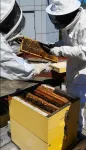
New research suggests that the use of an omega-3 rich oil called “ahiflower oil” can prevent damage to honey bee mitochondria caused by neonicotinoid pesticides. This research is part of an ongoing project by PhD student Hichem Menail of the Université de Moncton in New Brunswick, Canada. “Pesticides are a major threat to insect populations and as insects are at the core of ecosystem richness and balance, any loss in insect biodiversity can lead to catastrophic outcome,” says Mr Menail, adding that pesticide-related pollinator declines are also a huge concern for food crops globally. Imidacloprid, ...

Read the release
Luísa Figueiredo was elected as an EMBO member
Science

Luísa Figueiredo was elected as an EMBO member

The European Molecular Biology Organization (EMBO) has announced today that it will award the lifetime honor of EMBO Membership to Luísa Figueiredo, group leader at the Instituto de Medicina Molecular João Lobo Antunes (iMM, Lisbon, Portugal), in recognition of the excellence of her research and outstanding achievements in the life sciences. EMBO is an international organization of more than 2000 life scientists in Europe and around the world, committed to build a European research environment where scientists can achieve their best work. Aside from Luísa Figueiredo, 68 other EMBO Members have been elected this year. Luísa ...

Read the release
Science

Older adults who remain more active have a better quality of life, study finds

A reduction in the amount of time spent physically active when adults are over sixty years old is linked to lower quality of life, a Cambridge study of almost 1,500 adults has shown. The same was also true for increases in the amount of sedentary time, such as watching TV or reading. The researchers say this highlights the need to encourage older adults to remain active. Physical activity – particularly when it is moderate-intensity and raises your heart rate – is known to reduce the risk of a number of diseases, including heart disease, stroke, diabetes and cancer. The NHS recommends that adults do at least 150 minutes of moderate-intensity activity ...

Read the release
Science

Researchers develop tool that could improve liquid biopsy

A research team led by Xianghong Jasmine Zhou, PhD, professor of Pathology and Laboratory Medicine at the David Geffen School of Medicine at UCLA, has made an important advancement to address one of the major challenges in cell-free DNA (cfDNA) testing, also known as liquid biopsy. They’ve identified specific methylation patterns unique to each tissue, potentially helping to Identify the specific tissue or organ associated with cfDNA alterations picked up by testing, a critical challenge for accurate diagnosis and monitoring of diseases. Cell-free DNA has significant potential in disease detection and monitoring. However, accurately quantifying tissue-derived ...

Read the release
Science

Birds raise fewer young when spring arrives earlier in a warming world

Rising global temperatures are making it harder for birds to know when it’s spring and time to breed according to a new study published in Proceedings of the National Academy of Sciences. A large collaboration led by scientists at UCLA and Michigan State University has found that birds produce fewer young if they start breeding too early or late in the season. With climate change resulting in earlier springlike weather, the researchers report, birds have been unable to keep pace. And, the authors write, the mismatch between the ...

Read the release
Science

Chemists discover why photosynthetic light-harvesting is so efficient

When photosynthetic cells absorb light from the sun, packets of energy called photons leap between a series of light-harvesting proteins until they reach the photosynthetic reaction center. There, cells convert the energy into electrons, which eventually power the production of sugar molecules. This transfer of energy through the light-harvesting complex occurs with extremely high efficiency: Nearly every photon of light absorbed generates an electron, a phenomenon known as near-unity quantum efficiency. A new study from MIT chemists offers a potential explanation for how proteins of the light-harvesting complex, also called the antenna, achieve that ...

Read the release
Planting seeds: FSU researchers dig into how chemical gardens grow
Science

Planting seeds: FSU researchers dig into how chemical gardens grow

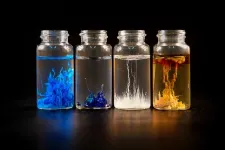
EMBARGOED UNTIL JULY 3 AT 3 P.M. ET FOR IMMEDIATE RELEASE CONTACT: Kathleen Haughney, University Communications (850) 644-1489; khaughney@fsu.edu July 2023 PLANTING SEEDS: FSU RESEARCHERS DIG INTO HOW CHEMICAL GARDENS GROW TALLAHASSEE, Fla. — Since the mid-1600s, chemists have been fascinated with brightly colored, coral-like structures that form by mixing metal salts in a small bottle. Until now, researchers have been unable to model how these deceptively simple tubular structures —called chemical gardens — work and the patterns and rules that ...

Read the release
Understanding the regulation of apicoplast gene expression in the malaria parasite
Science

Understanding the regulation of apicoplast gene expression in the malaria parasite

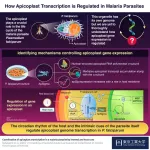
Gene expression within the apicoplast, an organelle in the malaria parasite Plasmodium falciparum, is regulated by melatonin (the circadian signaling hormone) in host blood, and intrinsic parasite cues, via a factor called ApSigma, as identified by a recent study aided by Tokyo Tech’s World Research Hub Initiative. The regulatory system highlighted in this study might be a future target for malaria treatment. Malaria is one of the biggest public health risks, with around 240 million people from across the globe contracting it every year. However, this life-threatening disease is ...

Read the release
First direct visualization of a zero-field pair density wave
Science

First direct visualization of a zero-field pair density wave

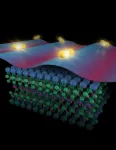
UPTON, NY—In the field of superconductivity—the phenomenon in which electrons can flow through a material with essentially zero resistance—the “holy grail” of discovery is a superconductor that can perform under everyday temperatures and pressures. Such a material could revolutionize modern life. But currently, even the “high-temperature” (high-Tc) superconductors that have been discovered must be kept very cold to function—too cold for most applications. Scientists still have much to learn before room-temperature ...

Read the release
Science

Kabbani to receive funding for study of mitochondrial targeting and regulation

Nadine Kabbani, Associate Professor, School of Systems Biology, is set to receive $100,000 from Charles Morgan for: "Mitochondrial Targeting and Regulation." This funding will begin in July 2023 and will end in July 2025. Regarding the importance of the project, Kabbani said, "Studies suggest an important role for mitochondrial regulation in many human diseases. The targeting of mitochondrial processes has thus emerged as an important strategy in drug design and biomarker discovery. In addition, mitochondrial responses are especially useful in toxicity testing for medical and environmental applications. The goal of this project is to identify mitochondrial ...

Read the release
Science

Associations of food insecurity and memory function among middle to older–age adults

About The Study: Food insecurity was associated with slightly faster memory decline among middle to older–age individuals, suggesting possible long-term negative cognitive function outcomes associated with exposure to food insecurity in older age. Authors: Adina Zeki Al Hazzouri, Ph.D., of Columbia University in New York, is the corresponding author. To access the embargoed study: Visit our For The Media website at this link https://media.jamanetwork.com/ (doi:10.1001/jamanetworkopen.2023.21474) Editor’s ...

Read the release
Science

Trends in mortality from poisonings, firearms, and all other injuries by intent

About The Study: The results of this study suggest that from 1999 to 2020, death rates due to poisonings, firearms, and all other injuries increased substantially in the U.S. The rapid increase in deaths due to unintentional poisonings and firearm homicides is a national emergency that requires urgent public health interventions at the local and national levels. Authors: Wayne R. Lawrence, Dr.P.H., of the National Institutes of Health in Bethesda, Maryland, is the corresponding author. To ...

Read the release
Science

Everything in balance? How a molecular switch controls lipid metabolism

Our body’s fat metabolism plays a vital role in energy production in our body. A research team at the University of Basel, Switzerland, has discovered a molecular switch that regulates lipid metabolism in our cells. This switch controls the storage or conversion of lipids into energy. All organisms need energy to live. We get energy from various components of our food. Our body uses a part of this energy directly and stores the rest. While glucose serves as an immediately available energy source, fats are stored as energy reserve in form of lipid droplets within our cells. When the body needs energy from these fat stores, lipids are transported ...

Read the release
Science

A UCLA-led team has received a $925,000 CDC grant to track mpox outbreaks across the US

The effort is led by Dr. David Talan, a professor of emergency medicine and infectious diseases in the UCLA Department of Emergency Medicine at the David Geffen School of Medicine at UCLA. Summer 2022 saw an outbreak of the disease that infected people in several countries across the globe. That outbreak receded by the following fall after widespread public attention and vaccination of high-risk individuals, prompting the World Health Organization on May 11, 2023 to declare an end to mpox as a global health emergency. But a recent outbreak among 20 people in Chicago, including some vaccine breakthrough ...

Read the release
Science

New approaches against the consequences of birth asphyxia

Brain damage caused by oxygen deficiency at birth is one of the main causes of death in newborns worldwide. Using a small animal model, researchers from the University Hospital Bonn (UKB) and DZNE tested treatment with 25 different active agents. Seven substances proved to be more effective than the standard therapy of artificial cooling: caffeine performed best. The results, published in the scientific journal Scientific Reports, could pave the way for new treatment options for newborns. Children, who experience ...

Read the release
Virtual exploration of chemical reactions
Science

Virtual exploration of chemical reactions

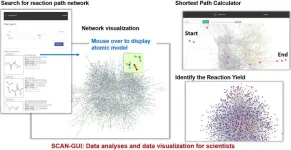
A new online platform to explore computationally calculated chemical reaction pathways has been released, allowing for in-depth understanding and design of chemical reactions. Advances in computational chemistry have proven a great boon in the field of reaction design, leading to the discovery of new reaction pathways for the synthesis of high-value compounds. Computational chemistry generates much data, and the process of organizing and visualizing this data is vital to be able to utilize it for future research. A team of researchers from Hokkaido University, led by Professor Keisuke Takahashi at the Faculty of Chemistry and Professor Satoshi ...

Read the release
Vaginal suppository containing lactobacilli can prevent recurrent cystitis in women
Science

Vaginal suppository containing lactobacilli can prevent recurrent cystitis in women

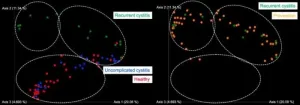
Recurrent cystitis (RC) is a frequent infection of the urinary tract and bladder, which is highly prevalent among postmenopausal women. Under healthy circumstances, the human vagina is home to a host of beneficial intestinal bacteria, such as Lactobacilli. However, in the case of urinary tract infections (UTIs), there is a decrease in the abundance of Lactobacilli and an increase in pathogenic bacteria, such as Escherichia coli (E. coli). Previous studies have shown that changes in vaginal microbiota are a key underlying reason for the development of UTIs. Further, a few clinical trials have demonstrated the utility of Lactobacillus-containing vaginal ...

Read the release
Amazon dolphins at risk from fishing, dams and dredging
Science

Amazon dolphins at risk from fishing, dams and dredging

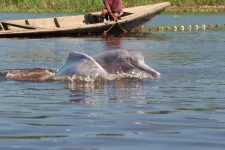
Amazon river dolphins are under threat from fishing and proposed new dams and dredging, research shows. Scientists used satellite tags to track eight dolphins in the Peruvian Amazon, to discover where they went in relation to fishing areas and proposed dams and dredging sites. On average, 89% of the dolphins’ home “range” (the area they live in) was used for fishing. Dolphins were found to be an average of 252km from the nearest proposed dam and 125km from the nearest proposed dredging site. While these are significant distances, the dolphins’ ranges ...

Read the release
From the original Press-News collection. Issuers of news releases are responsible for the accuracy of their content.