THE ORIGINAL COLLECTION · SINCE 2010

Science
press releases.

Research announcements from universities, hospitals and scientific institutions. Explore the stories, people and discoveries behind the headlines.

Original publication datesPage 492
FIND A STORY

Find a past release.

Dates and source material belong to the original release.

Read our research explainers

Browse the collection · original publication order

Science

New high-tech helmets may protect American football players from debilitating concussions

Millions of people in the US are concussed every year playing sports. Players of games like American football are at particularly high risk for injuries that can have devastating long-term consequences. Stanford University scientists working with the company Savior Brain have now designed one potential way of protecting players: a helmet containing liquid shock absorbers that could reduce the impact of blows to the head by a third. “Most of the members of our team have a personal connection to traumatic brain injury and we care deeply about ensuring long-term ...

Read the release

Science

LGB adults at higher risk of suicidal thoughts and self-harm

Lesbian, gay and bisexual (LGB) people are more than twice as likely than their straight peers to experience suicidal thoughts or self-harming behaviours, finds a new study led by UCL researchers. The study, published in Social Psychiatry and Psychiatric Epidemiology, is the first ever to analyse nationally representative data on sexual orientation and suicidality in England whilst being able to compare individual sexual minority groups. The researchers analysed data combined from two household surveys of 10,443 English adults (aged 16 and over), representative of the population, sampled in 2007 and 2014. As ...

Read the release
Incomplete imaging for transient ischemic attack emergencies increases stroke risk
Science

Incomplete imaging for transient ischemic attack emergencies increases stroke risk

Leesburg, VA, June 8, 2023—According to an accepted manuscript published in ARRS’ own American Journal of Roentgenology (AJR), transient ischemic attack (TIA) emergency department (ED) encounters with incomplete neurovascular imaging were associated with higher odds of subsequent stroke within 90 days. “Increased access to urgent neurovascular imaging in patients with TIA may represent a target that could facilitate detection and treatment of modifiable stroke risk factors,” wrote first author Vincent M. Timpone, MD, from the department of radiology at the University of Colorado Hospital in Aurora. Timpone et al. ...

Read the release
Science

New in the Hastings Center Report, May-June 2023 Issue

Examining the Ethics and Impacts of Laws Restricting Transgender Youth‐Athlete Participation Valerie Moyer, Amanda Zink, Brendan Parent As of this writing, 21 states have passed laws barring transgender youth-athletes from competing on public school sports teams in accordance with their gender identity. Proponents of these regulations claim that transgender females in particular have inherent physiological advantages that threaten a “level playing field” for their cisgender competitors. Existing evidence is limited but does not support these restrictions. Gathering more robust ...

Read the release
Science

Hallucinogen use other than LSD on the rise among young adults

ANN ARBOR—Young adults ages 19 to 30 nearly doubled their past 12-month use of non-LSD hallucinogens in the United States from 2018 to 2021, according to a study by the University of Michigan and Columbia University. In 2018, the prevalence of young adults' past-year use of non-LSD hallucinogens was 3.4%. In 2021, that use increased to 6.6%. "While non-LSD hallucinogen use remains substantially less prevalent than use of substances such as alcohol and cannabis, a doubling of prevalence in just three years is a ...

Read the release
Science

Seaweed farming may help tackle global food insecurity

To help solve hunger and malnutrition while also slowing climate change, some farmers could shift from land to sea, suggests a recent study from the Friedman School of Nutrition Science and Policy at Tufts University. The study was published in Global Food Security. Producing and selling seaweed could boost incomes for farmers in low- and middle-income countries (LMICs), particularly in coastal regions of Africa and Southeast Asia, said Patrick Webb, the Alexander McFarlane Professor of Nutrition at the Friedman School and senior author of the study. The other ...

Read the release
Why certain fish are left off the hook
Science

Why certain fish are left off the hook

As warming waters threaten fish populations and disrupt fisheries around the world, it is critical to find ways to sustain fisheries while at the same time allowing those fisheries to remain economically viable to those who depend on them for their livelihoods. In the United States, commercial fishing employs 1.2 million Americans and generates more than $165 billion annually. The primary way that the United States has protected its fisheries is through the Magnuson-Stevens Act, which was modernized in 1996 to foster the long-term biological and economic sustainability ...

Read the release
Science

Resuscitation after on-field cardiac arrest should start with teammates

It is well known that early resuscitation with cardiopulmonary resuscitation (CPR) and an automated external defibrillator (AED) saves lives, and in most sports-related sudden cardiac arrest events, trainers or medical personnel respond and initiate protocols to resuscitate a player while other athletes standby. However, time to treatment is critical, so the ability for a fellow athlete to recognize sports-related sudden cardiac arrest and initiate resuscitation while medical personnel arrive is crucial in a life-threatening event where seconds matter. However, in a new study presented at the American ...

Read the release
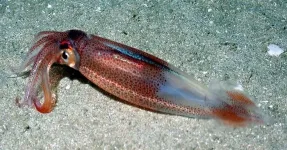
When water temperatures change, the molecular motors of cephalopods do too
Science

When water temperatures change, the molecular motors of cephalopods do too

Cephalopods are a large family of marine animals that includes octopuses, cuttlefish and squid. They live in every ocean, from warm, shallow tropical waters to near-freezing, abyssal depths. More remarkably, report two scientists at University of California San Diego in a new study, at least some cephalopods possess the ability to recode protein motors within cells to adapt “on the fly” to different water temperatures. Writing in the June 8, 2023 edition of Cell, first author Kavita J. Rangan, ...

Read the release
Science

Comparing doctors to peers doesn’t make them hate their jobs and may improve quality of care, new USC Schaeffer study finds

June 8, 2023 — Showing people how their behavior compares to their peers is a commonly used method to improve behavior. But in the wake of a global pandemic that exacerbated health care providers’ job dissatisfaction and burnout, questions remain about the potentially negative effects of peer comparison on the well-being of clinicians. A new study from the USC Schaeffer Center for Health Policy & Economics reveals fresh insights into the relationship between peer comparison and job satisfaction among clinicians. Published in JAMA Network Open, the study challenges prior findings that such feedback increases job dissatisfaction and burnout. Researchers ...

Read the release
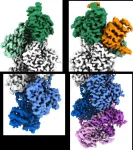
Study unravels the mysteries of actin filament polarity
Science

Study unravels the mysteries of actin filament polarity

Actin filaments — protein structures critical to living movement from single cells to animals — have long been known to have polarity associated with their physical characteristics, with growing “barbed” and shrinking “pointed” ends. The ends of the filament are also different in the way they interact with other proteins in cells. However, the mechanism that determines these differences has never been entirely clear to scientists. Now, researchers from the Perelman School of Medicine at the University of Pennsylvania have revealed key atomic structures of ...

Read the release
Science

Colorful foods improve athletes’ vision

Nutrition is an important part of any top athlete’s training program. And now, a new study by researchers from the University of Georgia proposes that supplementing the diet of athletes with colorful fruits and vegetables could improve their visual range. The paper, which was published in Exercise and Sport Sciences Reviews, examines how a group of plant compounds that build up in the retina, known as macular pigments, work to improve eye health and functional vision. Previous studies done by UGA researchers Billy R. Hammond and ...

Read the release
Science

Research puts lens on a new vision for land use decision making

A new framework for making better and more transparent decisions about the use of our land could help to balance society’s demands upon it with protecting and enhancing the environment. Researchers led by the University of Leicester have proposed a framework for decisions on land use, from nationwide policymaking to building happening at street level, that would involve the most representative range of stakeholders, from those with financial interests in the land to the local communities who use it and more besides. Now published in the journal People and Nature, it encourages decisionmakers ...

Read the release
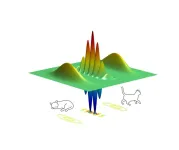
Schrödinger’s cat makes better qubits
Science

Schrödinger’s cat makes better qubits

Quantum computing uses the principles of quantum mechanics to encode and elaborate data, meaning that it could one day solve computational problems that are intractable with current computers. While the latter work with bits, which represent either a 0 or a 1, quantum computers use quantum bits, or qubits – the fundamental units of quantum information. “With applications ranging from drug discovery to optimization and simulations of complex biological systems and materials, quantum computing has the potential to reshape vast areas of science, industry, and society,” says ...

Read the release
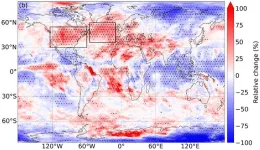
Aviation turbulence strengthened as the world warmed — study
Science

Aviation turbulence strengthened as the world warmed — study

The skies aircraft fly through are bumpier today than four decades ago, scientists have found, after producing a new analysis showing that turbulence has increased as the climate changed. New research from the University of Reading shows that clear-air turbulence, which is invisible and hazardous to aircraft, has increased in various regions around the world. At a typical point over the North Atlantic – one of the world’s busiest flight routes – the total ...

Read the release
Topological phase protection reams to sub-symmetry
Science

Topological phase protection reams to sub-symmetry

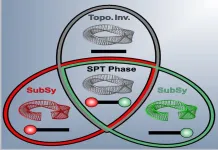
An international team led by researchers at Nankai University in China and at University of Zagreb in Croatia, along with team at the Institut national de la recherche scientifique (INRS) in Canada, led by Roberto Morandotti has made an important breakthrough in the study of topological phases. Their findings were recently published in Nature Physics – a journal published by Nature Publishing Group. In the last decade, topological photonics has attracted increasing attention due to the unique prospects to achieve light manipulation with high performance in terms of robustness and stability. Discoveries in topological photonics ...

Read the release
Science

Shirley Ryan AbilityLab receives $8.7 Million NIH grant for first-of-its-kind bionic arm osseointegration study

Today, an estimated 41,000 people in the United States live with the loss of an upper limb, including hundreds of service men and women. Although significant progress has been made in the durability, control and function of upper-limb prosthetic devices, they lack complete integration into the body and, importantly, do not enable their users to feel. Now, with the award of an $8.7 million grant from the National Institutes of Health (NIH), Shirley Ryan AbilityLab — the top-ranked physical medicine and rehabilitation hospital — and its research partners have an opportunity ...

Read the release
Science

Gradual supported release of primates into the wild shown as effective

Gradually re-introducing primates into the wild with post-release support has, for the first time, been scientifically shown to improve their well-being. Every year, rescue centres release animals, that are deemed ready, into the wild, based on the assumption that the animals will thrive most in their natural habitat, but this assumption has never been scientifically tested with primates. A team from Durham University, Disney’s Animals, Science and Environment and the Jane Goodall Institute ...

Read the release
Essential investment in plant and microbial research in Norwich, UK, confirmed
Science

Essential investment in plant and microbial research in Norwich, UK, confirmed

Development of an exciting, ground-breaking plant and microbial science and innovation hub can go ahead with confirmation of funding announced today. The transformational investment will fund new cutting-edge, world-class facilities for the John Innes Centre (JIC) and The Sainsbury Laboratory (TSL) at the heart of the Norwich Research Park. This will deliver a step change in our capability to translate scientific knowledge into bio-based solutions in response to some of society’s most pressing challenges. As well as transforming the existing capabilities of the John Innes Centre and The Sainsbury Laboratory, both internationally recognised ...

Read the release
Science

What your likes, posts really say about you

The myriad ways in which we use social media can be grouped into four broad categories, each of which is associated with a cluster of specific personality and behavioral traits, suggests new research from Washington University in St. Louis. “Social media is here to stay, so clarifying how people use social media and raising awareness of these findings are crucial first steps toward ultimately helping people understand how they can avoid the negative aspects of social networking and engage in healthier social media usage,” said Alison B. Tuck, first author of the study and a PhD candidate in clinical psychology in Arts & Sciences. The study, published online ...

Read the release
Scientists develop inorganic resins for generating and purifying radium and actinium
Science

Scientists develop inorganic resins for generating and purifying radium and actinium

The Science Targeted alpha therapy can destroy cancerous cells without harming healthy cells. It’s especially useful for treating metastasized cancers. The Department of Energy (DOE) Office of Science’s Isotope Program is developing and marketing novel radioactive isotopes for targeted alpha therapy. One method of making one isotope, actinium-225, involves bombarding radium targets with neutrons. This method poses a challenge: how to chemically separate the radium from the actinium. This can destroy typical separation equipment due to a radioactive process called alpha decay. Now, researchers ...

Read the release
Science

New research: Maybe crying in baseball is a good thing?

ITHACA, N.Y. – Venturing out of one’s comfort zone to perform a task – and then performing poorly in that task, such as a baseball pitcher trying to hit – can lead to better performance when returning to one’s specialty, according to new research. Brittany Bond, an assistant professor of organizational behavior in the Cornell School of Industrial and Labor Relations, and Ethan J. Poskanzer of the University of Colorado argue that this phenomenon occurs through a process they call “forced task inferiority,” in which underperformance in tasks outside their specialty frustrates ...

Read the release
Science

Trouble falling asleep, staying asleep linked to increased risk of stroke

MINNEAPOLIS – People who have insomnia symptoms such as trouble falling asleep, staying asleep and waking up too early, may be more likely to have a stroke, according to a study published in the June 7, 2023, online issue of Neurology®, the medical journal of the American Academy of Neurology. In addition, researchers found the risk was much higher in people under 50 years old. The study does not prove that insomnia symptoms cause stroke; it only shows an association. “There are many therapies that can help people improve the quality of their sleep, so determining which sleep ...

Read the release
Science

Creating less-allergenic shrimp using pressure and steam

With the start of summer, many people will be firing up their grills and roasting everything from hot dogs to steaks. Shrimp won’t be on the menu for millions of Americans with seafood allergies, though a method reported in ACS’ Journal of Agricultural and Food Chemistry could change that. The researchers say that reverse-pressure sterilization can produce a less-allergenic shrimp product that, when tested in mice sensitive to the crustaceans, did not cause severe reactions. Some of the most common foods that people are allergic to are dairy products, wheat, peanuts and seafood. The immune system mistakes some proteins from these foods for an intruder and ...

Read the release
Science

MD Anderson Research Highlights for June 7, 2023

HOUSTON ― The University of Texas MD Anderson Cancer Center’s Research Highlights showcases the latest breakthroughs in cancer care, research and prevention. These advances are made possible through seamless collaboration between MD Anderson’s world-leading clinicians and scientists, bringing discoveries from the lab to the clinic and back. Recent developments include a molecularly driven Phase I trial of the ATR inhibitor camonsertib, an artificial intelligence model to predict immunotherapy responses in lung cancer, an analysis of cognitive and functional outcomes following treatment ...

Read the release
From the original Press-News collection. Issuers of news releases are responsible for the accuracy of their content.