THE ORIGINAL COLLECTION · SINCE 2010

Space
press releases.

Research announcements from universities, hospitals and scientific institutions. Explore the stories, people and discoveries behind the headlines.

Original publication datesPage 33
FIND A STORY

Find a past release.

Dates and source material belong to the original release.

Read our research explainers

Browse the collection · original publication order

Astronomers spot 18 black holes gobbling up nearby stars
Space

Astronomers spot 18 black holes gobbling up nearby stars

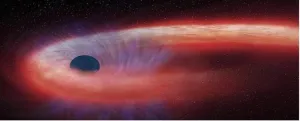
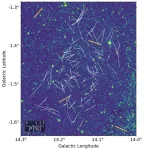
Star-shredding black holes are everywhere in the sky if you just know how to look for them. That’s one message from a new study by MIT scientists, appearing today in the Astrophysical Journal. The study’s authors are reporting the discovery of 18 new tidal disruption events (TDEs) — extreme instances when a nearby star is tidally drawn into a black hole and ripped to shreds. As the black hole feasts, it gives off an enormous burst of energy across the electromagnetic spectrum. Astronomers have detected previous tidal disruption events by looking for characteristic bursts in the optical and X-ray bands. To date, these searches have ...

Read the release
Lopsided galaxies shed light on the speed of dark matter
Space

Lopsided galaxies shed light on the speed of dark matter

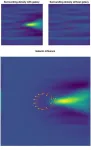
So how can the speed of dark matter be measured? The prerequisite is to find a galaxy in the universe that moves relative to dark matter. Since everything in the universe is in motion and there is a great deal of dark matter, it is not difficult to find such galaxies. Heavy objects, like galaxies, attract all types of matter, whether it is dark matter or visible matter that we encounter on a daily basis. As dark matter moves past a galaxy, the galaxy begins to pull the dark matter particles towards it. However, the change of speed direction of the particles takes time. Before ...

Read the release
Confirmation of ancient lake on Mars builds excitement for Perseverance rover's samples
Space

Confirmation of ancient lake on Mars builds excitement for Perseverance rover's samples

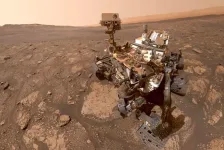
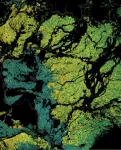
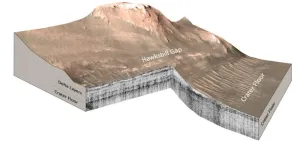
If life ever existed on Mars, the Perseverance rover’s verification of lake sediments at the base of the Jezero crater reinforces the hope that traces might be found in the crater. In new research published in the journal Science Advances, a team led by UCLA and The University of Oslo shows that at some point, the crater filled with water, depositing layers of sediments on the crater floor. The lake subsequently shrank and sediments carried by the river that fed it formed an enormous delta. As the lake dissipated over time, the sediments in the crater were eroded, forming ...

Read the release
Astrophysical jet caught in a “speed trap”
Space

Astrophysical jet caught in a “speed trap”

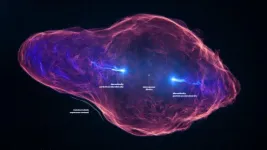
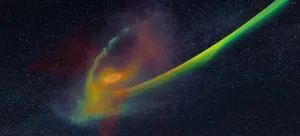
The science fiction author Arthur C. Clarke selected his own seven wonders of the world in a BBC television series in 1997. The only astronomical object he included was SS 433. It had attracted attention already in the late 1970s due to its X-ray emission and was later discovered to be at the center of a gas nebula that is dubbed the manatee nebula due to its unique shape resembling these aquatic mammals. SS 433 is a binary star system in which a black hole, with a mass approximately ten times that of the Sun, and a star, with a similar mass but occupying a much larger volume, orbit each other with ...

Read the release
These male marsupials give up sleep for sex
Space

These male marsupials give up sleep for sex

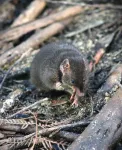
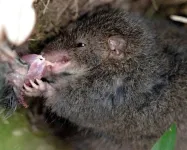
All animals need sleep. When humans or animals don’t get enough, it can lead to trouble paying attention, irritability, and other ill effects. And yet, researchers reporting in the journal Current Biology on January 25 have made the surprising discovery that a small Australian marsupial called an antechinus will sacrifice hours of sleep per night to make more time for sex during the mating season. The researchers say the multi-year study is the first to show direct evidence for this type of sleep restriction in any land-dwelling mammal. It’s a trade-off between sleep and reproduction that they say is likely driven by ...

Read the release
New satellite capable of measuring Earth precipitation from space
Space

New satellite capable of measuring Earth precipitation from space

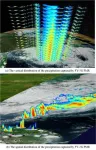
Measuring the amount of precipitation that falls in a specific location is simple if that location has a device designed to accurately record and transmit precipitation data. In contrast, measuring the amount and type of precipitation that falls to Earth in every location is logistically quite difficult. Importantly, this information could provide a wealth of data for characterizing and predicting Earth’s water, energy and biogeochemical cycles. Researchers from China recently deployed a satellite, FengYun 3G (FY-3G), that is successfully collecting Earth precipitation data from space. Scientists from the China Meteorological Administration developed and launched ...

Read the release
The moon is shrinking, causing landslides and instability in lunar south pole
Space

The moon is shrinking, causing landslides and instability in lunar south pole

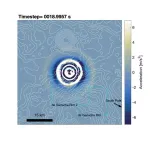
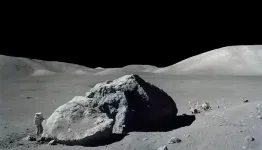
Earth’s moon shrank more than 150 feet in circumference as its core gradually cooled over the last few hundred million years. In much the same way a grape wrinkles when it shrinks down to a raisin, the moon also develops creases as it shrinks. But unlike the flexible skin on a grape, the moon’s surface is brittle, causing faults to form where sections of crust push against one another. A team of scientists discovered evidence that this continuing shrinkage of the moon led to notable surface warping in its south polar ...

Read the release
UTSA researchers reveal faint features in galaxy NGC 5728 though JWST image techniques
Space

UTSA researchers reveal faint features in galaxy NGC 5728 though JWST image techniques

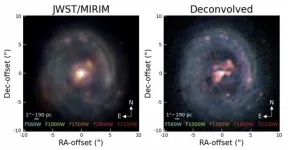
(SAN ANTONIO, TEXAS) — Mason Leist is working remotely—127 million light-years from Earth—on images of a supermassive black hole in his office at the UTSA Department of Physics and Astronomy. The UTSA Graduate Research Assistant led a study, published in The Astronomical Journal, on the best method to improve images obtained by the James Webb Science Telescope (JWST) using a mathematical approach called deconvolution. He was tasked by the Galactic Activity, Torus, and Outflow Survey (GATOS), an international team of scientists, to enhance JWST observations of the galaxy NGC 5728. The GATOS team, co-led by UTSA Professor and Leist’s doctoral ...

Read the release
Atmospheric pressure changes could be driving Mars’ elusive methane pulses
Space

Atmospheric pressure changes could be driving Mars’ elusive methane pulses

New research shows that atmospheric pressure fluctuations that pull gases up from underground could be responsible for releasing subsurface methane into Mars’ atmosphere; knowing when and where to look for methane can help the Curiosity rover search for signs of life. “Understanding Mars’ methane variations has been highlighted by NASA’s Curiosity team as the next key step towards figuring out where it comes from,” said John Ortiz, a graduate student at Los Alamos National Laboratory who led the research team. “There are several challenges associated with meeting that goal, ...

Read the release
Space-based landscape site perception: Teaching principles and methods for the basic course of landscape architecture
Space

Space-based landscape site perception: Teaching principles and methods for the basic course of landscape architecture

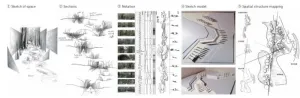
Replacing abstract form-making training with the perception of landscape site has been an important trend in the basic course of landscape architecture. Based on theoretical research and the authors’ teaching practice, this article aims to explore the significance, objects, and methods of site perception training. The authors argue that because landscape design is stemmed from the perception and interpretation of site characteristics, experiencing landscape sites must precede form-making training to become the foundation of design learning. Human-scale spaces that concern elements, structure, processes, and feelings for perception, representation, ...

Read the release
Motion of satellite galaxies suggests younger universe
Space

Motion of satellite galaxies suggests younger universe

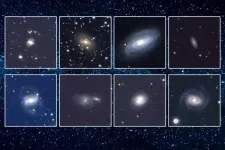
In standard cosmological models, the formation of cosmological structures begins with the emergence of small structures, which subsequently undergo hierarchical merging, leading to the formation of larger systems. As the Universe ages, massive galaxy groups and clusters, being the largest systems, tend to increase in mass and reach a more dynamically relaxed state. The motions of satellite galaxies around these groups and clusters provide valuable insights into their assembly status. The observations of such motion offer crucial clues about the age of the Universe. By using public data from the Sloan Digital Sky Survey (SDSS), a research team led by Prof. GUO ...

Read the release
Space

Planetary Commons: Fostering global cooperation to safeguard critical Earth system functions

“Stability and wealth of nations and our civilisation depends on the stability of critical Earth system functions that operate beyond national borders. At the same time, human activities push harder and harder on the planetary boundaries of these pivotal systems. From the Amazon rainforest to the Greenland ice masses, there are rising risks of triggering irreversible and unmanageable shifts in Earth system functioning. As these shifts affect people across the globe, we argue that tipping elements should be ...

Read the release
Mini marsupial goes from sex fests to cannibal feasts
Space

Mini marsupial goes from sex fests to cannibal feasts

Associate Professor Andrew Baker from QUT School of Biology and Environmental Science said antechinuses are carnivorous marsupials well-known for suicidal sex sessions where all males die after the 1 to 3 week breeding period. “During the breeding season, male and females mate promiscuously in frenzied bouts lasting as long as 14 hours. Certain stress-induced death follows for all males as surging testosterone causes cortisol to flood uncontrolled through the body, reaching pathological levels,” Professor Baker said. “The males drop dead, which provides an opportunity ...

Read the release
Origin of intense light in supermassive black holes and tidal disruption events revealed
Space

Origin of intense light in supermassive black holes and tidal disruption events revealed

A new study by Hebrew University is a significant breakthrough in understanding Tidal Disruption Events (TDEs) involving supermassive black holes. The new simulations, for the first time ever, accurately replicate the entire sequence of a TDE from stellar disruption to the peak luminosity of the resulting flare. This study has unveiled a previously unknown type of shockwave within TDEs, settling a longstanding debate about the energy source of the brightest phases in these events. It confirms that shock dissipation powers the brightest weeks ...

Read the release
Space

Astronomers detect oldest black hole ever observed

Researchers have discovered the oldest black hole ever observed, dating from the dawn of the universe, and found that it is ‘eating’ its host galaxy to death. The international team, led by the University of Cambridge, used the NASA/ESA/CSA James Webb Space Telescope (JWST) to detect the black hole, which dates from 400 million years after the big bang, more than 13 billion years ago. The results, which lead author Professor Roberto Maiolino says are “a giant leap forward”, are reported ...

Read the release
A new, rigorous assessment of OpenET accuracy for supporting satellite-based water management
Space

A new, rigorous assessment of OpenET accuracy for supporting satellite-based water management

Sustainable water management is an increasing concern in arid regions around the world, and scientists and regulators are turning to remote sensing tools like OpenET to help track and manage water resources. OpenET uses publicly available data produced by NASA and USGS Landsat and other satellite systems to calculate evapotranspiration (ET), or the amount of water lost to the atmosphere through soil evaporation and plant transpiration, at the level of individual fields. This tool has the potential to revolutionize water management, allowing for field-scale ...

Read the release
Research sheds new light on Moon rock formation solving major puzzle in lunar geology
Space

Research sheds new light on Moon rock formation solving major puzzle in lunar geology

New research has cracked a vital process in the creation of a unique rock type from the Moon. The discovery explains its signature composition and very presence on the lunar surface at all, unravelling a mystery which has long eluded scientists. The study, published today in Nature Geoscience, reveals a key step in the genesis of these distinctive magmas. A combination of high temperature laboratory experiments using molten rocks, together with sophisticated isotopic analyses of lunar samples, identify a critical reaction that controls their composition. This reaction took place in the deep lunar interior some three and a half ...

Read the release
Space

NASA analysis confirms 2023 as warmest year on record

Earth’s average surface temperature in 2023 was the warmest on record, according to an analysis by NASA. Global temperatures last year were around 2.1 degrees Fahrenheit (1.2 degrees Celsius) above the average for NASA’s baseline period (1951-1980), scientists from NASA’s Goddard Institute for Space Studies (GISS) in New York reported. “NASA and NOAA’s global temperature report confirms what billions of people around the world experienced last year; we are facing a climate ...

Read the release
Close encounters of the supermassive black hole kind: tidal disruption events and what they can reveal about black holes and stars in distant galaxies
Space

Close encounters of the supermassive black hole kind: tidal disruption events and what they can reveal about black holes and stars in distant galaxies

At the center of most large galaxies lives a supermassive black hole (SMBH). The Milky Way has Sagittarius A*, a mostly dormant SMBH whose mass is around 4.3 million times that of the sun. But if you look deeper into the universe, there are vastly larger SMBHs with masses that can reach up to tens of billions of times the mass of our sun. Black holes grow in mass by gravitationally consuming objects in their near vicinity, including stars. It’s a catastrophic and destructive end for stars unlucky enough to be swallowed by SMBHs, but fortunate for scientists who now have an opportunity to probe otherwise-dormant centers of galaxies. TDEs Light the Way As the name ...

Read the release
Our surprising magnetic galaxy
Space

Our surprising magnetic galaxy

A team of astronomers including those from the University of Tokyo created the first-ever map of magnetic field structures within a spiral arm of our Milky Way galaxy. Previous studies on galactic magnetic fields only gave a very general picture, but the new study reveals that magnetic fields in the spiral arms of our galaxy break away from this general picture significantly and are tilted away from the galactic average by a high degree. The findings suggest magnetic fields strongly impact star-forming regions which means they played a part in the creation of our own solar system. It might come as a surprise to ...

Read the release
John E. Carlstrom wins 2024 Dannie Heineman Prize for Astrophysics
Space

John E. Carlstrom wins 2024 Dannie Heineman Prize for Astrophysics

WASHINGTON, Jan. 11, 2024 – The Heineman Foundation, American Institute of Physics, and American Astronomical Society are pleased to announce John E. Carlstrom as the winner of the 2024 Dannie Heineman Prize for Astrophysics. Carlstrom was selected “for pioneering work on microwave interferometry and his leading role in the development of the South Pole Telescope, leading to the observations of clusters of galaxies through the Sunyaev-Zeldovich effect, B-Mode polarization in the cosmic microwave background and strong evidence for a flat universe, all of which changed the field for generations to come.” “AIP congratulates ...

Read the release
Space

Potential solvents identified for building on moon and Mars

PULLMAN, Wash. -- Researchers have taken the first steps toward finding liquid solvents that may someday help extract critical building materials from lunar and Martian-rock dust, an important piece in making long-term space travel possible. Using machine learning and computational modeling, Washington State University researchers have found about half a dozen good candidates for solvents that can extract materials on the moon and Mars usable in 3D printing. The work, reported in the Journal of Physical Chemistry B, is led by Soumik Banerjee, associate professor in WSU’s School of Mechanical ...

Read the release
Exciplex route to white OLEDs: the role of spacer
Space

Exciplex route to white OLEDs: the role of spacer

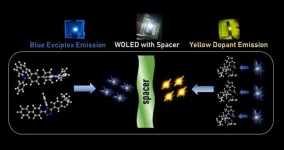
Organic light emitting diodes (OLEDs) have matured to commercial level. Yet, their widespread market adoption is hindered due to high costs and complicated device architecture. Researchers are actively exploring innovative device engineering strategies to circumvent these issues. Narayanan Unni and co-workers have tried to address the above challenges by exploiting a concept called exciplex. Exciplex emission is possible at the interface of two different materials which may not be luminescent themselves. This provides an opportunity to use relatively cheaper materials instead of costly fluorescent or phosphorescent emitter materials. They ...

Read the release
NASA’s Webb discovers dusty ‘cat’s tail’ in Beta Pictoris System
Space

NASA’s Webb discovers dusty ‘cat’s tail’ in Beta Pictoris System

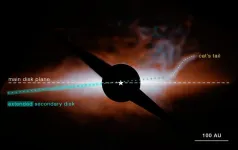
Beta Pictoris, a young planetary system located just 63 light-years away, continues to intrigue scientists even after decades of in-depth study. It possesses the first dust disk imaged around another star — a disk of debris produced by collisions between asteroids, comets, and planetesimals. Observations from NASA’s Hubble Space Telescope revealed a second debris disk in this system, inclined with respect to the outer disk, which was seen first. Now, a team of astronomers using NASA’s James Webb Space Telescope to image the Beta Pictoris system (Beta Pic) has discovered a new, previously unseen structure. The ...

Read the release
NASA’s Webb finds signs of possible aurorae on isolated brown dwarf
Space

NASA’s Webb finds signs of possible aurorae on isolated brown dwarf

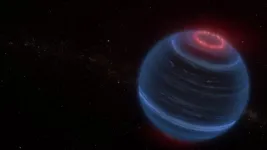
Astronomers using NASA’s James Webb Space Telescope have found a brown dwarf (an object more massive than Jupiter but smaller than a star) with infrared emission from methane, likely due to energy in its upper atmosphere. This is an unexpected discovery because the brown dwarf, W1935, is cold and lacks a host star; therefore, there is no obvious source for the upper atmosphere energy. The team speculates that the methane emission may be due to processes generating aurorae. These findings are being presented at the 243rd meeting of the American Astronomical Society in New Orleans. To help explain the mystery of the infrared ...

Read the release
From the original Press-News collection. Issuers of news releases are responsible for the accuracy of their content.