THE ORIGINAL COLLECTION · SINCE 2010

Space
press releases.

Research announcements from universities, hospitals and scientific institutions. Explore the stories, people and discoveries behind the headlines.

Original publication datesPage 34
FIND A STORY

Find a past release.

Dates and source material belong to the original release.

Read our research explainers

Browse the collection · original publication order

A Jupiter-sized planet has been hiding a big secret: A 350,000-mile-long tail
Space

A Jupiter-sized planet has been hiding a big secret: A 350,000-mile-long tail

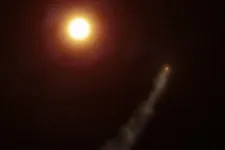
Key takeaways Astrophysicists have found that a large exoplanet known as WASP-69b is being trailed by a tail of gas seven times as long as the planet itself. The comet-like tail is the result of the planet’s gas atmosphere being burned off as it passes precariously close to the hot star it orbits and stretched by stellar winds. By studying this process in real time, scientists can better understand how thousands of other planets in our galaxy have evolved. WASP-69b is having a hot girl summer that never ends. The huge gaseous exoplanet, roughly the size of Jupiter and approximately ...

Read the release
Final supernova results from Dark Energy Survey offer unique insights into the expansion of the universe
Space

Final supernova results from Dark Energy Survey offer unique insights into the expansion of the universe

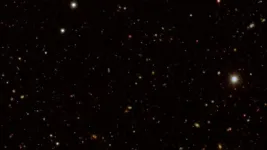
In 1998, astrophysicists discovered that the universe is expanding at an accelerating rate, attributed to a mysterious entity called dark energy that makes up about 70% of our universe. While foreshadowed by earlier measurements, the discovery was somewhat of a surprise; at the time, astrophysicists agreed that the universe’s expansion should be slowing down because of gravity. This revolutionary discovery, which astrophysicists achieved with observations of specific kinds of exploding stars, called type Ia (read “type one-A”) ...

Read the release
SwRI awarded $54 million contract to develop QuickSounder weather satellite
Space

SwRI awarded $54 million contract to develop QuickSounder weather satellite

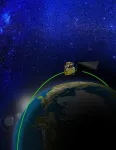
SAN ANTONIO — January 8, 2024 —NASA and NOAA have selected Southwest Research Institute (SwRI) to develop QuickSounder, the first in a new generation of NOAA low-Earth orbit environmental satellites. Under the $54 million contract, SwRI will design and build the satellite and operate it for three years. QuickSounder will kick off NOAA’s Near Earth Orbit Network (NEON) program. The Near Earth Orbit Network is a collaborative mission between NASA and NOAA. NASA will manage the development and launch of the satellites for NOAA, which will operate them and deliver data to users worldwide. NEON satellites ...

Read the release
Three iron rings in a planet-forming disk
Space

Three iron rings in a planet-forming disk

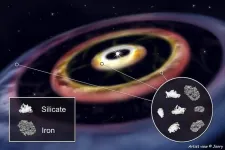
The origin of Earth and the Solar System inspires scientists and the public alike. By studying the present state of our home planet and other objects in the Solar System, researchers have developed a detailed picture of the conditions when they evolved from a disk made of dust and gas surrounding the infant sun some 4.5 billion years ago. Three rings hinting at two planets With the breathtaking progress made in star and planet formation research aiming at far-away celestial objects, we can now investigate the conditions in environments around young stars and compare them to the ones derived for the early Solar System. Using the European Southern Observatory’s (ESO) Very Large ...

Read the release
NASA/JAXA XRISM mission reveals its first look at X-ray cosmos
Space

NASA/JAXA XRISM mission reveals its first look at X-ray cosmos

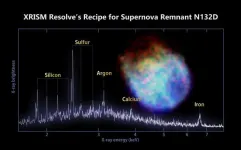
The Japan-led XRISM (X-ray Imaging and Spectroscopy Mission) observatory has released a first look at the unprecedented data it will collect when science operations begin later this year. The satellite’s science team released a snapshot of a cluster of hundreds of galaxies and a spectrum of stellar wreckage in a neighboring galaxy, which gives scientists a detailed look at its chemical makeup. “XRISM will provide the international science community with a new glimpse of the hidden X-ray sky,” said Richard Kelley, the ...

Read the release
Magnetic fields in the Cosmos: dark matter could help us discover their origin
Space

Magnetic fields in the Cosmos: dark matter could help us discover their origin

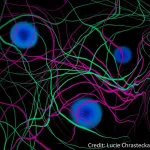
The mini-halos of dark matter scattered throughout the Cosmos could function as highly sensitive probes of primordial magnetic fields. This is what emerges from a theoretical study conducted by SISSA and published in Physical Review Letters. Present on immense scales, magnetic fields are found everywhere in the Universe. However, their origin are still subjects of debate among scholars. An intriguing possibility is that magnetic fields originated near the birth of the universe itself, that is they are primordial magnetic fields. In the study, researchers showed that if magnetic fields are indeed primordial then it could cause an increase in dark matter density perturbations ...

Read the release
Designing the ‘perfect’ meal to feed long-term space travelers
Space

Designing the ‘perfect’ meal to feed long-term space travelers

Imagine blasting off on a multiyear voyage to Mars, fueled by a diet of bland, prepackaged meals. As space agencies plan for longer missions, they’re grappling with the challenge of how to best feed people. Now, researchers reporting in ACS Food Science & Technology have designed the optimal “space meal”: a tasty vegetarian salad. They chose fresh ingredients that meet male astronauts’ specialized nutritional needs and can be grown in space. Astronauts in space burn ...

Read the release
Space

Sodium’s high-pressure transformation can tell us about the interiors of stars, planets

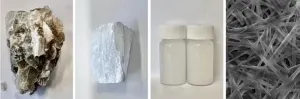
Travel deep enough below Earth’s surface or inside the center of the Sun, and matter changes on an atomic level. The mounting pressure within stars and planets can cause metals to become nonconducting insulators. Sodium has been shown to transform from a shiny, gray-colored metal into a transparent, glass-like insulator when squeezed hard enough. Now, a University at Buffalo-led study has revealed the chemical bonding behind this particular high-pressure phenomenon. While it’s been theorized that high pressure essentially squeezes sodium’s electrons out into the spaces between atoms, researchers’ quantum chemical ...

Read the release
Space

Scientists discover new way to identify liquid water on exoplanets

Scientists have devised a new way to identify habitable planets and potentially inhabited planets, by comparing the amount of carbon dioxide in their atmosphere, to neighbouring planets. An international team of researchers from the University of Birmingham (UK), the Massachusetts Institute of Technology (MIT) (US) and elsewhere, have shown that if a planet has a reduced amount of CO2 in its atmosphere compared to neighbouring planets, it suggests there is liquid water on that planet’s surface. The drop in CO2 levels implies ...

Read the release
Hubble sights a galaxy with ‘forbidden’ light
Space

Hubble sights a galaxy with ‘forbidden’ light

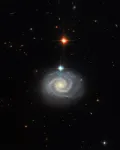
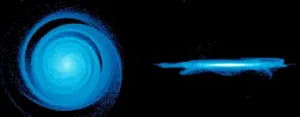
This whirling image features a bright spiral galaxy known as MCG-01-24-014, which is located about 275 million light-years from Earth. In addition to being a well-defined spiral galaxy, MCG-01-24-014 has an extremely energetic core known as an active galactic nucleus (AGN) and is categorized as a Type-2 Seyfert galaxy. Seyfert galaxies, along with quasars, host one of the most common subclasses of AGN. While the precise categorization of AGNs is nuanced, Seyfert galaxies tend to be relatively nearby and their central AGN does not outshine its host, while quasars are very distant AGNs with incredible luminosities that outshine ...

Read the release
Jupiter was targeted by exoplanet hunter
Space

Jupiter was targeted by exoplanet hunter

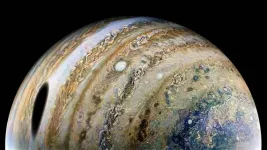
For the first time, an instrument to find planets light years away was used on an object in the Solar System, in a study on Jupiter's winds. We find ourselves at a time when it has become almost commonplace to discover planets orbiting another star, with more than 5,000 already registered. The first distant worlds to incorporate this list were mainly giant planets, similar to but also very different in many ways from Jupiter and Saturn. Astrophysicists have already begun to obtain data on the atmospheres of exoplanets, but fundamental ...

Read the release
NASA’s Hubble watches ‘spoke season’ on Saturn
Space

NASA’s Hubble watches ‘spoke season’ on Saturn

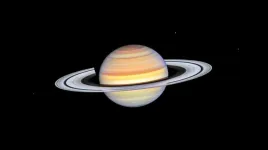
This photo of Saturn was taken by NASA's Hubble Space Telescope on October 22, 2023, when the ringed planet was approximately 850 million miles from Earth. Hubble's ultra-sharp vision reveals a phenomenon called ring spokes. Saturn's spokes are transient features that rotate along with the rings. Their ghostly appearance only persists for two or three rotations around Saturn. During active periods, freshly-formed spokes continuously add to the pattern. In 1981, NASA's Voyager 2 first photographed the ring spokes. NASA's Cassini orbiter also saw the spokes during its 13-year-long mission that ended in 2017. Hubble continues ...

Read the release
Astronomers detect seismic ripples in ancient galactic disk
Space

Astronomers detect seismic ripples in ancient galactic disk

A new snapshot of an ancient, far-off galaxy could help scientists understand how it formed and the origins of our own Milky Way. At more than 12 billion years old, BRI 1335-0417 is the oldest and furthest known spiral galaxy in our universe. Lead author Dr Takafumi Tsukui said a state-of-the-art telescope called ALMA allowed them to look at this ancient galaxy in much greater detail. “Specifically, we were interested in how gas was moving into and throughout the galaxy,” Dr Tsukui said. “Gas is a key ingredient for forming stars and can give ...

Read the release
Space

Organic compounds in asteroids formed in colder regions of space: study

Analysis of organic compounds – called polycyclic aromatic hydrocarbons (PAHs) – extracted from the Ryugu asteroid and Murchison meteorite has found that certain PAHs likely formed in the cold areas of space between stars rather than in hot regions near stars as was previously thought. The findings open new possibilities for studying life beyond Earth and the chemistry of objects in space. The only Australian members of an international research team, scientists from Curtin’s WA-Organic ...

Read the release
Pancake stack of films on a balloon most accurate gamma-ray telescope
Space

Pancake stack of films on a balloon most accurate gamma-ray telescope

A pancake stack of radioactivity-sensitive films carried through the sky by a balloon was able to take the world's most accurate picture of a neutron star's gamma ray beam. To achieve this, Kobe University researchers combined the oldest method of capturing radioactive radiation with the newest data capturing techniques and a clever time-recording device. The stars shine their light on us in the full range of the spectrum of light, from infra-red to gamma rays. For each of these bands, different sensing equipment is needed. The most challenging one is gamma rays, famous for being a high-energy product of nuclear fission, ...

Read the release
New 1.5-billion-pixel ESO image shows Running Chicken Nebula in unprecedented detail
Space

New 1.5-billion-pixel ESO image shows Running Chicken Nebula in unprecedented detail

While many holiday traditions involve feasts of turkey, soba noodles, latkes or Pan de Pascua, this year, the European Southern Observatory (ESO) is bringing you a holiday chicken. The so-called Running Chicken Nebula, home to young stars in the making, is revealed in spectacular detail in this 1.5-billion-pixel image captured by the VLT Survey Telescope (VST), hosted at ESO’s Paranal site in Chile. This vast stellar nursery is located in the constellation Centaurus (the Centaur), at about 6500 light-years from Earth. Young stars within this nebula emit intense radiation that makes the surrounding hydrogen gas glow in shades ...

Read the release
One small material, one giant leap for life on Mars: Sussex research takes us a step closer to sustaining human life on the red planet
Space

One small material, one giant leap for life on Mars: Sussex research takes us a step closer to sustaining human life on the red planet

A mineral found on the surface of Mars offers potential to create sustainable energy Uses ‘waste’ product from recent NASA research to create transformative nanomaterials Findings could play role in shaping sustainable habitation on the red planet – and clean energy production back home Researchers at the University of Sussex have discovered the transformative potential of Martian nanomaterials, potentially opening the door to sustainable habitation on the red planet. Using resources and techniques currently applied on the International Space Station and by NASA, Dr Conor Boland, a Lecturer in Materials Physics at the University of Sussex, led a ...

Read the release
NASA’s Webb rings in holidays with ringed planet Uranus
Space

NASA’s Webb rings in holidays with ringed planet Uranus

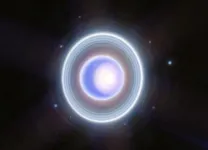
NASA’s James Webb Space Telescope recently trained its sights on unusual and enigmatic Uranus, an ice giant that spins on its side. Webb captured this dynamic world with rings, moons, storms, and other atmospheric features – including a seasonal polar cap. The image expands upon a two-color version released earlier this year, adding additional wavelength coverage for a more detailed look. With its exquisite sensitivity, Webb captured Uranus’ dim inner and outer rings, including the ...

Read the release
Astronomers discover first population of binary stripped stars
Space

Astronomers discover first population of binary stripped stars

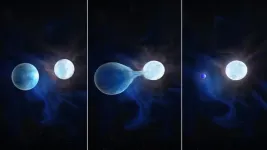
Astronomers at the University of Toronto have discovered a population of massive stars that have been stripped of their hydrogen envelopes by their companions in binary systems. The findings, published today in Science, shed light on the hot helium stars that are believed to be the origins of hydrogen-poor core-collapse supernovae and neutron star mergers. For over a decade, scientists have theorized that approximately one in three massive stars are stripped of their hydrogen envelope in binary systems. Yet, until now, only one possible candidate had been identified. “This was such a big, glaring hole,” says co-lead author ...

Read the release
Space

14-inch spacecraft delivers new details about ‘hot Jupiters'

A spacecraft the size of a cereal box has collected precise measurements of the atmospheres of large and puffy planets called “hot Jupiters.” The findings, led by a team from the University of Colorado Boulder, could help reveal how the atmospheres around these and a host of other worlds are escaping into space. The observations are the first results to come from a hard-working NASA spacecraft known as the Colorado Ultraviolet Transit Experiment (CUTE). Kevin France, principal investigator for the mission, will present the group’s results at a media availability Monday, Dec. 11 at 4:30 p.m. at the 2023 meeting of the American ...

Read the release
NASA’s Webb stuns with new high-definition look at exploded star
Space

NASA’s Webb stuns with new high-definition look at exploded star

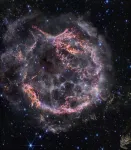
Like a shiny, round ornament ready to be placed in the perfect spot on a holiday tree, supernova remnant Cassiopeia A (Cas A) gleams in a new image from NASA’s James Webb Space Telescope. As part of the 2023 Holidays at the White House, First Lady of the United States Dr. Jill Biden debuted the first-ever White House Advent Calendar. To showcase the “Magic, Wonder, and Joy” of the holiday season, Dr. Biden and NASA are celebrating with this new image from Webb. While all ...

Read the release
Rail industry urged to consider safety risks of space weather
Space

Rail industry urged to consider safety risks of space weather

Train accidents could be caused by solar storms switching signalling from red to green according to new research examining the impact of space weather. Solar storms can trigger powerful magnetic disturbances on Earth, creating geomagnetically induced currents (GICs) which could potentially interfere with electricity transmission and distribution grids. A team led by PhD researcher Cameron Patterson and Professor Jim Wild from Lancaster University modelled how GICs flowed through the track circuits of AC electrified lines powered with overhead cables. Using two routes - the Preston to Lancaster section of the West ...

Read the release
Scholars say it's time to declare a new epoch on the moon, the 'lunar Anthropocene'
Space

Scholars say it's time to declare a new epoch on the moon, the 'lunar Anthropocene'

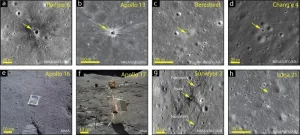
LAWRENCE — Human beings first disturbed moon dust on Sept. 13, 1959, when the USSR’s unmanned spacecraft Luna 2 alighted on the lunar surface. In the following decades, more than a hundred other spacecraft have touched the moon — both crewed and uncrewed, sometimes landing and sometimes crashing. The most famous of these were NASA’s Apollo Lunar Modules, which transported humans to the moon’s surface to the astonishment of humankind. In the coming years, missions and projects already planned will change the face of the moon ...

Read the release
Stellar winds regulate growth of galaxies
Space

Stellar winds regulate growth of galaxies

Galactic winds enable the exchange of matter between galaxies and their surroundings. In this way, they limit the growth of galaxies, that is, their star formation rate. Although this had already been observed in the local universe, an international research team led by a CNRS scientist1 has just revealed—using MUSE,2 an instrument integrated into the European Southern Observatory’s (ESO) Very Large Telescope—the existence of the phenomenon in galaxies which are more than 7 billion years old and actively forming stars, the category to which most galaxies belong. The team’s ...

Read the release
Space

Interpreting the afterglow of a black hole’s breakfast

An entirely new way to probe how active black holes behave when they eat has been discovered by an international team of astronomers. A sample of active black holes at the centre of 136 galaxies were found to shine in microwave and X-ray light in the same way, no matter their appetite for the surrounding galactic matter like gaseous clouds of dust and plasma. Led by scientists at Cardiff University, the team says the process is not something predicted by our current understanding of how black holes ...

Read the release
From the original Press-News collection. Issuers of news releases are responsible for the accuracy of their content.