THE ORIGINAL COLLECTION · SINCE 2010

Space
press releases.

Research announcements from universities, hospitals and scientific institutions. Explore the stories, people and discoveries behind the headlines.

Original publication datesPage 35
FIND A STORY

Find a past release.

Dates and source material belong to the original release.

Read our research explainers

Browse the collection · original publication order

NASA audio specialist named in Forbes 30 Under 30 List of Innovators
Space

NASA audio specialist named in Forbes 30 Under 30 List of Innovators

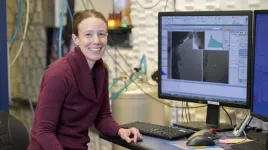
Katie Konans, NASA’s audio and podcasting lead at the agency’s Goddard Space Flight Center in Greenbelt, Maryland, is one of two NASA employees named to Forbes’ 30 Under 30 Class of 2024. The other agency honoree, Clare Luckey, is a systems engineer at NASA’s Johnson Space Center in Houston. Forbes’ 30 Under 30 list is a selection of young, creative, and bold minds the magazine’s experts consider revolutionaries, changing the course of business and society. Forbes evaluated more than 20,000 nominees to decide on 600 business and industry figures, with 30 selected in each of 20 industries. “When I joined ...

Read the release
Georgia State professor granted $5 million to identify and characterize objects in space
Space

Georgia State professor granted $5 million to identify and characterize objects in space

ATLANTA — Georgia State Professor of Physics & Astronomy Stuart Jefferies has been awarded a $5 million, multi-institutional grant by the U.S. Air Force to develop techniques to detect, map and image faint objects in space. The work could have far-reaching impacts, including strengthening national security in an increasingly congested space domain. The work will also advance the next generation of exceptionally large telescopes and improve the capabilities of astronomers studying the universe by providing images that are significantly sharper than those from existing telescopes. “Detecting objects in the space region between where ...

Read the release
Space

Dark galactic region nicknamed "The Brick" explained with Webb telescope findings

In a recent study led by University of Florida astronomer Adam Ginsburg, groundbreaking findings shed light on a mysterious dark region at the center of the Milky Way. The turbulent gas cloud, playfully nicknamed “The Brick” due to its opacity, has sparked lively debates within the scientific community for years. To decipher its secrets, Ginsburg and his research team, including UF graduate students Desmond Jeff, Savannah Gramze, and Alyssa Bulatek, turned to the James Webb Space Telescope (JWST). The implications of their observations, published in ...

Read the release
Ghostlike dusty galaxy reappears in James Webb Space Telescope image
Space

Ghostlike dusty galaxy reappears in James Webb Space Telescope image

It first appeared as a glowing blob from ground-based telescopes and then vanished completely in images from the Hubble Space Telescope. Now, the ghostly object has reappeared as a faint, yet distinct galaxy in an image from the James Webb Space Telescope (JWST). Astronomers with the COSMOS-Web collaboration have identified the object AzTECC71 as a dusty star-forming galaxy. Or, in other words, a galaxy that’s busy forming many new stars but is shrouded in a dusty veil that’s hard to see through — from nearly 1 billion years after the Big Bang. ...

Read the release
Satellite remote sensing model for wide-area prediction of transpiration rates in Japanese cypress plantations
Space

Satellite remote sensing model for wide-area prediction of transpiration rates in Japanese cypress plantations

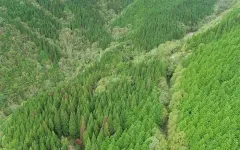
Tsukuba, Japan—Forests, known as nature's "green dams," play a crucial role in replenishing Earth's groundwater reserves. However, overcrowding in planted forests due to lack of maintenance activities, such as thinning practices, is a pressing concern in Japan. This overcrowding causes substantial water loss from these forests into the atmosphere through a combination of soil evaporation and tree transpiration (Et) known as evapotranspiration. In the rich forests of Japan, Et is a major factor in the depletion of water resources. Therefore, accurately measuring Et across wide areas is currently a critical task because ...

Read the release
Air Force awards UTEP Grant to safeguard assets in space
Space

Air Force awards UTEP Grant to safeguard assets in space

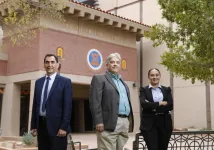
EL PASO, Texas (Nov. 30, 2023) – Space near earth is teeming with objects, whether natural, like meteors and comets, or manmade, like satellites, spacecraft and rocket debris. But experts still need a clearer picture of the location and state of these objects, which can threaten space-based assets, such as GPS, weather-monitoring and communication satellites. “The United States is dependent economically and militarily on space assets,” said Miguel Velez-Reyes, Ph.D., chair of the Electrical and Computer Engineering Department at The University of Texas at El Paso. “For ...

Read the release
Space

A Neptune-mass exoplanet found closely orbiting a very low-mass M dwarf star

The discovery of a Neptune-mass exoplanet orbiting the very low-mass M dwarf star LHS 3154 challenges theoretical models of planet formation, according to a new study. The planet, which has a mass at least 13 times that of Earth, tightly orbits a star 9 times less massive than the Sun, demonstrating that small stars can sometimes host larger planets than was previously thought. Planets form in the dense circumstellar discs of gas and dust that surround newborn stars. The amount of material in these structures determines how massive the planets that form ...

Read the release
Bringing asteroids to class: COSPAR joins new Erasmus+ program
Space

Bringing asteroids to class: COSPAR joins new Erasmus+ program

COSPAR and the Erasmus+ Education Programme COSPAR’s participation in Erasmus+ programmes is part of the COSPAR Panel on Education’s new approach to its mission of developing “means and media to encourage and spread space-related education”. The StudenTs As plaNetary Defenders (StAnD) project aims to engage primary and secondary school students in the subject of asteroids, meteors, and planetary defence. The 36-month StudenTs As plaNetary Defenders (StAnD) programme brings asteroids, comets, meteors and meteorites to the classroom using carefully prepared activities and experiments. The programme includes the installation of meteor detection cameras in participating ...

Read the release
Disc around star observed in another galaxy for the first time
Space

Disc around star observed in another galaxy for the first time

Astronomers have uncovered evidence of a rotating disc of material circling a massive young star in a nearby galaxy for the first time. Megan Reiter, assistant professor of physics and astronomy at Rice University, was part of the team of researchers who announced their discovery in a study published in Nature. “This is strong evidence that high-mass stars, which are several times bigger than the Sun, form in the same way as lower-mass stars,” Reiter said. “That’s been a big question for a long time.” Located in a galaxy neighboring ...

Read the release
Scientists discover rare 6-planet system that moves in strange synchrony
Space

Scientists discover rare 6-planet system that moves in strange synchrony

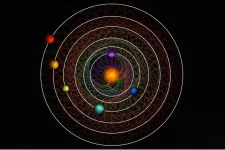
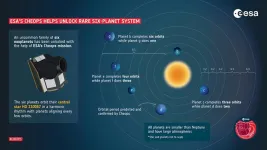
Scientists have discovered a rare sight in a nearby star system: Six planets orbiting their central star in a rhythmic beat. The planets move in an orbital waltz that repeats itself so precisely it can be readily set to music. A rare case of an “in sync” gravitational lockstep, the system could offer deep insight into planet formation and evolution. The analysis, led by UChicago scientist Rafael Luque, will be published Nov. 29 in Nature. “This discovery is going to become a benchmark system to study how sub-Neptunes, the most common type of planets outside of the solar system, form, evolve, what are they made of, and if they possess the ...

Read the release
An astronomical waltz reveals a sextuplet of planets
Space

An astronomical waltz reveals a sextuplet of planets

An international collaboration between astronomers using the CHEOPS and TESS space satellites, including NCCR PlanetS members from the University of Bern and the University of Geneva, have found a key new system of six transiting planets orbiting a bright star in a harmonic rhythm. This rare property enabled the team to determine the planetary orbits which initially appeared as an unsolvable riddle. CHEOPS is a joint mission by ESA and Switzerland, under the leadership of the University of Bern in collaboration with the University of Geneva. Thanks to a collaboration with scientists ...

Read the release
New astrophysics model sheds light on additional source of long gamma-ray bursts
Space

New astrophysics model sheds light on additional source of long gamma-ray bursts

Cutting-edge computer simulations combined with theoretical calculations are helping astronomers better understand the origin of some of the universe’s most energetic and mysterious light shows — gamma-ray bursts, or GRBs. The new unified model confirms that some long-lasting GRBs are created in the aftermath of cosmic mergers that spawn an infant black hole surrounded by a giant disk of natal material. Astronomers previously thought that black holes that generate long GRBs typically form when massive ...

Read the release
Space

Building blocks for life could have formed near new stars and planets

While life on Earth is relatively new, geologically speaking, the ingredients that combined to form it might be much older than once thought. According to research published in ACS Central Science, the simplest amino acid, carbamic acid, could have formed alongside stars or planets within interstellar ices. The findings could be used to train deep space instruments like the James Webb Space Telescope to search for prebiotic molecules in distant, star-forming regions of the universe. It has long been hypothesized that one of the building blocks for life, amino acids, could have formed during reactions in the “primordial ...

Read the release
NASA’s Fermi Mission nets 300 gamma-ray pulsars … and counting
Space

NASA’s Fermi Mission nets 300 gamma-ray pulsars … and counting

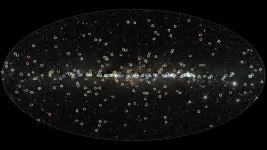
A new catalog produced by a French-led international team of astronomers shows that NASA’s Fermi Gamma-ray Space Telescope has discovered 294 gamma-ray-emitting pulsars, while another 34 suspects await confirmation. This is 27 times the number known before the mission launched in 2008. “Pulsars touch on a wide range of astrophysics research, from cosmic rays and stellar evolution to the search for gravitational waves and dark matter,” said study coordinator David Smith, research director at the Bordeaux Astrophysics Laboratory in Gironde, France, which is part of CNRS (the ...

Read the release
A gamma-ray pulsar milestone inspires innovative astrophysics and applications
Space

A gamma-ray pulsar milestone inspires innovative astrophysics and applications

WASHINGTON – The U.S. Naval Research Laboratory (NRL), in conjunction with the international Fermi Large Area Telescope Collaboration, announce the discovery of nearly 300 gamma ray pulsars in the publication of their Third Catalog of Gamma Ray Pulsars. This milestone comes 15 years since the launch of Fermi in 2008, when there were fewer than ten known gamma-ray pulsars. “Work on this important catalog has been going on in our group for years,” said Paul Ray, Ph.D., head of the High Energy Astrophysics and Applications Section ...

Read the release
Orbital-angular-momentum-encoded diffractive networks for object classification tasks
Space

Orbital-angular-momentum-encoded diffractive networks for object classification tasks

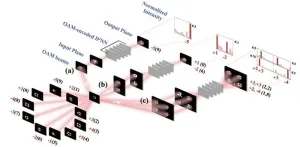
Deep learning has revolutionized the way we perceive and utilize data. However, as datasets grow and computational demands increase, we need more efficient ways to handle, store, and process data. In this regard, optical computing is seen as the next frontier of computing technology. Rather than using electronic signals, optical computing relies on the properties of light waves, such as wavelength and polarization, to store and process data. Diffractive deep neural networks (D2NN) utilize various properties of light waves to perform tasks like image and object recognition. Such networks consist of two-dimensional pixel arrays as diffractive layers. Each pixel serves as an adjustable ...

Read the release
Space

UCF receives 3 minority serving institution awards to promote collaborations with NASA

ORLANDO, Nov. 27, 2023 – Three research projects from the University of Central Florida have been selected for NASA Minority University Research and Education Project Partnership Annual Notification (MPLAN) awards. The grants, worth up to $50,000 each, are designed to connect and promote research collaborations between Minority Serving Institutions and NASA Mission Directorates. A total of 18 projects received Phase I funding across 15 universities. UCF received the most awards, with all three housed within the College of Engineering and Computer Science. Dean Michael Georgiopoulos ...

Read the release
Space

Extremely energetic cosmic ray detected, but with no obvious source

An extremely energetic cosmic ray – an extragalactic particle with an energy exceeding ~240 exa-electron volts (EeV) – has been detected by the Telescope Array experiment’s surface detector, researchers report. However, according to the findings, its arrival direction shows no obvious source. Ultrahigh-energy cosmic rays (UHECRs) are subatomic charged particles from space with energies greater than 1 EeV – roughly a million times as high as the energy reached by human-made particle accelerators. Although low-energy cosmic rays primarily emanate from the sun, the origins of rarer UHECRs are thought to be related to the most energetic phenomena in the Universe, ...

Read the release
Telescope Array detects second highest-energy cosmic ray ever
Space

Telescope Array detects second highest-energy cosmic ray ever

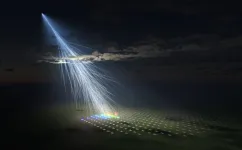
In 1991, the University of Utah Fly’s Eye experiment detected the highest-energy cosmic ray ever observed. Later dubbed the Oh-My-God particle, the cosmic ray’s energy shocked astrophysicists. Nothing in our galaxy had the power to produce it, and the particle had more energy than was theoretically possible for cosmic rays traveling to Earth from other galaxies. Simply put, the particle should not exist. The Telescope Array has since observed more than 30 ultra-high-energy cosmic rays, though none approaching the Oh-My-God-level energy. No observations have yet revealed ...

Read the release
Space

Does spaceflight increase men’s risk of erectile dysfunction?

During missions into space, astronauts are exposed to high levels of galactic cosmic radiation and weightlessness. Simulation experiments in male rats indicated that these aspects of spaceflight can negatively affect vascular tissues relevant to erectile dysfunction, even after a period of long-term recovery. The research, which is published in The FASEB Journal, indicated that vascular alterations are induced by relatively low doses of galactic cosmic radiation and to a lesser extent simulated weightlessness, primarily through increases in oxidative stress. Treatment with different antioxidants could counter some of these ...

Read the release
Hydrogen detected in lunar samples, points to resource availability for space exploration
Space

Hydrogen detected in lunar samples, points to resource availability for space exploration

WASHINGTON – U.S. Naval Research Laboratory (NRL) researchers have discovered solar-wind hydrogen in lunar samples, which indicates that water on the surface of the Moon may provide a vital resource for future lunar bases and longer-range space exploration. Space-based resource identification is a key factor in planning for civilian- and government-led space exploration. “Hydrogen has the potential to be a resource that can be used directly on the lunar surface when there are more regular or permanent ...

Read the release
NASA researcher honored by Goddard Tech Office for earth science work
Space

NASA researcher honored by Goddard Tech Office for earth science work

Earth science researcher Dr. Antonia Gambacorta earned the 2023 Goddard IRAD Technology Leadership award for pioneering new ways to measure lower layers of Earth’s atmosphere from space. The award from the chief technologist of NASA’s Goddard Space Flight Center in Greenbelt, Maryland, recognizes Gambacorta’s work demonstrating how hyperspectral microwave sounding, the measurement of hundreds of thousands of wavelengths of microwave light, could dissect Earth’s atmospheric planetary boundary layer (PBL). She also ...

Read the release
Two Sandia National Labs researchers elected associate fellows for aerospace contributions
Space

Two Sandia National Labs researchers elected associate fellows for aerospace contributions

ALBUQUERQUE, N.M. — Two Sandia National Laboratories employees will soon join the American Institute of Aeronautics and Astronautics class of 2024 as associate fellows. “This distinguished group of professionals has made significant and lasting contributions to the aerospace profession,” said AIAA President and Sandia Deputy Laboratories Director Laura McGill. “They exemplify expertise and dedication to excellence in advancing their specific technical disciplines. They are truly shaping the future of aerospace, and we are proud of their achievements.” Michael Ross Michael Ross was recognized for his work in ...

Read the release
Space

Astronomers discover signs of life in a star’s explosive death

**Strictly embargoed until 16:00 (BST) Wednesday 15 November 2023** Scientists have observed a series of bright, brief flashes occurring months after a stellar explosion, known as a luminous fast blue optical transient, or LFBOT The sighting of the never before seen flashes were made possible thanks to the University of Sheffield’s ULTRASPEC camera, mounted on the Thai National Telescope Since their discovery in 2018, astronomers have speculated about what might drive such extreme explosions Astrophysicists have settled the debate over the nature of a rare ...

Read the release
James Webb Space Telescope detects water vapor, sulfur dioxide and sand clouds in the atmosphere of a nearby exoplanet
Space

James Webb Space Telescope detects water vapor, sulfur dioxide and sand clouds in the atmosphere of a nearby exoplanet

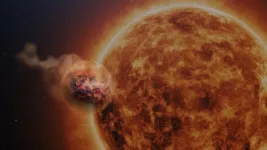
A team of European astronomers, co-led by researchers from the Institute of Astronomy, KU Leuven, used recent observations made with the James Webb Space Telescope to study the atmosphere of the nearby exoplanet WASP-107b. Peering deep into the fluffy atmosphere of WASP-107b they discovered not only water vapour and sulfur dioxide, but even silicate sand clouds. These particles reside within a dynamic atmosphere that exhibits vigorous transport of material. Astronomers worldwide are harnessing the advanced capabilities of the Mid-Infrared Instrument (MIRI) aboard the James Webb Space Telescope (JWST) to conduct groundbreaking observations of exoplanets – planets orbiting stars ...

Read the release
From the original Press-News collection. Issuers of news releases are responsible for the accuracy of their content.