THE ORIGINAL COLLECTION · SINCE 2010

Space
press releases.

Research announcements from universities, hospitals and scientific institutions. Explore the stories, people and discoveries behind the headlines.

Original publication datesPage 36
FIND A STORY

Find a past release.

Dates and source material belong to the original release.

Read our research explainers

Browse the collection · original publication order

Study finds strongest evidence yet for local sources of cosmic ray electrons
Space

Study finds strongest evidence yet for local sources of cosmic ray electrons

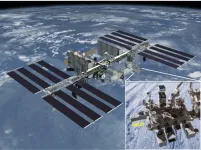
A new study using data from the CALorimetric Electron Telescope (CALET) instrument on the International Space Station has found evidence for nearby, young sources of cosmic ray electrons, contributing to a greater understanding of how the galaxy functions as a whole. The study included more than seven million data points representing particles arriving at CALET’s detector since 2015, and CALET’s ability to detect electrons at the highest energies is unique. As a result, the data includes more electrons at high energies than any previous work. That makes the statistical analysis of the data more robust and lends support to the conclusion that there are one or more local ...

Read the release
Downloading NASA’s dark matter data from above the clouds
Space

Downloading NASA’s dark matter data from above the clouds

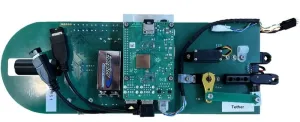
Data from a NASA mission to map dark matter around galaxy clusters has been saved by a new recovery system designed by scientists at the University of Sydney. The system allowed the retrieval of gigabytes of information, even after communication failed and the balloon-based telescope was damaged in the landing process. In April, the Super Pressure Balloon Imaging Telescope (SuperBIT) was launched from Wānaka Airport, New Zealand, suspended under a helium-filled balloon the size of a sports stadium on top of the Earth’s ...

Read the release
Webb Telescope’s Marcia Rieke awarded Catherine Wolfe Bruce Gold Medal
Space

Webb Telescope’s Marcia Rieke awarded Catherine Wolfe Bruce Gold Medal

Dr. Marcia Rieke, principal investigator for the Near-Infrared Camera on NASA’s James Webb Space Telescope is the Astronomical Society of the Pacific’s (ASP) 2023 recipient of its most prestigious award. ASP’s Catherine Wolfe Bruce Gold Medal honors Rieke, a Regents Professor of astronomy and Elizabeth Roemer Endowed Chair, Steward Observatory, at the University of Arizona. Rieke’s award and achievements was recognized at the ASP Awards Gala on Saturday, Nov. 11, in Redwood City, California. Groundbreaking Contributions Rieke’s research has focused on infrared observations of ...

Read the release
Galactic ‘lightsabers’: Answering longstanding questions about jets from black holes
Space

Galactic ‘lightsabers’: Answering longstanding questions about jets from black holes

The one thing everyone knows about black holes is that absolutely everything nearby gets sucked into them. Almost everything, it turns out. “Even though black holes are defined as objects from which nothing can escape, one of the astonishing predictions of Einstein’s theory of relativity is that black holes can actually lose energy,” says astrophysicist Eliot Quataert, Princeton’s Charles A. Young Professor of Astronomy on the Class of 1897 Foundation. “They ...

Read the release
Putting sound waves to work to create safer public spaces
Space

Putting sound waves to work to create safer public spaces

WASHINGTON, Nov. 14, 2023 – The risk of hearing loss does not come just from loud machinery or other obvious noise. It can also affect people in public environments like theaters and concert halls. Absorbing this excess sound to make public environments safer for hearing and using the unwanted sound waves to create electricity is the aim of a paper published this week in Physics of Fluids, by AIP Publishing. “According to the Centers for Disease Control and Prevention, an estimated 12.5% of children and adolescents aged 6-19 years and 17% of adults aged 20-69 years have suffered permanent ...

Read the release
UTA developing more powerful rocket engines for space travel
Space

UTA developing more powerful rocket engines for space travel

A University of Texas at Arlington engineering researcher has received a NASA grant to use rotating detonation rocket engines (RDREs) for in-space propulsion to make them more efficient, compact and powerful. Liwei Zhang, an assistant professor in the Department of Mechanical and Aerospace Engineering (MAE), will lead the $900,000 grant. “Detonation is very fast combustion. Inside an RDRE, detonation waves spin around in a circle at supersonic speeds. Compared to conventional engines that rely on regular combustion, an RDRE has a theoretically ...

Read the release
Space

UMD engineers’ ‘cooling glass’ blasts building heat into space

University of Maryland researchers aiming to combat rising global temperatures have developed a new “cooling glass” that can turn down the heat indoors without electricity by drawing on the cold depths of space. The new technology, a microporous glass coating described in a paper published in the journal Science, can lower the temperature of the material beneath it by 3.5 degrees Celsius at noon, and has the potential to reduce a mid-rise apartment building’s yearly carbon emissions by 10%, according to the research team led by Distinguished University Professor Liangbing Hu in the Department of Materials ...

Read the release
Space

Astrophysicist uses NSF funding to grow the number of deaf, hard-of-hearing, and Hispanic researchers

Astrophysicist Jason Nordhaus is breaking cultural and disciplinary boundaries by helping to grow the number of deaf, hard-of-hearing, and Hispanic researchers. And, in doing so, he is enabling these future scientists to drive discoveries in one of his areas of expertise—neutron star astrophysics. Nordhaus, an associate professor of physics at Rochester Institute of Technology’s National Technical Institute for the Deaf, has earned a National Science Foundation grant that connects NTID with Texas Tech University, a Hispanic Serving Institution. Through a series of unique summer research exchanges ...

Read the release
One step closer to Mars immigration
Space

One step closer to Mars immigration

Immigration to and living on Mars have long been depicted in science fiction works. But before dream turns into reality, there is a hurdle man has to overcome -- the lack of essential chemicals such as oxygen for long-term survival on the planet. However, hope looms up thanks to recent discovery of water activity on Mars. Scientists are now exploring the possibility of decomposing water to produce oxygen through electrochemical water oxidation driven by solar power with the help of oxygen evolution reaction (OER) catalysts. The challenge is to find a ...

Read the release
Second-most distant galaxy discovered using James Webb Space Telescope
Space

Second-most distant galaxy discovered using James Webb Space Telescope

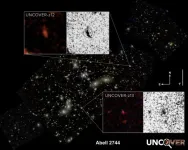
The second- and fourth-most distant galaxies ever observed have been discovered in a region of space known as Pandora’s Cluster, or Abell 2744, using data from NASA’s James Webb Space Telescope (JWST). Following up on a deep field image of the area, an international team led by Penn State researchers confirmed the distance of these ancient galaxies and inferred their properties using new spectroscopic data — information about light emitted across the electromagnetic spectrum — from JWST. At nearly 33 billion light years away, these incredibly distant ...

Read the release
NASA’s Webb, Hubble telescopes combine to create most colorful view of universe
Space

NASA’s Webb, Hubble telescopes combine to create most colorful view of universe

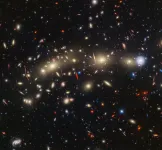
Astronomers once again have combined the observational powers of NASA’s James Webb Space Telescope and Hubble Space Telescope to create one of the most detailed and colorful portraits of the cosmos, just in time for the holiday season. The new image, dubbed the Christmas Tree Galaxy Cluster by the research team that includes Texas A&M University astronomer Dr. Lifan Wang, combines visible light from Hubble with infrared light detected by Webb to showcase MACS0416, a galaxy cluster about 4.3 billion light-years from Earth. Because the cluster is able to magnify the light from more distant background galaxies through a phenomenon known as gravitational ...

Read the release
Milky Way-like galaxy found in the early universe
Space

Milky Way-like galaxy found in the early universe

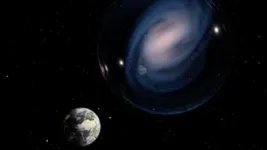
Using the James Webb Space Telescope, an international team, including astronomer Alexander de la Vega of the University of California, Riverside, has discovered the most distant barred spiral galaxy similar to the Milky Way that has been observed to date. Until now it was believed that barred spiral galaxies like the Milky Way could not be observed before the universe, estimated to be 13.8 billion years old, reached half of its current age. The research, published in Nature this week, was led by scientists at the Centro de Astrobiología in Spain. “This galaxy, named ceers-2112, formed soon after ...

Read the release
Scientists find 14 new transient objects in space by peering through the 'Christmas Tree Galaxy Cluster'
Space

Scientists find 14 new transient objects in space by peering through the 'Christmas Tree Galaxy Cluster'

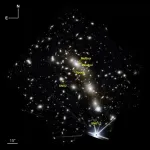
An international team of scientists, led by University of Missouri’s Haojing Yan, used NASA’s James Webb Space Telescope (JWST) to discover 14 new transient objects during their time-lapse study of galaxy cluster MACS0416 — located about 4.3 billion light years from Earth — which they’ve dubbed as the “Christmas Tree Galaxy Cluster.” “Transients are objects in space, like individual stars, that appear to suddenly brighten by orders of magnitudes and then fade away,” said Yan, an associate professor in the Department ...

Read the release
AI can map giant icebergs from satellite images 10,000 times faster than humans
Space

AI can map giant icebergs from satellite images 10,000 times faster than humans

AI can map giant icebergs from satellite images 10,000 times faster than humans Scientists have trained an artificial intelligence (AI) system to accurately map - in one-hundredth of a second - the surface area and outline of giant icebergs captured on satellite images. It is a major advance on existing automated systems which struggle to distinguish icebergs from other features in the image. Manual - or human - interpretation of the image is more ...

Read the release
NASA’s Webb findings support long-proposed process of planet formation
Space

NASA’s Webb findings support long-proposed process of planet formation

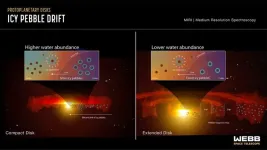
Scientists using NASA’s James Webb Space Telescope just made a breakthrough discovery in revealing how planets are made. By observing water vapor in protoplanetary disks, Webb confirmed a physical process involving the drifting of ice-coated solids from the outer regions of the disk into the rocky-planet zone. Theories have long proposed that icy pebbles forming in the cold, outer regions of protoplanetary disks — the same area where comets originate in our solar system — should be the fundamental seeds of planet formation. The main requirement of these theories is that pebbles should drift inward toward the star due to friction in the gaseous disk, ...

Read the release
SwRI-led Lucy observes first-ever contact binary orbiting an asteroid
Space

SwRI-led Lucy observes first-ever contact binary orbiting an asteroid

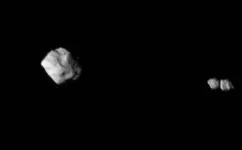
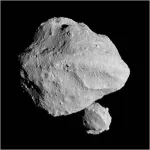
After the Southwest Research Institute-led Lucy mission flew past the asteroid Dinkinesh, the team discovered that it is even more “marvelous” as its newly discovered satellite is now shown to be a double-lobed moonlet. As NASA’s Lucy spacecraft continued to return data acquired during its first asteroid encounter on Nov. 1, 2023, the team discovered that Dinkinesh’s surprise satellite is itself a contact binary, made of two smaller objects touching each other. In the first image of Dinkinesh and its satellite taken at closest approach, the two lobes of the contact binary lined up, one behind the other, ...

Read the release
NASA’s Curious Universe podcast unveils new season of adventures
Space

NASA’s Curious Universe podcast unveils new season of adventures

NASA’s short-form, narrative podcast, NASA’s Curious Universe, returns for its sixth season Nov. 7. This season will bring listeners on new “wild and wonderful” adventures from the farthest reaches of the cosmos to right here on planet Earth. In season six, listeners will meet researchers who are using sounds from the Sun to learn crucial details about our star, explore the “dark side” of the universe with scientists who study dark matter and dark energy, and get a behind-the-scenes look at the first NASA mission to deliver an asteroid sample to Earth. Listen to the ...

Read the release
An ammonia trail to exoplanets
Space

An ammonia trail to exoplanets

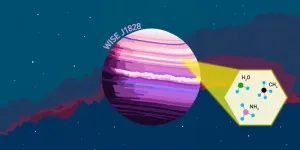
They reveal the origin of wine, the age of bones and fossils, and they serve as diagnostic tools in medicine. Isotopes and isotopologues – molecules that differ only in the composition of their isotopes – also play an increasingly important role in astronomy. For example, the ratio of carbon-12 (12C) to carbon-13 (13C) isotopes in the atmosphere of an exoplanet allows scientists to infer the distance at which the exoplanet orbits its central star. Until now, 12C and 13C bound in carbon monoxide were the only isotopologues that could be measured in the atmosphere of an exoplanet. Now a team of researchers has succeeded in detecting ammonia isotopologues ...

Read the release
Nasal microorganism to the rescue? Study confirms protective role of bacterium in chronic rhinosinusitis
Space

Nasal microorganism to the rescue? Study confirms protective role of bacterium in chronic rhinosinusitis

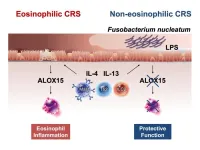
Like other countries in the world, Japan has witnessed a worrisome increase in the prevalence of chronic rhinosinusitis (CRS) over the last decade. An inflammatory disease that lasts at least 12 weeks, CRS can cause nasal congestion, nasal discharge, trouble breathing through the nose, facial pain, and even loss of sense of smell. Unfortunately, treating CRS is complex since the disease manifests in various forms. CRS can be categorized into eosinophilic (ECRS) or non-eosinophilic (non-ECRS) types. In ECRS, the nasal and sinus tissues exhibit an increased presence of eosinophils, a type of white blood cell that releases inflammatory ...

Read the release
Illinois Tech grows research footprint, securing prime space at TCC’s Fulton Labs
Space

Illinois Tech grows research footprint, securing prime space at TCC’s Fulton Labs

CHICAGO—November 3, 2023—Illinois Institute of Technology (Illinois Tech) has leased approximately 34,295 square feet in Trammell Crow Company’s (TCC) Fulton Labs innovation hub, announced today by the Chicago office of TCC, a global real estate developer. Illinois Tech will occupy the entire 7th floor of the cutting-edge wet lab facilities at 400 North Aberdeen, aiming to fuel scientific breakthroughs and industry-relevant research as the first academic institution to join the thriving and collaborative innovation ecosystem alongside their Fulton Labs neighbors, which include Portal Innovations and the Chan Zuckerberg BioHub. ...

Read the release
SwRI-led Lucy mission shows Dinkinesh asteroid is actually a binary
Space

SwRI-led Lucy mission shows Dinkinesh asteroid is actually a binary

SAN ANTONIO — November 3, 2023 —New images captured by NASA’s Lucy spacecraft confirmed that the small main belt asteroid Dinkinesh is a binary, two asteroids that orbit a common center of mass. The SwRI-led mission will now fly by 11 asteroids in its 12-year mission to Jupiter’s Trojan asteroids. Dinkinesh was meant to be the first asteroid that Lucy flew by but ended up being the first two. “Dinkinesh really did live up to its name; this is marvelous,” said Lucy Principal Investigator Dr. Hal Levison, of SwRI’s ...

Read the release
Black holes are messy eaters
Space

Black holes are messy eaters

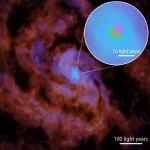
New observations down to light-year scale of the gas flows around a supermassive black hole have successfully detected dense gas inflows and shown that only a small portion (about 3 percent) of the gas flowing towards the black hole is eaten by the black hole. The remainder is ejected and recycled back into the host galaxy. Not all of the matter which falls towards a black hole is absorbed, some of it is ejected as outflows. But the ratio of the matter that the black hole “eats,” and the amount “dropped” ...

Read the release
Scientists designed the deployment of three-body chain-type tethered satellites in low-eccentricity orbits using only tether
Space

Scientists designed the deployment of three-body chain-type tethered satellites in low-eccentricity orbits using only tether

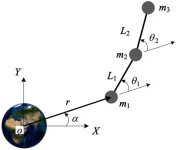
Recently, the tethered satellite system (TSS) has been used in Earth observations, space interferometry and other space missions, due to potential merits of TSS. The tethered TSAR (tomographic synthetic aperture radar) system is a group of tethered SAR satellites that can be rapidly deployed and provide a stable baseline for 3-dimensional topographic mapping and moving target detection. Successful deployment is critical for TSAR tethered system. Several control methods, including length, length rate, tension, and thrust-aided control, have been proposed over the years. Among them, adjusting tension is a viable yet challenging approach due to tether's strong nonlinearity and ...

Read the release
NASA’s Sandra Irish wins 2023 Society of Women Engineers Award
Space

NASA’s Sandra Irish wins 2023 Society of Women Engineers Award

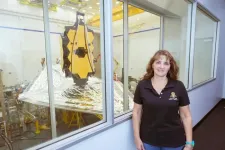
Sandra Irish, mechanical systems lead structures engineer for NASA’s James Webb Space Telescope, has been selected to receive the Society of Women Engineers (SWE) Resnik Challenger Medal Award for her visionary contributions to the development, testing, transport, and launch of NASA’s premier space telescope since 2006. The medal was awarded during the World’s Largest Conference for Women in Engineering and Technology or WE23, which took place Oct. 26-28 in Los Angeles. As an engineer at NASA’s Goddard Space Flight Center in Greenbelt, Maryland, for over 40 years, Irish’s mechanical systems expertise has helped ...

Read the release
The remains of an ancient planet lie deep within Earth
Space

The remains of an ancient planet lie deep within Earth

In the 1980s, geophysicists made a startling discovery: two continent-sized blobs of unusual material were found deep near the center of the Earth, one beneath the African continent and one beneath the Pacific Ocean. Each blob is twice the size of the Moon and likely composed of different proportions of elements than the mantle surrounding it. Where did these strange blobs—formally known as large low-velocity provinces (LLVPs)—come from? A new study led by Caltech researchers suggests that they are remnants of an ancient planet that violently collided with Earth billions of years ago in the same giant impact that created ...

Read the release
From the original Press-News collection. Issuers of news releases are responsible for the accuracy of their content.