THE ORIGINAL COLLECTION · SINCE 2010

Space
press releases.

Research announcements from universities, hospitals and scientific institutions. Explore the stories, people and discoveries behind the headlines.

Original publication datesPage 39
FIND A STORY

Find a past release.

Dates and source material belong to the original release.

Read our research explainers

Browse the collection · original publication order

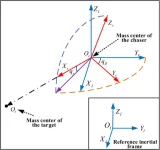
Scientists researched on finite-time anti-saturated proximity control with a tumbling non-cooperative space target
Space

Scientists researched on finite-time anti-saturated proximity control with a tumbling non-cooperative space target

The past few decades have witnessed the burgeoning development of on-orbit servicing in light of various meaningful space applications such as repair of malfunctioning satellites, debris removal, on-orbit assembly, and so on. As for the orbit-servicing targets, they are usually divided into 2 categories, i.e., cooperative and non-cooperative ones, based on whether the space targets have active cross-link communication and cooperative identifiers with the servicing spacecraft or not. Before executing the orbit-servicing task, close-range rendezvous and proximity is an inevitable process in which ...

Read the release
Black holes eat faster than previously expected
Space

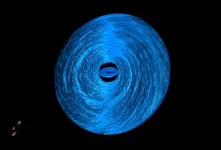
Black holes eat faster than previously expected

A new Northwestern University-led study is changing the way astrophysicists understand the eating habits of supermassive black holes. While previous researchers have hypothesized that black holes eat slowly, new simulations indicate that black holes scarf food much faster than conventional understanding suggests. The study will be published on Wednesday (Sept. 20) in The Astrophysical Journal. According to new high-resolution 3D simulations, spinning black holes twist up the surrounding space-time, ultimately ripping apart ...

Read the release
New recipes for origin of life may point way to distant, inhabited planets
Space

New recipes for origin of life may point way to distant, inhabited planets

Life on a faraway planet — if it’s out there — might not look anything like life on Earth. But there are only so many chemical ingredients in the universe’s pantry, and only so many ways to mix them. A team led by scientists at the University of Wisconsin–Madison has exploited those limitations to write a cookbook of hundreds of chemical recipes with the potential to give rise to life. Their ingredient list could focus the search for life elsewhere in the universe by pointing out the most likely conditions — planetary versions of mixing techniques, oven temperatures and baking times — for the recipes to come together. The process ...

Read the release
Space

Engineered compound shows promise in preventing bone loss in space

A new study published in a Nature Partner Journal, npj Microgravity, finds an engineered compound given to mice aboard the International Space Station (ISS) largely prevented the bone loss associated with time spent in space. The study, led by a transdisciplinary team of professors at the University of California at Los Angeles (UCLA) and the Forsyth Institute in Cambridge, Massachusetts, highlight a promising therapy to mitigate extreme bone loss from long-duration space travel as well as musculoskeletal ...

Read the release
Space

Growth of large operators threatens existence of grassroots coworking spaces, study warns

The growing number of large operators and developers opening coworking premises threatens to end the availability of grassroots community-oriented spaces designed to bring isolated workers together, a new study warns. These coworking communities were originally set up to create serendipitous encounters, knowledge-sharing opportunities, and social capital. But the increasing numbers of big companies running flexible offices means they are less likely to offer services matching these aims. Smaller operators see the incursion by large commercial real estate developers ...

Read the release
Webb Confirms accuracy of universe’s expansion rate measured by Hubble, deepens mystery of Hubble constant tension
Space

Webb Confirms accuracy of universe’s expansion rate measured by Hubble, deepens mystery of Hubble constant tension

The rate at which the universe is expanding, known as the Hubble constant, is one of the fundamental parameters for understanding the evolution and ultimate fate of the cosmos. However, a persistent difference called the “Hubble Tension” is seen between the value of the constant measured with a wide range of independent distance indicators and its value predicted from the big bang afterglow. NASA’s James Webb Space Telescope provides new capabilities to scrutinize and refine some of the strongest observational evidence for this tension. Nobel Laureate Adam Riess from the Johns Hopkins University and ...

Read the release
Electrons from Earth may be forming water on the Moon
Space

Electrons from Earth may be forming water on the Moon

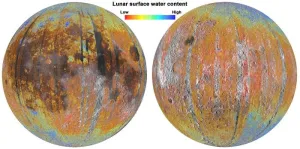
A team of researchers, led by a University of Hawai‘i (UH) at Mānoa planetary scientist, discovered that high energy electrons in Earth’s plasma sheet are contributing to weathering processes on the Moon's surface and, importantly, the electrons may have aided the formation of water on the lunar surface. The study was published today in Nature Astronomy. Understanding the concentrations and distributions of water on the Moon is critical to understanding its formation and evolution, and to providing water resources for future human exploration. The new ...

Read the release
Six of nine planetary boundaries now exceeded
Space

Six of nine planetary boundaries now exceeded

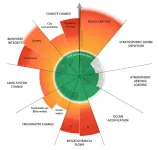
A new study updates the planetary boundary framework and shows human activities are increasingly impacting the planet and, thereby, increasing the risk of triggering dramatic changes in overall Earth conditions. For over 3 billion years, the interaction between life (represented by the planetary boundary, Biosphere Integrity) and climate have controlled the overall environmental conditions on Earth. Human activities, for example replacing nature with other land uses, changing the amount of water in rivers and in soil, the introduction of synthetic chemicals to the open environment, and the emission of greenhouse gases to the atmosphere ...

Read the release
Matter comprises of 31% of the total amount of matter and energy in the universe
Space

Matter comprises of 31% of the total amount of matter and energy in the universe

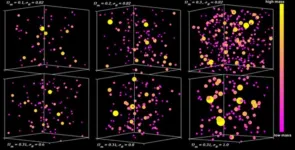
“Cosmologists believe that only about 20% of the total matter is made of regular or ‘baryonic’ matter, which includes stars, galaxies, atoms, and life,” explains first author Dr. Mohamed Abdullah, a researcher at the National Research Institute of Astronomy and Geophysics-Egypt, Chiba University, Japan. “About 80% is made of dark matter, whose mysterious nature is not yet known but may consist of some as-yet-undiscovered subatomic particles.” (Fig. 1) “The team used a well-proven technique to determine the total amount of matter in the universe, ...

Read the release
Dark matter halos measured around ancient quasars
Space

Dark matter halos measured around ancient quasars

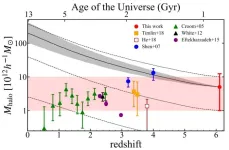
At the center of every galaxy is a supermassive black hole. Beyond a certain size, these become active, emitting huge amounts of radiation, and are then called quasars. It is thought these are activated by the presence of massive dark matter halos (DMH) surrounding the galaxy, directing matter towards the center, feeding the black hole. A team including researchers from the University of Tokyo have, for the first time, surveyed hundreds of ancient quasars and found this behavior is very consistent throughout history. This is surprising, as many large-scale processes show variation throughout the ...

Read the release
Study hints at the existence of the closest black holes to Earth in the Hyades star cluster
Space

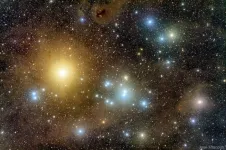
Study hints at the existence of the closest black holes to Earth in the Hyades star cluster

A paper published in the journal Monthly Notices of the Royal Astronomical Society hints at the existence of several black holes in the Hyades cluster — the closest open cluster to our solar system — which would make them the closest black holes to Earth ever detected. The study results from a collaboration between a group of scientists led by Stefano Torniamenti, from the University of Padua (Italy), with the significant participation of with Mark Gieles, ICREA professor at the Faculty of Physics, the ...

Read the release
NASA’s Swift learns a new trick, spots a snacking black hole
Space

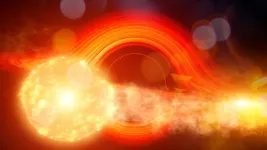
NASA’s Swift learns a new trick, spots a snacking black hole

Using NASA’s Neil Gehrels Swift Observatory, which launched in 2004, scientists have discovered a black hole in a distant galaxy repeatedly nibbling on a Sun-like star. The object heralds a new era of Swift science made possible by a novel method for analyzing data from the satellite’s X-ray Telescope (XRT). “Swift’s hardware, software, and the skills of its international team have enabled it to adapt to new areas of astrophysics over its lifetime,” said Phil Evans, an astrophysicist at the University of Leicester in the United Kingdom and longtime Swift team member. “Neil Gehrels, the ...

Read the release
Ravenous black hole consumes three Earths’-worth of star every time it passes
Space

Ravenous black hole consumes three Earths’-worth of star every time it passes

A star like our own Sun in a nearby galaxy is gradually being eaten away by a small but ravenous black hole, losing the equivalent mass of three Earths every time it passes close. The discovery by University of Leicester astronomers is reported today (7 September) in Nature Astronomy and provides a ‘missing link’ in our knowledge of black holes disrupting orbiting stars. It suggests a whole menagerie of stars in the process of being consumed that still lie undiscovered. The team was supported by the UK Space Agency and the UK Science and technology Facilities Council (STFC). The astronomers were alerted to ...

Read the release
Genetic tools probe microbial dark matter
Space

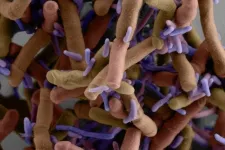
Genetic tools probe microbial dark matter

Patescibacteria are a group of puzzling, tiny microbes whose manner of staying alive has been difficult to fathom. Scientists can cultivate only a few types, yet these bacteria are a diverse group found in many environments. The few types of Patescibacteria that researchers can grow in the lab reside on the cell surfaces of another, larger host microbe. Patescibacteria in general lack the genes required to make many molecules necessary for life, such as the amino acids that make up proteins, the fatty acids that form membranes, and the nucleotides in DNA. This has led researchers ...

Read the release
New koala relative fills a branch of Australia’s unique marsupial story
Space

New koala relative fills a branch of Australia’s unique marsupial story

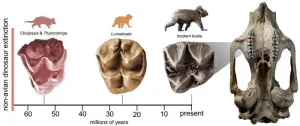
Koalas are endangered in much of Australia now but in in the past there were multiple species living across the continent. The discovery of an ancient relative of the koala helps fill a 30 million year gap in the amazing evolution of Australia’s marsupials, according to a new study by Australian and British scientists published in Scientific Reports. The study was led by Flinders University PhD student Arthur Crichton, who found fossil teeth of the new species at the Pwerte Marnte Marnte fossil site south of Alice ...

Read the release
NASA’s Webb wins Howard Hughes Memorial Award
Space

NASA’s Webb wins Howard Hughes Memorial Award

The Aero Club of Southern California has awarded the Howard Hughes Memorial Award to NASA's James Webb Space Telescope. The award will be accepted at a ceremony Wednesday, Sept. 6, at the California Club in Los Angeles. The Howard Hughes Memorial Award honors exceptional leaders who have advanced the fields of aviation or aerospace technology. Hughes’ first cousin, William R. Lummis, established the award in 1978, and the Aero Club of Southern California presents the award annually. Accepting the award will be Mike Menzel, the NASA mission systems engineer for Webb at NASA’s Goddard Space Flight Center in Greenbelt, Maryland. “On behalf of the entire ...

Read the release
Furthest ever detection of a galaxy’s magnetic field
Space

Furthest ever detection of a galaxy’s magnetic field

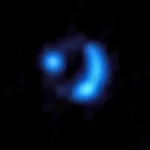
Using the Atacama Large Millimeter/submillimeter Array (ALMA), astronomers have detected the magnetic field of a galaxy so far away that its light has taken more than 11 billion years to reach us: we see it as it was when the Universe was just 2.5 billion years old. The result provides astronomers with vital clues about how the magnetic fields of galaxies like our own Milky Way came to be. Lots of astronomical bodies in the Universe have magnetic fields, whether it be planets, stars or galaxies. “Many people ...

Read the release
Breakthrough in atmospheric analysis: Chinese satellite delivers high spatial resolution ozone profiles
Space

Breakthrough in atmospheric analysis: Chinese satellite delivers high spatial resolution ozone profiles

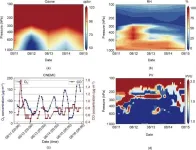
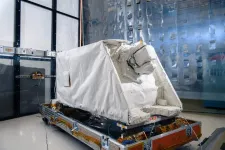
A breakthrough in satellite observations has allowed scientists to obtain high spatial resolution ozone profiles, enhancing our understanding of ozone distribution and its impact on the atmosphere. The research, conducted by the research team led by Cheng Liu and Fei Zhao at the University of Science and Technology of China, utilized data from the Environmental Trace Gases Monitoring Instrument (EMI) on the Gaofen-5 satellite, the first Chinese ultraviolet-visible hyperspectral spectrometer. Ozone plays a crucial role in the atmosphere, and understanding its vertical distribution is key to comprehending its horizontal and vertical transport, as well as its physical and chemical ...

Read the release
How does “MAD” accretion form around a black hole?
Space

How does “MAD” accretion form around a black hole?

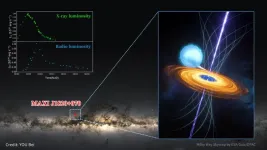
An international scientific team has revealed for the first time the magnetic field transport processes in the accretion flow of a black hole and the formation of a "MAD"—a magnetically arrested disk—in the vicinity of a black hole. The researchers made the discovery while conducting multi-wavelength observational studies of an outburst event of the black hole X-ray binary MAXI J1820+070, using Insight-HXMT, China's first X-ray astronomical satellite, as well as multiple telescopes. Key to their discovery was the observation that the radio emission from the black hole jet and the optical emission from the outer ...

Read the release
NASA to demonstrate laser communications from space station
Space

NASA to demonstrate laser communications from space station

NASA uses the International Space Station — a football field-sized spacecraft orbiting Earth — to learn more about living and working in space. For over 20 years, the space station has provided a unique platform for investigation and research in areas like biology, technology, agriculture, and more. It serves as a home for astronauts conducting experiments, including advancing NASA’s space communications capabilities. In 2023, NASA is sending a technology demonstration known as the Integrated LCRD Low Earth Orbit User ...

Read the release
ESO telescopes help unravel pulsar puzzle
Space

ESO telescopes help unravel pulsar puzzle

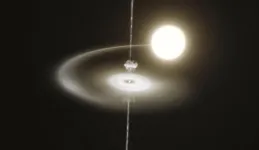
With a remarkable observational campaign that involved 12 telescopes both on the ground and in space, including three European Southern Observatory (ESO) facilities, astronomers have uncovered the strange behaviour of a pulsar, a super-fast-spinning dead star. This mysterious object is known to switch between two brightness modes almost constantly, something that until now has been an enigma. But astronomers have now found that sudden ejections of matter from the pulsar over very short periods are responsible for the peculiar switches. “We have witnessed extraordinary cosmic events where enormous amounts of matter, similar to cosmic cannonballs, are launched into ...

Read the release
Scientists zoom in on the Asian monsoon season using satellite data
Space

Scientists zoom in on the Asian monsoon season using satellite data

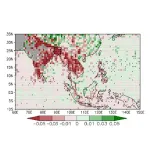
Tokyo, Japan – Scientists from Tokyo Metropolitan University and other institutes have studied new satellite data showing the diameter of rain droplets and the distribution of heavy ice in the atmosphere worldwide. They focused on the Asian monsoon region, finding larger droplets and more heavy ice precipitation on land before the actual monsoon season. Their findings shed new light on the features of the pre-monsoon season, such as more intense precipitation and lightning, potentially informing better weather prediction. As adverse rainfall events rock the world, scientists are trying to understand the mechanism ...

Read the release
JAXA, NASA XRISM Mission ready for liftoff
Space

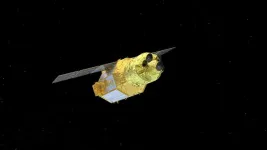
JAXA, NASA XRISM Mission ready for liftoff

A powerful satellite called XRISM (X-ray Imaging and Spectroscopy Mission) is set to provide astronomers with a revolutionary look at the X-ray sky. XRISM, led by JAXA (Japan Aerospace Exploration Agency) in collaboration with NASA and with contributions from ESA (European Space Agency), is scheduled to launch on an H-IIA rocket from Japan’s Tanegashima Space Center at 8:26 p.m. EDT on Sunday, Aug. 27 (9:26 a.m. on Monday, Aug. 28, in Japan). JAXA will stream the launch live ...

Read the release
How a cup of water can unlock the secrets of our Universe
Space

How a cup of water can unlock the secrets of our Universe

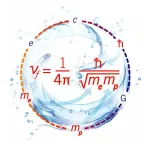
Researchers from Queen Mary University of London have made a discovery that could change our understanding of the universe. In their study published in Science Advances, they reveal, for the first time, that there is a range in which fundamental constants can vary, allowing for the viscosity needed for life processes to occur within and between living cells. This is an important piece of the puzzle in determining where these constants come from and how they impact life as we know it. In 2020, the same team found that the viscosity of liquids is determined by fundamental physical constants, setting a limit on how runny a ...

Read the release
Space

Ringing protons give insight into early universe

NEWPORT NEWS, VA – In the middle of the last century, physicists found that protons can resonate, much like a ringing bell. Advances over the last three decades have led to 3D pictures of the proton and significant insight into its structure in its ground state. But little is known about the 3D structure of the resonating proton. Now, an experiment to explore the 3D structures of resonances of protons and neutrons at the U.S. Department of Energy’s Thomas Jefferson National Accelerator Facility has added one more puzzle piece to the vast ...

Read the release
From the original Press-News collection. Issuers of news releases are responsible for the accuracy of their content.