THE ORIGINAL COLLECTION · SINCE 2010

Space
press releases.

Research announcements from universities, hospitals and scientific institutions. Explore the stories, people and discoveries behind the headlines.

Original publication datesPage 40
FIND A STORY

Find a past release.

Dates and source material belong to the original release.

Read our research explainers

Browse the collection · original publication order

Space

Listening for “sounds” from the far corners of space

Scientists spectacularly confirmed the existence of gravitational waves several years ago, but now they are searching the cosmos for new and different types of these waves that result from different objects in deep space. Benjamin Owen, a professor in the Department of Physics and Astronomy at Texas Tech University, was recently awarded a three-year National Science Foundation (NSF) grant that aims to uncover and confirm additional types of gravitational waves. “So far with gravitational waves we’ve seen what happens when you have ...

Read the release
Scientists elaborated the design and application prospect of China’s Tiangong space station
Space

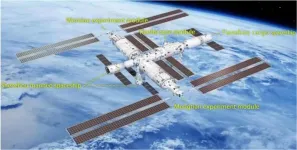
Scientists elaborated the design and application prospect of China’s Tiangong space station

As a manned spacecraft operating in orbit for a long time, a space station embodies a country’s scientific and technological strength comprehensively. China’s manned space project was approved in 1992 with a 3-step strategic plan, and building a space station is the final goal of this plan. In September 2010, China’s manned space station project was officially established. After 11 years of unremitting efforts, on 2021 April 29, the Tianhe core module was successfully launched into orbit by the carrier rocket ...

Read the release
Space

You’re reading this because an asteroid killed the dinosaurs, allowing mammals to dominate the Earth. But why?

Almost 66 million years ago, an asteroid struck the Earth, killing all non-avian dinosaurs and allowing mammals to dominate. But just how did we evolve from rat-like creatures running between the feet of dinosaurs to take over their ecological niches? Dr. Kendra Chritz, assistant professor in the UBC department of earth, ocean and atmospheric sciences, aims to find out. Dr. Chritz is co-leading a new multi-million-dollar research project to learn how ecosystems and organisms recover after a catastrophic, climate-changing event. She explains in this Q&A that clues may lie in the fossilized teeth of mammals. Why don’t we know much about how mammals ...

Read the release
Space

New UCF project examines key role soils play in keeping the planet cool

UNIVERSITY OF CENTRAL FLORIDA New UCF Project Examines Key Role Soils Play in Keeping the Planet Cool The research, funded by a grant from the USDA National Institute of Food and Agriculture, will examine a method to keep carbon from escaping soils and trapping heat in Earth’s atmosphere. ORLANDO, Aug.17, 2023 – A new project from the University of Central Florida is looking to the soils for a way to cool the skies. Funded by a nearly $750,000 grant from the USDA National Institute of Food and Agriculture, the research will examine a method to keep carbon from escaping soils and ...

Read the release
State-of-the-art UMass Lowell aerospace center seeded by $5.5M grant
Space

State-of-the-art UMass Lowell aerospace center seeded by $5.5M grant

Drawing on UMass Lowell’s expertise in spacecraft design and track record of successful missions, the university has secured $5.5 million in state funding to launch a research center where scientists, industry leaders and startups can build and test miniature satellites and components essential to spaceflight. The initiative, known as the Massachusetts Alliance for Space and Technology and Sciences, or MASTS, is anchored by a two-year, $5.5 million grant from the state via the Massachusetts ...

Read the release
The evolution of complex grammars
Space

The evolution of complex grammars

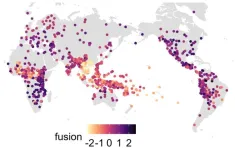
Languages around the world differ greatly in how many grammatical distinctions they make. This variation is observable even between closely related languages. The speakers of Swedish, Danish, and Norwegian, for example, use the same word hunden, meaning "the dog", to communicate that the dog is in the house or that someone found the dog or gave food to the dog. In Icelandic, on the other hand, three different word forms would be used in these situations, corresponding to the nominative, accusative, and dative case respectively: hundurinn, hundinn, and hundinum. This grammatical distinction in the case system, along with many others, sets Icelandic apart ...

Read the release
NASA’s Amy Simon Awarded AAS 2023 Alexander Prize
Space

NASA’s Amy Simon Awarded AAS 2023 Alexander Prize

The Division for Planetary Sciences (DPS) of the American Astronomical Society (AAS) has named its prize winners for 2023. AAS awarded the 2023 Alexander Prize to Amy Simon, Senior Scientist for Planetary Atmospheres Research in the Solar System Exploration Division at NASA's Goddard Space Flight Center in Greenbelt, Maryland. Simon won the award for a mid-career scientist who has made and continues to make outstanding contributions that have significantly advanced our knowledge of planetary systems, ...

Read the release
After 15 years, pulsar timing yields evidence of cosmic background gravitational waves
Space

After 15 years, pulsar timing yields evidence of cosmic background gravitational waves

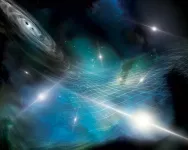
The universe is humming with gravitational radiation — a very low-frequency rumble that rhythmically stretches and compresses spacetime and the matter embedded in it. That is the conclusion of several groups of researchers from around the world who simultaneously published a slew of journal articles in June describing more than 15 years of observations of millisecond pulsars within our corner of the Milky Way galaxy. At least one group — the North American Nanohertz Observatory for Gravitational Waves (NANOGrav) collaboration — has found compelling ...

Read the release
NASA announces monthly themes to celebrate the Heliophysics Big Year
Space

NASA announces monthly themes to celebrate the Heliophysics Big Year

This October, NASA is launching the Heliophysics Big Year ­– a global celebration of solar science and the Sun’s influence on Earth and the entire solar system. Modeled after the “Big Year” concept from citizen scientists in the bird-watching community, the Heliophysics Big Year challenges everyone to get involved with fun Sun-related activities. For each month from October 2023 to December 2024, the Heliophysics Big Year will celebrate under a theme, sharing opportunities to participate in many solar science events from watching eclipses to joining citizen science projects. During ...

Read the release
Butterflies can remember where things are over sizeable spaces, new study finds
Space

Butterflies can remember where things are over sizeable spaces, new study finds

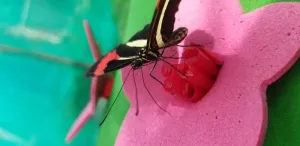
Heliconius butterflies are capable of spatial learning, scientists have discovered. The results provide the first experimental evidence of spatial learning in any butterfly or moth species. The findings, published today in Current Biology, also suggest Heliconius butterflies may be able to learn spatial information at large scales, consistent with the apparent importance of long-range spatial learning for traplining, which involves foraging within a home range of a few hundred square metres. Spatial learning is known in insects, but much of the research has focused on ant and bee species which live socially ...

Read the release
Space

New exoplanet discovery builds better understanding of planet formation

An international team of scientists have discovered an unusual Jupiter-sized planet orbiting a low-mass star called TOI-4860, located in the Corvus constellation. The newly discovered gas giant, named TOI-4860 b, is an unusual planet for two reasons: stars of such low mass are not expected to host planets like Jupiter, and the planet appears to be particularly enriched by heavy elements. The study, led by University of Birmingham astronomers, is published today (Friday 4th August) in a letter published within the Monthly Notices of the Royal Astronomical Society. The planet was initially identified using NASA’s Transiting Exoplanet ...

Read the release
James Webb Space Telescope captures stunning images of the Ring Nebula
Space

James Webb Space Telescope captures stunning images of the Ring Nebula

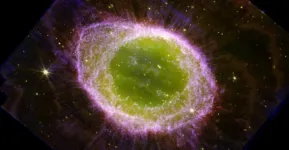
NASA's James Webb Space Telescope (JWST) has recorded breath-taking new images of the iconic Ring Nebula, also known as Messier 57. The images, released today by an international team of astronomers led by Professor Mike Barlow (UCL, UK) and Dr Nick Cox (ACRI-ST, France), with Professor Albert Zijlstra of The University of Manchester, showcase the nebula's intricate and ethereal beauty in unprecedented detail, providing scientists and the public with a mesmerizing view of this celestial wonder. For many sky enthusiasts, the Ring Nebula is a well-known object that is visible all summer long and is located in the constellation ...

Read the release
Space

New-generation geostationary satellite reveals widespread midday depression in dryland photosynthesis during 2020 western US heatwave

The western U.S., particularly the Southwest, has experienced a notable increase in record-breaking high temperatures over recent decades, with recurring drought and heatwaves. These conditions have resulted in severe consequences for both human and nature systems, including dire water shortages, rampant wildfires, substantial agricultural losses, and increased human mortality. These regions, dominated by water-limited ecosystems, face exacerbated water stress due to more frequent and protracted droughts and heatwaves, which can profoundly impair ecosystem ...

Read the release
Frank J. Malina Astronautics Medal awarded to Klaus Schilling
Space

Frank J. Malina Astronautics Medal awarded to Klaus Schilling

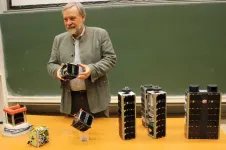
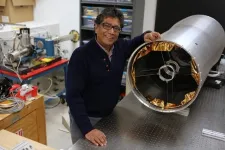
The International Astronautical Federation (IAF) selected Würzburg space expert Professor Klaus Schilling for the Frank J. Malina Astronautics Medal 2023. This medal is a top award in the space sector for innovative research and for commitment to education. According to a statement by the IAF, the medal is awarded each year to a personality who has provided outstanding services to space education and research. This applies to Professor Schilling without reservation: "He has provided numerous students with practical experience in satellite construction and has been involved in a wide ...

Read the release
Astronomers shed new light on formation of mysterious fast radio bursts
Space

Astronomers shed new light on formation of mysterious fast radio bursts

More than 15 years after the discovery of fast radio bursts (FRBs) – millisecond-long, deep-space cosmic explosions of electromagnetic radiation – astronomers worldwide have been combing the universe to uncover clues about how and why they form. Nearly all FRBs identified have originated in deep space outside our Milky Way galaxy. That is until April 2020, when the first Galactic FRB, named FRB 20200428, was detected. This FRB was produced by a magnetar (SGR J1935+2154), a dense, city-sized neutron star with an incredibly powerful magnetic field. This groundbreaking discovery led some to believe that FRBs identified at cosmological distances outside ...

Read the release
New manufacturing equipment could be used at sea or in deep space
Space

New manufacturing equipment could be used at sea or in deep space

An industrial engineering researcher at The University of Texas at Arlington has earned a grant from the Department of Defense to purchase state-of-the-art hybrid additive-subtractive manufacturing equipment. The project will improve manufacturing capabilities at UTA for printing a wide range of metals and alloys. The grant recipient, Emma Yang, is an assistant professor in the Industrial, Manufacturing, and Systems Engineering Department and an expert in additive and sustainable manufacturing. END ...

Read the release
Space

Using cosmic weather to study which worlds could support life

COLUMBUS, Ohio – As the next generation of giant, high-powered observatories begin to come online, a new study suggests that their instruments may offer scientists an unparalleled opportunity to discern what weather may be like on far-away exoplanets. Dubbed the extremely large telescopes (ELTs), these observatories, which include the Extremely Large Telescope (ELT), the Giant Magellan Telescope (GMT), and the Thirty Meter Telescope (TMT), will be some of the largest ground-based telescopes ever built, and their instruments are expected to exceed ...

Read the release
James Webb Space Telescope sees Jupiter moons in a new light
Space

James Webb Space Telescope sees Jupiter moons in a new light

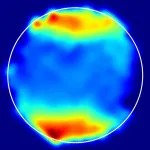
With its sensitive infrared cameras and high-resolution spectrometer, the James Webb Space Telescope (JWST) is revealing new secrets of Jupiter's Galilean satellites, in particular Ganymede, the largest moon, and Io, the most volcanically active. In two separate publications, astronomers who are part of JWST's Early Release Science program report the first detection of hydrogen peroxide on Ganymede and sulfurous fumes on Io, both the result of Jupiter's domineering influence. "This ...

Read the release
Astronomers reveal new features of galactic black holes
Space

Astronomers reveal new features of galactic black holes

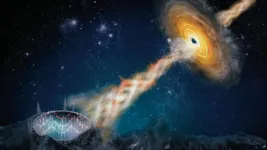
LAS VEGAS – July 26, 2023 – Black holes are the most mysterious objects in the universe, with features that sound like they come straight from a sci-fi movie. Stellar-mass black holes with masses of roughly 10 suns, for example, reveal their existence by eating materials from their companion stars. And in some instances, supermassive black holes accumulate at the center of some galaxies to form bright compact regions known as quasars with masses equal to millions to billions of our sun. A subset of accreting stellar-mass black holes that can launch jets of highly magnetized plasma are called microquasars. An international ...

Read the release
Space

In search of electromagnetic counterparts of gravitational waves

Alessandra Corsi knows that when you shoot for the stars, anything can happen. It’s in that spirit of intellectual curiosity that Corsi, an associate professor in Texas Tech University’s Department of Physics and Astronomy, will peer into some of the farthest recesses of space in search of gravitational waves. “We are at a critical moment in this field,” she said. “We had one event in 2017 that was amazing where everyone in multi-messenger astronomy started caring more about gravitational wave data, but now we need more of those type of events so we can study them and understand them better.” Corsi has received a three-year grant from the ...

Read the release
Space

RIT professor co-authors paper on new planetary formation findings

Rochester Institute of Technology’s Joel Kastner, a professor in the Chester F. Carlson Center for Imaging Science and School of Physics and Astronomy, and a team of researchers with the European Southern Observatory (ESO) have discovered new evidence of how planets as massive as Jupiter can form, using images from the ESO’s Very Large Telescope (VLT) and the Atacama Large Millimeter/submillimeter Array (ALMA). The combination of VLT and ALMA imaging have yielded detections of dusty ...

Read the release
New image reveals secrets of planet birth
Space

New image reveals secrets of planet birth

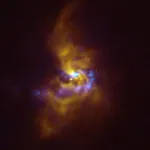
A spectacular new image released today by the European Southern Observatory gives us clues about how planets as massive as Jupiter could form. Using ESO’s Very Large Telescope (VLT) and the Atacama Large Millimeter/submillimeter Array (ALMA), researchers have detected large dusty clumps, close to a young star, that could collapse to create giant planets. “This discovery is truly captivating as it marks the very first detection of clumps around a young star that have the potential to give rise to giant planets,” says Alice Zurlo, a researcher at the Universidad Diego Portales, Chile, involved ...

Read the release
Webb detects water vapor in rocky planet-forming zone
Space

Webb detects water vapor in rocky planet-forming zone

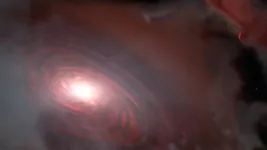
Water is essential for life as we know it. However, scientists debate how it reached the Earth and whether the same processes could seed rocky exoplanets orbiting distant stars. New insights may come from the planetary system PDS 70, located 370 light-years away. The star hosts both an inner disk and outer disk of gas and dust, separated by a 5 billion-mile-wide (8 billion kilometer) gap, and within that gap are two known gas-giant planets. New measurements by NASA’s James Webb Space Telescope’s MIRI (Mid-Infrared Instrument) have detected water vapor in the system’s inner disk, at distances ...

Read the release
Ming Xu, PhD (UConn) receives AFAR 2023 Vincent Cristofalo Rising Star Award in Aging Research
Space

Ming Xu, PhD (UConn) receives AFAR 2023 Vincent Cristofalo Rising Star Award in Aging Research

New York, NY – The American Federation for Aging Research (AFAR), a national non-profit organization whose mission is to support and advance healthy aging through biomedical research, is pleased to recognize the exemplary contributions of Ming Xu, PhD, to the field of aging research through the 2023 Vincent Cristofalo Rising Star Award in Aging Research. This award is named in honor of the late Dr. Cristofalo, who dedicated his career to aging research and to encouraging young scientists to investigate important problems in the biology of aging. Established in 2008, the award is a ...

Read the release
Space

PKUers finds key evidence for existence of nanohertz gravitational waves

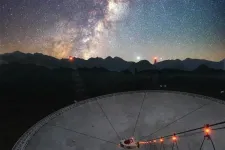
A group of Chinese scientists has recently found key evidence for the existence of nanohertz gravitational waves, marking a new era in nanohertz gravitational wave research. The research was based on pulsar timing observations carried out with the Five-hundred-meter Aperture Spherical Telescope (FAST). The research was conducted by the Chinese Pulsar Timing Array (CPTA) collaboration. Researchers (Prof. Kejia Lee, Post-Doc. Siyuan Chen, PhD students Jiangwei Xu, and Zihan Xue) from Department of Astronomy ...

Read the release
From the original Press-News collection. Issuers of news releases are responsible for the accuracy of their content.