THE ORIGINAL COLLECTION · SINCE 2010

Space
press releases.

Research announcements from universities, hospitals and scientific institutions. Explore the stories, people and discoveries behind the headlines.

Original publication datesPage 41
FIND A STORY

Find a past release.

Dates and source material belong to the original release.

Read our research explainers

Browse the collection · original publication order

These foods can help you live longer and protect the planet
Space

These foods can help you live longer and protect the planet

Eating more planet-friendly foods could help you live a longer, healthier life, according to new research. Researchers found that people who followed a more environmentally sustainable diet were 25% less likely to die during a follow-up period of over 30 years compared to those with a less sustainable diet. The study builds upon prior research that identified foods that are a win-win for both health and the environment—such as whole grains, fruit, non-starchy vegetables, nuts, and unsaturated oils—as well as foods that could be harmful to the environment and human health, like eggs ...

Read the release
To stick or to bounce: Size determines the stickiness of cosmic dust aggregates
Space

To stick or to bounce: Size determines the stickiness of cosmic dust aggregates

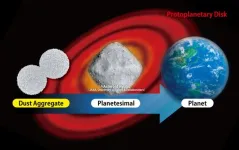
Microparticle dust aggregates, which are thought to play a role in the formation of new planets, are less likely to stick together after a collision when the aggregates are larger. Current evidence suggests that microparticles of cosmic dust collide and stick together to form larger dust aggregates that may eventually combine and develop into planets. Numerical models that accurately characterize the conditions required for colliding microparticle aggregates to stick together, rather than bounce apart, are therefore ...

Read the release
Hubble sees boulders escaping from asteroid dimorphos
Space

Hubble sees boulders escaping from asteroid dimorphos

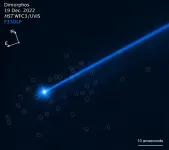
The popular 1954 rock song "Shake, Rattle and Roll," could be the theme music for the Hubble Space Telescope's latest discovery about what is happening to the asteroid Dimorphos in the aftermath of NASA's DART (Double Asteroid Redirection Test) experiment. DART intentionally impacted Dimorphos on September 26, 2022, slightly changing the trajectory of its orbit around the larger asteroid Didymos. Astronomers using Hubble's extraordinary sensitivity have discovered a swarm of boulders that were possibly shaken off the asteroid when NASA deliberately slammed the half-ton DART impactor spacecraft into Dimorphos ...

Read the release
Two-faced star exposed
Space

Two-faced star exposed

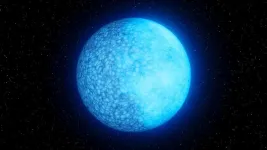
In a first for white dwarfs, the burnt-out cores of dead stars, astronomers have discovered that at least one member of this cosmic family is two faced. One side of the white dwarf is composed of hydrogen, while the other is made up of helium. “The surface of the white dwarf completely changes from one side to the other,” says Ilaria Caiazzo, a postdoctoral scholar at Caltech who leads a new study on the findings in the journal Nature. “When I show the observations to people, they are blown away.” White dwarfs are the scalding remains of stars that were once like our sun. As the ...

Read the release
Astronomers find new type of stellar object
Space

Astronomers find new type of stellar object

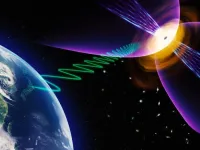
An international team led by astronomers from the Curtin University node of the International Centre for Radio Astronomy Research (ICRAR) has discovered a new type of stellar object that challenges our understanding of the physics of neutron stars. The object could be an ultra-long period magnetar, a rare type of star with extremely strong magnetic fields that can produce powerful bursts of energy. Until recently, all known magnetars released energy at intervals ranging from a few seconds to a few minutes. The newly discovered object emits radio waves every 22 minutes, making it the longest period magnetar ever detected. The research was published ...

Read the release
The puzzle of the galaxy with no dark matter
Space

The puzzle of the galaxy with no dark matter

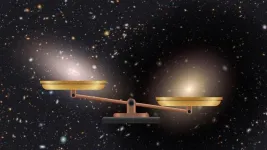
A team of scientists, led by the researcher at the IAC and the University of La Laguna (ULL) Sebastién Comerón, has found that the galaxy NGC 1277 does not contain dark matter.This is the first time that a massive galaxy (it has a mass several times that of the Milky Way) does not show evidence for this invisible component of the universe. “This result does not fit in with the currently accepted cosmological models, which include dark matter” explains Comerón. In the current standard model cosmology massive galaxies contain substantial quantities of dark matter, a type of matter which does not interact in the same ...

Read the release
Does this exoplanet have a sibling sharing the same orbit?
Space

Does this exoplanet have a sibling sharing the same orbit?

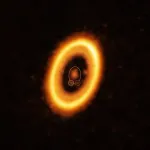
Using the Atacama Large Millimeter/submillimeter Array (ALMA), astronomers have found the possible ‘sibling’ of a planet orbiting a distant star. The team has detected a cloud of debris that might be sharing this planet’s orbit and which, they believe, could be the building blocks of a new planet or the remnants of one already formed. If confirmed, this discovery would be the strongest evidence yet that two exoplanets can share one orbit. “Two decades ago it was predicted in theory that pairs of planets of similar mass may share the same orbit around their star, the so-called Trojan or co-orbital planets. For the first time, we have found evidence ...

Read the release
VERA unveils surroundings of rapidly growing black holes
Space

VERA unveils surroundings of rapidly growing black holes

An international team of astronomers used the state-of-the-art capability of VERA, a Japanese network of radio telescopes operated by NAOJ, to uncover valuable clues about how rapidly growing “young” supermassive black holes form, grow, and possibly evolve into more powerful quasars. It is now widely accepted that nearly every active galaxy harbors a supermassive black hole at its core, with masses ranging from millions to billions of times that of the Sun. The growth history by which these black holes have gained such huge masses, however, remains an open question. Led by Mieko Takamura, ...

Read the release
Into the unknown: NASA space laser provides answers to a rainforest canopy mystery
Space

Into the unknown: NASA space laser provides answers to a rainforest canopy mystery

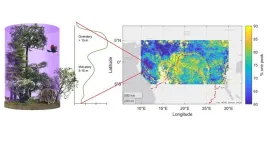
We know less about the rainforest canopy, where most of the world’s species live than we do about the surface of Mars or the bottom of the ocean. However, that is about to change thanks to GEDI—a NASA space laser that has provided a detailed structure of the world’s rainforests for the first time ever. “Tropical forests are mainly unstratified especially in Amazonia and regions with lower fertility or higher temperatures” reads the title of the recently published paper in Environmental Research Ecology ...

Read the release
Stellar cradles and graves seen in farthest galaxy ever
Space

Stellar cradles and graves seen in farthest galaxy ever

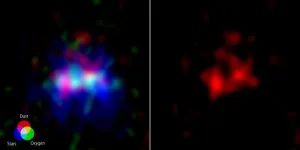
New observations using the Atacama Large Millimeter/submillimeter Array (ALMA) have distinguished the sites of star formation and a possible site of star death from the surrounding nebula in a galaxy 13.2 billion light-years away. This is the farthest that such structures have been observed. A team led by Yoichi Tamura, an astronomer at Nagoya University, attempted high-resolution observations of MACS0416_Y1, located 13.2 billion light-years away in the constellation Eridanus. Previous observations of this galaxy by the same team had detected radio waves emitted by both oxygen and dust, two components of interstellar nebulae. Detailed observations of the ...

Read the release
James Webb Telescope catches glimpse of possible first-ever ‘dark stars’
Space

James Webb Telescope catches glimpse of possible first-ever ‘dark stars’

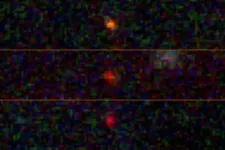
Stars beam brightly out of the darkness of space thanks to fusion, atoms melding together and releasing energy. But what if there’s another way to power a star? A team of three astrophysicists — Katherine Freese at The University of Texas at Austin, in collaboration with Cosmin Ilie and Jillian Paulin ’23 at Colgate University — analyzed images from the James Webb Space Telescope (JWST) and found three bright objects that might be “dark stars,” theoretical objects much bigger and brighter than our sun, powered by particles of dark matter annihilating. If confirmed, dark stars could reveal the nature ...

Read the release
Astronomers identify the coldest star yet that emits radio waves
Space

Astronomers identify the coldest star yet that emits radio waves

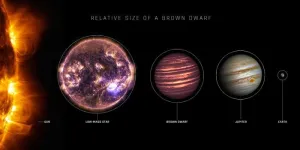
Astronomers at the University of Sydney have shown that a small, faint star is the coldest on record to produce emission at radio wavelength. The ‘ultracool brown dwarf’ examined in the study is a ball of gas simmering at about 425 degrees centigrade – cooler than a typical campfire – without burning nuclear fuel. By contrast, the surface temperature of the Sun, a nuclear inferno, is about 5600 degrees. While not the coldest star ever found, it is the coolest so far analysed using radio astronomy. The findings are published today in The Astrophysical Journal. Lead author and PhD student in the School of Physics, Kovi Rose, said: “It’s very rare ...

Read the release
When the stars align: Astronomers find answers to mysterious action of ghost stars in our Galaxy
Space

When the stars align: Astronomers find answers to mysterious action of ghost stars in our Galaxy

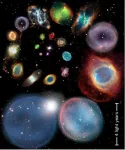
A collaboration of scientists from The University of Manchester and the University of Hong Kong have found a source for the mysterious alignment of stars near the Galactic Centre. The alignment of planetary nebulae was discovered ten years ago by a Manchester PhD student, Bryan Rees, but has remained unexplained. New data obtained with the European Southern Observatory Very Large Telescope in Chile and the Hubble Space Telescope, published in Astrophysical Journal Letters, has confirmed the alignment but also found a particular ...

Read the release
SwRI delivers plasma spectrometer for Moon mission
Space

SwRI delivers plasma spectrometer for Moon mission

SAN ANTONIO — July 11, 2023 —Southwest Research Institute has delivered a plasma spectrometer for integration into a lunar lander as part of NASA’s Lunar Vertex investigation, scheduled to commence next year. The target site is the Reiner Gamma region on the Moon’s nearside, a mysterious area known to have a local magnetic field. The SwRI-developed Magnetic Anomaly Plasma Spectrometer (MAPS) will study the interaction of the solar wind with surface materials on the Moon, aiming to understand the origin of the sinuous patterns of ...

Read the release
Name of Portuguese astrophysicist shines in the night sky
Space

Name of Portuguese astrophysicist shines in the night sky

The International Astronomical Union (IAU) has named an asteroid after Pedro Machado, astrophysicist at Institute of Astrophysics and Space Sciences (IA), at the Faculty of Sciences of the University of Lisbon (Portugal). Along with the nomination of Pedro Machado, there were over a hundred other nominations of asteroids and other small bodies. It is almost three kilometers in diameter and takes four and a half years to complete its orbit around the sun. We’re talking about 2001 QL160, or rather the asteroid 32599 Pedromachado. Pedro Machado has been honored by the Work group for the Nomenclature of Small Bodies (WGSBN 2) of the International Astronomical ...

Read the release
Astronomers discover elusive planet responsible for spiral arms around its star
Space

Astronomers discover elusive planet responsible for spiral arms around its star

Depictions of the Milky Way show a coiling pattern of spiral "arms" filled with stars extending outward from the center. Similar patterns have been observed in the swirling clouds of gas and dust surrounding some young stars – planetary systems in the making. These so-called protoplanetary disks, which are the birthplaces of young planets, are of interest to scientists because they offer glimpses into what the solar system may have looked like in its infancy and into how planets may form in general. Scientists have long thought that spiral arms in these disks ...

Read the release
Webb Telescope detects most distant active supermassive black hole
Space

Webb Telescope detects most distant active supermassive black hole

Researchers have discovered the most distant active supermassive black hole to date with the James Webb Space Telescope (JWST). The galaxy, CEERS 1019, existed about 570 million years after the big bang, and its black hole is less massive than any other yet identified in the early universe. In addition to the black hole in CEERS 1019, the researchers identified two more black holes that are on the smaller side and existed 1 billion and 1.1 billion years after the big bang. JWST also identified eleven galaxies that existed when the universe was 470 million to 675 million years old. The evidence was provided ...

Read the release
Astronomers identify the earliest strands of the cosmic web
Space

Astronomers identify the earliest strands of the cosmic web

Using NASA's James Webb Space Telescope, a team of scientists led by University of Arizona astronomers has discovered a threadlike arrangement of 10 galaxies that existed just 830 million years after the Big Bang. Lined up like pearls on an invisible string, the 3-million-light-year-long structure is anchored by a luminous quasar – a galaxy with an active, supermassive black hole at its core. The team believes the filament will eventually evolve into a massive cluster of galaxies, much like the well-known Coma Cluster in the "nearby" universe. The results are published in two papers in The Astrophysical Journal ...

Read the release
Why the day is 24 hours long: Astrophysicists reveal why Earth’s day was a constant 19.5 hours for over a billion years
Space

Why the day is 24 hours long: Astrophysicists reveal why Earth’s day was a constant 19.5 hours for over a billion years

A team of astrophysicists at the University of Toronto (U of T) has revealed how the slow and steady lengthening of Earth’s day caused by the tidal pull of the moon was halted for over a billion years. They show that from approximately two billion years ago until 600 million years ago, an atmospheric tide driven by the sun countered the effect of the moon, keeping Earth’s rotational rate steady and the length of day at a constant 19.5 hours. Without this billion-year pause in the slowing of our planet’s rotation, our current 24-hour day would stretch to over 60 hours. The ...

Read the release
Large sub-surface granite formation signals ancient volcanic activity on Moon's dark side
Space

Large sub-surface granite formation signals ancient volcanic activity on Moon's dark side

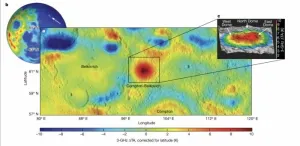
DALLAS (SMU) – A large formation of granite discovered below the lunar surface likely was formed from the cooling of molten lava that fed a volcano or volcanoes that erupted early in the Moon’s history – as long as 3.5 billion years ago. A team of scientists led by Matthew Siegler, an SMU research professor and research scientist with the Planetary Science Institute, has published a study in Nature that used microwave frequency data to measure heat below the surface of a suspected volcanic ...

Read the release
Webb locates dust reservoirs in two supernovae
Space

Webb locates dust reservoirs in two supernovae

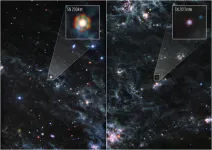
Researchers using NASA’s James Webb Space Telescope have made major strides in confirming the source of dust in early galaxies. Observations of two Type II supernovae, Supernova 2004et (SN 2004et) and Supernova 2017eaw (SN 2017eaw), have revealed large amounts of dust within the ejecta of each of these objects. The mass found by researchers supports the theory that supernovae played a key role in supplying dust to the early universe. Dust is a building block for many things in our universe – planets in particular. As dust from dying stars spreads through space, it carries essential elements to help give birth to the next generation of stars ...

Read the release
Martian dunes eroded by a shift in prevailing winds after the planet's last ice age
Space

Martian dunes eroded by a shift in prevailing winds after the planet's last ice age

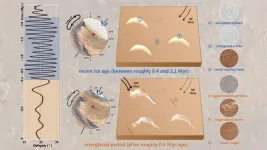
Detailed analysis of data obtained by the Zhurong rover of dunes located on the southern Utopian Plain of Mars suggests the planet underwent a major shift in climate that accompanied changes in prevailing winds. This shift likely occurred about 400,000 years ago, which coincides with the end of the last glacial period on Mars. Researchers from the National Astronomical Observatories, Institute of Geology and Geophysics and Institute of Tibetan Plateau Research of the Chinese Academy of Sciences, in collaboration with colleagues from Brown University, assessed the surface structure and chemical composition of Martian dunes to ...

Read the release
Quasar ‘clocks’ show Universe was five times slower soon after the Big Bang
Space

Quasar ‘clocks’ show Universe was five times slower soon after the Big Bang

Scientists have for the first time observed the early universe running in extreme slow motion, unlocking one of the mysteries of Einstein’s expanding universe. Einstein’s general theory of relativity means that we should observe the distant – and hence ancient – universe running much slower than the present day. However, peering back that far in time has proven elusive. Scientists have now cracked that mystery by using quasars as ‘clocks'. “Looking back to a time when the universe was ...

Read the release
Astrophysicists propose a new way of measuring cosmic expansion: lensed gravitational waves
Space

Astrophysicists propose a new way of measuring cosmic expansion: lensed gravitational waves

(Santa Barbara, Calif.) — The universe is expanding; we’ve had evidence of that for about a century. But just how quickly celestial objects are receding from each other is still up for debate. It’s no small feat to measure the rate at which objects move away from each other across vast distances. Since the discovery of cosmic expansion, its rate has been measured and re-measured with increasing precision, with some of the latest values ranging from 67.4 up to 76.5 kilometers per second per megaparsec, which relates the recession velocity (in ...

Read the release
IceCube shows Milky Way galaxy is a neutrino desert
Space

IceCube shows Milky Way galaxy is a neutrino desert

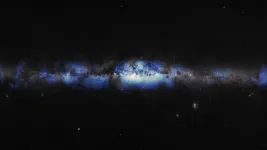
The Milky Way galaxy is an awe-inspiring feature of the night sky, dominating all wavelengths of light and viewable with the naked eye as a hazy band of stars stretching from horizon to horizon. Now, for the first time, the IceCube Neutrino Observatory has produced an image of the Milky Way using neutrinos — tiny, ghostlike astronomical messengers. In a June 30 article in the journal Science, the IceCube Collaboration — an international group of more than 350 scientists — presents this new ...

Read the release
From the original Press-News collection. Issuers of news releases are responsible for the accuracy of their content.