THE ORIGINAL COLLECTION · SINCE 2010

Space
press releases.

Research announcements from universities, hospitals and scientific institutions. Explore the stories, people and discoveries behind the headlines.

Original publication datesPage 42
FIND A STORY

Find a past release.

Dates and source material belong to the original release.

Read our research explainers

Browse the collection · original publication order

First 'ghost particle' image of Milky Way galaxy captured by scientists
Space

First 'ghost particle' image of Milky Way galaxy captured by scientists

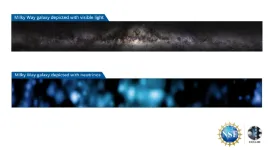
From visible starlight to radio waves, the Milky Way galaxy has long been observed through the various frequencies of electromagnetic radiation it emits. Scientists have now revealed a uniquely different image of our galaxy by determining the galactic origin of thousands of neutrinos — invisible "ghost particles" which exist in great quantities but normally pass straight through Earth undetected. The neutrino-based image of the Milky Way is the first of its kind: a galactic portrait made with particles of matter rather than electromagnetic ...

Read the release
Gullies on Mars could have been formed by recent periods of liquid meltwater, study suggests
Space

Gullies on Mars could have been formed by recent periods of liquid meltwater, study suggests

PROVIDENCE, R.I. [Brown University] — A study led by Brown University researchers offers new insights into how water from melting ice could have played a recent role in the formation of ravine-like channels that cut down the sides of impact craters on Mars. The study, published in Science, focuses on Martian gullies, which look eerily similar to gullies that form on Earth in the Dry Valleys of Antarctica and are caused by water erosion from melting glaciers. The researchers, including Brown planetary scientist Jim Head, built a model that simulates a sweet spot for when conditions on Mars allow the planet to warm above freezing temperatures, ...

Read the release
The first neutrino image of our galaxy
Space

The first neutrino image of our galaxy

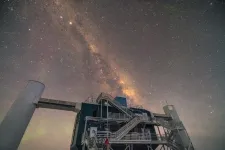
For the first time, researchers have produced an image of the Milky Way using neutrinos, which were observed with the IceCube telescope in the Antarctic ice. The neutrino image suggests that cosmic ray interactions are more intense in the center of our galaxy than once thought. The results are published in an article in the journal Science. For ages, the view of our Milky Way galaxy has inspired awe, visible with the naked eye as a hazy band of stars that stretches across the sky. Now IceCube researchers are able to see the Milky Way using neutrinos – tiny, ghostlike ...

Read the release
NASA’s Webb identifies the earliest strands of the cosmic web
Space

NASA’s Webb identifies the earliest strands of the cosmic web

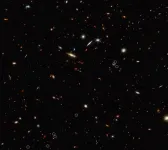
Galaxies are not scattered randomly across the universe. They gather together not only into clusters, but into vast interconnected filamentary structures with gigantic barren voids in between. This “cosmic web” started out tenuous and became more distinct over time as gravity drew matter together. Astronomers using NASA’s James Webb Space Telescope have discovered a thread-like arrangement of 10 galaxies that existed just 830 million years after the big bang. The 3 million light-year-long structure is anchored by a luminous quasar – a galaxy with an active, supermassive black hole at ...

Read the release
Scientists find evidence for slow-rolling sea of gravitational waves
Space

Scientists find evidence for slow-rolling sea of gravitational waves

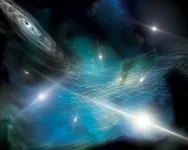
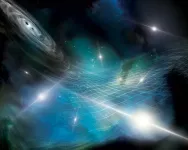
Scientists are reporting the first evidence that our Earth and the universe around us are awash in a background of spacetime undulations called gravitational waves. The waves oscillate very slowly over years and even decades and are thought to originate primarily from pairs of supermassive black holes leisurely spiraling together before they merge. The findings, reported in a series of papers in The Astrophysical Journal Letters, come from 15 years’ worth of observations made ...

Read the release
Clamor of gravitational waves from universe’s merging supermassive black holes ‘heard’ for first time
Space

Clamor of gravitational waves from universe’s merging supermassive black holes ‘heard’ for first time

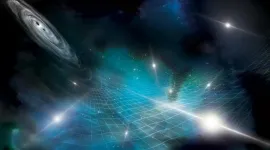
Following 15 years of data collection in a galaxy-sized experiment, scientists have “heard” the perpetual chorus of gravitational waves rippling through our universe for the first time — and it’s louder than expected. The groundbreaking discovery was made by scientists with the North American Nanohertz Observatory for Gravitational Waves (NANOGrav) who closely observed stars called pulsars that act as celestial metronomes. The newly detected gravitational waves — ripples in the fabric of space-time — are by far the most powerful ever measured: They carry roughly a million times as much energy as ...

Read the release
Gravitational waves from colossal black holes found using 'cosmic clocks'
Space

Gravitational waves from colossal black holes found using 'cosmic clocks'

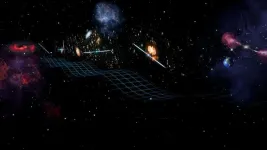
You can't see or feel it, but everything around you — including your own body — is slowly shrinking and expanding. It's the weird, spacetime-warping effect of gravitational waves passing through our galaxy, according to a new study by a team of researchers with the U.S. National Science Foundation's NANOGrav Physics Frontiers Center. The findings published today in The Astrophysical Journal Letters are from the North American Nanohertz Observatory for Gravitational Waves (NANOGrav), a collaborative team of researchers from more than 50 institutions in the U.S. and abroad. The team ...

Read the release
Scientists use exotic stars to tune into hum from cosmic symphony
Space

Scientists use exotic stars to tune into hum from cosmic symphony

Astrophysicists using large radio telescopes to observe a collection of cosmic clocks in our Galaxy have found evidence for gravitational waves that oscillate with periods of years to decades, according to a set of papers published today in The Astrophysical Journal Letters. The gravitational-wave signal was observed in 15 years of data acquired by the North American Nanohertz Observatory for Gravitational Waves (NANOGrav) Physics Frontiers Center (PFC), a collaboration of more than 190 scientists from the US and Canada who use pulsars ...

Read the release
Space

Australian astronomers find possible ‘fingerprints’ of gravitational waves

Astronomers using data collected by CSIRO’s Parkes radio telescope, Murriyang, have found their strongest evidence yet for low-frequency gravitational waves. For nearly 20 years the Parkes Pulsar Timing Array collaboration has monitored a set of rapidly spinning stars that pulse like a lighthouse, called pulsars. They are looking for nanosecond pulse delays caused by gravitational waves to provide further evidence for Einstein’s general theory of relativity and build on our understanding of the Universe. By ...

Read the release
Astrophysics collaboration led by Oregon State finds ‘chorus’ of gravitational waves
Space

Astrophysics collaboration led by Oregon State finds ‘chorus’ of gravitational waves

CORVALLIS, Ore. – Gravitational waves, ripples in the fabric of time-space predicted by Albert Einstein more than a century ago, are permeating the universe at low frequencies, according to a multiyear National Science Foundation project led by Oregon State University scientists. The findings appear in a collection of five papers authored by researchers from the NANOGrav Physics Frontier Center co-directed by Xavier Siemens, professor of physics in the OSU College of Science. Evidence of the gravitational waves, whose oscillations are ...

Read the release
AnalySwift receives nearly $800,000 NASA contract to improve simulation of next-generation composites
Space

AnalySwift receives nearly $800,000 NASA contract to improve simulation of next-generation composites

WEST LAFAYETTE, Ind. – NASA has awarded a $799,954 Phase II STTR contract to AnalySwift LLC, a Purdue University-affiliated commercial software provider. The company will develop DATC, or Design tool for Advanced Tailorable Composites, and launch it at the end of the two-year contract. Allan Wood, AnalySwift president and CEO, said advancements in simulation capabilities have not always kept pace with those in manufacturing techniques. He said DATC will significantly improve NASA’s capabilities to design and analyze aerospace structures made from advanced tailorable composites. “DATC will be used to design next-generation aerospace structures, such as hybrid/blended ...

Read the release
Starlight and the first black holes: researchers detect the host galaxies of quasars in the early universe
Space

Starlight and the first black holes: researchers detect the host galaxies of quasars in the early universe

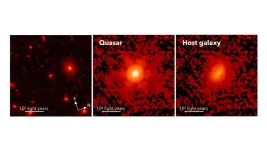
New images from the James Webb Space Telescope have revealed, for the first time, starlight from two massive galaxies hosting actively growing black holes – quasars – seen less than a billion years after the Big Bang. A new study in Nature this week finds the black holes have masses close to a billion times that of the Sun, and the host galaxy masses are almost one hundred times larger, a ratio similar to what is found in the more recent universe. A powerful combination of the Subaru Telescope and the JWST has paved a new path to study the distant universe. The existence of such massive black holes in the distant universe has created more questions ...

Read the release
Space

Life after death: Hawaiʻi astronomers find a planet that shouldn’t exist

Maunakea, Hawaiʻi - When our Sun reaches the end of its life, it will expand to 100 times its current size, enveloping the Earth. Many planets in other solar systems face a similar doom as their host stars grow old. But not all hope is lost, as astronomers from the University of Hawaiʻi Institute for Astronomy (UH IfA) have made the remarkable discovery of a planet’s survival after what should have been certain demise at the hands of its sun. The Jupiter-like planet 8 UMi b, officially named Halla, ...

Read the release
Space

Humans' ancestors survived the asteroid impact that killed the dinosaurs

A Cretaceous origin for placental mammals, the group that includes humans, dogs and bats, has been revealed by in-depth analysis of the fossil record, showing they co-existed with dinosaurs for a short time before the dinosaurs went extinct. The catastrophic destruction triggered by the asteroid hitting the Earth resulted in the death of all non-avian dinosaurs in an event termed the Cretaceous-Paleogene (K-Pg) mass extinction. Debate has long raged among researchers over whether placental mammals were present alongside the dinosaurs before the mass extinction, ...

Read the release
A surprise chemical find by ALMA may help detect and confirm protoplanets
Space

A surprise chemical find by ALMA may help detect and confirm protoplanets

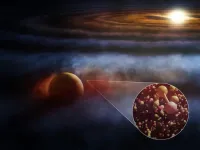
Scientists using the Atacama Large Millimeter/submillimeter Array (ALMA) to study the protoplanetary disk around a young star have discovered the most compelling chemical evidence to date of the formation of protoplanets. The discovery will provide astronomers with an alternate method for detecting and characterizing protoplanets when direct observations or imaging are not possible. The results will be published in an upcoming edition of The Astrophysical Journal Letters. HD 169142 is a young star located in the constellation ...

Read the release
Purdue-launched solid rocket motor-maker Adranos flies off with Anduril
Space

Purdue-launched solid rocket motor-maker Adranos flies off with Anduril

WEST LAFAYETTE, Ind. – Adranos Inc., a Purdue-originated company that grew from a doctoral project into an impactful company, has been acquired by a major Costa Mesa, California-based defense products company, Anduril Industries. Terms of the deal were settled, and the acquisition was announced on Sunday (June 25) in The Wall Street Journal that Anduril Industries is to purchase Adranos, manufacturer of solid rocket motors and maker of ALITEC, a high-performance solid rocket fuel that gives greater payload capacity, range and speed to launch systems. “The success of Adranos is the latest manifestation ...

Read the release
Space

Heat spots reveal growth rate of a galaxy 12 billion years ago

An international team of astronomers has drawn a temperature map of the dust drifting within one of the oldest spiral galaxies of the Universe which provides new insights into how fast the galaxy is growing. Until now researchers have only been able to measure the temperature of most distant galaxies in broad terms, without showing how temperatures vary in individual areas. This research, described in a paper published today in Monthly Notices of the Royal Astronomical Society (MNRAS) shows unambiguous temperature variation within the distant galaxy indicating two distinct heat sources – a supermassive black hole at the centre of the galaxy, and the heat generated ...

Read the release
Stellar demolition derby births powerful gamma-ray burst
Space

Stellar demolition derby births powerful gamma-ray burst

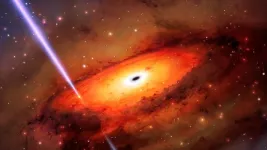
While searching for the origins of a powerful gamma-ray burst (GRB), an international team of astrophysicists may have stumbled upon a new way to destroy a star. Although most GRBs originate from exploding massive stars or neutron-star mergers, the researchers concluded that GRB 191019A instead came from the collision of stars or stellar remnants in the jam-packed environment surrounding a supermassive black hole at the core of an ancient galaxy. The demolition derby-like environment points to a ...

Read the release
Space

Einstein and Euler put to the test at the edge of the Universe

The cosmos is a unique laboratory for testing the laws of physics, in particular those of Euler and Einstein. Euler described the movements of celestial objects, while Einstein described the way in which celestial objects distort the Universe. Since the discovery of dark matter and the acceleration of the Universe’s expansion, the validity of their equations has been put to the test: are they capable of explaining these mysterious phenomena? A team from the University of Geneva (UNIGE) has developed the first method to find out. It ...

Read the release
Space

IADR announces recipients of the 2023 IADR STAR Network Fellowship

Alexandria, VA – The International Association for Dental Research (IADR) has announced the 2023 recipients of the IADR STAR Network Fellowship. The recipients were recognized during the Opening Ceremonies of the 101st General Session of the IADR, which was held in conjunction with the 9th Meeting of the Latin American Region and the 12th World Congress on Preventive Dentistry, that took place on June 21, 2023, in Bogotá, Colombia. The 2023 Recipients are: Karol Ali Apaza Alccayhuaman, Medical University of Vienna, Austria Meisser Madera, Universidad de Cartagena, Colombia Maja ...

Read the release
Detection of an echo emitted by our Galaxy's black hole 200 years ago
Space

Detection of an echo emitted by our Galaxy's black hole 200 years ago

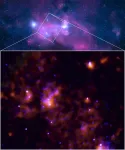
An international team of scientists has discovered that Sagittarius A* (Sgr A*)1, the supermassive black hole at the centre of the Milky Way, emerged from a long period of dormancy some 200 years ago. The team, led by Frédéric Marin2, a CNRS researcher at the Astronomical Strasbourg Observatory (CNRS/University of Strasbourg), has revealed the past awakening of this gigantic object, which is four million times more massive than the Sun. Their work is published in Nature on 21 June. Over a period of one year at the beginning of the 19th century, the black ...

Read the release
Space

Exoplanet may reveal secrets about the edge of habitability

ITHACA, N.Y. – How close can a rocky planet be to a star, and still sustain water and life? A recently discovered exoplanet may be key to solving that mystery. “Super-Earth” LP 890-9c (also named SPECULOOS-2c) is providing important insights about conditions at the inner edge of a star’s habitable zone and why Earth and Venus developed so differently, according to new research led by Lisa Kaltenegger, associate professor of astronomy at Cornell University. Her team found LP 890-9c, which orbits close to the inner ...

Read the release
ASU study: Jupiter’s moon Europa may have had a slow evolution
Space

ASU study: Jupiter’s moon Europa may have had a slow evolution

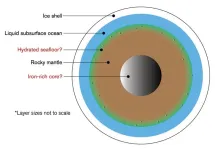
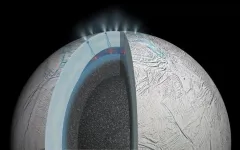
Jupiter's moon, Europa, is slightly smaller than Earth’s Moon and is one of the most promising places to search for alien life. Amid the Jovian system, Europa is of particular interest to scientists because of the strong evidence for nutrients, water and energy to potentially provide a habitable environment for some form of life beyond Earth. In addition, Europa is believed to be made up into four layers (from surface to center): an ice shell, salt water ocean, rocky mantle, and metallic core. Like Earth, Europa’s ...

Read the release
Phosphate, a key building block of life, found on Saturn’s moon Enceladus
Space

Phosphate, a key building block of life, found on Saturn’s moon Enceladus

An international team including a University of Washington scientist has found that the water on one of Saturn’s moons harbors phosphates, a key building block of life. The team led by the Freie Universität Berlin used data from NASA’s Cassini space mission to detect phosphates in particles ejected from the ice-covered global ocean of Saturn’s moon Enceladus. Phosphorus, in the form of phosphates, is vital for all life on Earth. It forms the backbone of DNA and is part of cell membranes and bones. The new study, published June 14 in ...

Read the release
Gemini North detects multiple rock-forming elements in the atmosphere of a scorching exoplanet
Space

Gemini North detects multiple rock-forming elements in the atmosphere of a scorching exoplanet

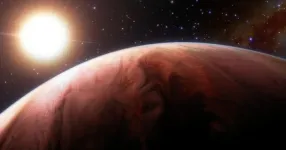
WASP-76b is a strange world. Located 634 light-years from Earth in the direction of the constellation of Pisces, the Jupiter-like exoplanet orbits its host star at an exceptionally close distance — approximately 12 times closer than Mercury is to the Sun — which heats its atmosphere to a searing 2000°C. Such extreme temperatures have “puffed up” the planet, increasing its volume to nearly six times that of Jupiter. At such extreme temperatures, mineral- and rock-forming elements, which would otherwise remain hidden in the atmosphere of a colder gas-giant planet, can reveal themselves. Using ...

Read the release
From the original Press-News collection. Issuers of news releases are responsible for the accuracy of their content.