THE ORIGINAL COLLECTION · SINCE 2010

Space
press releases.

Research announcements from universities, hospitals and scientific institutions. Explore the stories, people and discoveries behind the headlines.

Original publication datesPage 43
FIND A STORY

Find a past release.

Dates and source material belong to the original release.

Read our research explainers

Browse the collection · original publication order

Key building block for life found at Saturn’s moon Enceladus
Space

Key building block for life found at Saturn’s moon Enceladus

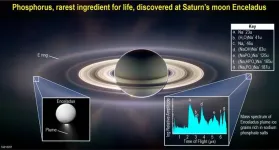
SAN ANTONIO —Wednesday, June 14, 2023 —The search for extraterrestrial life in our solar system just got more exciting. A team of scientists including Southwest Research Institute’s Dr. Christopher Glein has discovered new evidence that the subsurface ocean of Saturn’s moon Enceladus contains a key building block for life. The team directly detected phosphorus in the form of phosphates originating from the moon’s ice-covered global ocean using data from NASA’s Cassini mission. Cassini explored Saturn and its system of rings and moons for over ...

Read the release
Space

Earth was created much faster than we thought. This makes the chance of finding other habitable planets in the Universe more likely

When we walk around in our everyday life, we might not think of the Earth itself very often. But this planet is the foundation of our life. The air we breathe, the water we drink and the gravity that pins us to the ground. Up until now, researchers believed that it took more than 100 million years for the Earth to form. And it was also common belief that water was delivered by lucky collisions with water-rich asteroids like comets. However, a new study from the University of Copenhagen suggests that it might not have happened entirely by chance. “We show that the Earth formed by the very ...

Read the release
A scorching-hot exoplanet scrutinized by UdeM astronomers
Space

A scorching-hot exoplanet scrutinized by UdeM astronomers

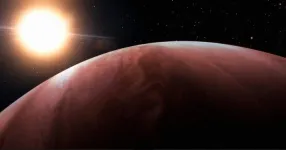
An international team led by Stefan Pelletier, a Ph.D. student at Université de Montréal's Trottier Institute for Research on Exoplanets announced today having made a detailed study of the extremely hot giant exoplanet WASP-76 b. Using the MAROON-X instrument on the Gemini-North Telescope, the team was able to identify and measure the abundance of 11 chemical elements in the atmosphere of the planet. Those include rock-forming elements whose abundances are not even known for giant planets in the Solar System such as Jupiter or Saturn. The team's study is published in ...

Read the release
DESI data sheds more light on 3D map of cosmos, study of universe
Space

DESI data sheds more light on 3D map of cosmos, study of universe

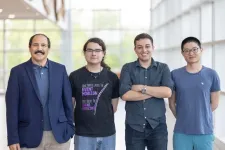
Dr. Mustapha Ishak-Boushaki, a theoretical astrophysicist at The University of Texas at Dallas, has spent his career seeking answers to some of the universe’s greatest mysteries, including why the expansion of the universe seems to be accelerating and whether gravity behaves differently beyond our closest cosmic neighbors. To study these and other questions, a large collaboration of scientists, including Ishak-Boushaki and UTD physics doctoral students Cristhian Garcia Quintero, Leonel Medina Varela and Yunan Xie, are using data from the Dark Energy Spectroscopic ...

Read the release
Pass the salt: This space rock holds clues as to how Earth got its water
Space

Pass the salt: This space rock holds clues as to how Earth got its water

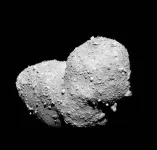
Sodium chloride, better known as table salt, isn't exactly the type of mineral that captures the imagination of scientists. However, a smattering of tiny salt crystals discovered in a sample from an asteroid has researchers at the University of Arizona Lunar and Planetary Laboratory excited, because these crystals can only have formed in the presence of liquid water. Even more intriguing, according to the research team, is the fact that the sample comes from an S-type asteroid, a category known to mostly lack hydrated, or water-bearing, minerals. The discovery strongly suggests ...

Read the release
Space

Planet orbiting 2 stars discovered using new technique

COLUMBUS, Ohio – An international team of astronomers is the first to apply an old technique to discover a new type of planet that orbits two stars – what is known as a circumbinary planet. As an added bonus, researchers found a second planet that is orbiting the same two stars, which is only the second confirmed multi-planet circumbinary system found to date. The study was published today in the journal Nature Astronomy. Circumbinary planets were once relegated to only science fiction, but thanks to data collected from NASA’s Kepler mission, astronomers now know that multiple star systems are ...

Read the release
Astronomers discover supernova explosion through rare ‘cosmic magnifying glasses’
Space

Astronomers discover supernova explosion through rare ‘cosmic magnifying glasses’

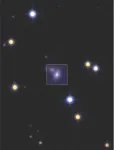
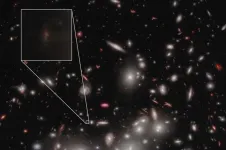
According to Einstein’s general theory of relativity, time and space are fused together in a quantity known as spacetime. The theory suggests that massive objects, like a galaxy or galaxy clusters, can cause spacetime to curve. Gravitational lensing is a rare yet observable example of Einstein’s theory in action; the mass of a large celestial body can significantly bend light as it travels through spacetime, much like a magnifying lens. When light from a more distant light source passes by this lens, scientists can use the resulting visual distortions to view objects that would otherwise be too far away and too faint to be seen. An ...

Read the release
Paul Ellison, PhD, receives SNMMI Mars Shot Fund award
Space

Paul Ellison, PhD, receives SNMMI Mars Shot Fund award

Reston, Virginia—The SNMMI Mars Shot Research Fund is excited to announce that Paul Ellison, PhD, assistant professor at the Department of Medical Physics at the University of Wisconsin School of Medicine and Public Health in Madison, has been selected as the recipient of a $500,000 grant from the 2023 Mars Shot Fund. The grants recognize individuals who have made transformative impact in the field and elevated the value of nuclear medicine and molecular imaging. The grant is one of five awarded in the inaugural year of the new SNMMI Mars Shot Research Fund, which ...

Read the release
Amir Iravani, MD, receives SNMMI Mars Shot Fund award
Space

Amir Iravani, MD, receives SNMMI Mars Shot Fund award

Reston, Virginia—The SNMMI Mars Shot Research Fund is excited to announce that Amir Iravani, MD, associate professor of radiology in the Department of Radiology at the University of Washington School of Medicine in Seattle, Washington, has been selected as the recipient of a $1,000,000 SNMMI Mars Shot Fund Grant. The grants recognize individuals who have made transformative impact in the field and elevated the value of nuclear medicine and molecular imaging. The grant is one of five awarded in the inaugural year of the new SNMMI Mars Shot Research Fund, which was established to provide resources that translate visionary nuclear medicine imaging, radiopharmaceutical therapy ...

Read the release
Craig Levin, PhD, receives SNMMI Mars Shot Fund award
Space

Craig Levin, PhD, receives SNMMI Mars Shot Fund award

Reston, Virginia—The SNMMI Mars Shot Research Fund is excited to announce that Craig Levin, PhD, professor of radiology, physics, electrical engineering and bioengineering at Stanford University in Stanford, California, has been selected as the recipient of a $500,000 grant from the 2023 Mars Shot Fund. The grants recognize individuals who have made transformative impact in the field and elevated the value of nuclear medicine and molecular imaging. The grant is one of five awarded in the inaugural year of the new SNMMI Mars Shot Research Fund, which was established to provide ...

Read the release
Julie Sutcliffe, PhD, receives SNMMI Mars Shot Fund award
Space

Julie Sutcliffe, PhD, receives SNMMI Mars Shot Fund award

Reston, Virginia—The SNMMI Mars Shot Research Fund is excited to announce that Julie Sutcliffe, PhD, professor of internal medicine and biomedical engineering, University of California–Davis, has been selected as the recipient of a $500,000 grant from the 2023 Mars Shot Fund. The grants recognize individuals who have made transformative impact in the field and elevated the value of nuclear medicine and molecular imaging. The grant is one of five awarded in the inaugural year of the new SNMMI Mars Shot Research Fund, which was established to provide ...

Read the release
Randy Yeh, MD, receives SNMMI Mars Shot Fund award
Space

Randy Yeh, MD, receives SNMMI Mars Shot Fund award

Reston, Virginia—The SNMMI Mars Shot Research Fund is excited to announce that Randy Yeh, MD, a radiologist and nuclear medicine physician at Memorial Sloan Kettering Cancer Center and assistant professor of radiology at Weill Cornell Medical College in New York, has been selected as the recipient of a $500,000 grant from the 2023 Mars Shot Fund. The grants recognize individuals who have made transformative impact in the field and elevated the value of nuclear medicine and molecular imaging. The grant is one of five awarded in the inaugural year of the new SNMMI Mars Shot Research Fund, which ...

Read the release
Researchers discover chemical evidence for pair-instability supernova from a very massive first star
Space

Researchers discover chemical evidence for pair-instability supernova from a very massive first star

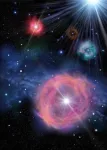
The first stars illuminated the Universe during the Cosmic Dawn and put an end to the cosmic "dark ages" that followed the Big Bang. However, the distribution of their mass is one of the great unsolved mysteries of the cosmos. Numerical simulations of the formation of the first stars estimate that the mass of the first stars reached up to several hundred solar masses. Among them, the first stars with masses between 140 and 260 solar masses ended up as pair-instability supernovae (PISNe). PISNe are quite different from ordinary supernovae (i.e., Type II ...

Read the release
Webb telescope detects universe’s most distant organic molecules
Space

Webb telescope detects universe’s most distant organic molecules

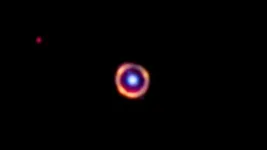
An international team of astronomers has detected complex organic molecules in the most distant galaxy to date using NASA’s James Webb Space Telescope. The discovery of the molecules, which are familiar on Earth in smoke, soot and smog, demonstrates the power of Webb to help understand the complex chemistry that goes hand-in-hand with the birth of new stars even in the earliest periods of the universe’s history. At least for galaxies, the new findings cast doubt on the old adage that where there’s smoke, there’s ...

Read the release
Early universe crackled with bursts of star formation, Webb shows
Space

Early universe crackled with bursts of star formation, Webb shows

Among the most fundamental questions in astronomy is: How did the first stars and galaxies form? NASA’s James Webb Space Telescope is already providing new insights into this question. One of the largest programs in Webb’s first year of science is the JWST Advanced Deep Extragalactic Survey, or JADES, which will devote about 32 days of telescope time to uncover and characterize faint, distant galaxies. While the data is still coming in, JADES already has discovered hundreds of galaxies that existed when the universe was less than 600 million years old. The team also has identified galaxies sparkling with a multitude of young, hot ...

Read the release
NASA’s Webb Space Telescope peers behind bars
Space

NASA’s Webb Space Telescope peers behind bars

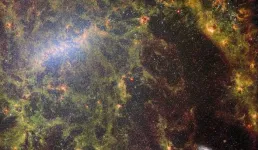
A delicate tracery of dust and bright star clusters threads across this image from the James Webb Space Telescope. The bright tendrils of gas and stars belong to the barred spiral galaxy NGC 5068, whose bright central bar is visible in the upper left of this image – a composite from two of Webb’s instruments. NASA Administrator Bill Nelson revealed the image Friday during an event with students at the Copernicus Science Centre in Warsaw, Poland. NGC 5068 lies around 20 million light-years from Earth in the constellation Virgo. This image of the central, bright star-forming regions ...

Read the release
Webb Space Telescope detects universe’s most distant complex organic molecules
Space

Webb Space Telescope detects universe’s most distant complex organic molecules

CHAMPAIGN, Ill. — Researchers have detected complex organic molecules in a galaxy more than 12 billion light-years away from Earth – the most distant galaxy in which these molecules are now known to exist. Thanks to the capabilities of the recently launched James Webb Space Telescope and careful analyses from the research team, a new study lends critical insight into the complex chemical interactions that occur in the first galaxies in the early universe. University of Illinois Urbana-Champaign astronomy and physics professor Joaquin Vieira and graduate student Kedar Phadke collaborated with researchers at Texas A&M ...

Read the release
Weigh a quasar’s galaxy with precision
Space

Weigh a quasar’s galaxy with precision

A team of researchers from EPFL have found a way to use the phenomenon of strong gravitational lensing to determine with precision – about 3 times more precise than any other technique – the mass of a galaxy containing a quasar, as well as their evolution in cosmic time. Knowing the mass of quasar host galaxies provides insight into the evolution of galaxies in the early universe, for building scenarios of galaxy formation and black hole development. The results are published in Nature ...

Read the release
Space

Eventually everything will evaporate, not only black holes

New theoretical research by Michael Wondrak, Walter van Suijlekom and Heino Falcke of Radboud University has shown that Stephen Hawking was right about black holes, although not completely. Due to Hawking radiation, black holes will eventually evaporate, but the event horizon is not as crucial as had been believed. Gravity and the curvature of spacetime cause this radiation too. This means that all large objects in the universe, like the remnants of stars, will eventually evaporate. Using a clever combination of quantum physics and Einstein’s theory of gravity, Stephen Hawking argued that the spontaneous creation and annihilation ...

Read the release
Astrophysicists confirm the faintest galaxy ever seen in the early universe
Space

Astrophysicists confirm the faintest galaxy ever seen in the early universe

Key takeaways After the Big Bang, the universe expanded and cooled sufficiently for hydrogen atoms to form. In the absence of light from the first stars and galaxies, the universe entered a period known as the cosmic dark ages. The first stars and galaxies appeared several hundred million years later and began burning away the hydrogen fog left over from the Big Bang, rendering the universe transparent, like it is today. Researchers led by astrophysicists from UCLA confirmed the existence of a distant, faint galaxy ...

Read the release
Astronomers discover planets in NASA Kepler's final days of observations
Space

Astronomers discover planets in NASA Kepler's final days of observations

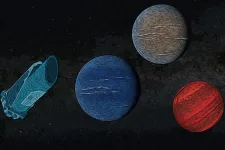
A team of astrophysicists and citizen scientists have identified what may be some of the last planets NASA’s retired Kepler space telescope observed during its nearly decade-long mission. The trio of exoplanets – worlds beyond our solar system – are all between the size of Earth and Neptune and closely orbit their stars. ''These are fairly average planets in the grand scheme of Kepler observations,” said Elyse Incha, a senior at the University of Wisconsin-Madison. “But they’re exciting because Kepler observed them during its last few days of operations. It showcases just how good Kepler was at planet hunting, even at the end of its ...

Read the release
Matthew Bailes, Duncan Lorimer and Maura McLaughlin receive the 2023 Shaw Prize in Astronomy
Space

Matthew Bailes, Duncan Lorimer and Maura McLaughlin receive the 2023 Shaw Prize in Astronomy

The Shaw Prize in Astronomy 2023 is awarded in equal shares to Matthew Bailes, Director of the Australian Research Council (ARC) Centre of Excellence for Gravitational Wave Discovery, Duncan Lorimer, Professor and Interim Chair of Physics and Astronomy and Associate Dean for Research at Eberly College of Arts and Sciences at West Virginia University, USA and Maura McLaughlin, Eberly Family Distinguished Professor at the Department of Physics and Astronomy, West Virginia University, USA, for the discovery ...

Read the release
Webb Telescope finds towering plume of water escaping from Saturn moon
Space

Webb Telescope finds towering plume of water escaping from Saturn moon

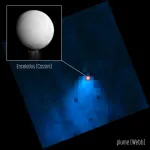
Two Southwest Research Institute scientists were part of a James Webb Space Telescope (JWST) team that observed a towering plume of water vapor more than 6,000 miles long — roughly the distance from the U.S. to Japan — spewing from the surface of Saturn’s moon, Enceladus. In light of this NASA JWST Cycle 1 discovery, SwRI’s Dr. Christopher Glein also received a Cycle 2 allocation to study the plume as well as key chemical compounds on the surface, to better understand the potential habitability of this ocean world. During its 13-year reconnaissance of the Saturn system, the Cassini spacecraft discovered that Enceladus has a subsurface ocean ...

Read the release
A telescope’s last view
Space

A telescope’s last view

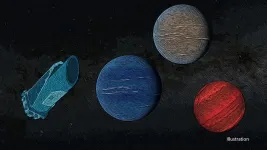
More than 5,000 planets are confirmed to exist beyond our solar system. Over half were discovered by NASA’s Kepler Space Telescope, a resilient observatory that far outlasted its original planned mission. Over nine and a half years, the spacecraft trailed the Earth, scanning the skies for periodic dips in starlight that could signal the presence of a planet crossing in front of its star. In its last days, the telescope kept recording the brightness of stars as it was running out of fuel. On Oct. 30, 2018, its fuel tanks depleted, the ...

Read the release
Quarter-ton marsupial roamed long distances across Australia’s arid interior
Space

Quarter-ton marsupial roamed long distances across Australia’s arid interior

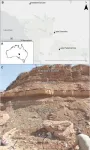
One of Australia’s first long-distance walkers has been described after Flinders University palaeontologists used advanced 3D scans and other technology to take a new look at the partial remains of a 3.5 million year old marsupial from central Australia. They have named a new genus of diprotodontid Ambulator, meaning walker or wanderer, because the locomotory adaptations of the legs and feet of this quarter-tonne animal would have made it well suited to roam long distances in search of food and ...

Read the release
From the original Press-News collection. Issuers of news releases are responsible for the accuracy of their content.