THE ORIGINAL COLLECTION · SINCE 2010

Technology
press releases.

Research announcements from universities, hospitals and scientific institutions. Explore the stories, people and discoveries behind the headlines.

Original publication datesPage 120
FIND A STORY

Find a past release.

Dates and source material belong to the original release.

Read our research explainers

Browse the collection · original publication order

A color-based sensor to emulate skin's sensitivity
Technology

A color-based sensor to emulate skin's sensitivity

Robotics researchers have already made great strides in developing sensors that can perceive changes in position, pressure, and temperature – all of which are important for technologies like wearable devices and human-robot interfaces. But a hallmark of human perception is the ability to sense multiple stimuli at once, and this is something that robotics has struggled to achieve. Now, Jamie Paik and colleagues in the Reconfigurable Robotics Lab (RRL) in EPFL’s School of Engineering have developed a sensor that can perceive combinations of bending, stretching, compression, and temperature changes, all using a robust system that boils down ...

Read the release

When deep learning meets active learning in the era of foundation models
Technology

When deep learning meets active learning in the era of foundation models

A Chinese research team wrote a review article on deep active learning, an increasingly popular method of combining active learning with deep learning for sample selection in the training of neural networks for artificial intelligence tasks. It was published Nov. 30 in Intelligent Computing, a Science Partner Journal. Given that research on deep active learning techniques in the context of foundation models is limited, this review offers some insights into this topic. It surveys existing deep active learning approaches, applications and especially challenges "in the era of foundation ...

Read the release
ORNL supports executive order for safe, secure and trustworthy AI
Technology

ORNL supports executive order for safe, secure and trustworthy AI

As artificial intelligence technologies improve, they increase the efficiency and capabilities of research across the scientific spectrum. Because of the rapid pace of the field, AI tools must be developed sustainably, a guiding principle for the Department of Energy’s Oak Ridge National Laboratory throughout its 40 years of AI research. Now, its extensive array of resources are supporting the nation as it harnesses the power of these transformative technologies. In October, President Biden ...

Read the release
Photonic chip that ‘fits together like Lego’ opens door to semiconductor industry
Technology

Photonic chip that ‘fits together like Lego’ opens door to semiconductor industry

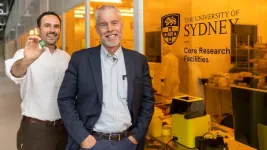
Researchers at the University of Sydney Nano Institute have invented a compact silicon semiconductor chip that integrates electronics with photonic, or light, components. The new technology significantly expands radio-frequency (RF) bandwidth and the ability to accurately control information flowing through the unit. Expanded bandwidth means more information can flow through the chip and the inclusion of photonics allows for advanced filter controls, creating a versatile new semiconductor device. Researchers expect the chip will have application in advanced radar, ...

Read the release
Technology

Can artificial intelligence improve life science? As much as life science can improve AI, researchers say

Artificial intelligence (AI) may attempt to mimic the human brain, but it has yet to fully grasp the complexity of what it means to be human. While it may not truly understand feelings or original creativity, it can help us better understand ourselves — especially our physical bodies in health and in disease, according to a series of articles recently published by the journal Quantitative Biology. The peer-reviewed papers — a variety of editorials, perspectives and commentaries on AI for life science — assess the rapid development of AI and recent attention ...

Read the release
2D material reshapes 3D electronics for AI hardware
Technology

2D material reshapes 3D electronics for AI hardware

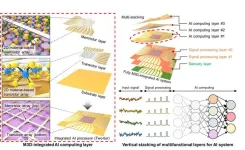
Multifunctional computer chips have evolved to do more with integrated sensors, processors, memory and other specialized components. However, as chips have expanded, the time required to move information between functional components has also grown. “Think of it like building a house,” said Sang-Hoon Bae, an assistant professor of mechanical engineering and materials science at the McKelvey School of Engineering at Washington University in St. Louis. “You build out laterally and up vertically to get more ...

Read the release
Researchers show an old law still holds for quirky quantum materials
Technology

Researchers show an old law still holds for quirky quantum materials

Long before researchers discovered the electron and its role in generating electrical current, they knew about electricity and were exploring its potential. One thing they learned early on was that metals were great conductors of both electricity and heat. And in 1853, two scientists showed that those two admirable properties of metals were somehow related: At any given temperature, the ratio of electronic conductivity to thermal conductivity was roughly the same in any metal they tested. This so-called Wiedemann-Franz law has held ever since – except in quantum materials, where electrons stop behaving as individual particles and glom together into a sort of electron soup. ...

Read the release
Straining memory leads to new computing possibilities
Technology

Straining memory leads to new computing possibilities

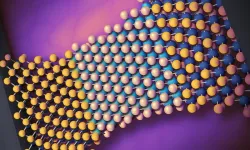
By strategically straining materials that are as thin as a single layer of atoms, University of Rochester scientists have developed a new form of computing memory that is at once fast, dense, and low-power. The researchers outline their new hybrid resistive switches in a study published in Nature Electronics. Developed in the lab of Stephen M. Wu, an assistant professor of electrical and computer engineering and of physics, the approach marries the best qualities of two existing forms of resistive switches used for memory: memristors and phase-change materials. Both forms have been explored for their advantages over ...

Read the release
Technology

Social media posts that promote tobacco are increasing, AI detection technology finds

When teenagers and young adults see pro-tobacco content on social media, they face higher risks. They are more likely to report using tobacco products such as e-cigarettes (also called vapes), more likely to start using those products for the first time and less likely to view them as harmful. Algorithms programmed to automatically remove tobacco ads are designed to protect youth—but they don’t always work or are not implemented well enough by social media platforms, according to Julia Vassey, MPH, a health behavior researcher in the department of population ...

Read the release
AI image generator Stable Diffusion perpetuates racial and gendered stereotypes, study finds
Technology

AI image generator Stable Diffusion perpetuates racial and gendered stereotypes, study finds

What does a person look like? If you use the popular artificial intelligence image generator Stable Diffusion to conjure answers, too frequently you’ll see images of light-skinned men. Stable Diffusion’s perpetuation of this harmful stereotype is among the findings of a new University of Washington study. Researchers also found that, when prompted to create images of “a person from Oceania,” for instance, Stable Diffusion failed to equitably represent Indigenous peoples. Finally, the generator tended to sexualize images of women from certain Latin American countries (Colombia, Venezuela, Peru) as well as those from Mexico, India and Egypt. The researchers will present ...

Read the release
ORNL joins consortium to tackle scientific AI’s next great milestone
Technology

ORNL joins consortium to tackle scientific AI’s next great milestone

The Department of Energy’s Oak Ridge National Laboratory has joined a global consortium of scientists from federal laboratories, research institutes, academia and industry to address the challenges of building large-scale artificial intelligence systems and advancing trustworthy and reliable AI for scientific discovery. The partnership, known as the Trillion Parameter Consortium, or TPC, seeks to grow and improve large-scale generative AI models aimed at tackling complex scientific challenges. These include the development of scalable model architectures and related training strategies, as well as data organization ...

Read the release
Building the digital replica of our seas: an open call for crucial biodiversity data to restore ocean ecosystems
Technology

Building the digital replica of our seas: an open call for crucial biodiversity data to restore ocean ecosystems

The Horizon Europe DTO-BioFlow project (https://dto-bioflow.eu) has launched an Open Call offering up to 60,000€ for institutions that manage marine biodiversity data, to invite them to contribute to the European Digital Twin of the Ocean (EU DTO) by making these data available to the public domain through EMODnet Biology, the portal that provides open and free access to interoperable data and data products on temporal and spatial distribution of marine species (angiosperms, benthos, birds, fish, macroalgae, mammals, reptiles, phyto- and zooplankton) from European regional seas. Published officially on Tuesday, October 31st, this single-stage call is open to a wide ...

Read the release
The chip that makes calculations with light
Technology

The chip that makes calculations with light

Optical wireless may no longer have any obstacles. A study by Politecnico di Milano, conducted together with Scuola Superiore Sant'Anna in Pisa, the University of Glasgow and Stanford University, and published in the prestigious journal Nature Photonics, has made it possible to create photonic chips that mathematically calculate the optimal shape of light to best pass through any environment, even one that is unknown or changing over time. The problem is well known: light is sensitive to any form of obstacle, even very small ones. Think, for example, of how we see objects when looking through a frosted window ...

Read the release
Long-live quantum entanglement goes to distance
Technology

Long-live quantum entanglement goes to distance

Quantum technologies are currently maturing at a breath-taking pace. These technologies exploit principles of quantum mechanics in suitably engineered systems, with bright prospects such as boosting computational efficiencies or communication security well beyond what is possible with devices based on today’s 'classical' technologies. As with classical devices, however, to realise their full potential, quantum devices will need to be networked. In principle, this can be done using the fibre-optic networks employed for classical telecommunications. But practical implementation requires that the information ...

Read the release
Applying semiconductor manufacturing principles to optoelectronic devices
Technology

Applying semiconductor manufacturing principles to optoelectronic devices

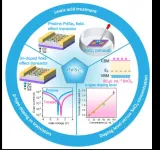
Optoelectronics detect or emit light and are used in a variety of devices in many different industries. These devices have historically relied on thin transistors, which are small semiconductors that control the movement of electrons and photons, made out of graphene and other two-dimensional materials. However, graphene and these other materials often have problems with band gap opening and other shortcomings that have researchers searching for an alternative. When treated with a method called the ...

Read the release
Network of robots can successfully monitor pipes using acoustic wave sensors
Technology

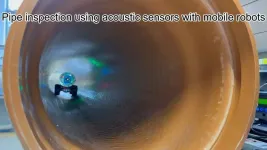
Network of robots can successfully monitor pipes using acoustic wave sensors

An inspection design method and procedure by which mobile robots can inspect large pipe structures has been demonstrated with the successful inspection of multiple defects on a three-meter long steel pipe using guided acoustic wave sensors. The University of Bristol team, led by Professor Bruce Drinkwater and Professor Anthony Croxford, developed approach was used to review a long steel pipe with multiple defects, including circular holes with different sizes, a crack-like defect and pits, through a designed inspection path to achieve 100% detection coverage for a defined reference defect. In the study, published today in NDT and E International, ...

Read the release
How do you make a robot smarter? Program it to know what it doesn’t know
Technology

How do you make a robot smarter? Program it to know what it doesn’t know

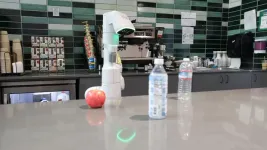
Modern robots know how to sense their environment and respond to language, but what they don’t know is often more important than what they do know. Teaching robots to ask for help is key to making them safer and more efficient. Engineers at Princeton University and Google have come up with a new way to teach robots to know when they don’t know. The technique involves quantifying the fuzziness of human language and using that measurement to tell robots when to ask for further directions. Telling a robot to pick ...

Read the release
Researchers advance 'placenta-on-a-chip' with sensing, imaging technology
Technology

Researchers advance 'placenta-on-a-chip' with sensing, imaging technology

AMES, Iowa – A research poster dated Dec. 9, 2015, hangs just outside Nicole Hashemi’s Iowa State University laboratory. It introduces a major project for Hashemi and her research group. And it’s evidence that scientific persistence sometimes equals scientific advancement. Hashemi, an associate professor of mechanical engineering, and her students have been working all these years to develop a “placenta-on-a-chip.” In this case that’s a thin, rectangular, clear, polymer block with two tiny microchannels – just millionths of ...

Read the release
DFW air quality continues to miss EPA goals for safety
Technology

DFW air quality continues to miss EPA goals for safety

Air quality in the Dallas-Fort Worth metropolitan area continues to miss safety levels set by the Environmental Protection Agency (EPA) and is unlikely to meet EPA goals anytime soon, according to new research from The University of Texas at Arlington. Purnendu “Sandy” Dasgupta, professor of chemistry and biochemistry and the Hamish Small Chair of Ion Analysis at The University of Texas at Arlington, said the region’s low population density, lack of widespread public transportation and reliance on cars contribute to its poor air quality. Its ozone values have exceeded safety levels set by the EPA for the last 20 years. “Compared ...

Read the release
Technology

Nextgen computing: Hard-to-move quasiparticles glide up pyramid edges

Image A new kind of "wire" for moving excitons, developed at the University of Michigan, could help enable a new class of devices, perhaps including room temperature quantum computers. What's more, the team observed a dramatic violation of Einstein's relation, used to describe how particles spread out in space, and leveraged it to move excitons in much smaller packages than previously possible. "Nature uses excitons in photosynthesis. We use excitons in OLED displays and some LEDs and solar cells," said Parag Deotare, ...

Read the release
Compact accelerator technology achieves major energy milestone
Technology

Compact accelerator technology achieves major energy milestone

Particle accelerators hold great potential for semiconductor applications, medical imaging and therapy, and research in materials, energy and medicine. But conventional accelerators require plenty of elbow room — kilometers — making them expensive and limiting their presence to a handful of national labs and universities. Researchers from The University of Texas at Austin, several national laboratories, European universities and the Texas-based company TAU Systems Inc. have demonstrated a compact particle accelerator less than 20 meters long that produces ...

Read the release
Technology

Algorithm appreciation overcomes algorithm aversion

Advertising content generated by artificial intelligence (AI) is perceived as being of higher quality than content produced by human experts – according to a new research paper in Judgment and Decision Making, a journal published by Cambridge University Press on behalf of the Society for Judgment and Decision Making and the European Association for Decision Making. In the first study of its kind, the findings challenge the view that knowing a piece of content is generated with AI involvement lowers the perceived quality of content – known as algorithm aversion. ChatGPT4 outperforms human experts in generating advertising content for ...

Read the release
Technology

An AI-aided stethoscope can improve home monitoring of asthma in very young children

Adults and older children with asthma can take objective measures of symptoms such as peak expiratory flow (PEF), the volume of airflow in one forced exhalation, at home. This provides a more complete picture of their disease and helps them detect asthma exacerbations or negative changes to their condition at the onset. However, a 2022 report by the Global Initiative for Asthma (GINA) identifies continuous respiratory sounds such as wheezes, rhonchi, as the best indicators of asthma exacerbation, especially in children under 5 years of age. Assessment of these symptoms, still primarily done by doctors using ...

Read the release
Next generation semiconductors: Diamond device shows highest breakdown voltage
Technology

Next generation semiconductors: Diamond device shows highest breakdown voltage

To reach the world’s goal of carbon neutrality by 2050, there must be a fundamental change in electronic materials to create a more reliable and resilient electricity grid. A diamond might be a girl’s best friend, but it might also be the solution needed to sustain the electrification of society needed to reach carbon neutrality in the next 30 years. Researchers at the University of Illinois Urbana-Champaign have developed a semiconductor device made using diamond, that has the highest breakdown voltage and lowest leakage current compared to previously reported diamond devices. Such a device will enable more efficient technologies needed as the world transitions to renewable energies. It ...

Read the release
Increasing high-temperature strength of materials through collaborative efforts of AI and materials researchers
Technology

Increasing high-temperature strength of materials through collaborative efforts of AI and materials researchers

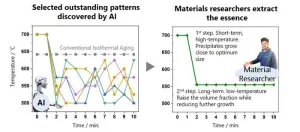
1. A materials research team consisting of NIMS and Nagoya University has designed a novel two-step thermal aging schedule (i.e., non-isothermal aging or unconventional heat treatment) capable of fabricating nickel-aluminum (Ni-Al) alloys that are stronger at high temperatures than Ni-Al alloys fabricated using conventional thermal aging processes. This was achieved by using artificial intelligence (AI) techniques to identify several dozen different thermal aging schedules potentially effective in increasing alloys’ high-temperature strength. The mechanisms ...

Read the release
From the original Press-News collection. Issuers of news releases are responsible for the accuracy of their content.