THE ORIGINAL COLLECTION · SINCE 2010

Technology
press releases.

Research announcements from universities, hospitals and scientific institutions. Explore the stories, people and discoveries behind the headlines.

Original publication datesPage 79
FIND A STORY

Find a past release.

Dates and source material belong to the original release.

Read our research explainers

Browse the collection · original publication order

Technology

Henna secures $30,000 from PSU’s University Venture Development Fund to enhance AI fairness & safety

UVDF Funding, Henna Henna Secures $30,000 from PSU’s University Venture Development Fund to Enhance AI Fairness & Safety Portland, OR – August 13, 2024 – Henna, a startup with deep ties to Portland State University (PSU), has successfully secured $30,000 in funding from the University Venture Development Fund (UVDF). This grant will support Henna's mission to make AI adoption fairer and safer. Henna was founded earlier this year by Arsh Haque (they/them), Chair of the Diversity, Equity, & Inclusion ...

Read the release

Heriot-Watt University breaks ground on new £2.5M Optical Ground Station
Technology

Heriot-Watt University breaks ground on new £2.5M Optical Ground Station

Work has started on a new Quantum Communications Hub Optical Ground Station (HOGS), a state-of-the-art telescope which is being built on Heriot-Watt University’s Research Park. The new facility will demonstrate and test satellite quantum secure communications, maintaining and growing the UK’s strength in the field of quantum technologies. It is scheduled to be fully operational by late Autumn [2024]. As well as helping to tackle future cyberattacks by researching methods to send secure transmissions via satellites, it will unlock new research on space environmentalism alongside innovative R&D activities for future laser communication ...

Read the release
Algorithm raises new questions about Cascadia earthquake record
Technology

Algorithm raises new questions about Cascadia earthquake record

The Cascadia subduction zone in the Pacific Northwest has a history of producing powerful and destructive earthquakes that have sunk forests and spawned tsunamis that reached all the way to the shores of Japan. The most recent great earthquake was in 1700. But it probably won’t be the last. And the area that stands to be affected is now bustling metropolises that are home to millions of people. Figuring out the frequency of earthquakes – and when the next “big one” will happen – is an active scientific question that involves looking for signs of past earthquakes in the geologic record in the form of shaken up rocks, ...

Read the release
New sensor technology enhances detection of tiny particles
Technology

New sensor technology enhances detection of tiny particles

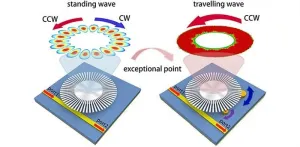
In recent years, advances in photonics and materials science have led to remarkable developments in sensor technology, pushing the boundaries of what can be detected and measured. Among these innovations, non-Hermitian physics has emerged as a crucial area of research, offering new ways to manipulate light and enhance sensor sensitivity. A recent study published in Advanced Photonics Nexus reports a breakthrough in this field, presenting a new type of sensor that leverages exceptional points (EPs) to achieve unprecedented levels of sensitivity. This study introduces a highly sensitive and reconfigurable sensor based on a single ...

Read the release
Technology

A human-centered AI tool to improve sepsis management

COLUMBUS, Ohio – A proposed artificial intelligence tool to support clinician decision-making about hospital patients at risk for sepsis has an unusual feature: accounting for its lack of certainty and suggesting what demographic data, vital signs and lab test results it needs to improve its predictive performance. The system, called SepsisLab, was developed based on feedback from doctors and nurses who treat patients in the emergency departments and ICUs where sepsis, the body’s overwhelming response to an infection, is most ...

Read the release
UCLA receives $1 million NSF grant to accelerate commercialization of quantum technologies
Technology

UCLA receives $1 million NSF grant to accelerate commercialization of quantum technologies

Researchers from the California NanoSystems Institute at UCLA and their colleagues have received a one-year, $1 million grant as part of a new National Science Foundation program aimed at accelerating the development and commercialization of quantum technologies for the benefit of society. The Quantum Sensing and Imaging Lab, or Q-SAIL, which will be led by UCLA quantum physicist David Leibrandt, is one of five pilot projects across the country selected by the NSF to participate in the agency’s new National Quantum Virtual Laboratory, a first-of-its-kind national resource to enable the faster ...

Read the release
Technology

UVA's first-ever data science majors begin their journey

A new era at the University of Virginia’s School of Data Science officially kicked off, as the inaugural class of data science undergraduate majors arrived for orientation on the eve of UVA’s first day of classes. Throughout the day at the new School of Data Science building, students heard from faculty and staff, learned more about their curriculum, took headshots and a group photograph, and began to familiarize themselves with classrooms and other features of the facility that would be their academic home. The day also served as a call to action, as students learned not only what requirements would be needed to complete their degree but what a data ...

Read the release
Using machine learning to speed up simulations of irregularly shaped particles
Technology

Using machine learning to speed up simulations of irregularly shaped particles

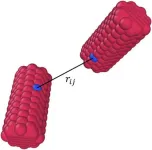
Simulating particles is a relatively simple task when those particles are spherical. In the real world, however, most particles are not perfect spheres but take on irregular and varying shapes and sizes. Simulating these particles becomes a much more challenging and time-consuming task. The ability to simulate particles is critical to understanding how they behave. For example, microplastics are a new form of pollution as plastic waste has increased drastically and uncontrollably decays in the environment ...

Read the release
Lighting the way for quantum innovation
Technology

Lighting the way for quantum innovation

ALBUQUERQUE, N.M. — Sandia National Laboratories and Arizona State University, two research powerhouses, are collaborating to push the boundaries of quantum technology and transform large-scale optical systems into compact integrated microsystems. Nils Otterstrom, a Sandia physicist specializing in integrated photonics, is at the forefront of scaling down optical systems to the size of a chip. This innovation offers performance advantages and scalability for an array of applications from advanced computing to secure communications. “Integrated ...

Read the release
Astrophysicists use AI to precisely calculate universe’s ‘settings’
Technology

Astrophysicists use AI to precisely calculate universe’s ‘settings’

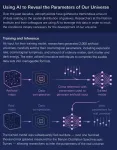
The standard model of the universe relies on just six numbers. Using a new approach powered by artificial intelligence, researchers at the Flatiron Institute and their colleagues extracted information hidden in the distribution of galaxies to estimate the values of five of these so-called cosmological parameters with incredible precision. The results were a significant improvement over the values produced by previous methods. Compared to conventional techniques using the same galaxy data, the approach yielded less than half ...

Read the release
SETI Institute starts first low frequency search for alien technology in distant galaxies
Technology

SETI Institute starts first low frequency search for alien technology in distant galaxies

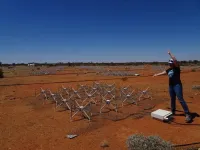
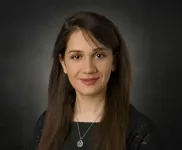
August 26, 2024, Mountain View, CA -- The SETI Institute, the Berkeley SETI Research Center and the International Centre for Radio Astronomy Research announced a groundbreaking study using the Murchison Widefield Array (MWA) in Western Australia. Led by Dr. Chenoa Tremblay of the SETI Institute and Prof. Steven Tingay of Curtin University, this research is the first to search for signs of alien technology in galaxies beyond our own, focusing on low radio frequencies (100 MHz). This innovative study used the MWA’s large field of view (FOV), allowing the team to cover about 2,800 galaxies in one observation, of which 1300 we know the distance to. Usually, the search for extraterrestrial ...

Read the release
Shakespeare in sign language, seen through AI
Technology

Shakespeare in sign language, seen through AI

A new study uses co-creation with reference communities to develop an app for sign language machine translation (SLMT). The research team designed a theatrical performance in sign language, seen through the eyes of artificial intelligence (AI), as one of the methodologies. “Historically, deaf people have been excluded from the development of automatic translation technologies,” says Shaun O’Boyle, Research Fellow in the School of Inclusive and Special Education (Dublin City University DCU). “This has often caused backlash and resistance from deaf communities, as the projects were designed and ...

Read the release
Technology

How to control your screentime use and make technology work for you

Many of us feel that we, or our children, spend too much time staring at a screen. From gaming to social media use or ‘doomscrolling,’ it can sometimes feel that we are mindlessly spending hours going down a rabbit hole of technology. However, according to Catherine Knibbs, a psychotherapist who specializes in cybertrauma and online harms, there are tangible steps we can all take to wrestle back control from the hands of the technology corporations. In her new book, Managing Your Gaming and Social ...

Read the release
UVA engineering professors target inclusive AI education with $1 million grant
Technology

UVA engineering professors target inclusive AI education with $1 million grant

Underserved high school students often lack access to artificial intelligence education that could prepare them for future careers in technology. Researchers at the University of Virginia School of Engineering and Applied Science and Clemson University are hoping to change that. To help bridge the educational divide, the research team received a $1 million grant from the National Science Foundation to democratize access to AI education. Future fair and equitable technologies depend on a robust AI education, and expanding access to that education is crucial. The project is part of the NSF’s Experiential Learning for ...

Read the release
Technology

Pendulum Therapeutics and BiomeSense launch pioneering study on gut microbiome using continuous sampling technology

San Francisco, CA (August 12, 2024) – Pendulum Therapeutics, in collaboration with BiomeSense, announces the launch of an innovative new pilot study entitled "Detection of Akkermansia muciniphila Utilizing Serial Longitudinal Samples with the BiomeSense GutLab™: An Open-Label Proof of Concept Study." Pendulum Therapeutics and BiomeSense are two biotech companies at the forefront of microbiome science. Their groundbreaking research aims to advance the scientific understanding of the human microbiome by focusing on continuous detection of Akkermansia muciniphila, a keystone strain in the gut microbiome, using a new data generation technology. About ...

Read the release
Technology

Unconventional interface superconductor could benefit quantum computing

RIVERSIDE, Calif. -- A multi-institutional team of scientists in the United States, led by physicist Peng Wei at the University of California, Riverside, has developed a new superconductor material that could potentially be used in quantum computing and be a candidate “topological superconductor.” Topology is the mathematics of shape. A topological superconductor uses a delocalized state of an electron or hole (a hole behaves like an electron with positive charge) to carry quantum information and process data in a robust manner. The researchers report today in Science Advances that they combined trigonal tellurium ...

Read the release
Technology

Toward a code-breaking quantum computer

CAMBRIDGE, MA — The most recent email you sent was likely encrypted using a tried-and-true method that relies on the idea that even the fastest computer would be unable to efficiently break a gigantic number into factors. Quantum computers, on the other hand, promise to rapidly crack complex cryptographic systems that a classical computer might never be able to unravel. This promise is based on a quantum factoring algorithm proposed in 1994 by Peter Shor, who is now a professor at MIT. But while researchers have taken great strides in the last 30 years, scientists ...

Read the release
Langbeinites show talents as 3D quantum spin liquids
Technology

Langbeinites show talents as 3D quantum spin liquids

A 3D quantum spin liquid has been discovered in the vicinity of a member of the langbeinite family. The material's specific crystalline structure and the resulting magnetic interactions induce an unusual behaviour that can be traced back to an island of liquidity. An international team has made this discovery with experiments at the ISIS neutron source and theoretical modelling on a nickel-langbeinite sample. When spins in a crystal lattice cannot align to reach a minimum energy together, this is called magnetic frustration. ...

Read the release
Technology

Temperature regulates negative supercoils to modulate meiotic crossovers and chromosome organization

This study is led by Prof. Shunxin Wang (State Key Laboratory of Reproductive Medicine and Offspring Health, Center for Reproductive Medicine, Institute of Women, Children and Reproductive Health, Shandong University) and Prof. Liangran Zhang (Advanced Medical Research Institute, Shandong University). In their study of meiosis in budding yeast, the research team found that yeast senses temperature changes by increasing the level of DNA negative supercoils to increase crossovers and modulate chromosome organization ...

Read the release
Single 5-nm quantum dot detection via microtoroid resonator photothermal microscopy
Technology

Single 5-nm quantum dot detection via microtoroid resonator photothermal microscopy

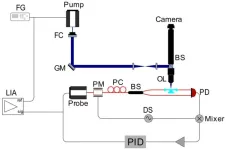
The detection of individual particles and molecules has opened new horizons in analytical chemistry, cellular imaging, nanomaterials, and biomedical diagnostics. Traditional single-molecule detection methods rely heavily on fluorescence techniques, which require labeling of the target molecules. In contrast, photothermal microscopy has emerged as a promising label-free, non-invasive imaging technique. This method measures localized variations in the refractive index of a sample's surroundings, resulting from light absorption by sample components, which induces temperature changes in the surrounding region. Whispering ...

Read the release
New images reveal global air quality trends
Technology

New images reveal global air quality trends

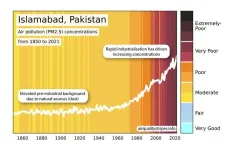
University of Leeds News Embargoed until 23 August 10:00 BST A selection of AQ Stripes graphic images are available here The global concentrations of one of the main air pollutants known to affect human health have been graphically illustrated for the first time by a team of scientists. The Air Quality Stripes which were created by the University of Leeds, the University of Edinburgh, North Carolina State University, and the UK Met Office, starkly contrast the significant improvements in air quality across much of Europe with the alarming deterioration in parts ...

Read the release
Technology

3D body volume scanner uses AI to help predict metabolic syndrome risk

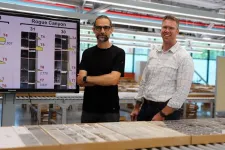
ROCHESTER, Minn. — Mayo Clinic researchers are using artificial intelligence (AI) with an advanced 3D body-volume scanner – originally developed for the clothing industry – to help doctors predict metabolic syndrome risk and severity. The combination of tools offers doctors a more precise alternative to other measures of disease risk like body mass index (BMI) and waist-to-hip ratio, according to findings published in the European Heart Journal - Digital Health. Metabolic syndrome can lead to heart attack, stroke and other serious health issues and affects over a third of the U.S. population and a quarter of people globally. ...

Read the release
Technology

AI tackles one of the most difficult challenges in quantum chemistry

New research using neural networks, a form of brain-inspired AI, proposes a solution to the tough challenge of modelling the states of molecules. The research shows how the technique can help solve fundamental equations in complex molecular systems. This could lead to practical uses in the future, helping researchers to prototype new materials and chemical syntheses using computer simulation before trying to make them in the lab. Led by Imperial College London and Google DeepMind scientists, the study is published today in Science. Excited molecules The team investigated the problem of understanding ...

Read the release
Technology

CU researchers awarded $1.35 million grant to develop decision support technology for long-term care facilities

Researchers from the University of Colorado College of Nursing and CU School of Medicine on the Anschutz Medical Campus were awarded a $1.35 million grant from the Agency for Healthcare Research and Quality (AHRQ) to design and implement technologies that improve resident safety and employee wellbeing at long-term care facilities. “Long-term care facilities in the United States are in crisis, they’re facing low resources and high staff turnover,” CU Nursing Associate Professor and ...

Read the release
Self-improving AI method increases 3D-printing efficiency
Technology

Self-improving AI method increases 3D-printing efficiency

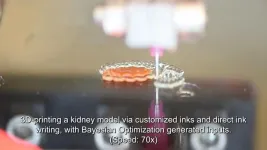
PULLMAN, Wash. – An artificial intelligence algorithm can allow researchers to more efficiently use 3D printing to manufacture intricate structures. The Washington State University study, published in the journal Advanced Materials Technologies, could allow for more seamless use of 3D printing for complex designs in everything from artificial organs to flexible electronics and wearable biosensors. As part of the study, the algorithm learned to identify, and then print, the best versions of kidney and prostate organ models, printing out 60 continually improving versions. “You can optimize the results, saving time, cost and labor,” said Kaiyan Qiu, co-corresponding ...

Read the release
From the original Press-News collection. Issuers of news releases are responsible for the accuracy of their content.