How well do deep-sea animals perform under pressure?
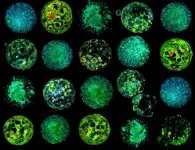
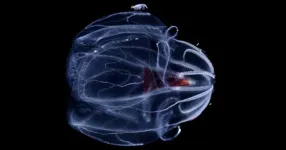
A multi-institutional team that includes researchers from the University of Delaware, University of California San Diego and Monterey Bay Aquarium Research Institute (MBARI), among others, published a paper in Science on Thursday, June 27, that provides new insight on how deep-sea “comb jellies” called ctenophores adapt and survive at extreme pressures. It turns out that part of the adaptation involves lipids, fatty chemical compounds found in the membrane of all living cells that perform essential functions, including storing energy, sending signals and controlling what passes through ...
Read the release