The power of pause: Controlled deposition for effective and long-lasting organic devices
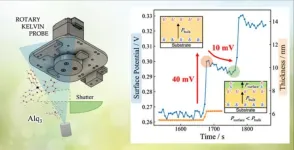
Organic optoelectronic devices, such as organic light-emitting diodes (OLEDs), use molecules with specific structures arranged on thin films. Additionally, the arrangement of these molecules on any surface is crucial for various processes that occur within these devices. This arrangement is guided by two primary factors: the deposition rate (how fast the molecules are placed) and the surface temperature. Slower deposition rates and higher temperatures facilitate the proper arrangement, resulting in more stable structures. Finding the right time scale for this process is also critical, and ...
Read the release