Our surprising magnetic galaxy
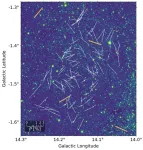
A team of astronomers including those from the University of Tokyo created the first-ever map of magnetic field structures within a spiral arm of our Milky Way galaxy. Previous studies on galactic magnetic fields only gave a very general picture, but the new study reveals that magnetic fields in the spiral arms of our galaxy break away from this general picture significantly and are tilted away from the galactic average by a high degree. The findings suggest magnetic fields strongly impact star-forming regions which means they played a part in the creation of our own solar system. It might come as a surprise to ...
Read the release