Observations from a bright fast radio burst probe the distant universe
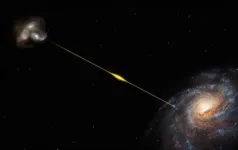
An unusually high-energy fast radio burst (FRB) from a high-redshift galaxy has offered new insights into the distant universe, challenging current models of FRB emission. The findings also help constrain key attributes of these astrophysical phenomena. FRBs are brief pulses of radio emission originating from distant extragalactic sources. Although the astrophysical processes that cause FRBs aren’t fully understood, the signals they produce can be used to infer information about the cosmic environments they pass through as they travel across the universe, including the nature of ...
Read the release