Medicine Technology 🌱 Environment Space Energy Physics Engineering Social Science Earth Science Science
Modeling autism in a dish
Science 2010-11-12

Modeling autism in a dish

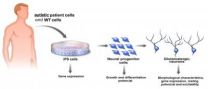
LA JOLLA, CA—A collaborative effort between researchers at the Salk Institute for Biological Studies and the University of California, San Diego, successfully used human induced pluripotent stem (iPS) cells derived from patients with Rett syndrome to replicate autism in the lab and study the molecular pathogenesis of the disease. Their findings, published in the Nov. 12, 2010, issue of Cell, revealed disease-specific cellular defects, such as fewer functional connections between Rett neurons, and demonstrated that these symptoms are reversible, raising the hope that, ...
Read more →
Science 2010-11-12

NIAID media tipsheet: Annual Meeting of the American College of Allergy, Asthma and Immunology

WHAT: The 2010 Annual Meeting of the American College of Allergy, Asthma & Immunology (ACAAI) brings together leading allergists and immunologists from around the world. WHO: Scientists supported by the National Institute of Allergy and Infectious Diseases (NIAID), part of the National Institutes of Health, will present their latest research findings at the ACAAI Annual Meeting. For more than 60 years, NIAID has supported allergy and immunology research at U.S. and international institutions and conducted studies within its own laboratories to improve the health ...
Read more →
UCSD researchers create autistic neuron model
Medicine 2010-11-12

UCSD researchers create autistic neuron model

Using induced pluripotent stem cells from patients with Rett syndrome, scientists at the University of California, San Diego School of Medicine have created functional neurons that provide the first human cellular model for studying the development of autism spectrum disorder (ASD) and could be used as a tool for drug screening, diagnosis and personalized treatment. The research, led by Alysson R. Muotri, PhD, assistant professor of pediatrics, will be published in the November 12 issue of the journal Cell. "This work is important because it puts us in a translational ...
Read more →
Medicine 2010-11-12

New urine test could diagnose acute kidney injury

The presence of certain markers in the urine might be a red flag for acute kidney injury (AKI), according to a study appearing in an upcoming issue of the Journal of the American Society Nephrology (JASN). The results suggest that a simple urine test could help prevent cases of kidney failure. Unlike heart or brain injuries, which show obvious outward signs, physical symptoms are not typically present with AKI. Researchers have been looking for markers of AKI, with the hope that early detection will lead to early therapy to prevent kidney failure. Richard Zager, MD (Clinical ...
Read more →
Environment 2010-11-12

Keeping the daily clock ticking in a fluctuating environment: Hints from a green alga

Researchers in France have uncovered a mechanism which explains how biological clocks accurately synchronize to the day/night cycle despite large fluctuations in light intensity during the day and from day to day. Following the identification of two central "clock genes" of a green alga, Ostreococcus tauri, a mathematical model reproducing their daily activity profiles has revealed that their internal clock is influenced by the naturally varying light levels throughout the day only at periods when it needs resetting. The results found by the biologists at Oceanologic Observatory ...
Read more →
Science 2010-11-12

Cats show perfect balance even in their lapping

CAMBRIDGE, Mass. — Cat fanciers everywhere appreciate the gravity-defying grace and exquisite balance of their feline friends. But do they know those traits extend even to the way cats lap milk? Researchers at MIT, Virginia Tech and Princeton University analyzed the way domestic and big cats lap and found that felines of all sizes take advantage of a perfect balance between two physical forces. The results will be published in the November 11 online issue of the journal Science. It was known that when they lap, cats extend their tongues straight down toward the bowl ...
Read more →
Environment 2010-11-12

New explanation for the origin of high species diversity

PHILADELPHIA—An international team of scientists, including a leading evolutionary biologist from the Academy of Natural Sciences, have reset the agenda for future research in the highly diverse Amazon region by showing that the extraordinary diversity found there is much older than generally thought. The findings from this study, which draws on research by the Academy's Dr. John Lundberg and other scientists, were published as a review article in this week's edition of Science. The study shows that Amazonian diversity has evolved as by-product of the Andean mountain ...
Read more →
Tropical forest diversity increased during ancient global warming event
Science 2010-11-12

Tropical forest diversity increased during ancient global warming event

The steamiest places on the planet are getting warmer. Conservative estimates suggest that tropical areas can expect temperature increases of 3 degrees Celsius by the end of this century. Does global warming spell doom for rainforests? Maybe not. Carlos Jaramillo, staff scientist at the Smithsonian Tropical Research Institute, and colleagues report in the journal Science that nearly 60 million years ago rainforests prospered at temperatures that were 3-5 degrees higher and at atmospheric carbon dioxide levels 2.5 times today's levels. "We're going to have a novel climate ...
Read more →
Science 2010-11-12

Study finds the mind is a frequent, but not happy, wanderer

CAMBRIDGE, Mass. -- People spend 46.9 percent of their waking hours thinking about something other than what they're doing, and this mind-wandering typically makes them unhappy. So says a study that used an iPhone web app to gather 250,000 data points on subjects' thoughts, feelings, and actions as they went about their lives. The research, by psychologists Matthew A. Killingsworth and Daniel T. Gilbert of Harvard University, is described this week in the journal Science. "A human mind is a wandering mind, and a wandering mind is an unhappy mind," Killingsworth and ...
Read more →
Science 2010-11-12

Voluntary cooperation and monitoring lead to success

FRANKFURT. Many imminent problems facing the world today, such as deforestation, overfishing, or climate change, can be described as commons problems. The solution to these problems requires cooperation from hundreds and thousands of people. Such large scale cooperation, however, is plagued by the infamous cooperation dilemma. According to the standard prediction, in which each individual follows only his own interests, large-scale cooperation is impossible because free riders enjoy common benefits without bearing the cost of their provision. Yet, extensive field evidence ...
Read more →
New vaccine hope in fight against pneumonia and meningitis
Medicine 2010-11-12

New vaccine hope in fight against pneumonia and meningitis

A new breakthrough in the fight against pneumonia, meningitis and septicaemia has been announced today by scientists in Dublin and Leicester. The discovery will lead to a dramatic shift in our understanding of how the body's immune system responds to infection caused by Streptococcus pneumoniae and pave the way for more effective vaccines. The collaborative research, jointly led by Dr Ed Lavelle from Trinity College Dublin and Dr Aras Kadioglu from the University of Leicester, with Dr Edel McNeela of TCD as its lead author, has been published in the international peer-reviewed ...
Read more →
Scientists demystify an enzyme responsible for drug and food metabolism
Medicine 2010-11-12

Scientists demystify an enzyme responsible for drug and food metabolism

For the first time, scientists have been able to "freeze in time" a mysterious process by which a critical enzyme metabolizes drugs and chemicals in food. By recreating this process in the lab, a team of researchers has solved a 40-year-old puzzle about changes in a family of enzymes produced by the liver that break down common drugs such as Tylenol, caffeine, and opiates, as well as nutrients in many foods. The breakthrough discovery may help future researchers develop a wide range of more efficient and less-expensive drugs, household products, and other chemicals. The ...
Read more →
Engineering 2010-11-12

Gene discovery suggests way to engineer fast-growing plants

DURHAM, N.C. – Tinkering with a single gene may give perennial grasses more robust roots and speed up the timeline for creating biofuels, according to researchers at the Duke Institute for Genome Sciences & Policy (IGSP). Perennial grasses, including switchgrass and miscanthus, are important biofuels crops and can be harvested repeatedly, just like lawn grass, said Philip Benfey, director of the IGSP Center for Systems Biology. But before that can happen, the root system needs time to get established. "These biofuel crops usually can't be harvested until the second ...
Read more →
Medicine 2010-11-12

Stanford scientists identify key protein controlling blood vessel growth into brains of mice

STANFORD, Calif. — One protein single-handedly controls the growth of blood vessels into the developing brains of mice embryos, according to researchers at the Stanford University School of Medicine. Understanding how the protein, a cellular receptor, functions could help clinicians battle brain tumors and stroke by choking off or supplementing vital blood-vessel development, and may enhance the delivery of drugs across the blood-brain barrier. "The strength and specificity of this receptor's effects indicate that it could be a very important target," said Calvin Kuo, ...
Read more →
Medicine 2010-11-12

Fortify HIT contracts with education and ethics to protect patient safety, say informatics experts

Bethesda, MD—An original and progressive report on health information technology (HIT) vendors, their customers and patients, published online today, makes ground-breaking recommendations for new practices that target the reduction or elimination of tensions that currently mar relationships between many HIT vendors and their customers, specifically with regard to indemnity and error management of HIT systems. In light of the Obama Administration's $19 billion investment in HIT, paid out in ARRA stimulus funds, these recommendations are particularly significant in helping ...
Read more →
Graphene's strength lies in its defects
Science 2010-11-12

Graphene's strength lies in its defects

PROVIDENCE, R.I. [Brown University] — The website of the Nobel Prize shows a cat resting in a graphene hammock. Although fictitious, the image captures the excitement around graphene, which, at one atom thick, is the among the thinnest and strongest materials ever produced. A significant obstacle to realizing graphene's potential lies in creating a surface large enough to support a theoretical sleeping cat. For now, material scientists stitch individual graphene sheets together to create sheets that are large enough to investigate possible applications. Just as sewing ...
Read more →
Space 2010-11-12

New analysis explains formation of bulge on far side of moon

SANTA CRUZ, CA--A bulge of elevated topography on the farside of the moon--known as the lunar farside highlands--has defied explanation for decades. But a new study led by researchers at the University of California, Santa Cruz, shows that the highlands may be the result of tidal forces acting early in the moon's history when its solid outer crust floated on an ocean of liquid rock. Ian Garrick-Bethell, an assistant professor of Earth and planetary sciences at UC Santa Cruz, found that the shape of the moon's bulge can be described by a surprisingly simple mathematical ...
Read more →
Science 2010-11-12

Contact among age groups key to understanding whooping cough spread and control

ANN ARBOR, Mich.---Strategies for preventing the spread of whooping cough---on the rise in the United States and several other countries in recent years---should take into account how often people in different age groups interact, research at the University of Michigan suggests. The findings appear in the Nov. 12 issue of the journal Science. Thanks to widespread childhood vaccination, whooping cough (pertussis) once seemed to be under control. But the illness, which in infants causes violent, gasping coughing spells, has made a comeback in some developed countries ...
Read more →
Science 2010-11-12

Fruit flies lead scientists to new human pain gene

Boston, Mass. - While it has become clear in recent years that susceptibility to pain has a strong inherited component, very little is known about actual "pain genes" and how they work. In the November 12th issue of Cell, researchers at Children's Hospital Boston and their collaborators report on a novel human pain gene. People with minor variations in this gene showed clear differences in susceptibility to acute heat pain and chronic back pain. Corroborating mouse studies give some clues as to how the gene controls pain sensitivity. The gene was uncovered in a genome-wide ...
Read more →
All-optical transistor
Physics 2010-11-12

All-optical transistor

Controlling and modulating the flow of light is essential in today's telecommunications-based society. Professor Tobias Kippenberg and his team in EPFL's Laboratory of Photonics and Quantum Measurements have discovered a novel way to couple light and vibrations. Using this discovery, they built a device in which a beam of light traveling through an optical microresonator could be controlled by a second, stronger light beam. The device thus acts like an optical transistor, in which one light beam influences the intensity of another. Their optical microresonator has two ...
Read more →
Science 2010-11-12

Having severe acne may increase suicide risk

Individuals who suffer from severe acne are at an increased risk of attempting suicide, according to a paper published on bmj.com today. The study also finds that an additional risk may be present during and up to one year after treatment with isotretinoin, a commonly prescribed drug for severe acne. However, the authors stress that this additional risk is most likely due to the acne itself, rather than the drug treatment. Isotretinoin (commonly marketed as Roaccutane, Accutane, Amnesteem, Claravis, Clarus or Decutan) has been used to treat severe acne since the 1980s. ...
Read more →
Thousands of turtles captured in Madagascar despite ban
Science 2010-11-12

Thousands of turtles captured in Madagascar despite ban

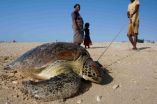
New research has revealed up to 16,000 endangered turtles are being caught each year by villagers in just one region of Madagascar, despite a government ban. Researchers from the University of Exeter and Blue Ventures Conservation say the figure, thought to be a conservative estimate, is the first direct assessment of turtle exploitation on the island. The study highlights the extent of small-scale fishing, traditionally very difficult to monitor, and could be vital in finding a way to sustainably manage turtle fishing in the region. Dr Annette Broderick, from the ...
Read more →
Medicine 2010-11-12

Study points to window of opportunity for successful autism therapy

"The biggest surprise to me was that we could rescue the autistic phenotype [in the human cells] to something close to normal," said Alysson Muotri of the University of California San Diego. The researchers made the discovery by first transforming adult cells taken from patients with Rett Syndrome into induced pluripotent stem cells (iPS cells) using an established cocktail. iPS cells look and act very much like embryonic stem cells. Those stem cells were able to form functional neurons in cell culture. However, neurons derived from Rett Syndrome patients exhibited ...
Read more →
Science 2010-11-12

A long history of pain: Study finds pain gene common to flies, mice and humans

They show that one of those genes in particular has a long evolutionary history, as evidenced by the fact that it plays a role in pain sensing in flies, mice and humans. At least in mice, the newly described gene is also linked to a condition known in humans as synesthesia, in which one sensory experience triggers the perception of another sense. "We found lots of new genes and pathways that have never been implicated in pain before," said Josef Penninger of the Institute of Molecular Biotechnology of the Austrian Academy of Sciences. "From a helicopter view, this ...
Read more →
23 percent of young people get into fights when they go out at night
Science 2010-11-12

23 percent of young people get into fights when they go out at night

Night-time violence among young Spaniards is becoming ever more common, according to a research study carried out by the European Institute of Studies on Prevention. The study shows that 5.2% of young people carry weapons when they go out at night, 11.6% have been attacked or threatened, and 23% have got into a fight at some time. "Reports about young people being attacked or injured in fights when they go out at night are becoming increasingly common", Amador Calafat, lead author of the study and a researcher at the European Institute of Studies on Prevention (IREFREA), ...
Read more →