New signaling pathway in neurons
Published 2021-02-25 · Original archive entry · Explore research explainers
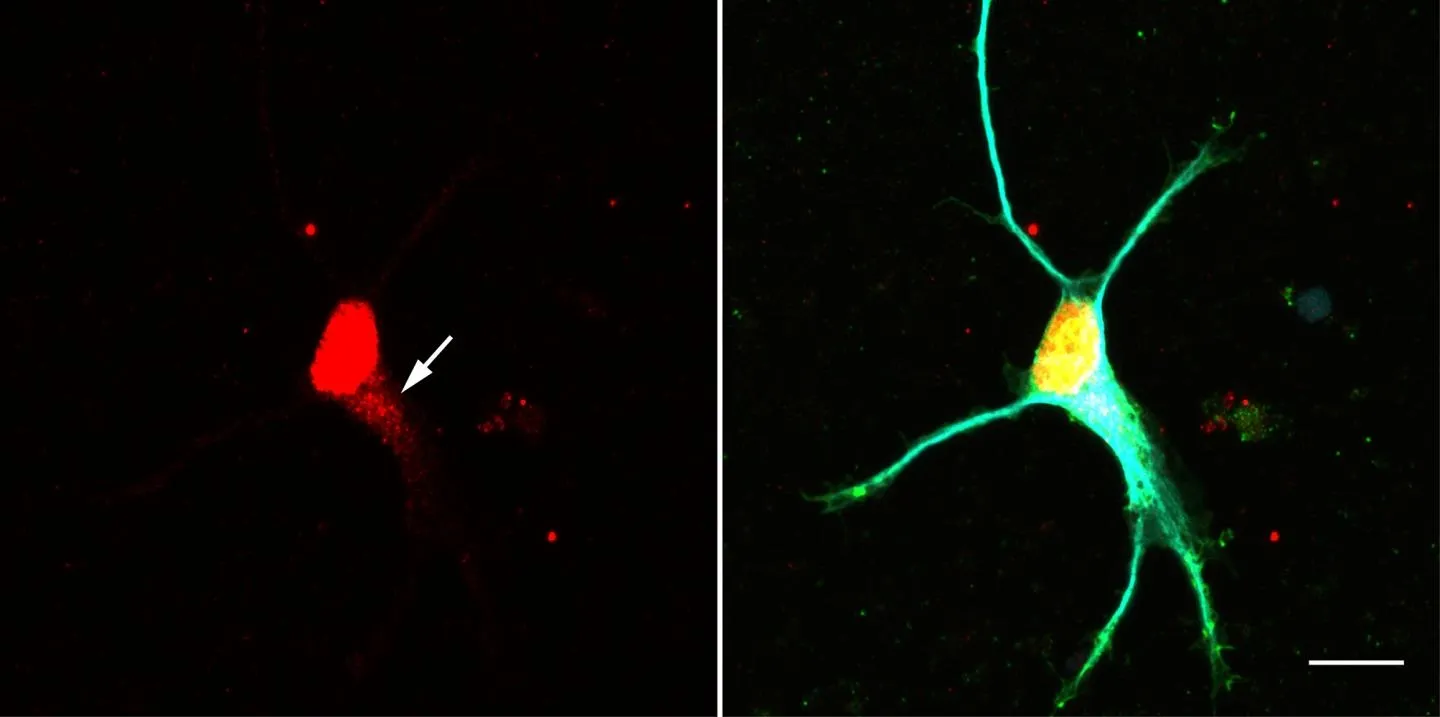
Neurodegenerative diseases, such as various forms of senile dementia or amyotrophic lateral sclerosis (ALS), have one thing in common: large amounts of certain RNA-protein complexes (snRNPs) are produced and deposited in the nerve cells of those affected - and this hinders the function of the cells. The overproduction is possibly caused by a malfunction in the assembly of the protein complexes.
How the production of these protein complexes is regulated was unknown until now. Researchers from Martinsried and Würzburg in Bavaria, Germany, have solved the puzzle and now report on it in the open access journal Nature Communications. They describe in detail a signaling pathway that prevents the overproduction of snRNPs when they are not needed. The results should make it possible to better understand the processes in motor neuron diseases and senile dementia.
The research group led by Professor Michael Sendtner and Dr. Michael Briese from the Institute of Clinical Neurobiology at Julius-Maximilians-Universität Würzburg (JMU) was in charge of the publication. Professor Utz Fischer and Pradhipa Ramanathan from the JMU Institute of Biochemistry were also involved, as was a team from the Max Planck Institute of Biochemistry in Martinsried.
The next steps in research
Further investigations shall now show how the synthesis and degradation of excess snRNPs are regulated in nerve cells. The scientists hope that in the end they will be able to identify new therapeutic options for neurodegenerative diseases.
How the production of these protein complexes is regulated was unknown until now. Researchers from Martinsried and Würzburg in Bavaria, Germany, have solved the puzzle and now report on it in the open access journal Nature Communications. They describe in detail a signaling pathway that prevents the overproduction of snRNPs when they are not needed. The results should make it possible to better understand the processes in motor neuron diseases and senile dementia.
The research group led by Professor Michael Sendtner and Dr. Michael Briese from the Institute of Clinical Neurobiology at Julius-Maximilians-Universität Würzburg (JMU) was in charge of the publication. Professor Utz Fischer and Pradhipa Ramanathan from the JMU Institute of Biochemistry were also involved, as was a team from the Max Planck Institute of Biochemistry in Martinsried.
The next steps in research
Further investigations shall now show how the synthesis and degradation of excess snRNPs are regulated in nerve cells. The scientists hope that in the end they will be able to identify new therapeutic options for neurodegenerative diseases.
INFORMATION: