A $5 device identifies counterfeit pills by how they dissolve
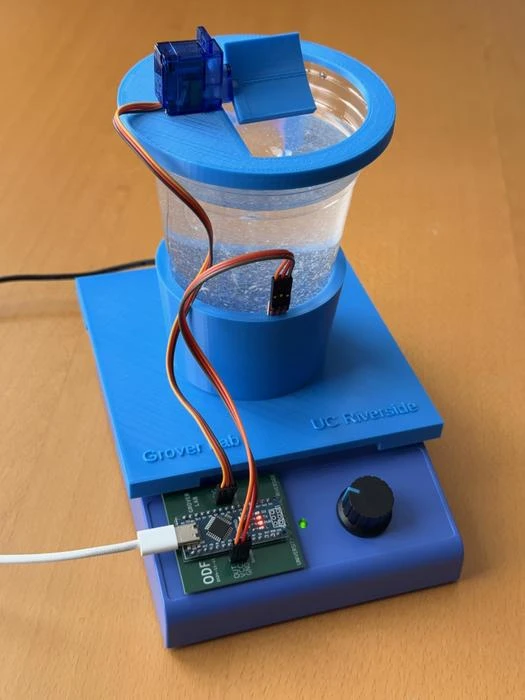
A device that could cost as little as $5 to manufacture can tell whether a pill is legitimate by watching it dissolve in water. Engineers at the University of California, Riverside have built an open-source counterfeit drug detector from repurposed infrared sensors — the kind designed for toy robots that follow lines drawn on paper — and demonstrated that it correctly identifies 90% of tested medications based solely on their dissolution patterns.
Every pill leaves a fingerprint in water
The core principle is simple. All pills of a given drug are manufactured to be as identical as possible — same active ingredient, same binders, same coating, same pressing force. That uniformity means they dissolve at roughly the same rate when dropped in water. A counterfeit pill, made by different people with different ingredients in a different facility, may contain the same active compound, but it won't dissolve the same way. The differences may be subtle — invisible to the eye — but an infrared sensor can track them.
William Grover, an associate bioengineering professor at UC Riverside, and his team built a device that shines infrared light through a water sample as a pill dissolves. The sensor monitors how the optical properties of the solution change over time, converting the entire dissolution process into a digital curve — what Grover calls a disintegration fingerprint.
Legitimate pills of the same product produce nearly identical fingerprints. A counterfeit, even a sophisticated one, produces a different curve. The comparison is automatic and requires no chemistry expertise to interpret.
Thirty drugs, 90% accuracy, one cheap sensor
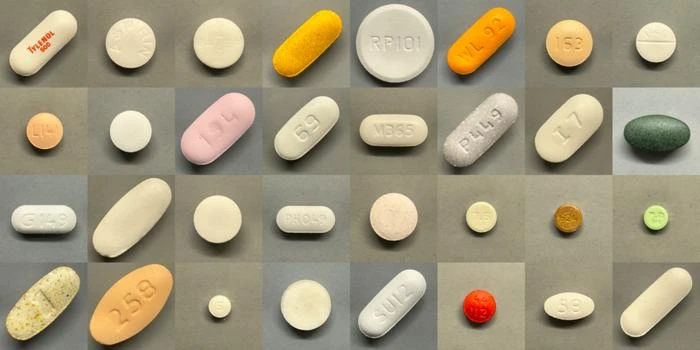
The research team tested more than 30 different medications: antibiotics, vitamin supplements, prescription opioids, over-the-counter painkillers. In 90% of cases, the fingerprinting method correctly identified the drug. The device could even distinguish between name-brand and generic versions of the same compound — Bayer aspirin versus drugstore-brand aspirin, for instance — despite the two containing the same active ingredient and very similar inactive ones.
To test geographic consistency, the team recruited friends and family to buy samples of the same products across the United States and Canada. Pills of the same product from different stores typically produced matching fingerprints. But some manufacturers produce slightly different formulations for different countries, and the device caught those differences too.
The open-source plans for building the device are detailed in a paper published in Analytical Chemistry. At full build, it costs under $30. Grover estimates that a stripped-down version could be produced for as little as $5 — cheap enough for deployment in low-resource settings where counterfeit drugs cause the most harm.
One in ten medications worldwide is fake or substandard
The World Health Organization puts the figure at roughly 10%: one in every ten medications circulating globally is either counterfeit or substandard. The problem is concentrated in the developing world, where regulatory infrastructure is thin and supply chains are long. But it's not confined there. In the United States, gray markets for weight-loss drugs, anti-aging treatments, and other high-demand pharmaceuticals have produced injuries and deaths. Watered-down or illicitly manufactured versions of GLP-1 inhibitors and Botox have been implicated in serious adverse events.
Existing methods for verifying drug authenticity — mass spectrometry, high-performance liquid chromatography — are accurate but expensive and require trained operators. They work in a regulatory lab. They don't work at a rural clinic in sub-Saharan Africa, at a pharmacy counter in Southeast Asia, or at a U.S. border checkpoint processing suspicious shipments.
Grover's device is designed for exactly those settings. It requires water, a pill, and a few minutes. No reagents, no training, no laboratory.
The antimalarial target
Grover's next goal is detecting counterfeit antimalarial drugs. Malaria kills more than 600,000 people annually, most of them children in tropical regions. Effective treatments exist, but so do counterfeits — pills sold in authentic-looking packaging that contain no active ingredient at all.
The economics of the scam are brutal. Counterfeiters know that demand for antimalarials is high, margins are large, and enforcement is sparse. A parent buys what appears to be the right medication. The child takes it. The infection doesn't clear. The result, in too many cases, is death from a treatable disease.
Getting dissolution-fingerprint readers into the hands of health workers, pharmacists, and procurement officers in malaria-endemic regions is the kind of deployment Grover envisions. The open-source design is deliberate — anyone with basic electronics skills can build the device from the published plans.
What the fingerprint can and cannot tell you
The method has clear limitations. It identifies whether a pill matches the expected dissolution profile of a legitimate product. It does not identify what the pill actually contains. A counterfeit that dissolves differently could be harmless filler or a dangerous substitute — the fingerprint alone won't distinguish between the two. For that, chemical analysis is still necessary.
The 90% accuracy rate also means that roughly one in ten pills tested may be misidentified. In a screening context — flagging suspicious batches for further testing — that error rate may be acceptable. For definitive regulatory action, it would need to be supplemented by confirmatory methods.
The reference library of fingerprints also needs to grow. The current dataset covers about 30 medications. The global pharmacopeia contains thousands. Building a comprehensive database of dissolution fingerprints for widely counterfeited drugs is a substantial undertaking that would require collaboration across manufacturers, regulators, and researchers.
But as a first-pass screening tool — cheap, fast, portable, and requiring no technical expertise — the device fills a gap that expensive laboratory methods cannot. The question now is whether the open-source design translates from an engineering lab in Riverside to a pharmacy counter in Lagos or Phnom Penh. That's a logistics problem, not a technology one. The sensor works.