Queensland's assisted dying law works for patients - but GPs say the system is failing them
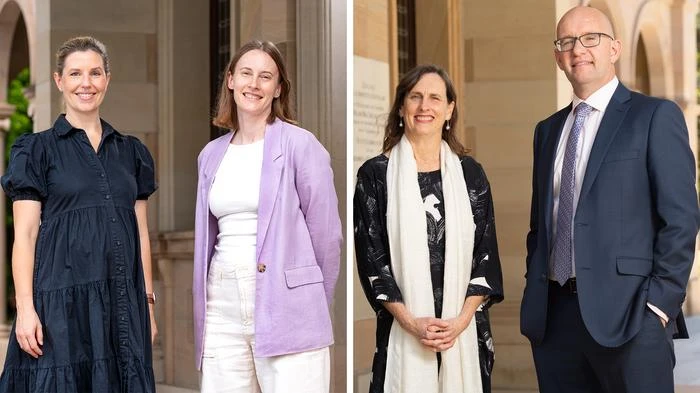
Dr. Laura Ley Greaves expected to hear about clinical dilemmas when she began interviewing Queensland general practitioners about their experiences with the state's new voluntary assisted dying law. She did hear some. But what dominated the conversations was something more mundane and, in its own way, more troubling: paperwork, confusion about eligibility criteria, and the absence of a clear payment structure for one of the most emotionally demanding tasks a doctor can perform.
Queensland's Voluntary Assisted Dying Act took effect in January 2023, making it the fifth Australian state to legalize the practice. In its first year, Ley Greaves and colleagues at the Queensland University of Technology interviewed 12 GPs who had engaged with the legislation in various capacities - some as fully authorized practitioners, others in more limited referral or advisory roles. Their experiences, published in the Australian Journal of General Practice, paint a picture of a system that works for patients but is slowly grinding down the doctors who make it possible.
From zero cases to fifty - and everything in between
The most striking finding was the sheer range of GP involvement. Some of the twelve doctors had not participated in a single VAD case. Others had handled more than fifty. That variation is not random. It reflects structural features of Queensland's model that funnel the vast majority of cases - around 90% - through the public health system. Community-based GPs, working in private practices without institutional support, face barriers at every step.
The application process itself is a significant hurdle. GPs described the paperwork as complex and time-intensive, requiring meticulous documentation across multiple stages. For doctors who encounter VAD requests rarely, the cognitive burden of navigating an unfamiliar regulatory framework compounds the administrative load. Several expressed anxiety about making procedural errors - a reasonable concern given the legal gravity of the process.
"GPs are often the first point of contact for patients at the end of life, and their holistic, patient-centred approach means they are ideally placed to support VAD," said Ley Greaves, a PhD researcher at QUT. "However, many GPs told us the application process, training requirements, and lack of clear remuneration made participation difficult, especially for those working outside the public system."
No Medicare rebate for end-of-life's hardest conversation
Money is not the primary motivation for any doctor choosing to participate in assisted dying. But the complete absence of a dedicated Medicare rebate creates a genuine financial disincentive, particularly for GPs in private practice. A VAD assessment and application can consume hours of clinical time - time that generates no reimbursement through the standard billing framework. For a solo practitioner or small practice already operating on thin margins, that is not a trivial consideration.
The financial barrier falls unevenly. Hospital-based physicians and those working within state-funded palliative care services are salaried; the additional time for VAD work does not directly reduce their income. Community GPs absorb the cost themselves. The result is a system that effectively restricts VAD provision to institutional settings, limiting the choice and continuity of care available to patients who might prefer to work with their long-standing family doctor.
Rural and regional GPs face compounded disadvantages. Training opportunities are concentrated in urban centers. Peer support networks are thinner. The emotional weight of assisting a patient's death is heavier in a small community where the doctor may have treated the patient for decades and will continue to see their family. Without structural support, these GPs are the most likely to opt out - precisely the communities where alternative access is most limited.
Training gaps beyond the authorized practitioners
Rachel Feeney, a QUT co-author specializing in VAD research, highlighted a problem that extends beyond the subset of GPs who actively provide assisted dying. Even doctors who have no intention of becoming authorized VAD practitioners still need sufficient knowledge to respond to patient inquiries, provide accurate information, and make appropriate referrals. Many reported ongoing confusion about eligibility criteria, procedural requirements, and the boundaries of their legal obligations.
"Even doctors who don't intend to become authorised VAD practitioners still need the knowledge to guide patients sensitively and lawfully," Feeney said. "Education is essential to ensure patients receive accurate information and compassionate care."
This knowledge gap has real consequences. A patient who asks their GP about assisted dying and receives an uncertain or incorrect answer may abandon the inquiry, delay access, or seek information from less reliable sources. The quality of that first conversation shapes the patient's entire trajectory through the system.
A centralized model and its trade-offs
Queensland's approach is distinctive among Australian states for its high degree of centralization within the public health system. This design ensures statewide access - no patient is left without a pathway because their local area lacks an authorized practitioner. It also provides institutional infrastructure: protocols, peer review, specialist consultation, and administrative support.
But centralization comes at a cost. It marginalizes the very professionals who are often best positioned to support dying patients: their general practitioners. GPs who have managed a patient's chronic illness for years, who know their values, their family dynamics, their fears, are sidelined in favor of hospital-based practitioners who may meet the patient for the first time during the VAD assessment. That is not necessarily worse care, but it is different care, and it removes an element of relational continuity that many patients value deeply.
The tension is not unique to Queensland. Every jurisdiction that has implemented assisted dying legislation grapples with the balance between centralized quality control and distributed access. What the QUT study makes concrete is the human experience of that tension - how it plays out in individual consulting rooms and what it costs individual doctors.
What the study cannot tell us
Twelve GPs is a small sample, and the researchers are clear about that limitation. The study captures depth, not breadth. It reveals the texture of individual experiences but cannot quantify how widespread each barrier is across Queensland's GP workforce. The interviews were conducted during the first year of the legislation, when teething problems are expected. Some of the administrative friction may resolve as systems mature and familiarity grows.
The study also focuses exclusively on GP perspectives. Patient experiences, specialist perspectives, and the views of pharmacists and nurses involved in VAD provision are not represented. A comprehensive assessment of the system's functioning would require those additional viewpoints.
And because Queensland's model is structurally distinct from those in other Australian states, the findings may not transfer directly. Victoria's and Western Australia's systems, for example, involve community-based practitioners more heavily. Whether their GPs face similar or different barriers is a separate question requiring separate research.
The study forms part of a larger longitudinal project examining Queensland's VAD implementation over time. Future waves of data collection will show whether the barriers identified in year one persist, worsen, or resolve as the system matures and as the political and medical landscape around assisted dying continues to evolve.