Cold-blooded animals can't tune their physiology to daily temperature swings
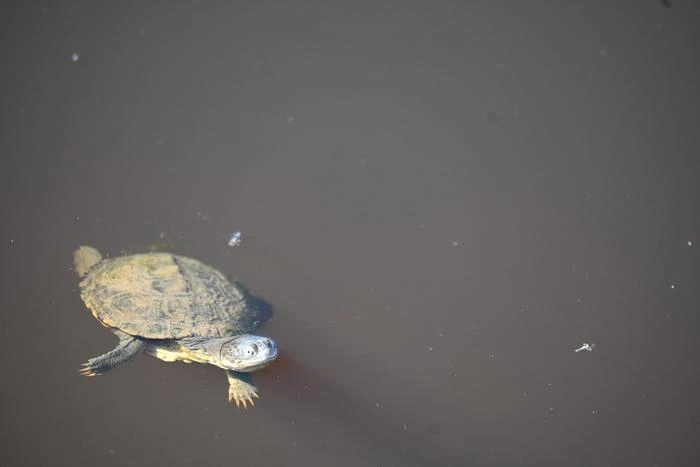
Ectotherms do not fine-tune their physiology to cope with daily temperature swings. That is the blunt finding from a Murdoch University meta-analysis that synthesized data from 26 studies spanning fish, reptiles, and invertebrates - and it contradicts a widespread assumption in thermal biology.
The prevailing expectation, grounded in established physiological theory, held that cold-blooded animals exposed to predictable daily temperature fluctuations would compensate. Their metabolic rates, locomotor performance, cardiovascular function, and enzyme activity would adjust to become less sensitive to those swings - a form of physiological buffering that would smooth out the thermal rollercoaster of day and night, sun and shade.
The data say otherwise.
Twenty-six studies, no consistent compensation
Led by Daniel Gomez Isaza from the Harry Butler Institute at Murdoch University, the research team compiled and compared performance data from ectotherms maintained under constant temperatures against those exposed to fluctuating temperature regimes. They examined four categories of physiological response: metabolic rate, locomotor performance, cardiovascular function, and enzyme activity. Across all four, they found no consistent evidence that fluctuating-temperature animals performed any differently from constant-temperature animals when tested at the same measurement temperatures.
"We expected to see signs that these animals adjust their physiology to become less sensitive to daily temperature change," Gomez Isaza said. "Instead, we found the opposite. There was no consistent evidence that ectotherms fine-tune their physiology in response to these predictable fluctuations."
The absence of compensation is striking because the temperature fluctuations in these studies were not extreme or unpredictable. They mimicked the kind of regular daily cycling that ectotherms have experienced for their entire evolutionary history. If any thermal regime should trigger compensatory adjustment, this is it. The fact that it does not suggests that ectotherms either lack the physiological machinery for short-term thermal compensation, or that the energetic cost of maintaining such machinery outweighs the benefit.
What ectotherms actually rely on instead
If physiology is not the buffer, what is? Behavior. Ectotherms regulate their body temperature primarily by moving - seeking shade when it is hot, basking in sunlight when it is cold, burrowing into substrate, shifting depth in a water column. These behavioral thermoregulation strategies are well documented and highly effective in environments that offer thermal heterogeneity. A lizard on a rocky outcrop has options. A fish in a shallow stream can find cooler pockets.
But behavioral thermoregulation has prerequisites. It requires the existence of thermal refuges - cooler or warmer microhabitats within reach. It requires mobility. And it requires time. An animal that must spend most of its day foraging or avoiding predators may not have the luxury of constantly repositioning itself for thermal comfort.
"Because ectotherms aren't adjusting their physiology to daily temperature swings, it's likely they'll have to depend more on behavioural strategies - like seeking shade, sun, or cooler microhabitats - or on rapid, short-term stress responses to cope with these changes," said Essie Rodgers, a co-author and lecturer at Murdoch University's School of Environmental and Conservation Sciences.
Climate change is not just about warming - it is about variability
The findings acquire urgency in the context of climate change, which is not simply making the planet warmer but is also altering temperature variability. Daily temperature ranges are shifting. Heat waves are becoming more frequent and more intense. Cold snaps still occur. The predictable rhythms of diurnal temperature cycling are being overlaid with increasing irregularity.
For an ectotherm that cannot physiologically buffer against even predictable daily fluctuations, unpredictable and amplified fluctuations present a compounding challenge. If a fish cannot adjust its metabolic rate to handle a normal 8-degree daily swing, it is poorly equipped for a 14-degree swing driven by an unusual heat event.
This matters for population-level outcomes. Metabolic costs rise with temperature in ectotherms - exponentially, not linearly. An animal that cannot dampen its metabolic response to temperature spikes will burn through energy reserves faster during heat events. That means less energy for growth, reproduction, and immune function. Over a season, over a generation, those costs accumulate.
Ectotherms include most animal life on Earth
The scope of this vulnerability is enormous. Ectotherms encompass virtually all fish, all reptiles, all amphibians, and all invertebrates. They dominate global biodiversity. They anchor food webs in every ecosystem from coral reefs to alpine streams to tropical forests. The insects that pollinate crops, the fish that feed billions of people, the reptiles that control pest populations - all are ectotherms, and all are subject to the thermal constraint this study documents.
That does not mean all ectotherms are equally at risk. Species with access to thermally diverse habitats may cope through behavior. Species with short generation times may adapt genetically. Tropical ectotherms, already living near their thermal maxima with relatively little daily variation, face different pressures than temperate-zone species accustomed to wide daily swings. The vulnerability landscape is complex and species-specific.
Limits of the meta-analysis
The study drew on 26 separate investigations, which represents a reasonable evidence base for meta-analysis but is not exhaustive. The taxonomic coverage, while spanning fish, reptiles, and invertebrates, is inevitably uneven. Some major groups - amphibians, marine invertebrates - may be underrepresented. And the laboratory conditions used in most of the compiled studies, while well-controlled, do not fully replicate the complexity of natural thermal environments, where fluctuations are layered with other stressors such as hypoxia, desiccation, and predation pressure.
The meta-analysis also cannot distinguish between the absence of a physiological response and a response too small or too variable to detect with current sample sizes. It is possible that some species do show marginal compensation that falls below the statistical threshold of detection. But even if that is the case, the compensation is evidently too weak to constitute a reliable buffer against thermal variability.
"Over the longer term, their resilience may hinge on genetic adaptation rather than day-to-day physiological flexibility, which raises real concerns as temperature variability continues to increase," Rodgers said. For species with long generation times - large reptiles, slow-growing fish - genetic adaptation may simply be too slow to keep pace with the rate of environmental change now underway.
Conservation implications for a warming, swinging world
The practical implications extend to conservation planning and habitat management. If ectotherms depend on behavioral thermoregulation rather than physiological adjustment, then the availability of thermal microhabitats becomes a critical factor in their survival under climate change. Protecting shade structures, maintaining riparian vegetation along streams, preserving the structural complexity of habitats that creates thermal diversity - these management actions take on heightened importance when the animals using them have no internal mechanism to compensate for temperature extremes.
For aquatic ectotherms, the situation may be especially constrained. Fish in shallow rivers or ponds may have limited options for behavioral thermoregulation when entire water bodies warm simultaneously. Unlike a lizard that can retreat under a rock, a fish in a warming lake may have nowhere cooler to go. The combination of physiological inflexibility and habitat constraints could create thermal traps for populations during heat events - scenarios that current species distribution models may not adequately capture.
Understanding which species are most vulnerable requires integrating the physiological findings from studies like this one with ecological data on habitat use, behavioral flexibility, and population connectivity. A species that cannot adjust its physiology but has access to diverse microhabitats and high mobility may cope better than one that is sedentary and confined to a thermally uniform environment. The meta-analysis provides the physiological baseline; the ecological context determines whether that baseline translates into population-level risk.