Neuro-symbolic AI solves robot tasks at 1% the energy cost — with triple the accuracy
Tufts University School of Engineering
Ask a robot to stack blocks into a tower and, more often than not, it will fumble. Shadows trick its vision. It misjudges where a block's center of mass sits. It places one piece at a slight angle, and the whole structure topples. The robot isn't stupid — it's working from a visual-language-action model, the same class of AI that powers much of modern robotics. But these models learn by brute statistical repetition, and brute repetition is expensive.
At Tufts University's School of Engineering, Matthias Scheutz watched his robots fail at a deceptively simple puzzle and saw not just an engineering problem, but an energy crisis in miniature.
415 terawatt hours and climbing
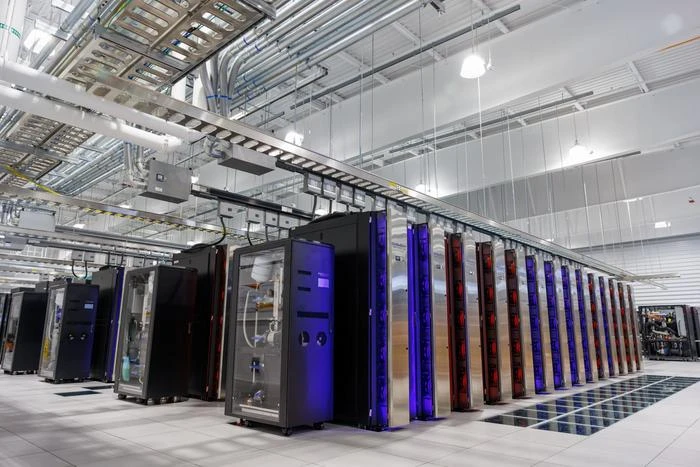
The International Energy Agency estimates that U.S. AI and data center systems consumed roughly 415 terawatt hours of electricity in 2024 — more than 10% of the country's total energy output. That figure is projected to double by 2030. Every AI-generated search summary at the top of a Google results page burns up to 100 times more energy than producing the traditional web listings below it.
This trajectory is, by most accounts, unsustainable. And Scheutz, the Karol Family Applied Technology Professor at Tufts, believed the root cause wasn't just scale — it was architecture. Standard AI models, whether large language models like ChatGPT or visual-language-action (VLA) models for robots, work by predicting the next word or action in a sequence based on massive training datasets. That approach generates impressive results, but also hallucinations, errors, and enormous power bills.
So Scheutz's lab tried something different: bolt symbolic reasoning onto the neural network.
Combining instinct with logic
Neuro-symbolic AI is not a new concept, but Scheutz's implementation targets a specific weakness. Traditional VLA models scan a scene, identify objects, interpret instructions, and attempt actions — all through statistical inference. A neuro-symbolic VLA adds a layer of rule-based reasoning on top. Think of it as giving the robot both instincts and a rulebook.
Where a standard VLA might attempt to place a block through trial and error across dozens of attempts, the neuro-symbolic system applies constraints: it knows that blocks must be centered, that larger blocks go on the bottom, that a structure's center of mass must remain within its base of support. These aren't learned from thousands of examples. They're programmed as logical rules.
"A neuro-symbolic VLA can apply rules that limit the amount of trial and error during learning and get to a solution much faster," Scheutz said. "Not only does it complete the task much faster, but the time spent on training the system is significantly reduced."
The Tower of Hanoi test
To benchmark their approach, the team used the Tower of Hanoi puzzle — a classic problem that requires moving a stack of disks between pegs according to strict rules. It's simple enough for a human child, but demands planning that purely statistical models struggle with.
The results were stark. On the standard puzzle, the neuro-symbolic system achieved a 95% success rate. The conventional VLA managed 34%. On a more complex version of the puzzle that neither system had encountered in training, the gap widened further: 78% for the hybrid system, 0% for the standard VLA. Every single attempt failed.
Training time told a similar story. The neuro-symbolic model required 34 minutes. The standard VLA needed over 36 hours — more than 60 times longer. And energy consumption dropped accordingly: training the hybrid system used just 1% of the energy required for the conventional model. During actual task execution, it consumed 5% of the standard model's energy draw.
What this does not solve
There are important caveats. The research, set to be presented at the International Conference of Robotics and Automation in Vienna this May, demonstrates a proof of concept, not a production-ready system. The Tower of Hanoi, while a useful benchmark, is a structured puzzle with clear rules — a far cry from the messy, unpredictable environments where robots need to operate.
Symbolic reasoning works well when you can define the rules in advance. Many real-world tasks resist tidy formalization. A robot sorting recycling in a warehouse faces ambiguous objects, variable lighting, and situations no rulebook anticipated. How well neuro-symbolic systems handle that kind of open-ended complexity remains an open question.
The study also focused on robotic VLA models, not the large language models that dominate public attention. Whether the same hybrid approach could meaningfully reduce the energy footprint of systems like ChatGPT or Gemini — which operate at vastly different scales and on different types of tasks — is a separate research question entirely.
The resource wall ahead
Still, the broader argument carries weight. The AI industry is locked in a competitive arms race for ever-larger data centers, facilities whose power consumption can exceed what's needed to run a small city. Scheutz and his team contend that current LLMs and VLAs, despite their popularity, may not be the right foundation for energy-efficient, reliable AI.
"These systems are just trying to predict the next word or action in a sequence, but that can be imperfect, and they can come up with inaccurate results or hallucinations," Scheutz said. "Their energy expense is often disproportionate to the task."
The hybrid approach won't replace neural networks. But it suggests that the future of AI might not require an ever-expanding power grid — just a smarter way to combine the tools we already have. Whether the industry, currently pouring billions into brute-force scaling, will pivot toward that kind of efficiency is another matter.