THE ORIGINAL COLLECTION · SINCE 2010

Earth Science
press releases.

Research announcements from universities, hospitals and scientific institutions. Explore the stories, people and discoveries behind the headlines.

Original publication datesPage 6
FIND A STORY

Find a past release.

Dates and source material belong to the original release.

Read our research explainers

Browse the collection · original publication order

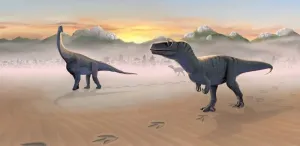
Footprints reveal prehistoric Scottish lagoons were stomping grounds for giant Jurassic dinosaurs
Earth Science

Footprints reveal prehistoric Scottish lagoons were stomping grounds for giant Jurassic dinosaurs

Jurassic dinosaurs milled about ancient Scottish lagoons, leaving up to 131 footprints at a newly discovered stomping ground on the Isle of Skye in Scotland, according to a study published April 2, 2025 in the open-access journal PLOS One by Tone Blakesley of the University of Edinburgh, Scotland and colleagues. In the rocks of the Isle of Skye, dinosaur footprints are abundant, providing insights into dinosaur distribution and behavior during an important time in their evolution. The footprints were left in the rippled sands of an ancient subtropical lagoon, dating back to the Middle Jurassic ...

Read the release
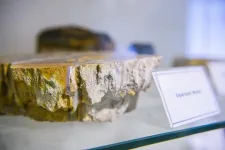
Early Earth's first crust composition discovery rewrites geological timeline
Earth Science

Early Earth's first crust composition discovery rewrites geological timeline

Researchers have made a new discovery that changes our understanding of Earth’s early geological history, challenging beliefs about how our continents formed and when plate tectonics began. A study published in Nature on 2 April reveals that Earth's first crust, formed about 4.5 billion years ago, probably had chemical features remarkably like today’s continental crust. This suggests the distinctive chemical signature of our continents was established at the very beginning of Earth’s history. Professor Emeritus Simon ...

Read the release
Mind the seismic gap: Understanding earthquake types in Guerrero, Mexico
Earth Science

Mind the seismic gap: Understanding earthquake types in Guerrero, Mexico

Plate temperature and water release can explain the occurrence of different types of earthquakes in Guerrera, Mexico. The Kobe University simulation study also showed that the shape of the Cocos Plate is responsible for a gap where earthquakes haven’t occurred for more than a century. The results are important for accurate earthquake prediction models in the region. Where one tectonic plate is pushed down by another, the resulting stress is released in various tectonic events. There are catastrophic megathrust earthquakes, unnoticeable “slow slip events,” and continuous low-frequency “tectonic tremors,” and knowing ...

Read the release
From dinosaurs to birds: the origins of feather formation
Earth Science

From dinosaurs to birds: the origins of feather formation

Feathers are among the most complex cutaneous appendages in the animal kingdom. While their evolutionary origin has been widely debated, paleontological discoveries and developmental biology studies suggest that feathers evolved from simple structures known as proto-feathers. These primitive structures, composed of a single tubular filament, emerged around 200 million years ago in certain dinosaurs. Paleontologists continue to discuss the possibility of their even earlier presence in the common ancestor of dinosaurs and pterosaurs (the first flying vertebrates with membranous wings) around 240 million years ago. Proto-feathers are ...

Read the release
Sea level rise after the last ice age: More knowledge
Earth Science

Sea level rise after the last ice age: More knowledge

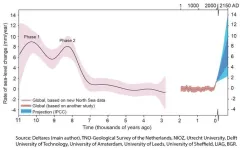
New geological data has given more insight into the rate and magnitude of global sea level rise following the last ice age, about 11,700 years ago. This information is of great importance to understand the impact global warming has had on the ice caps and on sea level rise. The findings have been published in the scientific journal Nature by researchers from Deltares, Utrecht University, TNO Netherlands Geological Service, Delft University of Technology, the Netherlands Institute for Sea Research (NIOZ), University of Leeds, University of Sheffield, University of Amsterdam, LIAG and BGR. Better ...

Read the release
Are volcanoes behind the oxygen we breathe?
Earth Science

Are volcanoes behind the oxygen we breathe?

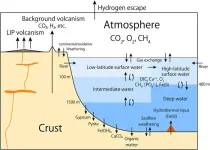
It is widely believed that Earth’s atmosphere has been rich in oxygen for about 2.5 billion years due to a relatively rapid increase in microorganisms capable of performing photosynthesis. Researchers, including those from the University of Tokyo, provide a mechanism to explain precursor oxygenation events, or “whiffs,” which may have opened the door for this to occur. Their findings suggest volcanic activity altered conditions enough to accelerate oxygenation, and the whiffs are an indication of this taking place. Take a deep breath. Do you ever think about the air entering your lungs? It’s ...

Read the release
Earth Science

Levels of select vitamins & minerals in pregnancy may be linked to lower midlife BP risk

Research Highlights: Higher levels of the minerals copper and manganese in pregnant women were associated with lower blood pressure and a reduced risk of developing high blood pressure decades later, according to a long-term study of women in Massachusetts. Higher levels of vitamin B12 were also associated with lower blood pressure in midlife. Note: The study featured in this news release is a research abstract presenting at the American Heart Association’s Epidemiology, Prevention, Lifestyle and Metabolic Health Scientific Sessions 2025, and the full manuscript is simultaneously published in the American Heart Association’s peer-reviewed journal Hypertension. Embargoed ...

Read the release
Earth Science

Heat from the sun affects seismic activity on Earth

WASHINGTON, March 4, 2025 – Seismology has revealed much of the basics about earthquakes: Tectonic plates move, causing strain energy to build up, and that energy eventually releases in the form of an earthquake. As for forecasting them, however, there’s still much to learn in order to evacuate cities before catastrophes like the 2011 magnitude 9.0 Tōhoku earthquake that, in addition to causing a tsunami that led to the Fukushima nuclear disaster, resulted in more than 18,000 deaths. In recent years, research has focused on a possible correlation between ...

Read the release
Earth Science

Genetic switch could help control leaf growth in poor soils

A new study has identified a genetic circuit in plants that controls individual leaf growth and allows the plants to adapt to their environment. The findings could help the development of more drought-resistant crops. Scientists from the University of Nottingham’s School of Biosciences investigated the growth of maize leaves in plants cultivated in three different soils containing differential amounts of nutrients and water. They found that microbes colonising plant leaves across these soils influence the growth of the leaves independently of the concentration of nutrients and soil properties. The findings have been published ...

Read the release
Coastal erosion threatens this ancient city — and others much closer to home
Earth Science

Coastal erosion threatens this ancient city — and others much closer to home

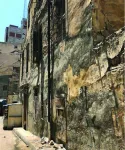
A new USC study reveals a dramatic surge in building collapses in the ancient Egyptian port city of Alexandria, directly linked to rising sea levels and seawater intrusion. Once a rare occurrence, building collapses in Alexandria — one of the world’s oldest cities, often called the “bride of the Mediterranean” for its beauty — have accelerated from approximately one per year to an alarming 40 per year over the past decade, the researchers found. “The true cost of this loss extends far beyond bricks and mortar. We are witnessing the gradual disappearance of historic coastal ...

Read the release
Earth Science

Kahramanmaraş earthquake study showcases potential slip rate errors

Accurate assessment of the land surface damage (such as small-scale fracturing and inelastic deformation) from two major earthquakes in 2023 can help scientists assess future earthquake hazards and therefore minimize risk to people and infrastructure. However, attaining precise extensive measurements in earthquake zones remains challenging. The two earthquakes that struck on 6 February 2023 were devastating: they were of magnitude 7.8 and 7.6 and occurred in quick succession near the border between Syria and Turkey. They caused widespread infrastructure destruction and resulted in tens of thousands of deaths across multiple provinces. Using ...

Read the release
Earth Science

Seismic techniques reveal how intense storms in 2023 impacted aquifers in Greater Los Angeles

Despite record rainfall in the region in early 2023, only a fraction of Southern California’s groundwater reserves has been replenished, researchers report. Their study, which leverages seismic noise data from across Greater Los Angeles, highlights the urgent need for improved monitoring and management of the state’s critical groundwater reserves. After enduring two decades of severe drought, California experienced an abrupt meteorological shift in water in 2023. A succession of 16 atmospheric rivers from late 2022 through early 2023, followed by the torrential ...

Read the release
Earth Science

Los Angeles groundwater remained depleted after 2023 deluge, study finds

The greater Los Angeles area has long been subject of intense seismographic monitoring. A network of highly sensitive seismometers peppers the region on a constant vigil for earthquakes. Now researchers at the Stanford Doerr School of Sustainability have developed a new way to use that existing infrastructure and its decades of data to estimate water levels in the region’s aquifers, which serve some 10 million residents of Los Angeles and Orange counties. The researchers analyzed the ...

Read the release
500-year-old Transylvanian diaries show how the Little Ice Age completely changed life and death in the region
Earth Science

500-year-old Transylvanian diaries show how the Little Ice Age completely changed life and death in the region

Glaciers, sediments, and pollen can be used to reconstruct the climate of the past. Beyond ‘nature’s archive,’, other sources, such as diaries, travel notes, parish or monastery registers, and other written documents – known at the ‘society’s archive’ – contain reports and observations about local climates in bygone centuries. In contrast, the second half of the century was characterized by heavy rainfall and floods, particularly in the 1590s. The western parts of the European continent cooled significantly when in the 16th century a period known as the ‘Little Ice Age’ intensified. During the second ...

Read the release
Rare bird skull from the age of dinosaurs helps illuminate avian evolution
Earth Science

Rare bird skull from the age of dinosaurs helps illuminate avian evolution

A new study in Nature describing a fossil of a nearly complete and intact bird skull from Antarctica is shedding light on the early evolution of today’s birds and avian diversity at the end of the Age of Dinosaurs. The skull is from Vegavis iaai, an extinct duck-like bird that lived during the Late Cretaceous, just before non-avian dinosaurs went extinct. It’s one of very few 3D bird skulls known to science from the Cretaceous — a 79-million-year geological period and the last era when ...

Read the release
Drying and rewetting cycles substantially increased soil CO2 release
Earth Science

Drying and rewetting cycles substantially increased soil CO2 release

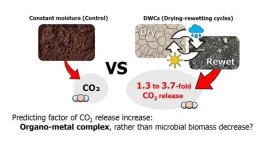
Niigata, Japan - The amount of carbon dioxide (CO2) released by microbial decomposition of soil organic carbon on a global scale is approximately five times greater than the amount of anthropogenic CO2 emissions. Thus, it is essential to clarify the impact of climate change on soil CO2 release dynamics. A collaborative research group consisting of Dr. Hirohiko Nagano and Ms. Yuri Suzuki of Niigata University with researchers of Kyushu University and the Japan Atomic Energy Agency conducted incubation experiments on forest and pastureland soils at 10 locations across Japan. The research group revealed ...

Read the release
Earth Science

Large magma bodies found beneath dormant volcanoes, surprising scientists

ITHACA, N.Y. – New Cornell University led-research challenges the long-standing belief that active volcanoes have large magma bodies that are expelled during eruptions and then dissipate over time as the volcanoes become dormant. Researchers used seismic waves to identify magma chambers beneath the surface of six volcanoes of various sizes and dormancy within the Cascade Range, which includes half of the U.S. volcanoes designated by the U.S. Geological Survey as “very high threat.” The team found that all of the volcanoes, including dormant ones, have persistent and large magma bodies. The ...

Read the release
Unveiling Japan's geological history through volcanogenic massive sulfide deposits
Earth Science

Unveiling Japan's geological history through volcanogenic massive sulfide deposits

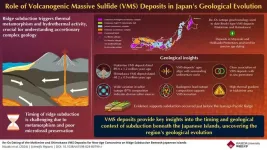
The Earth’s surface is constantly reshaped by the movement of tectonic plates, which make up the continental crust on which we are living. These tectonic plates are in continuous motion, and when one plate is pushed under another, it is called “subduction.” These processes play a crucial role in shaping the Earth’s landmasses, including the islands of Japan, over several hundred million years. Studying ancient mineral deposits offers a valuable way to uncover the timing of these events. However, determining the precise timing of these tectonic events has ...

Read the release
New twist in mystery of dinosaurs' origin
Earth Science

New twist in mystery of dinosaurs' origin

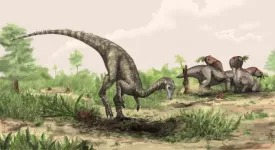
The remains of the earliest dinosaurs may lie undiscovered in the Amazon and other equatorial regions of South America and Africa, suggests a new study led by UCL (University College London) researchers. Currently, the oldest known dinosaur fossils date back about 230 million years and were unearthed further south in places including Brazil, Argentina and Zimbabwe. But the differences between these fossils suggest dinosaurs had already been evolving for some time, pointing to an origin millions of years earlier. The new study, published in the journal Current Biology, accounted for gaps in ...

Read the release
Earth Science

Could the Summerville ghost lantern be an earthquake light?

Gather around, and let Susan Hough tell you the tale of the Summerville Light. Legend has it that the strange orb sometimes seen hovering over the railroad tracks in the remote area around Summerville, South Carolina is a lantern borne by a ghost whose husband lost his head in a train accident. But Hough, a seismologist at the U.S. Geological Survey, wonders if there might be a less ethereal but no less intriguing possibility: is the source of the Summerville Light a phenomenon known as earthquake ...

Read the release
Earth Science

Claims for the world’s deepest earthquake challenged by new analysis

The magnitude 7.9 Bonin Islands earthquake sequence, which ruptured deep within the earth near the base of the upper mantle, did not include an aftershock that extended to record depths into the lower mantle, according to a study in The Seismic Record. When Hao Zhang of the University of Southern California and colleagues re-examined the aftershock sequence of the May 2015 earthquake, they did not find evidence for a 751-kilometer-deep aftershock as reported by previous researchers. This aftershock has been called the deepest earthquake ever recorded. Instead, their study found a distribution of aftershocks that is compatible with a 12-kilometer sliver of a mantle mineral called olivine ...

Read the release
Curious blue rings in trees and shrubs reveal cold summers of the past — potentially caused by volcanic eruptions
Earth Science

Curious blue rings in trees and shrubs reveal cold summers of the past — potentially caused by volcanic eruptions

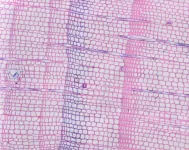
When the going gets cold, even tough trees struggle with growing. Trees need a certain number of warm days in their growing seasons to grow properly; otherwise, the cell walls of new growth don’t lignify properly, creating ‘blue rings’ that appear when wood samples are dyed. Since trees and shrubs can live for hundreds of years, identifying these blue rings allows us to spot cold summers in the past. By looking at pine trees and juniper shrubs from northern Norway, scientists identified two extremely cold summers in 1902 and 1877, possibly caused by the eruptions of Mount Pelée on the island of Martinique and ...

Read the release
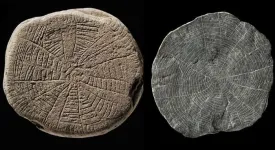
Volcanic eruption caused Neolithic people to sacrifice unique "sun stones"
Earth Science

Volcanic eruption caused Neolithic people to sacrifice unique "sun stones"

Throughout history, volcanic eruptions have had serious consequences for human societies such as cold weather, lack of sun, and low crop yields. In the year 43 BC when a volcano in Alaska spewed large quantities of sulphur into the stratosphere, harvests failed the following years in the countries around the Mediterranean, causing famine and disease. This is well-documented in written sources from ancient Greece and Rome. We do not have written sources from the Neolithic. But climate scientists from the Niels Bohr Institute at the University of Copenhagen have analysed ice cores from the Greenland ice sheet and can now document that around 2,900 ...

Read the release
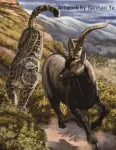
Conquest of Asia and Europe by snow leopards during the last Ice Ages uncovered
Earth Science

Conquest of Asia and Europe by snow leopards during the last Ice Ages uncovered

The study, published in Science Advances, was led by researchers Qigao Jiangzuo, from Peking University, and Joan Madurell Malapeira, from the Universitat Autònoma de Barcelona (UAB). Snow leopards (Panthera uncia) are in serious danger of extinction, with only about 4,000 specimens remaining. They are medium to large felids that live at high altitudes, over 2,000 meters above sea level, mainly in the Himalayas. Although their distinctive traits have long been recognized, the correlation between these ...

Read the release
Atop the Oregon Cascades, UO team finds a huge buried aquifer
Earth Science

Atop the Oregon Cascades, UO team finds a huge buried aquifer

THIS PUBLICATION IS EMBARGOED UNTIL 3 PM EASTERN TIME ON JANUARY 13, 2025. Oregon’s Cascade Range mountains might not hold gold, but they store another precious resource in abundance: water. Scientists from the University of Oregon and their partners have mapped the amount of water stored beneath volcanic rocks at the crest of the central Oregon Cascades and found an aquifer many times larger than previously estimated — at least 81 cubic kilometers. That’s almost three times the maximum capacity of Lake Mead, ...

Read the release
From the original Press-News collection. Issuers of news releases are responsible for the accuracy of their content.