THE ORIGINAL COLLECTION · SINCE 2010

Earth Science
press releases.

Research announcements from universities, hospitals and scientific institutions. Explore the stories, people and discoveries behind the headlines.

Original publication datesPage 7
FIND A STORY

Find a past release.

Dates and source material belong to the original release.

Read our research explainers

Browse the collection · original publication order

Study shows how plant roots access deeper soils in search of water
Earth Science

Study shows how plant roots access deeper soils in search of water

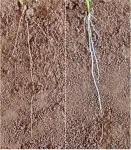
Scientists have discovered how plants adapt their root systems in drought conditions to grow steeper into the soil to access deeper water reserves. Plant scientists from the University of Nottingham, in collaboration with Shanghai Jiao Tong University, have identified how abscisic acid (ABA), a plant hormone known for its role in drought response, influences root growth angles in cereal crops such as rice and maize. The results have been published in Current Biology. The study highlights how ABA and auxin, another key hormone, work together to shape root growth ...

Read the release
Study suggests that magma composition drives volcanic tremor
Earth Science

Study suggests that magma composition drives volcanic tremor

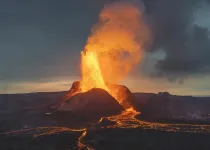
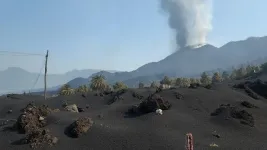
A new study based on the sampling and analysis of volcanic ash at Cumbre Vieja volcano in the Canary Islands, located off Africa’s northwest coast, suggests that the composition of magma could drive tremors during volcanic eruptions. The findings, which are detailed today in the journal Nature Geoscience in a paper led by scientists at the American Museum of Natural History and the City University of New York (CUNY), highlight the potential of volcanic ash analysis as a monitoring and forecasting tool. “The volcano research community has gotten ...

Read the release
Earth Science

Oil extraction might have triggered small earthquakes in Surrey

A series of more than 100 small earthquakes in Surrey in 2018 and 2019 might have been triggered by oil extraction from a nearby well, suggests a new study by UCL researchers. The earthquakes, which occurred in Newdigate and surrounding areas from April 2018 until early 2019, were recorded as being between 1.34 and 3.18 magnitude, and were linked to cracks in walls and ceilings and other damage to people’s homes, with reports of houses and beds shaking. Geologists have been divided over whether these earthquakes could have been triggered by extraction at the Horse Hill well in Horley about 5km ...

Read the release
New research reveals groundwater pathways across continent
Earth Science

New research reveals groundwater pathways across continent

Researchers from Princeton University and the University of Arizona have created a simulation that maps underground water on a continental scale. The result of three years’ work studying groundwater from coast to coast, the findings plot the unseen path that each raindrop or melted snowflake takes before reemerging in freshwater streams, following water from land surface to depths far below and back up again, emerging up to 100 miles away, after spending from 10 to 100,000 years underground. The simulation, published Jan. 6 in the journal Nature Water, shows that rainfall and snowmelt ...

Read the release
2025 Seismological Society of America Annual Meeting
Earth Science

2025 Seismological Society of America Annual Meeting

SSA will be holding its annual meeting on 14-18 April 2025 at the Hilton Baltimore Inner Harbor Hotel in Baltimore, Maryland. The meeting attracts more than 800 scientists, engineers and policymakers for presentations and posters that cover the latest seismological research from around the globe. The meeting's topics are presented in 48 technical sessions, including topics such as earthquake forecasting, seismic hazard assessment, explosion forensics, exploring extraterrestrial ...

Read the release
Massive volcanic eruptions did not cause the extinction of dinosaurs
Earth Science

Massive volcanic eruptions did not cause the extinction of dinosaurs

Massive volcanic eruptions on the Indian peninsula have long been proposed as an alternative cause for the demise of the dinosaurs. This phase of active volcanism took place in a period just before the Earth was struck by a meteorite, 66 million years ago. The effect of these volcanic eruptions on the Earth’s climate has been topic of fierce scientific debates for decades. Now, climate scientists from Utrecht University and the University of Manchester show that, while the volcanism caused a temporary cold period, the effects had already worn off thousands of years before the meteorite impacted. The scientists therefore conclude that the meteorite impact was the ...

Read the release
Innovative biomimetic superhydrophobic coating combines repair and buffering properties for superior anti-erosion
Earth Science

Innovative biomimetic superhydrophobic coating combines repair and buffering properties for superior anti-erosion

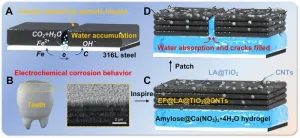
The long-term erosion and corrosion issues during the development of offshore oil and gas fields pose significant threats to the safe and efficient operation of these facilities. Superhydrophobic coatings, known for their ability to reduce interactions between corrosive substances and substrates, have garnered considerable attention. However, their poor mechanical properties often hinder their long-term application in practical working environments. To address this challenge, a research team led by Prof. Yuekun Lai from Fuzhou University and Prof. Xuewen Cao from China University of Petroleum (East China) has developed a biomimetic dental enamel coating with ...

Read the release
Durian helps rice plants thrive in salty soil
Earth Science

Durian helps rice plants thrive in salty soil

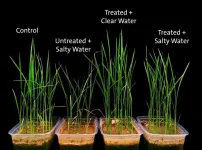
Extreme weather and pollution have increased the salt content in some soil, making growing conditions harsh for salt-sensitive crops like rice. Now, researchers reporting in ACS Nano detail a possible solution that doesn’t require genetic modification to make rice plants thrive in these conditions. In lab experiments, they determined that coating rice seedlings with magnesium-doped carbon dots — derived from durian peels — increased the seedlings’ antioxidant activity and photosynthesis, reducing the stress caused by salty soil. To increase stress resistance in plants, the current ...

Read the release
Earth Science

Do soil microbes affect flowers’ ability to attract bees?

New research reveals that certain soil microbes can help plants grow bigger flowers, therefore attracting more bees. The findings, which are published in New Phytologist, suggest that studying roots’ relationships with microbes can help scientists predict floral trait variations and plant-pollinator interactions. The research focused on arbuscular mycorrhizal fungi (AMF), which form a symbiotic relationship with plant roots, providing the plant with nutrients and water in exchange for carbon. AMF associations with plants’ roots enhanced flower size, resulting in more visitations ...

Read the release
Unveiling a century of stress and deformation: Insights from Kīlauea Volcano’s 1975 earthquake
Earth Science

Unveiling a century of stress and deformation: Insights from Kīlauea Volcano’s 1975 earthquake

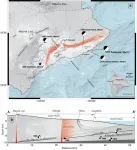
Researchers from the University of Hawai‘i at Mānoa Department of Earth Sciences assessed an unprecedented 120 years of data from Kīlauea Volcano on Hawai‘i Island, uncovering, for the first time, century-spanning patterns of deformation and stress changes. They had a particular focus on the transformative 1975 magnitude 7.7 Kalapana earthquake, which also resulted in a 20-foot high tsunami. Their study was published recently in the Journal of Geophysical Research: Solid Earth. “Deciphering Kīlauea's history deepens our understanding of volcanic and seismic hazards,” said lead author Lauren Ward ...

Read the release
New research provides an improved understanding of earthquake hazards in the Permian Basin
Earth Science

New research provides an improved understanding of earthquake hazards in the Permian Basin

A new collection of published papers offers the most detailed and comprehensive breakdown yet of how water injected into the Permian Basin during oil and gas operations is changing subsurface pressures and causing earthquakes. The Permian Basin in West Texas is the country’s most prolific energy-producing region, accounting for more than 40% of the nation’s oil production and about 15% of gas production. However, energy production has caused earthquakes and other challenges in recent years as oil and gas operators now manage roughly 15 million barrels of produced wastewater each day. This briny water comes to the surface ...

Read the release
The Parasaurolophus’ pipes: Modeling the dinosaur’s crest to study its sound #ASA187
Earth Science

The Parasaurolophus’ pipes: Modeling the dinosaur’s crest to study its sound #ASA187

MELVILLE, N.Y., Nov. 21, 2024 – Fossils might give a good image of what dinosaurs looked like, but they can also teach scientists what they sounded like. The Parasaurolophus is a duck-billed dinosaur with a unique crest that lived 70 million to 80 million years ago. It stood around 16 feet tall and is estimated to have weighed 6,000 to 8,000 pounds. Hongjun Lin from New York University will present results on the acoustic characteristics of a physical model of the Parasaurolophus’ crest Thursday, Nov. 21, at 4:30 p.m. ET as part of the virtual 187th Meeting of the Acoustical Society of America, running Nov. 18-22, 2024. “I’ve ...

Read the release
Thanksgiving special: dinosaur drumsticks and the story of the turkey trot
Earth Science

Thanksgiving special: dinosaur drumsticks and the story of the turkey trot

New Haven, Conn. — Wings may be the obvious choice when studying the connection between dinosaurs and birds, but a pair of Yale paleontologists prefer drumsticks. That part of the leg, they say, is where fibular reduction among some dinosaurs tens of millions of years ago helped make it possible for peacocks to strut, penguins to waddle, and turkeys to trot. “A good way to understand this is to take a look at drumsticks, like the ones people eat on Thanksgiving,” said Armita Manafzadeh, lead author ...

Read the release
Earth Science

What are the belowground responses to long-term soil warming among different types of trees?

Through a 20-year experiment, investigators have shown how different trees adjust their strategies for acquiring nutrients through their roots as soil warms with climate change. The research, which is published in Global Change Biology, included trees that associate with different fungi that help roots absorb nutrients. Measurements showed that when exposed to warmer soils, oak trees associated with ectomycorrhizal fungi reduce interactions with soil microbes while increasing fine root exploration, whereas maple trees that associate with arbuscular mycorrhizal largely maintain ...

Read the release
Earth Science

Groundwater pumping drives rapid sinking in California

A new study shows land in California’s San Joaquin Valley has been sinking at record-breaking rates over the last two decades as groundwater extraction has outpaced natural recharge. The researchers found that the average rate of sinking for the entire valley reached nearly an inch per year between 2006 and 2022. Researchers and water managers have known that sinking, technically termed “subsidence,” was occurring over the past 20 years. But the true impact was not fully appreciated because the total subsidence had not been quantified. This was in part due to a gap in data. Satellite radar systems, which provide the most precise measure of elevation changes, ...

Read the release
American soil losing more nutrients for crops due to heavier rainstorms, study shows
Earth Science

American soil losing more nutrients for crops due to heavier rainstorms, study shows

UNIVERSITY PARK, Pa. — Phosphorus, a nutrient in soil essential for sustaining most forms of life, is increasingly disappearing from land as it is washed into waterways throughout the United States, according to a new study led by researchers at Penn State. The study, published today (Nov. 18) in the Proceedings of the National Academy of Sciences, analyzed data from 430 rivers across the U.S. and found that phosphorus loss from agricultural lands has increased over the past four decades, despite efforts to reduce it. This loss of phosphorus ...

Read the release
Earth Science

Plugged wells and reduced injection lower induced earthquake rates in Oklahoma

Wastewater injection resulting from oil and gas production in Oklahoma caused a dramatic rise in seismic activity in the state between 2009 and 2015. But regulatory efforts to backfill some injection wells with cement and reduce injection volumes have been effective in lowering the state’s induced earthquake rate, according to a new study in The Seismic Record. The study by Robert Skoumal of the U.S. Geological Survey and colleagues lends further support to the idea that reducing the depth of wastewater injection can decrease seismic activity—a finding that ...

Read the release
Geologists rewrite textbooks with new insights from the bottom of the Grand Canyon
Earth Science

Geologists rewrite textbooks with new insights from the bottom of the Grand Canyon

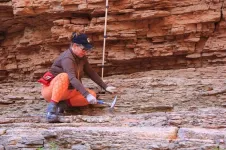
LOGAN, UTAH, USA – Any boomer, gen xer, millennial, gen zer or alpha who’s studied geology has likely gained foundational knowledge from Edwin Dinwiddie McKee’s landmark studies of the Grand Canyon’s sedimentary record – even if they don’t readily recognize McKee’s name. The legendary scientist, who lived from 1906-1984, studied and documented the stratigraphy and sedimentation of Colorado Plateau geology, especially the Grand Canyon’s Cambrian Tonto Group, for more than 50 years. His time-tested ...

Read the release
Did the world's best-preserved dinosaurs really die in 'Pompeii-type' events?
Earth Science

Did the world's best-preserved dinosaurs really die in 'Pompeii-type' events?

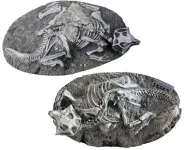
Between about 120 million and 130 million years ago, during the age of dinosaurs, temperate forests and lakes hosted a lively ecosystem in what is now northeast China. Diverse fossils from that time remained pretty much undisturbed until the 1980s, when villagers started finding exceptionally preserved creatures, which fetched high prices from collectors and museums. This started a fossil gold rush. Both locals and scientists have now dug so much, their work can be seen from space―perhaps the most extensive paleontological excavations anywhere. By the 1990s, it was clear that the so-called Yixian ...

Read the release
Dinosaurs thrived after ice, not fire, says a new study of ancient volcanism
Earth Science

Dinosaurs thrived after ice, not fire, says a new study of ancient volcanism

201.6 million years ago, one of the Earth's five great mass extinctions took place, when three-quarters of all living species suddenly disappeared. The wipeout coincided with massive volcanic eruptions that split apart Pangaea, a giant continent then comprising almost all the planet's land. Millions of cubic miles of lava erupted over some 600,000 years, separating what are now the Americas, Europe and North Africa. It marked the end of the Triassic period and the beginning of the Jurassic, the period when dinosaurs arose to take the place of Triassic creatures and dominate the planet. The exact mechanisms of the End Triassic Extinction have long been debated, ...

Read the release
Millions in the U.S. may rely on groundwater contaminated with PFAS for drinking water supplies
Earth Science

Millions in the U.S. may rely on groundwater contaminated with PFAS for drinking water supplies

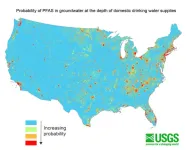
PEMBROKE, N.H. — Approximately 71 to 95 million people in the Lower 48 states – more than 20% of the country’s population – may rely on groundwater that contains detectable concentrations of per- and polyfluoroalkyl substances, also known as PFAS, for their drinking water supplies. These findings are according to a U.S Geological Survey study published Oct. 24. The predictive model results can help members of the public, water suppliers and regulators understand the potential for PFAS contamination, guide future studies and inform strategic planning for water resources. USGS scientists are the first to ...

Read the release
Earth Science

Model predicts PFAS occurrence in groundwater in the US

According to a new machine learning-assisted predictive model, as many as 95 million Americans may rely on groundwater containing PFAS for their drinking water supplies before any treatment, researchers report. This raises concerns about unmonitored contamination in domestic and public water supplies. Per- and polyfluoroalkyl substances (PFAS), often called “forever chemicals,“ are highly persistent environmental contaminants linked to adverse environmental and health effects. Used in many consumer products, these organic pollutants have become ubiquitous in the environment and ...

Read the release
Earth Science

Paleontologists discover Colorado ‘swamp dweller’ that lived alongside dinosaurs

A team of paleontologists working near Rangely, Colorado, has uncovered a new (or, more accurately, very old) state resident—a fossil mammal about the size of a muskrat that may have scurried through swamps during the Age of Dinosaurs. The researchers, led by the University of Colorado Boulder’s Jaelyn Eberle, published their findings Oct. 23 in the journal PLOS ONE. Eberle and her colleagues named their discovery, which they identified from a piece of jawbone and three molar teeth, Heleocola piceanus. The animal lived in Colorado roughly 70 to 75 million years ago—a time when a vast inland sea covered ...

Read the release
Scientists discover how fungi interact with soil actinomycetes
Earth Science

Scientists discover how fungi interact with soil actinomycetes

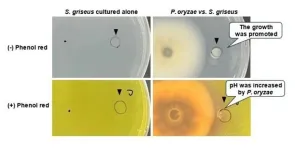
In the world of agriculture, rice is a staple food for more than half of the global population, making its cultivation crucial for food security. However, the rice blast fungus Pyricularia oryzae (syn. Magnaporthe oryzae) poses a significant threat to rice crops, causing extensive damage and leading to substantial yield losses. Traditional methods of controlling this pathogen often rely on chemical fungicides, which can have detrimental environmental impacts and contribute to the development of resistant strains. Therefore, researchers are increasingly exploring alternative strategies that leverage natural ...

Read the release
Compositional evolution of the upper mantle driven by plate tectonics
Earth Science

Compositional evolution of the upper mantle driven by plate tectonics

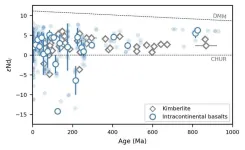
On present-day Earth, plate subduction continuously modifies the chemical composition of the convecting mantle, and various mantle sources linked to these processes have been widely studied. However, when did global chemical heterogeneity of the convecting mantle first emerge in Earth's geological history? And how might Earth’s geodynamic evolution have influenced the chemical composition of the convecting mantle over time? Researchers from the Institute of Oceanology of the Chinese Academy of Sciences (IOCAS), along with collaborators from Australia, Switzerland and the USA, have tried to address these questions ...

Read the release
From the original Press-News collection. Issuers of news releases are responsible for the accuracy of their content.