THE ORIGINAL COLLECTION · SINCE 2010

Earth Science
press releases.

Research announcements from universities, hospitals and scientific institutions. Explore the stories, people and discoveries behind the headlines.

Original publication datesPage 8
FIND A STORY

Find a past release.

Dates and source material belong to the original release.

Read our research explainers

Browse the collection · original publication order

Earth Science

Soil volatile organic compound profiles as indicators for soil evaluation in soybean fields

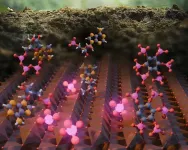
Tsukuba, Japan—Maintaining soil health is crucial for sustainable agriculture. Recently, soil volatile organic compounds (VOCs) have emerged as promising indicators for assessing soil health. This study aimed to evaluate the effectiveness of soil VOC profiles as indicators of soil health in soybean fields. Soil samples were collected from soybean fields in Fukushima Prefecture, which exhibited diverse soil conditions, over the past three years. These samples were analyzed for VOC content in conjunction with data on soil physical properties, soil metabolome, soil ionome, and soil microbiome as well as rhizosphere chemicals ...

Read the release

Earth Science

Closer look at New Jersey earthquake rupture could explain shaking reports

The magnitude 4.8 Tewksbury earthquake surprised millions of people on the U.S. East Coast who felt the shaking from this largest instrumentally recorded earthquake in New Jersey since 1900. But researchers noted something else unusual about the earthquake: why did so many people 40 miles away in New York City report strong shaking, while damage near the earthquake’s epicenter appeared minimal? In a paper published in The Seismic Record, YoungHee Kim of Seoul National University and colleagues show how the earthquake’s ...

Read the release
Earth Science

NCSA, Google work together in Alaska as part of Permafrost Discovery Gateway

Earlier this summer, members of the National Center for Supercomputing Applications traveled to Alaska as part of their continued work with the Permafrost Discovery Gateway, a project led by the Woodwell Climate Research Center using artificial intelligence (AI) and machine learning (ML) in tracking Arctic permafrost thaw. NCSA’s Associate Director for Software Kenton McHenry and Research Software Engineer Todd Nicholson visited Fairbanks, Alaska along with 12 Google.org fellows to see first hand the melting permafrost and the impacts to those that live there. “I have seen ...

Read the release
Earth Science

Are branch faults the “on-ramps” that lead to great continental transform earthquakes?

The five largest continental transform earthquakes since 2000 all originated on a branch of the main fault—and two researchers predict that the next great earthquake of this type will also get its start on a branch or splay fault. Last year’s magnitude 7.8 Pazarcık earthquake in Türkiye was one of these large and damaging earthquakes, where two continental tectonic plates slide past each other horizontally. That earthquake began on a branch fault, as did the 2001 magnitude 7.8 Kokoxili earthquake in northern Tibet, the 2002 magnitude 7.9 Denali earthquake in Alaska, the 2008 magnitude 7.9 Wenchuan earthquake in China, and the 2016 ...

Read the release
Extinct volcanoes a ‘rich’ source of rare earth elements
Earth Science

Extinct volcanoes a ‘rich’ source of rare earth elements

A mysterious type of iron-rich magma entombed within extinct volcanoes is likely abundant with rare earth elements and could offer a new way to source these in-demand metals, according to new research from The Australian National University (ANU) and the University of the Chinese Academy of Sciences. Rare earth elements are found in smartphones, flat screen TVs, magnets, and even trains and missiles. They are also vital to the development of electric vehicles and renewable energy technologies such as wind turbines. Dr Michael Anenburg from ANU said the iron-rich magma that solidified to form some extinct volcanoes is up to ...

Read the release
Earth Science

Australian crater could offer fresh insight into Earth’s geological history

A probable crater stretching more than 370 miles, or 600 kilometers, across the heart of Australia could reshape our understanding of Earth’s geological history. Researcher Daniel Connelly and Virginia Commonwealth University’s Arif Sikder, Ph.D., believe they have found evidence to support the existence of MAPCIS – the Massive Australian Precambrian-Cambrian Impact Structure -– which is a nonconcentric complex crater that could provide new insights into the geological and biological evolution of our planet. “Working on the MAPCIS project has been an incredible journey,” said Sikder, an associate professor in the Center for ...

Read the release
Earth Science

New research reenvisions Earth’s mantle as a relatively uniform reservoir

Lavas from hotspots—whether erupting in Hawaii, Samoa or Iceland—likely originate from a worldwide, uniform reservoir in Earth’s mantle, according to an evaluation of volcanic hotspots published today in Nature Geoscience. The findings indicate Earth’s mantle is far more chemically homogenous than scientists previously thought—and that lavas only acquire their unique chemical “flavours” enroute to the surface. “The discovery literally turns our view of hotspot lavas and the mantle upside down,” said Dr. Matthijs Smit, associate professor ...

Read the release
Research reveals reality of Ice Age teen puberty
Earth Science

Research reveals reality of Ice Age teen puberty

Landmark new research shows Ice Age teens from 25,000 years ago went through similar puberty stages as modern-day adolescents. In a study published today in the Journal of Human Evolution of the timing of puberty in Pleistocene teens, researchers are addressing a knowledge gap about how early humans grew up. Found in the bones of 13 ancient humans between 10 and 20 years old is evidence of puberty stages. Co-led by University of Victoria (UVic) paleoanthropologist April Nowell, researchers found specific markers in the bones that allowed them to assess the progress of adolescence. “By analyzing specific areas of the skeleton, we inferred things like menstruation ...

Read the release
Advancing power grounding systems: A novel predictive model for soil resistivity
Earth Science

Advancing power grounding systems: A novel predictive model for soil resistivity

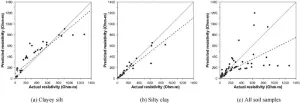
Proper power grounding systems are necessary for maintaining the safety and reliability of critical electrical subsystem infrastructure, such as substations. Power grounding systems provide a low-resistance path for electrical fault currents to flow into the earth, preventing electrical shocks, fires, and damage to vital equipment. Investigation of soil resistivity is crucial for designing power grounding systems. For the most cost-effective and efficient grounding systems for electrical substations, it is imperative to carefully ...

Read the release
Earth Science

Why dinosaur collagen might have staying power

Dinosaurs continue to fascinate people, but that’s not their only enduring quality: Collagen in their skeletons remains intact for millions of years, despite containing chemical bonds that should only persist for about 500 years. Now, scientists report in ACS Central Science that the unique tenacity of this protein may result from a molecular structure that shields these vulnerable bonds from attack by water that’s present in the environment. Collagen is the most abundant protein in animals. It’s found in skin and connective tissues, such as cartilage and bones. Fragments of collagen have been ...

Read the release
Earth Science

Levels of one ‘forever chemical’ are increasing in groundwater, study finds

Rain and water in ponds and lakes slowly seeps into the soil, moving through minute cracks to refill underground aquifers. Per- and polyfluoroalkyl substances (PFAS), often described as forever chemicals, can tag along into groundwater that’s later removed for drinking. Researchers in ACS’ Environmental Science & Technology Letters analyzed water from over 100 wells in Denmark for one particularly persistent PFAS: trifluoroacetate. They report steadily increasing levels of the forever chemical in recent decades. Trifluoroacetate forms when fluorinated gases, such as refrigerants, and fluorinated pesticides partially degrade in the environment. Water passing ...

Read the release
Earth Science

MIT chemists explain why dinosaur collagen may have survived for millions of years

Collagen, a protein found in bones and connective tissue, has been found in dinosaur fossils as old as 195 million years. That far exceeds the normal half-life of the peptide bonds that hold proteins together, which is about 500 years. A new study from MIT offers an explanation for how collagen can survive for so much longer than expected. The research team found that a special atomic-level interaction defends collagen from attack by water molecules. This barricade prevents water from breaking the peptide bonds through a process called hydrolysis. “We ...

Read the release
Qunkasaura: New sauropod dinosaur from the Cretaceous discovered in the Iberian Peninsula
Earth Science

Qunkasaura: New sauropod dinosaur from the Cretaceous discovered in the Iberian Peninsula

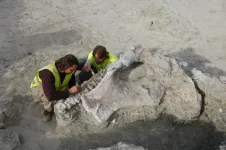
A new study led by Portuguese paleontologist Pedro Mocho, from the Instituto Dom Luiz of the Faculty of Sciences of the University of Lisbon (CIÊNCIAS), has just been published in the Communications Biology journal, which announces a new species of sauropod dinosaur that lived in Cuenca, Spain, 75 million years ago: Qunkasaura pintiquiniestra. The more than 12,000 fossils collected from 2007 onwards during works to install the Madrid-Levante high-speed train (AVE) tracks revealed this deposit, giving rise to one of the most relevant collections ...

Read the release
Earth Science

UAF scientist’s method could give months’ warning of major earthquakes

The public could have days or months of warning about a major earthquake through identification of prior low-level tectonic unrest over large areas, according to research by a University of Alaska Fairbanks scientist who analyzed two major quakes in Alaska and California. The work was led by research assistant professor Társilo Girona of the UAF Geophysical Institute. Girona, a geophysicist and data scientist, studies precursory activity of volcanic eruptions and earthquakes. Geologist Kyriaki Drymoni of the Ludwig-Maximilians-Universität in Munich, Germany, is a co-author. The ...

Read the release
Earth Science

Two epicenters led to Japan’s violent Noto earthquake on New Year's Day

Key takeaways The 7.5- magnitude earthquake beneath Japan’s Noto Peninsula on Jan. 1, 2024, occurred when a “dual-initiation mechanism” applied enough energy from two different locations to break through a fault barrier – an area that locks two sides of a fault in place and absorbs the energy of fault movement, slowing it down or stopping it altogether. An international team of researchers led by UCLA graduate student Liuwei Xu, professor Lingsen Meng and UC Santa Barbara’s Chen Ji analyzed a preceding seismic swarm and identified a previously unknown barrier in the region of the swarm. The team’s data collection methods could ...

Read the release
To kill mammoths in the Ice Age, people used planted pikes, not throwing spears, researchers say
Earth Science

To kill mammoths in the Ice Age, people used planted pikes, not throwing spears, researchers say

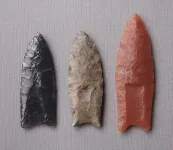
How did early humans use sharpened rocks to bring down megafauna 13,000 years ago? Did they throw spears tipped with carefully crafted, razor-sharp rocks called Clovis points? Did they surround and jab mammoths and mastadons? Or did they scavenge wounded animals, using Clovis points as a versatile tool to harvest meat and bones for food and supplies? UC Berkeley archaeologists say the answer might be none of the above. Instead, researchers say humans may have braced the butt of their pointed spears against the ground and angled the weapon upward in a way that would impale a charging animal. The force would have driven the spear deeper ...

Read the release
Decoding mysterious seismic signals
Earth Science

Decoding mysterious seismic signals

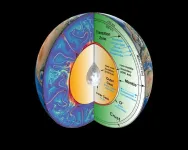
For the decades since their discovery, seismic signals known as PKP precursors have challenged scientists. Regions of Earth’s lower mantle scatter incoming seismic waves, which return to the surface as PKP waves at differing speeds. The origin the precursor signals, which arrive ahead of the main seismic waves that travel through Earth’s core, has remained unclear, but research led by University of Utah geophysicists sheds new light on this mysterious seismic energy. PKP precursors appear to propagate from places deep below North America and the western Pacific and possibly bear an association with “ultra-low velocity zones,” thin layers ...

Read the release
Strike Force: Utah State leads collaborative $2.3M NSF grant to study earthquake critical zones
Earth Science

Strike Force: Utah State leads collaborative $2.3M NSF grant to study earthquake critical zones

LOGAN, UTAH, USA -- Utah State University geoscientist Alexis Ault recalls the devastating aftermath of back-to-back 7.8 and 7.6-magnitude earthquakes on Feb. 6, 2023, near the Turkey-Syria border that killed more than 50,000 people and displaced millions. “We witnessed the destruction firsthand, as well as the resilience of the country and population trying to get their footing and rebuild,” says Ault, associate professor in USU’s Department of Geosciences, who traveled to the disaster site about six months after ...

Read the release
Earth Science

Record-breaking 1.2-kilometer drill core unveils new insights into Earth's mantle

A record-breaking 1268-meter drill core into Earth’s mantle, collected from the Mid-Atlantic Ridge in the North Atlantic, has provided a deep and detailed mineralogical glimpse of the oceanic mantle. The findings reveal new insights into mantle composition, Earth’s deep geology, and the potential biogeochemical conditions involved in the origins of life. Understanding the Earth’s mantle is crucial for comprehending important details of the Earth system, including terrestrial magmatism, crust formation, and the cycling ...

Read the release
Scientists uncover hidden forces causing continents to rise
Earth Science

Scientists uncover hidden forces causing continents to rise

Scientists at the University of Southampton have answered one of the most puzzling questions in plate tectonics: how and why ‘stable’ parts of continents gradually rise to form some of the planet’s greatest topographic features. They have found that when tectonic plates break apart, powerful waves are triggered deep within the Earth that can cause continental surfaces to rise by over a kilometre. Their findings help resolve a long-standing mystery about the dynamic forces that shape and connect some of the Earth’s most ...

Read the release
Earth Science

Seismic detectors measure soil moisture using traffic noise

Caltech researchers have developed a new method to measure soil moisture in the shallow subterranean region between the surface and underground aquifers. This region, called the vadose zone, is crucial for plants and crops to obtain water through their roots. However, measuring how this underground moisture fluctuates over time and between geographical regions has traditionally relied on satellite imaging, which only gives low-resolution averages and cannot penetrate below the surface. Additionally, moisture within the vadose zone changes rapidly—a thunderstorm can saturate a region that dries ...

Read the release
New study disputes Hunga Tonga volcano’s role in 2023-24 global warm-up
Earth Science

New study disputes Hunga Tonga volcano’s role in 2023-24 global warm-up

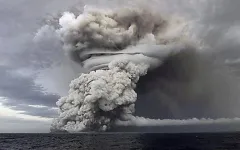
New research from a collaborative team featuring Texas A&M University atmospheric scientist Dr. Andrew Dessler is exploring the climate impact of the 2022 Hunga Tonga volcano eruption and challenging existing assumptions about its effects in the process. The remarkable two-day event, which occurred in mid-January 2022, injected vast amounts of volcanic aerosols and water vapor into the atmosphere. Historically, large volcanic eruptions like Tambora in 1815 and Mt. Pinatubo in 1991 have led to significant cooling effects on the global climate by blocking sunlight with their aerosols. ...

Read the release
Parched Central Valley farms depend on Sierras for groundwater
Earth Science

Parched Central Valley farms depend on Sierras for groundwater

New research shows that California’s Central Valley, known as America’s breadbasket, gets as much as half of its groundwater from the Sierra Nevadas. This is significant for a farming region that, in some parts, relies almost entirely on groundwater for irrigation. While it is easy to see above-ground reservoirs rise and fall with the rain and snow, aquifers are a natural water source hidden out of sight, in some cases hundreds of feet underground. “They are like giant bathtubs full of water and sediment,” said UC Riverside associate professor of groundwater hydrology Hoori Ajami. Scientists have ...

Read the release
Earth Science

UAF researcher creates way to detect elusive volcanic vibrations

A new automated system of monitoring and classifying persistent vibrations at active volcanoes can eliminate the hours of manual effort needed to document them. Graduate student researcher Darren Tan at the University of Alaska Fairbanks Geophysical Institute led development of the system, which is based on machine learning. Machine learning is a branch of artificial intelligence focused on building systems that learn from data, identify patterns and make decisions with minimal human intervention. Details about Tan’s automated ...

Read the release
Minerals play newly discovered role in Earth’s phosphorus cycle
Earth Science

Minerals play newly discovered role in Earth’s phosphorus cycle

Northwestern University-led researchers have discovered a new way that nature cycles phosphorus, a finding that uncovers a missing piece of Earth’s puzzling phosphorus cycle. The research will be published on Thursday (July 18) in the journal Nature Communications. A critical nutrient for plant growth, phosphorus is a non-negotiable component of fertilizers. Without it, farmers cannot ensure plant health and boost crop yields. Understanding Earth’s phosphorus cycle, therefore, is important for protecting the global food supply. Although ...

Read the release
From the original Press-News collection. Issuers of news releases are responsible for the accuracy of their content.