THE ORIGINAL COLLECTION · SINCE 2010

Environment
press releases.

Research announcements from universities, hospitals and scientific institutions. Explore the stories, people and discoveries behind the headlines.

Original publication datesPage 63
FIND A STORY

Find a past release.

Dates and source material belong to the original release.

Read our research explainers

Browse the collection · original publication order

The cost of preventing extinction of Australia’s priority species
Environment

The cost of preventing extinction of Australia’s priority species

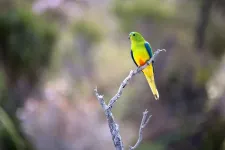
A new study has estimated it would cost $15.6 billion per year for 30 years to prevent extinction for 99 of Australia’s priority species. The research, led by Griffith University’s Centre for Planetary Health and Food Security with WWF-Australia and the University of Queensland, highlights the urgent need for increased funding to combat threats such as habitat destruction, invasive species and climate change. Australia has already lost more than 100 endemic species in the past three centuries, placing it at the forefront of the global extinction crisis. The ...

Read the release
Cracks in Greenland Ice Sheet grow more rapidly in response to climate change
Environment

Cracks in Greenland Ice Sheet grow more rapidly in response to climate change

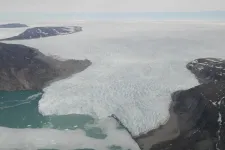
Embargoed until 10am GMT UK time (5am US Eastern Time) on Monday 03 February 2025 (Nature Geoscience embargo) -With pictures- The Greenland Ice Sheet is cracking open more rapidly as it responds to climate change. The warning comes in a new large-scale study of crevasses on the world’s second largest body of ice. Using 3-D surface maps, scientists led by Durham University, UK, found crevasses had significantly increased in size and depth at the fast-flowing edges of the ice sheet over the ...

Read the release
Environment

Electricity prices across Europe to stabilise if 2030 targets for renewable energy are met, study suggests

Hitting the current national 2030 quotas for solar and wind energy could reduce the volatility of electricity markets by an average of 20% across 29 European countries, according to a new study from the University of Cambridge. The intensity of spikes in power prices are predicted to fall in every country by the end of the decade if commitments to green energy are met, as natural gas dependency is cut. The UK and Ireland would be the biggest beneficiaries, with 44% and 43% reductions in the severity of electricity price spikes by 2030, compared with last year. Germany could experience a 31% decline in electricity price ...

Read the release
Environment

Can ocean-floor mining oversights help us regulate space debris and mining on the Moon?

by Nishith Mishra, Martina Elia Vitoloni, and Dr Joseph Pelton Mining ocean resources needed for electric cars and other devices is currently a hot issue of dispute. Final resolution of how or whether the seabed should be expl18oited is pending. Outcomes in this contentious area could create precedents that could impact decisions about mining the moon. These precedents might shape the how and why of mining the Moon and shape the future and the sustainability of space activities of human beings. But this is only one possible precedent that could reshape the future of space. Pending international discussions on space traffic management, space debris removal, and limiting ...

Read the release
Recycling lithium-ion batteries cuts emissions and strengthens supply chain
Environment

Recycling lithium-ion batteries cuts emissions and strengthens supply chain

Recycling lithium-ion batteries to recover their critical metals has significantly lower environmental impacts than mining virgin metals, according to a new Stanford University lifecycle analysis published in Nature Communications. On a large scale, recycling could also help relieve the long-term supply insecurity – physically and geopolitically – of critical battery minerals. Lithium-ion battery recyclers source materials from two main streams: defective scrap material from battery manufacturers, and so-called “dead” batteries, mostly ...

Read the release
How does the atmosphere affect ocean weather?
Environment

How does the atmosphere affect ocean weather?

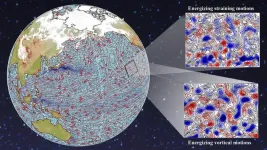
Much like the windy weather patterns that affect the Earth’s surface, our planet’s oceans experience their own distinct weather patterns. These weather patterns, known as eddies, are circular currents of water that are typically about 100 kilometers wide. A new study of satellite imagery and high-resolution climate model data by scientists at the University of Rochester upends previous assumptions and provides insight about how those surface and ocean weather patterns interact. Scientists formerly believed atmospheric wind had a damping effect, ...

Read the release
Environment

Carbon capture from constructed wetlands declines as they age

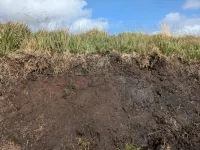
COLUMBUS, Ohio – Constructed wetlands do a good job in their early years of capturing carbon in the environment that contributes to climate change – but that ability does diminish with time as the wetlands mature, a new study suggests. Researchers examined soil core samples taken from two constructed freshwater wetlands and compared them to data from previous studies of the same wetlands over 29 years to determine how well human-made wetlands sequester — or capture and store — ...

Read the release
Life cycles of some insects adapt well to a changing climate. Others, not so much.
Environment

Life cycles of some insects adapt well to a changing climate. Others, not so much.

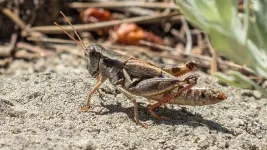
As insect populations decrease worldwide in what some have called an "insect apocalypse," biologists are desperate to determine how the six-legged creatures are responding to a warming world and to predict the long-term winners and losers. A new study of Colorado grasshoppers shows that, while the answers are complicated, biologists have much of the knowledge they need to make these predictions and prepare for the consequences. The findings, published Jan. 30 in the journal PLOS Biology, come thanks to the serendipitous ...

Read the release
Addressing 3D effects of clouds for significant improvements of climate models
Environment

Addressing 3D effects of clouds for significant improvements of climate models

Leipzig. Over the next few years, climate researchers from Germany aim to achieve a breakthrough in the radiative properties of clouds by describing the corresponding processes not just one-dimensionally, as has been the case up to now, but three-dimensionally in future. Capturing clouds and radiation in 3D is seen as an important step towards undistorted remote sensing of the atmosphere and improved modelling of climate and weather. The new research group of the German Research Foundation (DFG) brings together experts in atmospheric radiation, high-resolution ...

Read the release
Environment

Scientists unlock ice-repelling secrets of polar bear fur for sustainable anti-freezing solutions

Polar bear fur’s natural ability to resist ice formation could pave the way for safer, more sustainable solutions to prevent ice buildup across industries such as aviation and renewable energy, according to researchers at the University of Surrey. An international study published in Science Advances has explored the anti-icing properties of polar bear fur in extreme Arctic conditions, revealing a unique mix of lipids in the fur’s sebum – an oily substance produced by the skin - that drastically reduces ice adhesion. ...

Read the release
Burn grasslands to maintain them: What is good for biodiversity?
Environment

Burn grasslands to maintain them: What is good for biodiversity?

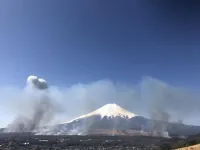
As grasslands get abandoned, controlled burning is discussed as a labor-saving method of keeping forests at bay. A Kobe University research team found that this method results in higher biodiversity and a higher prevalence of endangered plant species in some grasslands compared to others, depending on what soils they grow on. Humans have been keeping grasslands since millennia by grazing, mowing and controlled burning, all of these are means to keep forests from overgrowing the grasslands. Grazing and mowing are, however, labor intensive and as rural areas become increasingly depopulated, grasslands have been disappearing worldwide. One consequence ...

Read the release
Environment

New study finds high concentrations of plastics in the placentae of infants born prematurely

UNDER EMBARGO UNTIL: Jan. 30, 2025, 3:30 p.m. MST Media Contact: Karen Addis, APR, karen@addispr.com, +1 (301) 787-2394 Denver, Colo. ― Microplastics, which are less than 5 millimeters, and nanoplastics, which are invisible to the naked eye, are widespread throughout our environment. Research has shown that exposure to plastics in general is harmful to both the environment and humans. Now, in a new study to be presented today at the Society for Maternal-Fetal Medicine’s (SMFM) annual meeting, The Pregnancy Meeting™, researchers will unveil findings that suggest that microplastics and nanoplastics have been found ...

Read the release
Earth scientists study Sikkim flood in India to help others prepare for similar disasters
Environment

Earth scientists study Sikkim flood in India to help others prepare for similar disasters

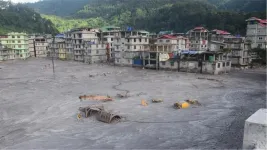
Experts from the global Earth science community – including a scientist from the University of Calgary – have pieced together what happened during the massive Sikkim flood to try to help others prepare for similar disasters. On Oct. 3, 2023, a multi-hazard cascade in the Sikkim Himalaya, India, was triggered by a permanently frozen (permafrost) lateral moraine – debris from erosion along a glacier – collapsing into South Lhonak Lake. “A landslide went into a lake and that triggered a wave that eroded a dam at the end of the lake, which resulted in a slurry-like flood for hundreds of kilometres,” explains Dr. Dan ...

Read the release
Environment

Drivers, causes and impacts of the 2023 Sikkim flood in India

In a comprehensive analysis, researchers present the divers, causes, and impacts of the catastrophic 2023 Sikkim glacial lake outburst flood (GLOF). The findings stress the urgent need to enhance GLOF hazard assessments and improve prediction and early warning systems as melting glaciers steadily raise the risk of GLOFs in the Himalayan region. South Lhonak Lake – perched at 5200 meters above sea level in the Upper Teesta basin of Sikkim, India – is among the region's largest and most rapidly expanding glacial lakes, posing severe hazards due to its ...

Read the release
Climate change increases risk of successive natural hazards in the Himalayas
Environment

Climate change increases risk of successive natural hazards in the Himalayas

An international study has investigated the causes and impacts of the devastating flood disaster in the Himalayas in October 2023, which destroyed large areas along and surrounding the Teesta River in Sikkim, India. A research team from nine countries, including researchers from the University of Zurich (UZH), analyzed the complex drivers, causes and consequences of this flood cascade and reconstructed the exact time of its onset. Massive damage caused by tsunami wave On 3 October 2023, approximately 14.7 million cubic meters of frozen ...

Read the release
Promoting cacao production without sacrificing biodiversity
Environment

Promoting cacao production without sacrificing biodiversity

The productivity of cacao trees decreases with time, forcing farmers to renew their plantations by either cutting down the old trees or establishing a new crop elsewhere. Frequently, new plantations are established in areas of the forest that are thinned out to accommodate new, young cacao trees. However, this comes with high economic and ecological costs. An alternative approach is to graft highly productive and native cultivars onto the existing older cacao trees. An international team led by scientists of the University of Göttingen found that cacao grafting is a useful measure to rejuvenate cacao plants, increasing their yield and profits with minimal impact on biodiversity. The ...

Read the release
Wildfire smoke can carry toxins hundreds of kilometers, depositing grime on urban structures, surfaces: research
Environment

Wildfire smoke can carry toxins hundreds of kilometers, depositing grime on urban structures, surfaces: research

Hamilton, ON, Jan. 30, 2025 – Researchers have shown that plumes of wildfire smoke can carry contaminants hundreds of kilometres, leaving a toxic and lingering footprint which has the potential to be re-released into the environment. The frequency and severity of wildfires is expected to continue increasing due to climate change. In recent weeks, catastrophic wildfires have devasted Los Angeles, scorching tens of thousands of acres. Canada’s 2023 wildfire season was the most destructive ever recorded, with an estimated 18.5 million hectares burned. The 2024 season was the second worst on record, with more than 5 million ...

Read the release
Environment

Archaeology: Ancient Greek and Roman cultures caused lead pollution in Aegean Sea region

Lead pollution in the Aegean Sea region may have begun around 5,200 years ago, according to a paper published in Communications Earth & Environment. The findings suggest that lead pollution due to human activities began approximately 1,200 years earlier than previously thought, and that the expansion of the Roman Empire across the Aegean region led to a significant increase in lead pollution in the region around 2,150 years ago. Andreas Koutsodendris and colleagues analysed the lead content of ...

Read the release
KTU researcher on energy revolution: sustainability is still a work in process
Environment

KTU researcher on energy revolution: sustainability is still a work in process

The world is experiencing more frequent and intense heat waves, floods, hurricanes, and wildfires due to rising greenhouse gas emissions. The energy sector is one of the largest contributors to climate change, yet it also plays a crucial role in the strategies needed to mitigate and adapt to its effects, contributing to the achievement of ambitious climate goals. In this global context, Lithuania is undergoing a significant energy transformation as it moves toward a more sustainable and independent future. By aligning its energy ...

Read the release
Future of UK peatlands under threat due to climate change
Environment

Future of UK peatlands under threat due to climate change

The UK’s peatlands face an uncertain future amid the escalating impacts of climate change. Peatlands are critical ecosystems for carbon storage and biodiversity, containing more carbon than all the world's forests despite covering just 3% of the global land surface. But new research reveals that vast areas of the UK’s peatlands, including the Flow Country UNESCO World Heritage Site, are likely to be unsuitable for peat accumulation by 2061–80 due to climate change. The researchers urge for a shift in conservation strategies, with the ...

Read the release
Otago scientists discover Antarctic fast ice secrets
Environment

Otago scientists discover Antarctic fast ice secrets

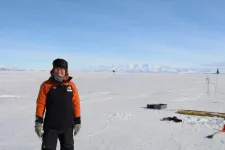
University of Otago – Ōtākou Whakaihu Waka scientists have successfully analysed more than 30 years of vital data on the thickness of landfast sea ice in Antarctica’s McMurdo Sound, which will prove useful to measure future impacts of climate change. The study, published in the Journal of Geophysical Research: Oceans, set out to discover what key influences determine the thickness of landfast sea-ice, known as fast ice, using data from 1986 to 2022. Fast ice is frozen ocean water that is attached to shorelines and persists for at least 15 days. It provides vital habitats for penguins and seals, as well as fish, krill and algae underneath the ice. Scientists ...

Read the release
Oceanic plate between Arabian and Eurasian continental plates is breaking away
Environment

Oceanic plate between Arabian and Eurasian continental plates is breaking away

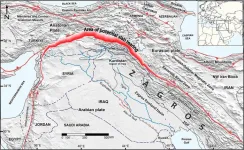
An international research team led by the University of Göttingen has investigated the influence of the forces exerted by the Zagros Mountains in the Kurdistan region of Iraq on how much the surface of the Earth has bent over the last 20 million years. Their research revealed that in the present day, deep below the Earth’s surface, the Neotethys oceanic plate – the ocean floor that used to be between the Arabian and Eurasian continents – is breaking off horizontally, with a tear progressively ...

Read the release
NewsGuard: Study finds no bias against conservative news outlets
Environment

NewsGuard: Study finds no bias against conservative news outlets

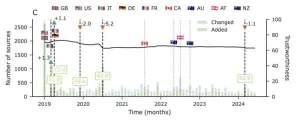
[Vienna, 29.01.2025]—A recent study evaluating the NewsGuard database, a leading media reliability rating service, has found no evidence supporting the allegation that NewsGuard is biased against conservative news outlets. Actually, the results suggest it’s unlikely that NewsGuard has an inherent bias in how it selects or rates right-leaning sources in the US, where trustworthiness is especially low. “It seems unlikely that NewsGuard has an inherent bias against conservative sources, both in selecting and giving them lower ratings. Instead, the US media system is flooded with right-wing sources that tend to not adhere to professional ...

Read the release
Princeton Chem discovers that common plastic pigment promotes depolymerization
Environment

Princeton Chem discovers that common plastic pigment promotes depolymerization

It turns out that the black plastic lid atop your coffee cup has a superpower. And the Stache Lab at Princeton Chemistry, which uncovered it, is exploiting that property to recycle at least two major types of plastic. Their startling mechanism for promoting depolymerization relies on an additive that many plastics already contain: a pigment called carbon black that gives plastic its black color. Through a process called photothermal conversion, intense light is focused on plastic containing the pigment that jumpstarts the degradation. So far, researchers have shown that carbon black can depolymerize polystyrene and polyvinyl chloride (PVC), two of the least recycled plastics in the planet’s ...

Read the release
Research contrasts drought sensitivity of Eurasian and North American grasslands
Environment

Research contrasts drought sensitivity of Eurasian and North American grasslands

EMBARGO: THIST CONTENT IS UNDER EMBARGO UNTIL 11 AM U.S. EASTERN STANDARD TIME ON JANUARY 29, 2025. INTERESTED MEDIA MAY RECIVE A PREVIEW COPY OF THE JOURNAL ARTICLE IN ADVANCE OF THAT DATE OR CONDUCT INTERVIEWS, BUT THE INFORMATION MAY NOT BE PUBLISHED, BROADCAST, OR POSTED ONLINE UNTIL AFTER THE RELEASE WINDOW. Grasslands in Asia and North America differ in their responses to drought, according to a new paper in the journal Nature led by faculty at Colorado State University. The findings show that differences in the dominant grasses and lower species diversity in the Eurasian Steppe grasslands may make it more vulnerable to drought ...

Read the release
From the original Press-News collection. Issuers of news releases are responsible for the accuracy of their content.