THE ORIGINAL COLLECTION · SINCE 2010

Physics
press releases.

Research announcements from universities, hospitals and scientific institutions. Explore the stories, people and discoveries behind the headlines.

Original publication datesPage 16
FIND A STORY

Find a past release.

Dates and source material belong to the original release.

Read our research explainers

Browse the collection · original publication order

Shedding light on superconducting disorder
Physics

Shedding light on superconducting disorder

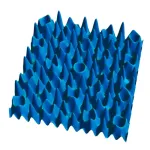
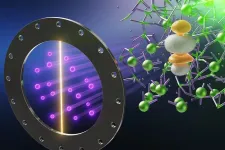
The importance of disorder in physics is only matched by the difficulty to study it. For example, the remarkable properties of high-temperature superconductors are greatly affected by variations in the chemical composition of the solid. Techniques that enable measurements of such disorder and its impact on the electronic properties, such as scanning tunnelling microscopy, work only at very low temperatures, and are blind to these physics near the transition temperature. Now, a team of researchers of the Max Planck Institute for the Structure and Dynamics of Matter (MPSD) in Germany and Brookhaven National ...

Read the release
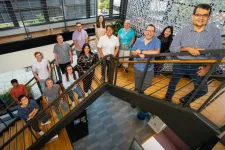
Wyss Institute team selected to develop first-of-its-kind biologically engineered broad-spectrum antimicrobial therapeutic under a contract from the DARPA-SHIELD program
Physics

Wyss Institute team selected to develop first-of-its-kind biologically engineered broad-spectrum antimicrobial therapeutic under a contract from the DARPA-SHIELD program

By Benjamin Boettner (BOSTON) — Researchers at the Wyss Institute for Biologically Inspired Engineering at Harvard Universityreceived a contract for up to $12M from the Defense Advanced Research Projects Agency (DARPA)’s new SHIELD program. The SHIELD (Synthetic Hemo-technologies to Locate and Disinfect) program aims to develop a prophylactic treatment that can be broadly administered to trauma victims in combat casualty care scenarios to rapidly clear multiple bloodborne bacterial and fungal pathogens, limit morbidity and mortality, and protect recipients for up to seven days. Blood ...

Read the release
Breakthrough in proton barrier films using pore-free graphene oxide
Physics

Breakthrough in proton barrier films using pore-free graphene oxide

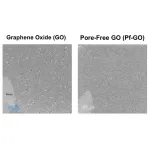
Kumamoto University’s research team, led by Assistant Professor Kazuto Hatakeyama and Professor Shintaro Ida of Institute of Industrial Nanomaterials, has announced a groundbreaking development in hydrogen ion barrier films using graphene oxide (GO) that lacks internal pores. This innovative approach promises significant advancements in protective coatings for various applications. In their study, the research team successfully synthesized and developed a thin film from a new form of graphene oxide that does not contain pores. Traditionally, ...

Read the release
Physics

"It feels like I'm moving my own hand". A research team from the Scuola Superiore Sant'Anna in Pisa has developed the prosthesis of the future, the first in the world with magnetic control

Pisa, 11 september. It is the first magnetically controlled prosthetic hand, that allows amputees to reproduce all movements simply by thinking and to control the force applied when grasping fragile objects. No wires, no electrical connection, only magnets and muscles to control the movements of the fingers and enable everyday activities such as opening a jar, using a screwdriver, picking up a coin. A research team from the BioRobotics Institute of the Scuola Superiore Sant'Anna in Pisa, coordinated by Prof. Christian Cipriani, has ...

Read the release
Discovery of a new phase of matter in 2D which defies normal statistical mechanics
Physics

Discovery of a new phase of matter in 2D which defies normal statistical mechanics

Physicists from the Cavendish Laboratory in Cambridge have created the first two-dimensional version of the Bose glass, a novel phase of matter that challenges statistical mechanics. The details of the study have been published in Nature. As the name suggests, the Bose glass has some glassy properties and within it all particles are localised. This means that each particle in the system sticks to itself, not mixing with its neighbours. If coffee was localised, then when stirring milk into the coffee, the intricate pattern of black and white stripes would remain forever, instead of washing out to an average. To create this new phase of matter, the group overlapped several laser ...

Read the release
Unique nanodisk pushing photonic research forward
Physics

Unique nanodisk pushing photonic research forward

Researchers at Chalmers University of Technology, in Sweden, have for the first time succeeded in combining two major research fields in photonics by creating a nanoobject with unique optical qualities. Since the object is a thousand times thinner than the human hair, yet very powerful, the breakthrough has great potential in the development of efficient and compact nonlinear optical devices. “My feeling is that this discovery has a great potential,” says Professor Timur Shegai, who led the study at Chalmers. Photonic applications harness the power of light-matter interactions to generate ...

Read the release
Atoms on the edge
Physics

Atoms on the edge

Typically, electrons are free agents that can move through most metals in any direction. When they encounter an obstacle, the charged particles experience friction and scatter randomly like colliding billiard balls. But in certain exotic materials, electrons can appear to flow with single-minded purpose. In these materials, electrons may become locked to the material’s edge and flow in one direction, like ants marching single-file along a blanket’s boundary. In this rare “edge state,” electrons can flow without ...

Read the release
Seeing like a butterfly: Optical invention enhances camera capabilities
Physics

Seeing like a butterfly: Optical invention enhances camera capabilities

UNIVERSITY PARK, Pa. — Butterflies can see more of the world than humans, including more colors and the field oscillation direction, or polarization, of light. This special ability enables them to navigate with precision, forage for food and communicate with one another. Other species, like the mantis shrimp, can sense an even wider spectrum of light, as well as the circular polarization, or spinning states, of light waves. They use this capability to signal a “love code,” which helps them find and be discovered by mates. Inspired ...

Read the release
Research Center awarded $14.4 million to advance new manufacturing solutions for microelectronics
Physics

Research Center awarded $14.4 million to advance new manufacturing solutions for microelectronics

A new Energy Frontier Research Center (EFRC), supported by the Department of Energy’s Office of Science and led by SLAC National Accelerator Laboratory, was awarded $14.4 million over four years to advance manufacturing of microelectronics by investigating approaches to building their components in fundamentally new ways. Instead of moving electrons through conducting metallic interconnects in the miniscule and ever shrinking parts of devices such as microchips used in computers and cell phones, the researchers propose to move information via spin waves that can propagate through semiconductors ...

Read the release
AIM-HI Accelerator Fund announces the 2024 Women’s Venture Competition winners
Physics

AIM-HI Accelerator Fund announces the 2024 Women’s Venture Competition winners

ROCKVILLE, MD (September 4, 2024) The AIM-HI Accelerator Fund is pleased to announce that the 2024 Women’s Venture Competition’s first prize winner with distinction goes to HDAX Therapeutics led by its CEO and Co-Founder, Nabanita Nawar, Ph.D, and the Second Prize Winner goes to ARMA BIO, led by Co-Founder & CSO, Paraskevi Giannakakou, Ph.D. The 2024 AIM-HI Women’s Venture Competition Committee reviewed more than 50 applications from 10 countries, including Canada, Ghana, India, Israel, Norway, Romania, Singapore, Spain, Thailand, ...

Read the release
Assorted, distinctive behavior of molten uranium salt revealed by neutrons
Physics

Assorted, distinctive behavior of molten uranium salt revealed by neutrons

Assorted, distinctive behavior of molten uranium salt revealed by neutrons The Department of Energy’s Oak Ridge National Laboratory is a world leader in molten salt reactor technology development — and its researchers additionally perform the fundamental science necessary to enable a future where nuclear energy becomes more efficient. In a recent paper published in the Journal of the American Chemical Society, researchers have documented for the first time the unique chemistry dynamics and structure of high-temperature liquid uranium trichloride ...

Read the release
Physics

New UMass study identifies factors that predict physical activity for nursing students

AMHERST, Mass. -- New research from the Mechanical and Industrial Engineering Department at the University of Massachusetts Amherst, in collaboration with the Elaine Marieb Center for Nursing and Engineering Innovation, is helping to identify barriers to physical activity in nurses. Published in PLOS ONE, the study reports that the key factors influencing exercise include intrinsic motivation, certain types of social support, certain demographic identifiers and the use of health-tracking technology. Nursing is a notoriously exhausting career, marked by irregular and long shifts and high physical demands. At the same time, prior studies show that about half ...

Read the release
Physics

Auburn University secures two NSF grants to transform physics education

Auburn University’s Department of Physics has been awarded two significant National Science Foundation (NSF) grants, marking a major step toward transforming physics education across all levels—from introductory courses to graduate studies. The grants, led by Assistant Professor Eric Burkholder, a specialist in Physics Education Research, aim to close the gap between traditional physics instruction and the complex problem-solving skills needed for real-world scientific challenges. The cornerstone of these projects is the recognition that traditional methods of teaching physics—while ...

Read the release
Wang investigates dynamic electron spins in correlated magnets
Physics

Wang investigates dynamic electron spins in correlated magnets

This summer, Yishu Wang was awarded a $719,000 research grant from the United States Department of Energy (DOE) to study the dynamic and microscopic behaviors of magnets with quantum mechanical properties. Magnetism originates from electrons in a material. When the electrons in a material all spin in the same direction, as they do in metals like iron, the material is magnetic, with poles that attract or repel other magnetic materials. “Magnets that we are using today can be viewed as static orderings of electrons, analogous to the static pattern of brushstrokes in a painting,” said Wang, a joint assistant professor in the Department of Materials Science and Engineering ...

Read the release
Atomic force microscopy upgrade captures 3D images of calcite dissolving
Physics

Atomic force microscopy upgrade captures 3D images of calcite dissolving

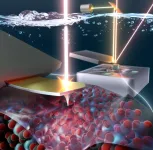
Researchers at Nano Life Science Institute (WPI-NanoLSI), Kanazawa University, implement modifications to their high-speed atomic force microscopy that simultaneously improve resolution and speed, while enabling direct measurements of 3D structures to provide conclusive evidence of a contested hydration layer forming as calcite dissolves. Understanding the dissolution processes of minerals can provide key insights into geochemical processes. Attempts to explain some of the observations during the dissolution of calcite (CaCO3) have led to the hypothesis that a hydration layer forms, although this has been contested. Hydration layers are also ...

Read the release
Rare earth single atoms enhance manganese oxide's electrochemical oxygen evolution
Physics

Rare earth single atoms enhance manganese oxide's electrochemical oxygen evolution

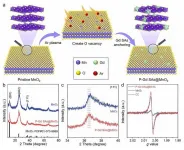
An international group of researchers has developed a novel approach that enhances the efficiency of the oxygen evolution reaction (OER), a key process in renewable energy technologies. By introducing rare earth single atoms into manganese oxide (MnO2), the group successfully modulated oxygen electronic states, leading to unprecedented improvements in OER performance. Their findings were published in the journal Nano Energy on June 10, 2024. Transition-metal-based oxides have been widely explored for their potential as active OER catalysts. However, the capacity of these catalysts is hindered by the adsorbate evolution mechanism, which ...

Read the release
Bubbling, frothing and sloshing: Long-hypothesized plasma instabilities finally observed
Physics

Bubbling, frothing and sloshing: Long-hypothesized plasma instabilities finally observed

Whether between galaxies or within doughnut-shaped fusion devices known as tokamaks, the electrically charged fourth state of matter known as plasma regularly encounters powerful magnetic fields, changing shape and sloshing in space. Now, a new measurement technique using protons, subatomic particles that form the nuclei of atoms, has captured details of this sloshing for the first time, potentially providing insight into the formation of enormous plasma jets that stretch between the stars. Scientists at the U.S. Department of Energy’s (DOE) Princeton Plasma Physics Laboratory (PPPL) created ...

Read the release
Controlling molecular electronics with rigid, ladder-like molecules
Physics

Controlling molecular electronics with rigid, ladder-like molecules

As electronic devices continue to get smaller and smaller, physical size limitations are beginning to disrupt the trend of doubling transistor density on silicon-based microchips approximately every two years according to Moore’s law. Molecular electronics—the use of single molecules as the building blocks for electronic components—offers a potential pathway for the continued miniaturization of small-scale electronic devices. Devices that utilize molecular electronics require precise control over the flow of electrical current. However, the dynamic nature of these single molecule components affects device performance and impacts ...

Read the release
Low-cost flexible metasurfaces to increase the efficiency of optoelectronic devices
Physics

Low-cost flexible metasurfaces to increase the efficiency of optoelectronic devices

Metasurfaces are two-dimensional counterparts of metamaterials, which are the artificial materials that possess unusual characteristics. With a variety of fascinatingly innovative and diverse uses, these specially-prepared surfaces with engineered patterns can modify the propagation of electromagnetic waves across the entire spectrum of wavelengths. Though the journey of metamaterials began with metal-dielectric systems, the metasurfaces have gone all-dielectric, and are crucial in applications relating to optoelectronic devices such as solar cells and light emitting diodes (LED) to improve their efficiency through a mere surface effect. Student researchers led ...

Read the release
USAMMDA commercial partner receives FDA emergency use authorization for plasma powder
Physics

USAMMDA commercial partner receives FDA emergency use authorization for plasma powder

A U.S. Army Medical Materiel Development Activity commercial partner received Emergency Use Authorization from the U.S. Food and Drug Administration for the Department of Defense to use octaplasLG Powder—a potentially lifesaving treatment option for blood replacement therapies in certain operational circumstances. Notice of the EUA for this product was received by the company, Octapharma USA, on Aug. 8, 2024. USAMMDA’s Warfighter Protection and Acute Care Project Management Office, which has a Cooperative Research and Development Agreement with Octapharma USA, manages research and development efforts for several ...

Read the release

Freeze-frame: U of A researchers develop world's fastest microscope that can see electrons in motion
Physics

Freeze-frame: U of A researchers develop world's fastest microscope that can see electrons in motion

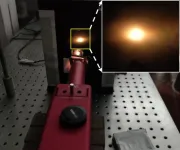
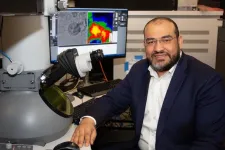
Imagine owning a camera so powerful it can take freeze-frame photographs of a moving electron – an object traveling so fast it could circle the Earth many times in a matter of a second. Researchers at the University of Arizona have developed the world's fastest electron microscope that can do just that. They believe their work will lead to groundbreaking advancements in physics, chemistry, bioengineering, materials sciences and more. "When you get the latest version of a smartphone, it comes with a better camera," said Mohammed Hassan, associate professor of physics and optical sciences. "This transmission electron microscope is ...

Read the release
Physicists discover heaviest antimatter hypernucleus to date
Physics

Physicists discover heaviest antimatter hypernucleus to date

Physicists from the STAR Collaboration have observed a new antimatter hypernucleus, antihyperhydrogen-4, for the first time. This is the heaviest antimatter hypernucleus discovered in experiments to date. This study, led by researchers from the Institute of Modern Physics (IMP) of the Chinese Academy of Sciences, was published in Nature on Aug. 21. Current physics assumes that the properties of matter and antimatter are symmetrical and that equal amounts of matter and antimatter existed at the birth of the universe. However, some mysterious physical mechanism caused the annihilation of most matter and antimatter, with only about one in ten billion matter particles ...

Read the release

Quenching the intense heat of a fusion plasma may require a well-placed liquid metal evaporator
Physics

Quenching the intense heat of a fusion plasma may require a well-placed liquid metal evaporator

Inside the next generation of fusion vessels known as spherical tokamaks, scientists at the U.S. Department of Energy’s Princeton Plasma Physics Laboratory (PPPL) envisioned a hot region with flowing liquid metal that is reminiscent of a subterranean cave. Researchers say evaporating liquid metal could protect the inside of the tokamak from the intense heat of the plasma. It’s an idea that dates back several decades and is tied to one of the Lab’s strengths: working with liquid metals. “PPPL’s expertise in using liquid metals, ...

Read the release
IOP Publishing hosts Progress In Physics 2024 – a two-day hybrid conference focused on condensed matter physics
Physics

IOP Publishing hosts Progress In Physics 2024 – a two-day hybrid conference focused on condensed matter physics

The Institute of Physics and IOP Publishing (IOPP) are launching Progress In Physics 2024, a two-day hybrid workshop hosted at the Institute of Physics’ office in London from 9-10 October 2024. The event will cover topics on condensed matter and will bring together leading physics researchers to exchange knowledge in both an in-person and online format. Progress in Physics 2024 aligns with the mission of IOPP’s new Progress In seriesTM of journals. The series builds on the success of IOPP’s flagship journal Reports on Progress in PhysicsTM which celebrates its 90th anniversary this year. With ...

Read the release
New research shows unprecedented atmospheric changes during May's geomagnetic superstorm
Physics

New research shows unprecedented atmospheric changes during May's geomagnetic superstorm

On May 11, a gorgeous aurora surprised stargazers across the southern United States. That same weekend, a tractor guided by GPS missed its mark. What do the visibility of the northern lights have in common with compromised farming equipment in the Midwest? A uniquely powerful geomagnetic storm, according to two newly published papers co-authored by Virginia Tech's Scott England. “The northern lights are caused by energetic, charged particles hitting our upper atmosphere, which are impacted by numerous factors in space, including the sun,” said England, associate professor in the Kevin T. Crofton Department of Aerospace and Ocean Engineering. “During ...

Read the release
From the original Press-News collection. Issuers of news releases are responsible for the accuracy of their content.