THE ORIGINAL COLLECTION · SINCE 2010

Physics
press releases.

Research announcements from universities, hospitals and scientific institutions. Explore the stories, people and discoveries behind the headlines.

Original publication datesPage 30
FIND A STORY

Find a past release.

Dates and source material belong to the original release.

Read our research explainers

Browse the collection · original publication order

Intense lasers shine new light on the electron dynamics of liquids
Physics

Intense lasers shine new light on the electron dynamics of liquids

An international team of researchers from the Max Planck Institute for the Structure and Dynamics of Matter (MPSD) in Hamburg and ETH Zurich has now demonstrated that it is possible to probe electron dynamics in liquids using intense laser fields and to retrieve the electron mean free path – the average distance an electron can travel before colliding with another particle. They found that the mechanism by which liquids emit a particular light spectrum known as the high-harmonic spectrum is markedly different from the one in other phases of matter like gases and solids. The team’s findings open the door to a deeper understanding of ultrafast dynamics in liquids. Using ...

Read the release

Milestone for novel atomic clock
Physics

Milestone for novel atomic clock

An international research team has taken a decisive step toward a new generation of atomic clocks. At the European XFEL X-ray laser, the researchers have created a much more precise pulse generator based on the element scandium, which enables an accuracy of one second in 300 billion years – that is about a thousand times more precise than the current standard atomic clock based on caesium. The team presents its success in the journal Nature. Atomic clocks are currently the world’s ...

Read the release
Physics

Organic lasers have a bright future

Scientists at St Andrews are leading a significant breakthrough in a decades-long challenge to develop compact laser technology. Lasers are used across the world for a huge range of applications in communications, medicine, surveying, manufacturing and measurement. They are used to transmit information across the internet, for medical treatments, and even in the face scanner on phones. Most of these lasers are made from rigid, brittle, semiconductor crystals such as gallium arsenide. Organic semiconductors are a newer class of electronic material. Flexible, based on carbon and emitting visible ...

Read the release
World-class neutron source takes a break for major Proton Power Upgrade
Physics

World-class neutron source takes a break for major Proton Power Upgrade

The Spallation Neutron Source at Oak Ridge National Laboratory — already the world’s most powerful accelerator-based neutron source — will be on a planned hiatus through June 2024 as crews work to upgrade the facility. Much of the work — part of the facility’s Proton Power Upgrade project — will involve building a connector between the accelerator and the planned Second Target Station at SNS. When complete, the PPU project will bring the accelerator up to 2.8 megawatts from its current record-breaking ...

Read the release
Thiol ligands modify metal nanocluster structures and optical properties
Physics

Thiol ligands modify metal nanocluster structures and optical properties

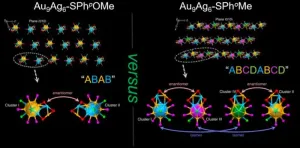
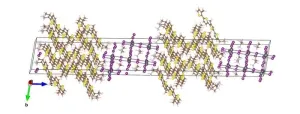
Metal nanoclusters are tiny, crystalline structures up to two nanometers (2 x 10⁻⁹ meters) in diameter that contain a few to hundreds of metal atoms. Understanding the precise assembly of metal nanoclusters is paramount to determining how different structures affect the properties and molecular interactions of these materials. Researchers recently synthesized two similar gold-silver (Au9Ag6) nanoclusters in a highly controlled manner to determine the precise atomic structure of each nanocluster and the effects of specific thiol ligands, or sulfur-containing binding molecules, on material synthesis. Given their extremely small size, metal nanoclusters have ...

Read the release
Successful optical biosensing using dual optical combs: High sensitivity and rapid detection of biomolecules with promising prospects
Physics

Successful optical biosensing using dual optical combs: High sensitivity and rapid detection of biomolecules with promising prospects

Key points Biosensing has been valuable for detecting biomolecules, including novel coronavirus (SARS-CoV-2), but achieving both high sensitivity and rapidity has been challenging. Rapid and high-sensitivity detection of SARS-CoV-2 was achieved by utilizing optical-to-electric frequency conversion of optical combs and active-dummy temperature compensation with dual-optical-comb configuration. This enables ultra-early detection of infectious pathogens, health biomarkers, food contaminants, environmental hormones, and more, contributing to various preventive measures. Research Introduction ...

Read the release
Physics

Racial disparities in emergency department physical restraint use

About The Study: In this systematic review and meta-analysis of 10 studies, physical restraint was uncommon, occurring in less than 1% of encounters, but adult Black patients experienced a significantly higher risk of physical restraint in emergency department settings compared with other racial groups. Emergency departments should carefully consider, and take steps to address, how racism may affect disparate use of restraints among adult patients. Authors: Vidya Eswaran, M.D., of the Baylor College of Medicine in Houston, is the corresponding author. To access the embargoed study: Visit ...

Read the release
Physics

Biophysical Society announces 2024 Society Fellows

ROCKVILLE, MD – The Biophysical Society is proud to announce its 2024 Society Fellows. This award honors the Society’s distinguished members who have demonstrated excellence in science and contributed to the expansion of the field of biophysics. The Fellows will be honored at the Biophysical Society’s 68th Annual Meeting, being held in Philadelphia, Pennsylvania from February 10-14, 2024. The 2024 Fellows are: Rommie E. Amaro, University of California, San Diego, USA, is named a Biophysical Society Fellow for her work on developing methods to enable the simulation of biological molecules in situ and ...

Read the release
Imaging the smallest atoms provides insights into an enzyme's unusual biochemistry
Physics

Imaging the smallest atoms provides insights into an enzyme's unusual biochemistry

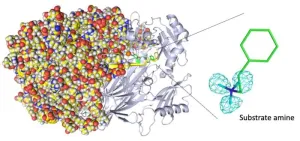
Osaka, Japan – When your wounds heal and your liver detoxifies a poison such as histamine you ingested, you can thank the class of enzymes known as copper amine oxidases for their assistance. Identifying the exact positions of the smallest hydrogen atoms in these enzymes is challenging with commonly used technologies, but is critical to engineering improved enzymes that exhibit unusual yet useful biochemical reactivity. Now, in a study recently published in ACS Catalysis, a team led by researchers ...

Read the release
Researchers unveil new flexible adhesive with exceptional recovery and adhesion properties for electronic devices
Physics

Researchers unveil new flexible adhesive with exceptional recovery and adhesion properties for electronic devices

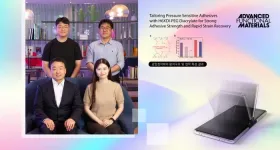
The rapid advancements in flexible electronic technology have led to the emergence of innovative devices such as foldable displays, wearables, e-skin, and medical devices. These breakthroughs have created a growing demand for flexible adhesives that can quickly recover their shape while effectively connecting various components in these devices. However, conventional pressure-sensitive adhesives (PSAs) often face challenges in achieving a balance between recovery capabilities and adhesive strength. In an extraordinary study conducted at UNIST, researchers have successfully synthesized new types of urethane-based crosslinkers that address this critical challenge. Led by Professor Dong Woog ...

Read the release
Atomic layer deposition route to scalable, electronic-grade van der Waals Te thin films
Physics

Atomic layer deposition route to scalable, electronic-grade van der Waals Te thin films

A research team, led by Professor Joonki Suh in the Department of Materials Science and Engineering and the Graduate School of Semiconductor Materials and Devices Engineering at UNIST, has made a significant breakthrough in thin film deposition technology. By employing an innovative atomic layer deposition (ALD) process, Professor Seo successfully achieved regular arrangement of tellurium (Te) atoms at low temperatures as low as 50 degrees Celsius. The ALD method is a cutting-edge thin film process that enables precise stacking ...

Read the release
Physics

Corning® launches Videodrop, revolutionizing real-time nanoparticle detection and analysis

CORNING, N.Y. | Corning Incorporated | September 15, 2023 - Corning Incorporated (NYSE: GLW) today announced the launch of Corning® Videodrop, an optical technology that applies the principles of interferometric microscopy to quantify the size and concentration of nanoparticles. The latest addition to the company’s growing suite of bioprocessing technology, Videodrop can analyze a solution in less than 60 seconds, and requires only a single 5-10 µl drop of sample material for testing. The technology is capable of collecting a physical titer of viral vectors such as lentivirus, ...

Read the release
IOP Publishing and the Japan Society of Applied Physics convert Applied Physics Express to fully gold OA
Physics

IOP Publishing and the Japan Society of Applied Physics convert Applied Physics Express to fully gold OA

IOP Publishing (IOPP) and the Japan Society of Applied Physics (JSAP) announce that Applied Physics Express (APEX) is to become fully open access (OA). From January 2024, all articles published in APEX, the journal devoted to rapid dissemination of new findings in applied physics, will be immediately and openly accessible for anyone to read. The move reflects the increasing demand for more accessible and open science, and funders’ mandates requiring authors to publish their work in OA journals. Making APEX open access means that authors will be ...

Read the release
Physics

Physical activity boosting resources support classroom performance

DALLAS, September 8, 2023 — This back to school season the American Heart Association and the National Football League (NFL), in collaboration with its 32 NFL clubs, are offering students exciting ways to move more with NFL PLAY 60™. Physical activity is important as students return to the classroom. According to the U.S. Department of Health and Human Services’ 2018 Physical Activity Guidelines for Americans, active kids learn better, focus more, think more clearly, react to stress more calmly, and perform and behave better in the classroom[1]. The ...

Read the release
Grasping entropy: Teachers and students investigate thermodynamics through a hands-on model
Physics

Grasping entropy: Teachers and students investigate thermodynamics through a hands-on model

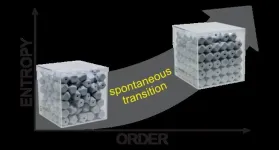
WASHINGTON, Sept. 6, 2023 – Though a cornerstone of thermodynamics, entropy remains one of the most vexing concepts to teach budding physicists in the classroom. As a result, many people oversimplify the concept as the amount of disorder in the universe, neglecting its underlying quantitative nature. In The Physics Teacher, co-published by AIP Publishing and the American Association of Physics Teachers, researcher T. Ryan Rogers designed a hand-held model to demonstrate the concept of entropy for students. Using everyday materials, Rogers’ approach allows students to confront ...

Read the release
Physics

Non-binary and transgender Californians suffered alarming levels of physical and sexual violence in the past year

WASHINGTON (September 6, 2023) – An annual survey of physical and sexual violence suffered by Californians documents for the first time the higher incidence of violence among non-binary and transgender people. One in 20 California adults has experienced physical violence (5%) in the past year, a decrease from 8% in 2022, according to The California Violence Experiences Study (CalVEX); but the reported rates for non-binary and transgender individuals were notably higher, 14% and 27%, respectively. “The new data we have in this year’s report show that rates of violence have declined since levels seen during the pandemic, but these experiences remain too ...

Read the release
Scientists synthesize new organometallic “sandwich” compound capable of holding more electrons
Physics

Scientists synthesize new organometallic “sandwich” compound capable of holding more electrons

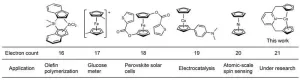
Organometallic compounds, molecules made up of metal atoms and organic molecules, are often used to accelerate chemical reactions and have played a significant role in advancing the field of chemistry. Metallocenes, a type of organometallic compound, are known for their versatility and special "sandwich" structure. Their discovery was a significant contribution to the field of organometallic chemistry and led to the awarding of the Nobel Prize in Chemistry in 1973 to the scientists who discovered and explained their sandwich structure. The ...

Read the release
IOP Publishing appoints Dr. David Gevaux as Chief Editor of Reports on Progress in Physics
Physics

IOP Publishing appoints Dr. David Gevaux as Chief Editor of Reports on Progress in Physics

IOP Publishing (IOPP) has appointed Dr. David Gevaux as the first Chief Editor of Reports on Progress in Physics. Taking up the post from the 4th of September, Dr. Gevaux will lead on ambitious plans for the journal, as its scope expands to include groundbreaking new research content alongside the authoritative reviews for which it is well known across all areas of physics. Working closely with Professor Subir Sachdev, the Editor in Chief of Reports on Progress in Physics, Dr. Gevaux will champion the editorial ...

Read the release
New scalable, etching-based technique for precise tuning of microdisk lasers
Physics

New scalable, etching-based technique for precise tuning of microdisk lasers

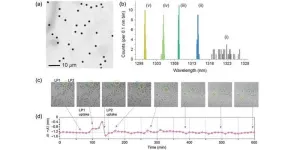
Micro- and nanodisk lasers have recently emerged as promising optical sources and probes for various applications in the fields of nanophotonics and biomedicine. Their ability to achieve lasing at a deterministic wavelength and ultra-narrowband precision is critical for several applications in on-chip photonic communications, on-chip bioimaging, biochemical sensing, and quantum photonic information processing. However, the large-scale fabrication of such precise wavelength micro- and nanodisk lasers remains challenging. Current nanofabrication processes introduce randomness in ...

Read the release
Physics

Peering into nanofluidic mysteries one photon at a time

Researchers at University of Manchester and the École polytechnique fédérale de Lausanne (EPFL), Switzerland, have revealed an innovative approach to track individual molecule dynamics within nanofluidic structures, illuminating their response to molecules in ways never before possible. Nanofluidics, the study of fluids confined within ultra-small spaces, offers insights into the behaviour of liquids on a nanometer scale. However, exploring the movement of individual molecules in such confined environments has been challenging due to the limitations of conventional microscopy techniques. This obstacle prevented ...

Read the release
Growing triple-decker hybrid crystals for lasers
Physics

Growing triple-decker hybrid crystals for lasers

By controlling the arrangement of multiple inorganic and organic layers within crystals using a novel technique, researchers at Duke University and Purdue University have shown they can control the energy levels of electrons and holes (positive charge carriers) within a class of materials called perovskites. This tuning influences the materials’ optoelectronic properties and their ability to emit light of specific energies, demonstrated by their ability to function as a source of lasers. Appearing online August 31 in the journal Nature Chemistry, the research is the result of a close collaboration between several ...

Read the release
Physics

New study will examine impact of lifestyle physical activity on cognition for older adults

Jason Yang has been awarded nearly $400,000 from the National Institute on Aging to explore the role of lifestyle physical activity (light movements, walking) in cognition among insufficiently active older adults with higher risks for Alzheimer’s or related dementias. The exercise science assistant professor will use the two-year R21 grant to help determine if frequent and regular engagement in lifestyle physical activity over time may benefit cognitive function for this population. A ...

Read the release
Golden rules for building atomic blocks
Physics

Golden rules for building atomic blocks

National University of Singapore (NUS) physicists have developed a technique to precisely control the alignment of supermoiré lattices by using a set of golden rules, paving the way for the advancement of next generation moiré quantum matter. Moiré patterns are formed when two identical periodic structures are overlaid with a relative twist angle between them or two different periodic structures but overlaid with or without twist angle. The twist angle is the angle between the crystallographic orientations of the two structures. For example, when graphene and hexagonal boron nitride (hBN) which are layered materials are overlaid on each other, the atoms in the ...

Read the release
High-fidelity transmission of information via novel electronic-optical system
Physics

High-fidelity transmission of information via novel electronic-optical system

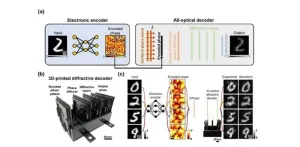
Transferring optical information in free space with large bandwidth and high transmission capacity has gained significant attention in various applications, such as remote sensing, underwater communication, and medical devices. Nevertheless, unpredictable, unknown phase perturbations or random diffusers within the optical path pose great challenges, limiting the high-fidelity transmission of optical data in free space. Adaptive optics presents a potential solution that can correct for random distortions ...

Read the release
Professor receives grant to develop electronic devices made entirely of paper
Physics

Professor receives grant to develop electronic devices made entirely of paper

Imagine if you could build an electronic device made entirely of paper. A nontoxic, cost-effective and biodegradable alternative to silicon- and plastic-based components would be a game-changer for a planet quickly filling up with the “e-waste” of discarded gadgets and single-use sensors. That’s the vision of Binghamton University Professor Seokheun (Sean) Choi. He’s worked for years creating better biobatteries that use bacteria or human sweat to generate energy. Some of those batteries have been paper-based, and now he hopes to apply that knowledge to ...

Read the release
From the original Press-News collection. Issuers of news releases are responsible for the accuracy of their content.