THE ORIGINAL COLLECTION · SINCE 2010

Physics
press releases.

Research announcements from universities, hospitals and scientific institutions. Explore the stories, people and discoveries behind the headlines.

Original publication datesPage 31
FIND A STORY

Find a past release.

Dates and source material belong to the original release.

Read our research explainers

Browse the collection · original publication order

Physics

Mazin to study ab initio engineering of doped-covalent-bond superconductors

Mazin To Study Ab Initio Engineering Of Doped-Covalent-Bond Superconductors Igor Mazin, Professor of Practice for Advanced Studies in Theoretical Physics, Quantum Materials Center, Physics and Astronomy, is set to receive funding for the project: "Collaborative research: Ab Initio Engineering of Doped-Covalent-Bond Superconductors." This EAGER award will support a joint computational and theoretical effort to guide the search for practical superconducting materials. Superconductors carry electrical current without any resistance when cooled down below a certain material-dependent ...

Read the release

Physics

COS researchers transitioning training dataset labeling tool to support discoveries in earth science & heliophysics

COS Researchers Transitioning Training Dataset Labeling Tool To Support Discoveries In Earth Science & Heliophysics Chaowei Yang, Professor, Director, NSF Spatiotemporal Innovation Center, Geography and Geoinformation Science, and Jie Zhang, Professor, Physics and Astronomy, received funding for the project: "Transitioning a Training Dataset Labeling Tool (TDLT) to Support Discoveries in Earth Science and Heliophysics." The researchers are creating a generalizable training dataset labeling tool for both Earth and heliophysics by ...

Read the release
Physics

Which radio waves disrupt the magnetic sense in migratory birds?

While radio waves emitted by radio and television broadcasting and CB radio can disrupt the magnetic compass of migratory birds, those used in mobile communication networks do not because the frequencies are too high to affect their sense of orientation. This was the key finding of a new study published in the scientific journal Proceedings of the National Academy of Sciences (PNAS) by a team of researchers led by Professor Dr Henrik Mouritsen of the University of Oldenburg and Professor Dr Peter Hore of the University of Oxford (UK). This finding also bolsters the researchers' theory that the magnetic compass sense in these birds is based on a quantum-mechanical ...

Read the release
Physics

Researchers reveal electronic nematicity without charge density waves in titanium-based kagome metal

Chestnut Hill, Mass (8/24/2023) – Electronic nematic order in kagome materials has thus far been entangled with charge density waves. Now it is finally observed as a stand-alone phase in a titanium-based Kagome metal, a team of researchers led by Boston College physicists reported recently in Nature Physics. Quantum materials composed of atoms arranged on a kagome net of corner-sharing triangles present an exciting platform to realize novel electronic behavior, paper co-author and Boston College Professor of Physics Ilija Zeljkovic explained. There ...

Read the release
Demon Hunting: Physicists confirm 67-year-old prediction of massless, neutral composite particle
Physics

Demon Hunting: Physicists confirm 67-year-old prediction of massless, neutral composite particle

In 1956, theoretical physicist David Pines predicted that electrons in a solid can do something strange. While they normally have a mass and an electric charge, Pines asserted that they can combine to form a composite particle that is massless, neutral, and does not interact with light. He called this particle a “demon.” Since then, it has been speculated to play an important role in the behaviors of a wide variety of metals. Unfortunately, the same properties that make it interesting have allowed it to elude detection since its prediction. Now, a team of researchers led by Peter Abbamonte, a professor of physics at the University of Illinois Urbana-Champaign, ...

Read the release
Physics

Spectrum of apps shrinks after ban on personalized ads

A ban on using apps to collect data in order to personalize advertising would significantly reduce the spectrum of available apps and the number of updates, according to a study by the Technical University of Munich (TUM) based on the ban concerning Android apps for children. The findings can assist companies in defining their business models and policymakers when regulating targeted advertising. Most smartphone apps are free. The providers finance them with advertising, often with what is referred to as targeted advertising: The apps evaluate data such as usage behavior and the user's location and even photos and messages ...

Read the release
Controlling the source of electromagnetic waves enables control of the period of laser-induced periodic surface structures (LIPSS)
Physics

Controlling the source of electromagnetic waves enables control of the period of laser-induced periodic surface structures (LIPSS)

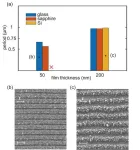
Since the scientists at Bell Labs invented the world’s first transistor in December 1947, a revolution in microelectronics technology has profoundly affected lifestyles worldwide. As electronics get smaller and smaller, it is a challenge to find an easy, fast, and low-cost way to fabricate micro-nano components. Traditional direct writing fabrication methods such as mechanical scribing, focused ion beam etching, electron beam lithography, multiphoton polymerization, and thermal scanning probe etching are inefficient. Although methods such as nanoimprinting, photolithography, plasma etching, and ...

Read the release
Gold buckyballs, oft-used nanoparticle ‘seeds’ are one and the same
Physics

Gold buckyballs, oft-used nanoparticle ‘seeds’ are one and the same

HOUSTON – (Aug. 15, 2023) – Rice University chemists have discovered that tiny gold “seed” particles, a key ingredient in one of the most common nanoparticle recipes, are one and the same as gold buckyballs, 32-atom spherical molecules that are cousins of the carbon buckyballs discovered at Rice in 1985. Carbon buckyballs are hollow 60-atom molecules that were co-discovered and named by the late Rice chemist Richard Smalley. He dubbed them “buckminsterfullerenes” because their atomic structure reminded him of architect Buckminster Fuller’s geodesic domes, and the “fullerene” family has grown to include dozens of hollow ...

Read the release
No longer ships passing in the night: these electromagnetic waves had head-on collisions
Physics

No longer ships passing in the night: these electromagnetic waves had head-on collisions

NEW YORK, August 14, 2023 — A research team at the Advanced Science Research Center at the CUNY Graduate Center (CUNY ASRC) has shown that it is possible to manipulate photons so that they can collide, interacting in new ways as they cross paths. The discovery, detailed in Nature Physics, will allow scientists who develop technologies rooted in electromagnetic wave propagation to make significant advances in telecommunications, optical computing and energy applications. The breakthrough took place in the lab of Andrea Alù, Distinguished ...

Read the release
Ultrafast lasers for materials processing
Physics

Ultrafast lasers for materials processing

Lasers are an essential tool for materials processing. They can be used to cut, weld and remove material. A special kind of lasers known as femtosecond lasers can be used to create high-precision microstructures, such as those needed for smartphone displays and automotive technology. Professor Clara Saraceno from Ruhr University Bochum aims to introduce a cheaper and more efficient laser technology to the market. To this end, she is receiving a proof-of-concept grant amounting to 150,000 euros from the European Research ...

Read the release
Muon g-2 doubles down with latest measurement, explores uncharted territory in search of new physics
Physics

Muon g-2 doubles down with latest measurement, explores uncharted territory in search of new physics

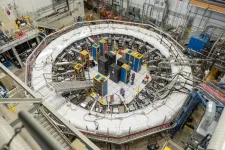
Batavia, Ill., Aug. 10, 2023 – Physicists now have a brand-new measurement of a property of the muon called the anomalous magnetic moment that improves the precision of their previous result by a factor of 2. An international collaboration of scientists working on the Muon g-2 experiment at the U.S. Department of Energy’s Fermi National Accelerator Laboratory announced the much-anticipated updated measurement on Aug. 10. This new value bolsters the first result they announced in April 2021 and sets up a showdown between theory and experiment over 20 years in the making. “We’re really probing new territory. We’re determining ...

Read the release
ORNL, UT’s Spark Cleantech Accelerator partner to support entrepreneurs
Physics

ORNL, UT’s Spark Cleantech Accelerator partner to support entrepreneurs

Entrepreneur-fellows in Innovation Crossroads, a Department of Energy Lab-Embedded Entrepreneurship Program at Oak Ridge National Laboratory, will complete the Spark Cleantech Accelerator, a 12-week program offered by the University of Tennessee, Knoxville, Spark Innovation Center at the UT Research Park. “By combining the resources of Innovation Crossroads and the Spark Cleantech Accelerator, we are building a stronger program for entrepreneurs,” said Dan Miller, program lead for Innovation Crossroads. “Entrepreneurial ecosystems depend on relationships among early-stage companies. This new collaboration — ...

Read the release
Geomagnetic field protects Earth from electron showers
Physics

Geomagnetic field protects Earth from electron showers

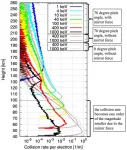
Understanding the ionosphere high in the Earth's atmosphere is important due to its effects on communications systems, satellites and crucial chemical features including the ozone layer. New insights into the activity of high energy electrons have come from a simulation study led by geophysicist Yuto Katoh at Tohoku University, reported in the journal Earth, Planets and Space. "Our results clarify the unexpected role of the geomagnetic field surrounding the Earth in protecting the atmosphere from high energy electrons," says Katoh. The ionosphere is a wide region between roughly ...

Read the release
Physics

Super Radar: Breakthrough radar research overcomes a nearly century-old trade-off between wavelength and distance resolution

New interference radar functions employed by a team of researchers from Chapman University and other institutions improve the distance resolution between objects using radar waves. The results may have important ramifications in military, construction, archaeology, mineralogy and many other domains of radar applications. This first proof-of-principle experiment opens a new area of research with many possible applications that can be disruptive to the multi-billion dollar radar industry. There are many new avenues to pursue both in theory and experiment. The ...

Read the release
Physics

Researchers develop smartphone app that reliably recognizes physical signs of stroke

CONTACT: Camille Jewell cjewell@vancomm.com or 202-248-5460 SAN DIEGO—Today at the Society of NeuroInterventional Surgery’s (SNIS) 20th Annual Meeting, researchers discussed a smartphone app created that reliably recognizes patients’ physical signs of stroke with the power of machine learning. In the study, “Smartphone-Enabled Machine Learning Algorithms for Autonomous Stroke Detection,” researchers from the UCLA David Geffen School of Medicine and multiple medical institutions in Bulgaria used data from 240 patients with stroke at four metropolitan stroke centers. Within 72 hours of the ...

Read the release
Scientists discover unusual ultrafast motion in layered magnetic materials
Physics

Scientists discover unusual ultrafast motion in layered magnetic materials

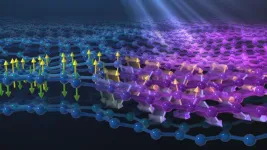
A common metal paper clip will stick to a magnet. Scientists classify such iron-containing materials as ferromagnets. A little over a century ago, physicists Albert Einstein and Wander de Haas reported a surprising effect with a ferromagnet. If you suspend an iron cylinder from a wire and expose it to a magnetic field, it will start rotating if you simply reverse the direction of the magnetic field. “Einstein and de Haas’s experiment is almost like a magic show,” said Haidan Wen, a ...

Read the release
Waves of charge signal rare physics at work inside a superconductor
Physics

Waves of charge signal rare physics at work inside a superconductor

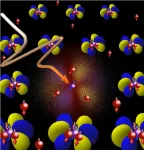
‘A place for everything and everything in its place’–making sense of order, or disorder, helps us understand nature. Animals tend to fit nicely into categories: Mammals, birds, reptiles, whatever an axolotl is, and more. Sorting also applies to materials: Insulator, semiconductor, conductor, and even superconductor. Where exactly a material lands in the hierarchy depends on a seemingly invisible interplay of electrons, atoms, and their surroundings. Unlike animals, the boundaries are less sharp, and tweaking a material’s ...

Read the release
Correlation between neutron pairs observed in helium-8 nuclei
Physics

Correlation between neutron pairs observed in helium-8 nuclei

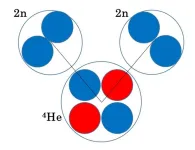
Atomic nuclei consist of nucleons such as protons and neutrons, which are bound together by nuclear force or strong interaction. This force allows protons and neutrons to form bound states; however, when only two neutrons are involved, the attractive force is slightly insufficient to create such a state. This prompts the question: would four neutrons be adequate? This question has captivated atom physicists, who have actively sought to unlock this mystery in both the theoretical and experimental realms. With ...

Read the release
Hollings director honored as fellow of Royal College of Physicians
Physics

Hollings director honored as fellow of Royal College of Physicians

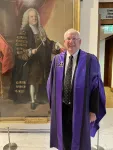
Raymond N. DuBois, M.D., Ph.D., director of MUSC Hollings Cancer Center, has been inducted as a fellow into the Royal College of Physicians (RCP). DuBois traveled to London, England, for the ceremony in July. He had been elected to the prestigious body prior to the COVID pandemic, which delayed the induction ceremony. The Royal College of Physicians was established in 1518 by a royal charter from King Henry VIII. The college's founding aim was to professionalize physicians through an academic body that required a degree and an exam before ...

Read the release
When electrons slowly vanish during cooling
Physics

When electrons slowly vanish during cooling

Many substances change their properties when they are cooled below a certain critical temperature. Such a phase transition occurs, for example, when water freezes. However, in certain metals there are phase transitions that do not exist in the macrocosm. They arise because of the special laws of quantum mechanics that apply in the realm of nature’s smallest building blocks. It is thought that the concept of electrons as carriers of quantized electric charge no longer applies near these exotic phase transitions. Researchers at the University of Bonn and ETH Zurich have now ...

Read the release
Physics

Texas Tech physicist lands NSF grant

Myoung-Hwan Kim, an assistant professor in the Department of Physics and Astronomy at Texas Tech University, has been awarded a National Science Foundation grant in the field of materials research (DMR) related to quantum information science (QIS). An emerging field of research, QIS involves studying the transmission of information through quantum mechanics principles. Kim’s research will examine the influence of magnetism and topology on quantum particles delivering information. Kin’s award is one of two Texas Tech recently received from the NSF for QIS research. The other was awarded to Lu Wei, an assistant professor in the Department of Computer ...

Read the release
This 3D printed gripper doesn’t need electronics to function
Physics

This 3D printed gripper doesn’t need electronics to function

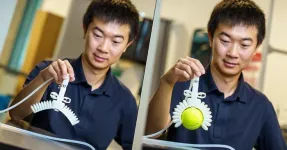
This soft robotic gripper is not only 3D printed in one print, it also doesn’t need any electronics to work. The device was developed by a team of roboticists at the University of California San Diego, in collaboration with researchers at the BASF corporation, who detailed their work in a recent issue of Science Robotics. The researchers wanted to design a soft gripper that would be ready to use right as it comes off the 3D printer, equipped with built in gravity and touch sensors. As a result, the gripper can pick up, hold, and release objects. No such gripper existed before this work. “We ...

Read the release
Physics

Study reveals vital role of supportive managers to minimize physical restraint use in care homes

A new Cochrane review finds that the use of physical restraints on care home residents can be reduced without increasing the risk of falls, when frontline care staff are empowered by supportive managers. Physical restraints are devices that restrict freedom of movement and are frequently used in residential care homes, such as nursing homes and assisted living facilities. Examples are bed rails or belts that prevent residents from getting out of bed unassisted. These restraints are ethically problematic as they are mostly ...

Read the release
Johns Hopkins Applied Physics Laboratory restores cold sensation in amputees’ phantom limbs
Physics

Johns Hopkins Applied Physics Laboratory restores cold sensation in amputees’ phantom limbs

Johns Hopkins Applied Physics Laboratory (APL) researchers have developed one of the world’s smallest, most intense and fastest refrigeration devices, the wearable thin-film thermoelectric cooler (TFTEC), and teamed with neuroscientists to help amputees perceive a sense of temperature with their phantom limbs. This advancement, one of the first of its kind, enables a useful new capability for a variety of applications, including improved prostheses, haptics for new modalities in augmented reality (AR) and thermally-modulated therapeutics for applications such as pain management. The technology also has a variety ...

Read the release
Physics

Discovery of pair density wave state in a two-dimensional high-Tc iron-based superconductor

As a macroscopic quantum state of matter, superconductivity has attracted tremendous attention in the field of scientific research and industry over the past century. According to the BCS (Bardeen-Cooper-Schrieffer) microscopic theory, superconductivity arises from the condensation of coherent Cooper pairs, and each Cooper pair is formed by two electrons with opposite spins and momenta. Theoretically, when time-reversal symmetry is broken, Cooper pairs may acquire a finite momentum and exhibit a spatially modulated superconducting order parameter, which is known as the Fulde-Ferrell-Larkin-Ovchinnikov ...

Read the release
From the original Press-News collection. Issuers of news releases are responsible for the accuracy of their content.