THE ORIGINAL COLLECTION · SINCE 2010

Science
press releases.

Research announcements from universities, hospitals and scientific institutions. Explore the stories, people and discoveries behind the headlines.

Original publication datesPage 201
FIND A STORY

Find a past release.

Dates and source material belong to the original release.

Read our research explainers

Browse the collection · original publication order

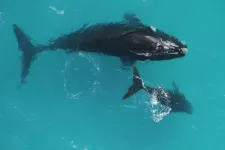
Study reveals right whales live 130 years — or more
Science

Study reveals right whales live 130 years — or more

New research published in Science Advances reveals that right whales can survive for more than 130 years — almost twice as long as previously understood. Extreme longevity is a trait common to the right whales’ cousins, the bowheads. Scientists working with Indigenous subsistence hunters in Utqiaġvik used chemical analysis of harvested bowhead whales to show they can live more than 200 years. Corroborating the chemical evidence, hunters have recovered 19th-century harpoon tips from bowheads taken in ...

Read the release
Researchers reveal how human eyelashes promote water drainage
Science

Researchers reveal how human eyelashes promote water drainage

Throughout human evolution, body and facial hair have notably diminished, yet eyelashes have remained a distinguishing feature. The physiological or functional purpose of eyelashes—traditionally thought to be for catching dust or filtering air, etc.—has long been debated. However, a team of Chinese researchers has recently elucidated the characteristics of human eyelashes. Their study reveals that eyelashes consist of a hydrophobic, curved, flexible fiber array, featuring ...

Read the release
Pollinators most vulnerable to rising global temperatures are flies, study shows
Science

Pollinators most vulnerable to rising global temperatures are flies, study shows

UNIVERSITY PARK, Pa. — Despite their reputation as buzzing nuisances, flies serve a critical role as some of the Earth’s most prolific pollinators — and new research led by Penn State scientists suggests they are increasingly at risk due to rising global temperatures. In a study recently published in the Journal of Melittology, an international team of researchers looked at the heat tolerance for a variety of species of bees and flies in tropical and subtropical regions of the Americas. Their findings suggest that rising temperatures pose a greater threat to flies than bees, as bees can tolerate much higher temperatures than flies and have a ...

Read the release
Science

DFG to fund eight new research units

The Deutsche Forschungsgemeinschaft (DFG, German Research Foundation) is establishing eight new Research Units. This was decided by the DFG Joint Committee on the recommendation of the Senate. The new Research Units will receive total funding of approximately €30 million, including a 22-percent programme allowance for indirect project costs. In addition to these eight newly created Research Units, it was decided to extend two Research Units and one Clinical Research Unit for a second funding period. Two of the newly established Research Units and one that has been extended receive funding under the framework of the ...

Read the release
Science

US tobacco 21 policies and potential mortality reductions by state

About The Study: This study found that early adoption and implementation of Tobacco 21 (T21) policies (minimum age of 21 for legal access to tobacco products) maximizes potential premature mortality reductions. However, the strength of T21 policies and enforcement varies widely across states. Enforcement of the federal T21 law is critical in the 8 states without state-level T21 cigarette policies of their own. Corresponding Author: To contact the corresponding author, Jamie Tam, PhD, email jamie.tam@yale.edu. To access the embargoed study: Visit our For The Media website at this link ...

Read the release
Science

AI-driven approach reveals hidden hazards of chemical mixtures in rivers

Artificial intelligence can provide critical insights into how complex mixtures of chemicals in rivers affect aquatic life – paving the way for better environmental protection. A new approach, developed by researchers at the University of Birmingham, demonstrates how advanced artificial intelligence (AI) methods can help identify potentially harmful chemical substances in rivers by monitoring their effects on tiny water fleas (Daphnia). The team worked with scientists at the Research Centre for Eco-Environmental Sciences (RCEES), in China, and the Hemholtz Centre for Environmental Research (UFZ), in Germany, to analyse ...

Read the release
Growing safer spuds: removing toxins from potatoes
Science

Growing safer spuds: removing toxins from potatoes

Scientists have discovered a way to remove toxic compounds from potatoes, making them safer to eat and easier to store. The breakthrough could cut food waste and enhance crop farming in space and other extreme environments. Potato plants naturally produce chemicals that protect them from insects. The chemicals, called steroidal glycoalkaloids, or SGAs, are found in high quantities in the green parts of potato peels, and in the sprouting areas. They render the potatoes unsafe for insects as well as humans. "These compounds are critical for plants to ward off insects, but they ...

Read the release
Science

Russia-Ukraine War’s unexpected casualties: Hungry people in distant nations

The war in Ukraine is causing hunger thousands of miles from the battlefields, according to a study released today. Nearly three years of war in the “breadbasket of the world” has left croplands destroyed and forced laborers who grow, harvest and process a bounty of wheat, barley and oats to flee. Combined with export bans from other countries, ripple effects resonated through global trade and upended food supply systems. But understanding how far those disruptions reached, who suffered and who gained has been difficult. Researchers at Michigan State University’s Center for Systems Integration and Sustainability (CSIS) lead a unique effort, relying ...

Read the release
Science

York U professor’s new paper challenges tokenizing women of colour in academia

TORONTO, December 20, 2024 — The unspoken rule for women of colour in academia is to be everything to everyone – mentor, diversity champion, tireless scholar, and silent workhorse, says York University equity studies Assistant Professor Yvonne Su in her recent paper published today in Nature Human Behaviour. “We are expected to carry the banner of inclusion, but we are not truly included. Inclusion, as it’s currently defined, is about optics, not transformation,” observes Su in the Faculty of Liberal Arts and Professional Studies. “It’s about showing diversity on the surface ...

Read the release
Science

Changes in store for atmospheric rivers

Communities up and down the West Coast of the United States can expect the potent storms known as atmospheric rivers to evolve as the climate warms. But residents in Southern California will see much different changes than residents in more northerly locations like Seattle. New research, led by scientists at the U.S. National Science Foundation National Center for Atmospheric Research (NSF NCAR), found that warming conditions will increase evaporation of ocean waters and significantly alter atmospheric rivers to the south. Farther north, however, atmospheric rivers will be most influenced by rising temperatures in the ocean and atmosphere. While ...

Read the release
Science

Patience isn't a virtue; it's a coping mechanism

Patience — like its corollary impatience — has always been a sort of “I know it when I see it” concept. And that didn’t sit well with UC Riverside psychology researcher Kate Sweeny. “Philosophers and religious scholars call patience a virtue, yet most people claim to be impatient,” Sweeny said. “That made me wonder if maybe patience is less about being a good person and more about how we deal with day-to-day frustrations.” For purposes of her research, Sweeny sought to better define what constitutes patience, and impatience, and the factors that determine them. Impatience, ...

Read the release
Innovative glue maker chosen for Japanese startup program
Science

Innovative glue maker chosen for Japanese startup program

The eco-friendly glue company D-Glue, co-created by a Cal Poly chemistry research team with student involvement in partnership with an East Coast company, has joined an international corporate incubator program as of Dec. 1. Plug and Play, a global innovation platform that links startups, corporations, investors, universities and government agencies, has over 60 locations across the world, reaching across 25 industries. Plug and Play’s three-month international program matches startups with business investors among its 45 Japanese corporate ...

Read the release
Clever trick to cook stars like Christmas puds detected for first time
Science

Clever trick to cook stars like Christmas puds detected for first time

Clever trick to cook stars like Christmas puds detected for first time Royal Astronomical Society press release RAS PR 24/33 Embargoed until 00:01 GMT on Friday 20 December 2024 The missing ingredient for cooking up stars in the same way you might steam your Christmas pudding has been spotted for the first time by astronomers. Much like a pressure cooker has a weight on top of its lid to keep the pressure in and get your festive dessert dense, moist and ready to eat, merging galaxies may need magnetic fields to create the ideal conditions for star formation. Until now, however, the existence of such a force had only been ...

Read the release
Getting rehab earlier improves concussion outcomes, OHSU study suggests
Science

Getting rehab earlier improves concussion outcomes, OHSU study suggests

People who suffer from continued symptoms of concussion should seek a referral to physical therapy as soon as possible, new research from Oregon Health & Science University suggests. Even though most people naturally recover from concussions within four weeks, the study revealed people who delayed physical therapy had lingering deficits related to their reaction times for balance, motor function — or body movements to perform tasks — and the use of sensory information — as in sight and touch — for balance. The research published this week in the Physical Therapy & Rehabilitation Journal. “It means they’re ...

Read the release
Science

New study highlights ethical challenges in conducting cannabis research in Canada

December 18, 2024 (Toronto, Canada) – In the first study of its kind, research led by the Centre for Addiction and Mental Health (CAMH) sheds light on the ethical complexities and systemic barriers facing scientists conducting cannabis research funded by the for-profit cannabis industry. Recently published in the journal Social Science & Medicine, the qualitative study titled Canadian cannabis researcher perspectives on the conduct and sponsorship of scientific research by the for-profit cannabis industry reveals that while researchers are driven by a commitment to public health and high-quality ...

Read the release
City of Hope research spotlight, November 2024
Science

City of Hope research spotlight, November 2024

This roundup highlights a promising early screening method identifying precancerous esophageal disease, recommendations to improve cancer-focused community outreach, details on how aging breast cells can be used as valuable biomarkers for early cancer detection, and an innovative infusion catheter that could improve health outcomes. To learn more about research at City of Hope, one of the largest and most advanced cancer research and treatment organizations in the U.S. with its National Medical Center named top 5 in the nation for cancer by U.S. News & World Report, subscribe to City of Hope Research Spotlight. Scientists develop first blood test for ...

Read the release
Science

Denali Fault tore apart ancient joining of two landmasses

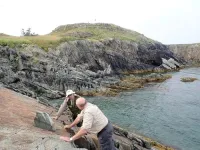
New research shows that three sites spread along an approximately 620-mile portion of today’s Denali Fault were once a smaller united geologic feature indicative of the final joining of two land masses. That feature was then torn apart by millions of years of tectonic activity. The work, led by associate professor Sean Regan at the University of Alaska Fairbanks Geophysical Institute and UAF College of Natural Science and Mathematics, is featured on the cover of the December edition of Geology, the journal of The Geological Society of America. Regan is the research paper’s lead author. ...

Read the release
National Institute awards $2.18 million to Lebeche, Ishrat for innovative stroke research
Science

National Institute awards $2.18 million to Lebeche, Ishrat for innovative stroke research

The National Institute of Neurological Disorders and Stroke has awarded $2.18 million to two researchers at the University of Tennessee Health Science Center for a project focused on a new drug treatment to protect the brain after a stroke. The principal investigators are Djamel Lebeche, PhD, professor in the Department of Physiology, and Tauheed Ishrat, PhD, associate professor in the Department of Anatomy and Neurobiology. Type 2 diabetic patients are two to six times more likely to suffer from an acute ischemic stroke. These patients also face additional complications such as blood-brain barrier leakage, swelling, bleeding, and poor recovery after a stroke. ...

Read the release
Science

Research shows how music can reduce distress

A new study has demonstrated for the first time how and why music can reduce distress and agitation for people with advanced dementia. There are an estimated one million people living with dementia in the UK and over half are diagnosed with advanced dementia, which can require specialist care and is often accompanied by behaviour such as agitation, aggression, wandering, and resistance to care. Published in the journal Nature Mental Health, the research reveals the different benefits of music therapy, identifies mechanisms to explain why music can have these effects, and provides a blueprint for implementing effective music therapy for people with advanced dementia. Music ...

Read the release
Virginia Tech study extends chart of life by nearly 1.5 billion years
Science

Virginia Tech study extends chart of life by nearly 1.5 billion years

If all the world's a stage and all the species merely players, then their exits and entrances can be found in the rock record. Fossilized skeletons and shells clearly show how evolution and extinction unfolded over the past half a billion years, but a new Virginia Tech analysis extends the chart of life to nearly 2 billion years ago. The chart shows the relative ups and downs in species counts, telling scientists about the origin, diversification, and extinction of ancient life. With this new study, the chart of life now includes life forms from the Proterozoic Eon, 2,500 million to 539 million years ago. Proterozoic life was generally smaller and squishier — like sea ...

Read the release
Early warning tool will help control huge locust swarms
Science

Early warning tool will help control huge locust swarms

Desert locusts typically lead solitary lives until something - like intense rainfall - triggers them to swarm in vast numbers, often with devastating consequences. This migratory pest can reach plague proportions, and a swarm covering one square kilometre can consume enough food in one day to feed 35,000 people. Such extensive crop destruction pushes up local food prices and can lead to riots and mass starvation. Now a team led by the University of Cambridge has developed a way to predict when and where desert locusts will swarm, so they can be dealt with before the problem ...

Read the release
Science

Cold-related deaths in the US

About The Study: Cold-related mortality rates more than doubled in the U.S. between 1999 and 2022. Prior research suggests that cold temperatures account for most temperature-related mortality. This study identified an increase in such deaths over the past 6 years. The underlying drivers of this trend warrant further research and may include more frequent extreme winter weather events and/or the rising burden of risk factors for cold-related mortality such as homelessness, social isolation, ...

Read the release
Science

Racial and ethnic differences in outcomes of neonates born at less than 30 weeks’ gestation

About The Study: In this cohort study, there were no differences in mortality rates between Black and white newborns, but Black newborns had higher rates of necrotizing enterocolitis and late-onset sepsis. Continued quality improvement and addressing social determinants of health are critical for promoting health equity in hospital outcomes and beyond. Corresponding Author: To contact the corresponding author, Nansi S. Boghossian, PhD, email nboghoss@mailbox.sc.edu. To access the embargoed study: Visit our For The Media website at this link https://media.jamanetwork.com/ (doi:10.1001/jamanetworkopen.2024.51707) Editor’s ...

Read the release
Science

How to deal with narcissists at home and at work

The best way to deal with narcissistic people in your personal life may be the hardest advice to take, according to an expert who has studied narcissism for more than 20 years. The best course of action is to identify narcissistic people early on and get them out of your life, said Amy Brunell, professor of psychology at The Ohio State University’s Mansfield campus. Brunell said that is often difficult because narcissists can be charming and likable early in a relationship. But there are usually subtle signs that you should not ignore. “If you’re in a new relationship and you’re ...

Read the release
This prototype sunscreen protects your skin and cools you off, too
Science

This prototype sunscreen protects your skin and cools you off, too

Wearing sunscreen is important to protect your skin from the harmful effects of UV radiation but doesn’t cool people off. However, a new formula, described in ACS’ Nano Letters, protects against both UV light and heat from the sun using radiative cooling. The prototype sunblock kept human skin up to 11 degrees Fahrenheit (6 degrees Celsius) cooler than bare skin, or around 6 F (3 C) cooler than existing sunscreens. Radiative cooling involves either reflecting or radiating heat away from something, cooling whatever’s underneath. It is already used to create cooling fabrics and coatings that could both cool and ...

Read the release
From the original Press-News collection. Issuers of news releases are responsible for the accuracy of their content.