THE ORIGINAL COLLECTION · SINCE 2010

Science
press releases.

Research announcements from universities, hospitals and scientific institutions. Explore the stories, people and discoveries behind the headlines.

Original publication datesPage 280
FIND A STORY

Find a past release.

Dates and source material belong to the original release.

Read our research explainers

Browse the collection · original publication order

Sant Pau researchers discover a new gene that causes ALS
Science

Sant Pau researchers discover a new gene that causes ALS

Sant Pau researchers discover a new gene that causes ALS Researchers from the Neuromuscular Diseases Group and the Dementia Neurobiology Group of the Sant Pau Research Institute (IR Sant Pau) and the Memory Unit of the Sant Pau Hospital, led by neurologist Dr. Ricard Rojas-García, have identified a new mutation in the ARPP21 gene that could be the cause of Amyotrophic Lateral Sclerosis (ALS), a devastating neurodegenerative disease. Specifically, it is a shared mutation (c.1586C>T; p.Pro529Leu) in the ARPP21 gene that ...

Read the release

Synthetic biology reveals the secrets of life without oxygen
Science

Synthetic biology reveals the secrets of life without oxygen

Long before photosynthesis brought free oxygen into the world, the earth was already populated by numerous organisms. Oxygen was life-threatening for them and therefore they developed completely different metabolic pathways to those we know from plants, animals and humans. Anaerobic bacteria have survived the ages in special, oxygen-free niches, some of them very close to us: as an essential part of the intestinal microbiome, where they are of enormous importance for the well-being of the organism. However, certain anaerobes can ...

Read the release
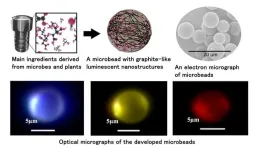
Microbeads with adaptable fluorescent colors from visible light to near-infrared
Science

Microbeads with adaptable fluorescent colors from visible light to near-infrared

1. A research team at NIMS has successfully developed an environmentally friendly, microspherical fluorescent material primarily made from citric acid. These microbeads emit various colors of light depending on the illuminating light and the size of the beads, which suggests a wide range of applications. Furthermore, the use of plant-derived materials allows for low-cost and energy-efficient synthesis. 2. Conventional luminescent devices commonly utilized thin films of compound semiconductors containing metals or sintered inorganic materials with rare earth elements. However, in a circular economy, there ...

Read the release
A chemical claw machine bends and stretches when exposed to vapors
Science

A chemical claw machine bends and stretches when exposed to vapors

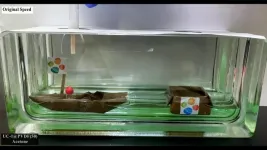
Scientists at King Abdullah University of Science and Technology (KAUST) in Saudi Arabia have developed a tiny “claw machine” that is able to pick up and drop a marble-sized ball in response to exposure to chemical vapors. The findings, published July 12 in the journal Chem, point to a technique that can enable soft actuators—the parts of a machine that make it move—to perform multiple tasks without the need for additional costly materials. While existing soft actuators can be “one-trick ponies” restricted to one type of movement, this novel composite film contorts itself ...

Read the release
Science

High and low tide cause low and high methane fluxes

High and low tide cause low and high methane fluxes Methane, a strong greenhouse gas that naturally escapes from the bottom of the North Sea, is affected by the pressure of high or low tide. Methane emissions from the seafloor can be just easily three times as much or as little, depending on the tide. This is shown by NIOZ oceanographer Tim de Groot, in a publication in Nature Communications Earth and Environment. "Our research shows that you can never rely on one measurement when you want to know how much methane escapes from the seafloor," De Groot emphasizes. Swamp ...

Read the release
Insight into one of life’s earliest ancestors revealed in new study
Science

Insight into one of life’s earliest ancestors revealed in new study

An international team of researchers led by the University of Bristol has shed light on Earth’s earliest ecosystem, showing that within a few hundred million years of planetary formation, life on Earth was already flourishing. Everything alive today derives from a single common ancestor known affectionately as LUCA (Last Universal Common Ancestor). LUCA is the hypothesized common ancestor from which all modern cellular life, from single celled organisms like bacteria to the gigantic redwood trees (as well as us humans) descend. LUCA represents the root ...

Read the release
Improving cycling performance of sodium-ion batteries through titanium substitution
Science

Improving cycling performance of sodium-ion batteries through titanium substitution

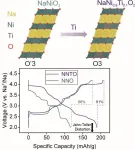
Researchers at Karlsruhe Institute of Technology (KIT) have made significant advances in sodium-ion battery (SIB) technology by improving cycling performance of the NaNiO2 cathode. They successfully synthesized, for the first time, the cathode active material NaNi0.9Ti0.1O2, which delivers a specific capacity of 190 mAh/g, thus positioning it as a potential candidate for application in high-energy-density SIBs. This innovative approach not only improves battery stability but also propels us toward advanced energy-storage solutions beyond. With its high theoretical ...

Read the release
Hatcheries can boost wild salmon numbers but reduce diversity
Science

Hatcheries can boost wild salmon numbers but reduce diversity

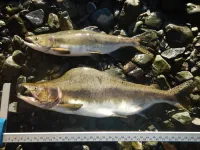
The ability of salmon hatcheries to increase wild salmon abundance may come at the cost of reduced diversity among wild salmon, according to a new University of Alaska Fairbanks–led study. The number of juvenile salmon released into the North Pacific Ocean by hatcheries increased rapidly in the second half of the last century and remains at over 5 billion each year. Salmon hatcheries have helped push annual pink salmon harvests in Prince William Sound from about 4 million fish prior to hatchery programs to roughly 50 million in recent years. Using data collected from pink salmon streams ...

Read the release
A stealth fungus has decimated North American bats but scientists may be a step closer to treating white-nose syndrome
Science

A stealth fungus has decimated North American bats but scientists may be a step closer to treating white-nose syndrome

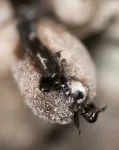
An invasive fungus that colonizes the skin of hibernating bats with deadly consequences is a stealthy invader that uses multiple strategies to slip into the small mammals' skin cells and quietly manipulate them to aid its own survival. The fungus, which causes the disease white-nose syndrome, has devastated several North American species over the last 18 years. Scientists have learned much about the fungus, Pseudogymnoascus destructans, since it was first documented in a New York cave in 2006, including where it thrives, its distribution, and clinical features. But exactly ...

Read the release
Science

Menstrual cramps can be worse in normal-length cycles without ovulation

According to current understanding, menstrual cramps only happen in cycles in which an egg is released, or an ovulatory cycle. But new research from the University of British Columbia (UBC) is challenging this notion. The findings, published in the Journal of Pain Research, reveal that some women not only experience cramps when no egg is released, but that cramps can be more severe and last longer during these anovulatory cycles. “I was surprised to see significant cramps in menstrual cycles with or without ovulation, which challenges current thinking” said co-author, Dr. Paul Yong, associate professor of obstetrics and gynecology at UBC and Canada Research ...

Read the release
Science

Muscle machine: How water controls the speed of muscle contraction

Image The flow of water within a muscle fiber may dictate how quickly muscle can contract, according to a University of Michigan study. Nearly all animals use muscle to move, and it's been known for a long time that muscle, like all other cells, is composed of about 70% water. But researchers don't know what sets the range and upper limits of muscle performance. Previous research into how muscle works focused only on how it worked on a molecular level rather than how muscle fibers are shaped, that they are three-dimensional ...

Read the release
User control of autoplay can alter awareness of online video ‘rabbit holes’
Science

User control of autoplay can alter awareness of online video ‘rabbit holes’

UNIVERSITY PARK, Pa. — The rabbit hole contains madness, according to author Lewis Carroll. Online, that madness manifests in the form of increasingly extreme content, often without users realizing it. A new study by Penn State researchers suggests that giving users control over the interface feature of autoplay can help them realize that they are going down a rabbit hole. The work — which the researchers said has implications for responsibly designing online content viewing platforms and algorithms, as well as helping users better ...

Read the release
Science

Study identifies seductive language for narcissists in job postings and the implications

Employers and recruiting firms frequently infuse job postings with words and phrases like “ambitious,” “thinks outside the box,” “communicates persuasively” and “thinks strategically.” However, according to a forthcoming Management Science study, such keywords signify “rule-bender” (versus “rule-follower”) language and heavily draw narcissistic applicants who are more likely to engage in unethical or fraudulent behavior–significantly ...

Read the release
Quadrupolar nuclei measured for the first time by zero-field NMR
Science

Quadrupolar nuclei measured for the first time by zero-field NMR

What is the structure of a particular molecule? And how do molecules interact with each other? Researchers interested in those questions frequently use nuclear magnetic resonance (NMR) spectroscopy to find answers. In NMR, a powerful external magnetic field is employed to align the spins of atomic nuclei, which are then induced to rotate by an oscillating weak magnetic field generated by coils. A change in voltage as a result can be converted to measurable frequencies. Based on this, researchers can identify the molecular structures while also revealing ...

Read the release
Researchers develop a way to make lifesaving phages accessible, transportable and much easier to use
Science

Researchers develop a way to make lifesaving phages accessible, transportable and much easier to use

The great promise of bacteriophages is that they naturally destroy bacteria, often in situations where antibiotics fail. Until now, though, there has been no way to access them quickly and efficiently, especially in emergency cases of antibiotic resistant infections. Researchers at McMaster University, working with a colleague from Université Laval, have developed a simple new way to store, identify, and share phages, making them more accessible to patients who need them. “Bacteriophages ...

Read the release
Science

MD Anderson Research Highlights for July 11, 2024

HOUSTON ― The University of Texas MD Anderson Cancer Center’s Research Highlights provides a glimpse into recent basic, translational and clinical cancer research from MD Anderson experts. These advances are made possible through seamless collaboration between MD Anderson’s world-leading clinicians and scientists, bringing discoveries from the lab to the clinic and back. Recent developments at MD Anderson offer insights into mechanisms regulating metabolic programming and cellular senescence, ...

Read the release
Science

State gun laws have mixed impact on suicide and homicide rates

DURHAM, N.C. – Certain state gun laws are associated with decreased suicide rates for children under age 18, but the laws have little influence on homicide rates, according to a study from Duke Health researchers examining the relationship between gun laws and child deaths. Since 2020, firearms rank as the leading cause of death among U.S. children ages 1-18, raising the need for research to help guide prevention efforts. “Our analysis of suicide and homicide mortality data from ...

Read the release
Science

Secondhand nicotine absorption from E-cigarette vapor vs tobacco smoke in children

About The Study: In this cross-sectional study of U.S. children, nicotine absorption was much lower in children who were exposed to secondhand vapor versus secondhand smoke, but higher than in those exposed to neither. These findings suggest that switching from smoking to vaping indoors may substantially reduce, but not eliminate, children’s secondhand exposure to nicotine and other noxious substances. Corresponding Author: To contact the corresponding author, Harry Tattan-Birch, Ph.D., email h.tattan-birch@ucl.ac.uk. To ...

Read the release
Science

Second-hand vaping exposure very low compared to second-hand smoking

Children exposed to vaping indoors absorb less than one seventh the amount of nicotine as children who are exposed to indoor smoking, but more than those exposed to neither, according to a new study led by UCL researchers. The study, published in JAMA Network Open and funded by Cancer Research UK, looked at blood tests and survey data for 1,777 children aged three to 11 in the United States. The researchers said that second-hand exposure to harmful substances in e-cigarettes would likely be much lower still, as e-cigarettes deliver similar levels of nicotine to tobacco but contain only a fraction of the toxicants and ...

Read the release
Science

Narcissism decreases with age, study finds

People tend to become less narcissistic as they age from childhood through older adulthood, according to a study published by the American Psychological Association. However, differences among individuals remain stable over time -- people who are more narcissistic than their peers as children tend to remain that way as adults, the study found. “These findings have important implications given that high levels of narcissism influence people’s lives in many ways -- both the lives of the narcissistic individuals themselves and, maybe even more, the lives of their families and friends,” said lead author Ulrich Orth, PhD, of the University of Bern in Switzerland. The ...

Read the release
Science

2000th ERC Proof of Concept grant awarded

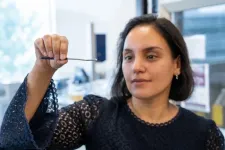
The grants – each worth €150,000 – help researchers to bridge the gap between the discoveries stemming from their frontier research and the practical application of the findings, including early phases of their commercialisation. Nanda Rea’s new project, called DeepSpacePULSE, aims to facilitate deep space exploration. Currently, to find their way, spacecraft and satellites use up a lot of energy exchanging vital navigation information with mission coordinators on Earth. Using ERC Proof of Concept funding, Prof. Nanda Rea ...

Read the release
Wild plants and crops don’t make great neighbors
Science

Wild plants and crops don’t make great neighbors

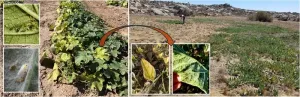
Native plants and non-native crops do not fare well in proximity to one another, attracting pests that spread diseases in both directions, according to two new UC Riverside studies. “We have changed the landscape, and it’s created opportunities for pathogens to thrive,” said UCR entomologist Kerry Mauck, who co-authored the studies. “We have introduced pathogens that damage native plants, and on the other side of the coin we have endemic pathogens that mutate to infect ...

Read the release
Opening the right doors: “jumping gene” control mechanisms revealed
Science

Opening the right doors: “jumping gene” control mechanisms revealed

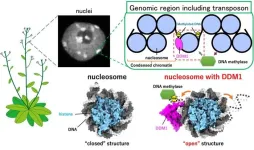
International joint research led by Akihisa Osakabe and Yoshimasa Takizawa of the University of Tokyo has clarified the molecular mechanisms in thale cresses (Arabidopsis thaliana) by which the DDM1 (Decreased in DNA Methylation 1) protein prevents the transcription of “jumping genes.” DDM1 makes “jumping genes” more accessible for transcription-suppressing chemical marks to be deposited. Because a variant of this protein exists in humans, the discovery provides insight into genetic conditions caused by such “jumping gene” mutations. The findings ...

Read the release
Aperiodic approximants for relating quasicrystals and modulated structures
Science

Aperiodic approximants for relating quasicrystals and modulated structures

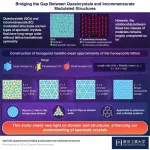
For a long time, scientists associated crystal structures with an ordered arrangement of atoms in a repeating lattice-like pattern, believing it to be the most stable configuration. However, by the 1960s, advancements in crystallography revealed materials that did not fit the traditional model. These structures exhibit a non-periodic or non-repeating pattern and are called aperiodic crystals. There are two types of aperiodic crystals: quasicrystals (QCs), which exhibit ordered but aperiodic arrangements, and incommensurately (IC) modulated structures, where a three-dimensional periodic lattice structure ...

Read the release
Same workout, different weight loss: Signal molecule versions are key
Science

Same workout, different weight loss: Signal molecule versions are key

Some people lose weight slower than others after workouts, and a Kobe University research team found a reason. They studied what happens to mice that cannot produce signal molecules that respond specifically to short-term exercise and regulate the body’s energy metabolism. These mice consume less oxygen during workouts, burn less fat and are thus also more susceptible to gaining weight. Since the team found this connection also in humans, the newly gained knowledge of this mechanism might provide a pathway for treating obesity. It is well known that exercise leads to the ...

Read the release
From the original Press-News collection. Issuers of news releases are responsible for the accuracy of their content.