THE ORIGINAL COLLECTION · SINCE 2010

Science
press releases.

Research announcements from universities, hospitals and scientific institutions. Explore the stories, people and discoveries behind the headlines.

Original publication datesPage 310
FIND A STORY

Find a past release.

Dates and source material belong to the original release.

Read our research explainers

Browse the collection · original publication order

Sweet taste receptor affects how glucose is handled metabolically by humans
Science

Sweet taste receptor affects how glucose is handled metabolically by humans

PHILADELPHIA (May 16, 2024) – The rich research portfolio of the Monell Chemical Senses Center on sweet taste goes way back: Monell scientists were one of four teams in 2001 that found and described the mammalian sweet taste receptor – TAS1R2-TAS1R3. Twenty years later in 2021, a pair of papers published in Mammalian Genome by Monell researchers covered the genetics of sugar-loving mice. The sweet taste receptor, expressed in taste bud cells, conveys sweetness from the mouth when it is activated. Earlier this month, a study in PLOS One, led by another Monell researcher, delved into how the sweet-taste receptor might be the first stop ...

Read the release
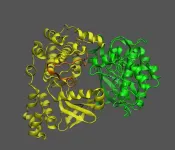

Scientists discover mechanism of sugar signaling in plants
Science

Scientists discover mechanism of sugar signaling in plants

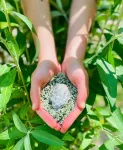
UPTON, N.Y. — Proteins are molecular machines, with flexible pieces and moving parts. Understanding how these parts move helps scientists unravel the function a protein plays in living things — and potentially how to change its effects. Biochemists at the U.S. Department of Energy’s (DOE) Brookhaven National Laboratory and colleagues at DOE’s Pacific Northwest National Laboratory (PNNL) have just published a new example of how one such molecular machine works. Their paper in the journal Science Advances describes how the moving parts of ...

Read the release
Pagan-Christian trade networks supplied horses from overseas for the last horse sacrifices in Europe
Science

Pagan-Christian trade networks supplied horses from overseas for the last horse sacrifices in Europe

Horses crossed the Baltic Sea in ships during the Late Viking Age and were sacrificed for funeral rituals, according to research from Cardiff University. Published in the journal Science Advances, studies on the remains of horses found at ancient burial sites in Russia and Lithuania show that they were brought overseas from Scandinavia utilising expansive trade networks connecting the Viking world with the Byzantine and Arab Empires. Up to now, researchers had believed sacrificial horses were always locally-sourced stallions. ...

Read the release
NUS scientist Professor Lim Chwee Teck elected Fellow of the Royal Society
Science

NUS scientist Professor Lim Chwee Teck elected Fellow of the Royal Society

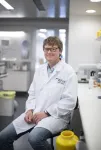
Professor LIM Chwee Teck, Director of the Institute for Health Innovation & Technology at the National University of Singapore (NUS iHealthtech) and NUSS Professor, has been elected to the prestigious Fellowship of the Royal Society, in recognition of his invaluable contributions to science. The Royal Society is the world's oldest and most esteemed scientific academy in continuous existence, as well as the United Kingdom’s national academy of sciences. Fellows are elected annually, and candidates are evaluated based on their exceptional achievements in science. This ...

Read the release
Scientists develop new geochemical ‘fingerprint’ to trace contaminants in fertilizer
Science

Scientists develop new geochemical ‘fingerprint’ to trace contaminants in fertilizer

DURHAM N.C. – An international team of scientists has uncovered toxic metals in mineral phosphate fertilizers worldwide by using a new tool to identify the spread and impact of such contaminants on soil, water resources, and food supply. “While mineral phosphate fertilizers are critical to boost global sustainable agriculture and food security, we found high levels of toxic metals in many fertilizers worldwide,” said Avner Vengosh, chair of the Earth and Climate Sciences division at Duke University’s Nicholas School of the Environment. “Our study developed a new method to identify sources and impacts of these metals on the environment.” Those ...

Read the release
Pickleball courts in a legal pickle #ASA186
Science

Pickleball courts in a legal pickle #ASA186

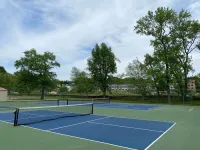
OTTAWA, Ontario, May 17, 2024 – Pickleball Legal Consultant is a job title that likely did not exist a decade ago, but as pickleball courts infiltrate neighborhoods to satiate an appetite for a sport whose namesake is a snack, communities take issue with the resulting influx of noise. Now homeowners’ associations and city councils face litigation by those whose lives are disrupted by pickleball’s din. Charles Leahy, an attorney, retired mechanical engineer, and former HOA board member became ...

Read the release
A devastating fire 2,200 years ago preserved a moment of life and war in Iron Age Spain — right down to a single gold earring
Science

A devastating fire 2,200 years ago preserved a moment of life and war in Iron Age Spain — right down to a single gold earring

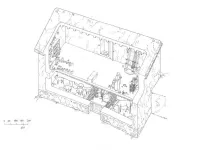
A ruined building in the middle of the Pyrenees records a tragedy for the people who lived there — a devastating fire which burned a settlement to the ground, destroying everything down to a hidden gold earring. Now archaeologists’ excavation of Building G, in the strategically placed Iron Age site of Tossal de Baltarga, reveals a way of life derailed by violence: potentially, a forgotten episode of the war between Carthage and Rome. “The destruction was dated around the end of the third century BCE, the moment where the Pyrenees were involved in the Second Punic War and the passage of Hannibal’s troops,” ...

Read the release
Ubiquitin trailblazer elected Fellow of prestigious Royal Society
Science

Ubiquitin trailblazer elected Fellow of prestigious Royal Society

WEHI division head and pioneer of ubiquitination Professor David Komander has been elected a Fellow of the esteemed Royal Society, the UK’s national science academy. Prof Komander was recognised for his significant research contributions towards understanding ubiquitin, the ‘kiss of death’ protein which tells our cells which proteins to break down or recycle – a vital process that helps cells stay healthy and function correctly. Prof Komander’s work has helped unravel the ‘ubiquitin code’ that enables ubiquitin to perform many ...

Read the release
A new ‘rule of biology’ may have come to light, expanding insight into evolution and aging
Science

A new ‘rule of biology’ may have come to light, expanding insight into evolution and aging

By Darrin S. Joy A molecular biologist at the USC Dornsife College of Letters, Arts and Sciences may have found a new “rule of biology.” A rule of biology, sometimes called a biological law, describes a recognized pattern or truism among living organisms. Allen’s rule, for example, states that among warm-blooded animals, those found in colder areas have shorter, thicker limbs (to conserve body heat) than those in hotter regions, which need more body surface area to dissipate heat. Zoologist Joel Allen formulated this idea in 1877, and though he wasn’t the first or the last to present a rule of biology, his ...

Read the release
Scripps Research chemists develop new method for making gamma chiral centers on simple carboxylic acids
Science

Scripps Research chemists develop new method for making gamma chiral centers on simple carboxylic acids

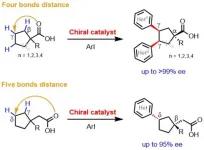
LA JOLLA, CA—Scripps Research chemists have accomplished a long elusive feat in synthetic chemistry: the invention of a broadly useful method for constructing “gamma chiral centers” on simple starting compounds called carboxylic acids. The method, published on May 16, 2024 in Science, significantly extends the ability of chemists to build and modify complex pharmaceutical molecules and other valuable chemical products. The term chiral refers to a type of asymmetry that allows some chemical compounds to exist in left-handed and right-handed forms. Often, only one of these forms has the ...

Read the release
Science

In September, securities watchdogs bark more, bite less

AUSTIN, Texas -- The Securities and Exchange Commission acts as Wall Street’s traffic cop, fining companies for such infractions as securities fraud and insider trading. New research from Texas McCombs finds another parallel between the SEC and traffic enforcement: pressure to meet self-imposed quotas. Assistant accounting professors Matthew Kubic and Sara Toynbee find that the agency files twice as many enforcement cases in September as in other months, a phenomenon they call the September spike. They also link the increase in cases to smaller fines that reduce what the government takes in from violators. The reason for the ...

Read the release
Under stress, an observer is more likely to help the victim than to punish the perpetrator
Science

Under stress, an observer is more likely to help the victim than to punish the perpetrator

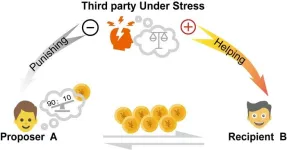
Being stressed while witnessing injustice may push your brain towards altruism, according to a study published on May 14th in the open-access journal PLOS Biology by Huagen Wang from Beijing Normal University, China, and colleagues. It takes more cognitive effort to punish others than it does to help them. Studies show that when witnessing an act of injustice while stressed, people tend to behave selflessly, preferring to help the victim than to punish the offender. This aligns with theories proposing that distinct brain networks drive intuitive, fast decisions and deliberate, slow decisions, ...

Read the release
Otters, especially females, use tools to survive a changing world
Science

Otters, especially females, use tools to survive a changing world

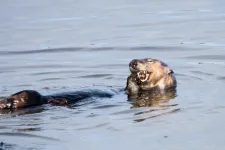
Sea otters are one of the few animals that use tools to access their food, and a new study has found that individual sea otters that use tools — most of whom are female — are able to eat larger prey and reduce tooth damage when their preferred prey becomes depleted. The study researchers and their enlisted volunteer “otter spotters” followed 196 radio-tagged southern sea otters off the coast of California to better understand how the threatened species uses tools in a rapidly changing environment. The research team from The University ...

Read the release
Breaking bonds to form bonds: Rethinking the Chemistry of Cations
Science

Breaking bonds to form bonds: Rethinking the Chemistry of Cations

A team of chemists from the University of Vienna, led by Nuno Maulide, has achieved a significant breakthrough in the field of chemical synthesis, developing a novel method for manipulating carbon-hydrogen bonds. This groundbreaking discovery provides new insights into the molecular interactions of positively charged carbon atoms. By selectively targeting a specific C–H bond, they open doors to synthetic pathways that were previously closed – with potential applications in medicine. The study was recently published in the prestigious journal Science. Living ...

Read the release
Archaeology: Egyptian pyramids built along long-lost Ahramat branch of the Nile
Science

Archaeology: Egyptian pyramids built along long-lost Ahramat branch of the Nile

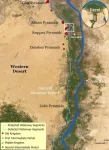
31 pyramids in Egypt, including the Giza pyramid complex, may originally have been built along a 64-km-long branch of the river Nile which has long since been buried beneath farmland and desert. The findings, reported in a paper in Communications Earth & Environment, could explain why these pyramids are concentrated in what is now a narrow, inhospitable desert strip. The Egyptian pyramid fields between Giza and Lisht, built over a nearly 1,000-year period starting approximately 4,700 years ago, now sit on the edge of the inhospitable Western Desert, part of the Sahara. ...

Read the release
How did sabre-toothed tigers acquire their long upper canine teeth?
Science

How did sabre-toothed tigers acquire their long upper canine teeth?

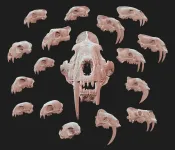
In a groundbreaking study, an international team led by scientists from the University of Liège has investigated the evolutionary patterns behind the development of sabre teeth, with some unexpected results along the way. A study that enriches our understanding of the Earth's past, but also documents the mechanisms leading to evolutionary convergence. Sabre teeth, those iconic elongated upper canine teeth, have long fascinated both scientists and the general public, notably because they have appeared several times in the fossil record, including two particularly well-known lineages of sabre-toothed tigers: the felids (the family of ...

Read the release
A new and better way to detect media censorship
Science

A new and better way to detect media censorship

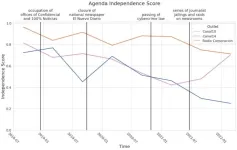
Worldwide news media are facing increasing pressure from autocrats to report favourably about their leaders and party politics. Political scientists launch a new computational method that can detect such media censorship by states while it is happening. This method provides valuable insights for communicating regime-driven media capture to the public. It is now described in detail in the scientific journal ‘Democratization’. One of the first steps of would-be autocrats is to control the ...

Read the release
Science

Listening to muscles

Spinal muscular atrophy or “SMA” for short is a terrible disease in which a genetic mutation causes certain nerves responsible for sending signals to muscles to degenerate. This leads to muscles wasting away, and many patients have died a painful death due to this rare condition. Genetic treatments have only been available for a few years. Now, a team led by Emmanuel Nedoschill, Ferdinand Knieling and Adrian Regensburger from the “Translational Pediatrics” working group at the Department of Pediatrics and Adolescent Medicine at Uniklinikum Erlangen have devised ...

Read the release
Spider silk sound system #ASA186
Science

Spider silk sound system #ASA186

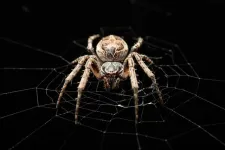
OTTAWA, Ontario, May 16, 2024 – The best microphone in the world might have an unexpected source: spider silk. Spiders weave webs to trap their insect snacks, but the sticky strands also help spiders hear. Unlike human eardrums and conventional microphones that detect sound pressure waves, spider silk responds to changes in the velocities of air particles as they are thrust about by a sound field. This sound velocity detection method remains largely underexplored compared to pressure sensing, but it holds great potential for high-sensitivity, long-distance sound detection. Researchers ...

Read the release
To sound like a hockey player, speak like a Canadian #ASA186
Science

To sound like a hockey player, speak like a Canadian #ASA186

OTTAWA, Ontario, May 16, 2024 – As a hockey player, Andrew Bray was familiar with the slang thrown around the “barn” (hockey arena). As a linguist, he wanted to understand how sport-specific jargon evolved and permeated across teams, regions, and countries. In pursuit of the sociolinguistic “biscuit” (puck), he faced an unexpected question. “It was while conducting this initial study that I was asked a question that has since shaped the direction of my subsequent research,” said Bray. “‘Are you trying to figure out why the Americans sound like fake Canadians?’” Canadian ...

Read the release
Science

Why do we overindulge?

If you tend to do other things or get distracted while eating dinner, you may be running the risk of over-consuming everyday pleasures later, possibly because the distraction caused you to enjoy yourself less, according to research published by the American Psychological Association. The study looked at how distraction affects “hedonic consumption,” or buying and using products and experiences because they make us feel good and not necessarily because we need them. “On any given day, a person may take great pleasure from one or more of these activities, yet people often consume more hedonic ...

Read the release
Science

Lily Ng and Douglas Forrest of NIDDK win Endocrine Society’s 2024 Endocrine Images Art Competition

WASHINGTON—The Endocrine Society is delighted to announce that Lily Ng, PhD, and Douglas Forrest, Ph.D., have won the Society's 2024 Endocrine Images Art Competition for their image of the astrocyte cell that expresses type 2 deiodinase. Now in its third year, the Art Competition celebrates the beauty of endocrine science as seen through the lens of a microscope. This year’s 19 entries were judged by a panel of Society members who based their assessments on aesthetic value of the images and their significance ...

Read the release
Science

New postpartum care recommendations target CVD risk

DALLAS, May 16, 2024 — Pregnancy-related deaths in the U.S. have risen 140% over the past three decades and cardiovascular disease is the leading cause.[1] Despite existing medical guidance on pregnancy and cardiovascular health, current trends in health outcomes suggest a significant opportunity for an improved system of care, particularly in the postpartum period. The American Heart Association, the world’s leading voluntary organization focused on heart and brain health and this year ...

Read the release
More efficient bioethanol production might be possible using persimmon tannin to help yeast thrive
Science

More efficient bioethanol production might be possible using persimmon tannin to help yeast thrive

While ethanol in alcoholic beverages impairs drinkers’ motor functions, it is that same substance that can power motor vehicles in a cleaner, more sustainable manner. What is necessary for the production of ethanol is yeast, but ethanol is among the environmental factors that add stress to yeasts, hindering their growth. To promote efficient bioethanol production, scientists have been searching for substances that can help yeasts better withstand ethanol, but few effective ones have been found. An Osaka Metropolitan ...

Read the release
Science

When saying “please” is more strategic than magic

Key takeaways A new study by UCLA sociologists found that using the word “please” does not always indicate respect or politeness. In the study, “please” was used only 7% of the time, mostly when there was an inhospitable interactional environment to overcome. Findings will help researchers in their understanding of politeness in the flow of social behavior and norms. By kindergarten age, most children have been taught that “please” is a magic word. “Please” is an expression of politeness that shows courtesy and respect, turning a potential demand into a request that will – ...

Read the release
From the original Press-News collection. Issuers of news releases are responsible for the accuracy of their content.