THE ORIGINAL COLLECTION · SINCE 2010

Science
press releases.

Research announcements from universities, hospitals and scientific institutions. Explore the stories, people and discoveries behind the headlines.

Original publication datesPage 321
FIND A STORY

Find a past release.

Dates and source material belong to the original release.

Read our research explainers

Browse the collection · original publication order

Gemini south reveals origin of unexpected differences in giant binary stars
Science

Gemini south reveals origin of unexpected differences in giant binary stars

It is estimated that up to 85% of stars exist in binary star systems, some even in systems with three or more stars. These stellar pairs are born together out of the same molecular cloud from a shared abundance of chemical building blocks, so astronomers would expect to find that they have nearly identical compositions and planetary systems. However, for many binaries that isn’t the case. While some proposed explanations attribute these dissimilarities to events occurring after the stars evolved, a team of astronomers have confirmed for the first time that they can actually originate ...

Read the release
More plants on the menu of ancient hunter-gatherers
Science

More plants on the menu of ancient hunter-gatherers

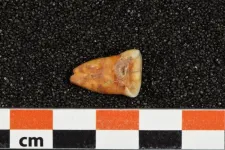
Conducted by an international team of scientists from the Max Planck Institute for Evolutionary Anthropology (Leipzig, Germany), Géoscience et Environnement Toulouse (Toulouse, France), and the Institut National des Sciences de l’Archéologie et du Patrimoine (Rabat, Morocco), the study examines the diet of individuals associated with the Iberomaurusian culture discovered in the cave of Taforalt, Morocco. Using a comprehensive multi-isotopic approach, including zinc and strontium isotope analysis in dental enamel, carbon, nitrogen, ...

Read the release
Science

The aspirin conundrum: navigating negative results, age, aging dynamics and equity

WASHINGTON – A new study examining the role of aspirin in breast cancer treatment reveals critical issues related to health equity and aging that have broad implications for cancer and other disease intervention trials, say researchers from Georgetown University’s Lombardi Comprehensive Cancer Center. They outline their concerns in an editorial accompanying the study’s findings published April 29 in the JAMA (“The Aspirin Conundrum: Navigating Negative Results, Age, Aging Dynamics and Equity”). The ...

Read the release
Scientists develop new organoid model to study thymus function
Science

Scientists develop new organoid model to study thymus function

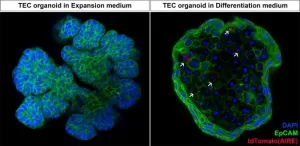
Researchers from the Organoid group have developed a new organoid model that can be used to study the thymus. The organoids, derived from mouse thymus tissue, specifically model thymic epithelial cells (TECs). These cells are responsible for training the T cells of the immune system to properly respond to pathogens. It is the first laboratory model that enables long-term culture of TECs, which presents new opportunities to study their function. Ultimately, this could also bring new insights into the treatment ...

Read the release
A revised classification of primary iron overload syndromes
Science

A revised classification of primary iron overload syndromes

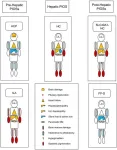
Background and Aims The clinical introduction of hepcidin25 (Hep25) has led to a more detailed understanding of its relationship with ferroportin (FP) and divalent metal transporter1 in primary iron overload syndromes (PIOSs). In 2012, we proposed a classification of PIOSs based on the Hep25/FP system, which consists of prehepatic aceruloplasminemia, hepatic hemochromatosis (HC), and posthepatic FP disease (FP-D). However, in consideration of accumulated evidence on PIOSs, we aimed to renew the classification. Methods We ...

Read the release
The therapeutic effects of baicalein on the hepatopulmonary syndrome in the rat model of chronic common bile duct ligation
Science

The therapeutic effects of baicalein on the hepatopulmonary syndrome in the rat model of chronic common bile duct ligation

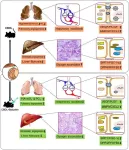
Background and Aims Hepatopulmonary syndrome (HPS) is characterized by arterial oxygenation defects due to pulmonary vascular dilation in liver disease. To date, liver transplantation remains the only effective treatment for HPS. This study aimed to explore the preventative role of baicalein in HPS development. Methods Sixty male rats were randomly assigned to three groups: sham, common bile duct ligation (CBDL), and baicalein, receiving intraperitoneal injections of baicalein (40 mg·kg−1·d−1, diluted in saline) for 21 days. Survival rate, liver and kidney function, and bile acid metabolism levels were evaluated. Liver and lung angiogenesis ...

Read the release
Science

Development and characterization of honey-containing nanoemulsion for topical delivery

Background and objectives Honey is a viscous, hygroscopic liquid in nature. It has the ability to treat wounds, wrinkles, aging, and inflammation. This study’s objective was to create and characterize a nanoemulsion containing honey and evaluate its stability. Methods A pseudo-ternary phase diagram was retraced with several concentrations of the Smix, water, and liquid paraffin oil to formulate nanoemulsions containing honey. From the results of pre-formulation stability studies, formulation HNE-19, with a hydrophilic lipophilic balance ...

Read the release
T. rex not as smart as previously claimed, scientists find
Science

T. rex not as smart as previously claimed, scientists find

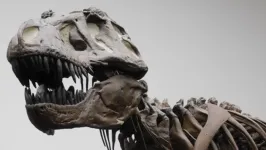
Dinosaurs were as smart as reptiles but not as intelligent as monkeys, as former research suggests. An international team of palaeontologists, behavioural scientists and neurologists have re-examined brain size and structure in dinosaurs and concluded they behaved more like crocodiles and lizards. In a study published last year, it was claimed that dinosaurs like T. rex had an exceptionally high number of neurons and were substantially more intelligent than assumed. It was claimed that these high neuron counts could directly inform on ...

Read the release
Breakthrough in brown fat research: Researchers from Denmark and Germany have found brown fat’s “off-switch”
Science

Breakthrough in brown fat research: Researchers from Denmark and Germany have found brown fat’s “off-switch”

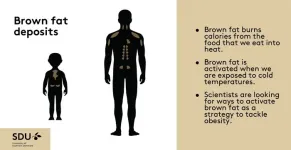
Brown fat, also known as brown adipose tissue (BAT), is a type of fat in our bodies that's different from the white fat around our belly and thighs that we are more familiar with. Brown fat has a special job—it helps to burn calories from the foods that we eat into heat, which can be helpful, especially when we're exposed to cold temperatures like during winter swimming or cryotherapy. For a long time, scientists thought that only small animals like mice and newborns had brown fat. But new research shows that a certain number of adults maintain their brown fat throughout life. Because brown fat is so good at burning calories, scientists ...

Read the release
Science

Losing keys and everyday items ‘not always sign of poor memory’

The mysteries of how memory works are explained in a new book that suggests anyone can boost their powers of recall – and that losing your keys is normal. Dr Megan Sumeracki and Dr Althea Need Kaminske say storing and retrieving information is far more complex than people think. Extremes of memory such as photographic or savant are also very rare despite their regular portrayal in films. Their new book The Psychology of Memory outlines simple recollection-boosting techniques to improve learning – or to help remember names and numbers. Forgetting is normal The authors highlight how a degree ...

Read the release
Science

People with opioid use disorder less likely to receive palliative care at end of life

Compared with people without opioid use disorder, those with opioid use disorder were less likely to receive palliative care in clinics and in their homes, and were dying at younger ages of causes other than opioid use, according to new research published in CMAJ (Canadian Medical Association Journal) https://www.cmaj.ca/lookup/doi/10.1503/cmaj.231419. “The majority of conversations about the opioid crisis focus on the high number of opioid toxicity deaths. The unfortunate reality is that people with opioid use disorder ...

Read the release
Science

Global measles cases almost double in a year

Provisional global total of 321,582 cases for 2023 is almost double (88% higher) than 2022 figure of 171,153 **ECCMID has now changed name to ESCMID Global, please credit ESCMID Global Congress in all future stories** Measles outbreaks are still occurring and in some cases increasing, among a wide variety of countries, raising concerns of an acceleration similar to just before the COVID pandemic. Dr Patrick O’Connor, of WHO Headquarters, Geneva, Switzerland will give an overview of the global measles situation at this year’s ...

Read the release
Science

Making transfusion-transmitted malaria in Europe a thing of the past

Individuals requiring blood transfusion are a vulnerable population, often with debilitating conditions like cancer, and transfusion-transmitted malaria is often fatal. Current serological tests used to identify “at risk” donors are not sensitive enough to completely eliminate malaria transfusion risk. The current challenges are to optimise the testing strategy to minimise the loss of blood products (especially those rare blood phenotypes) and to enhance screening sensitivity for infectious immuno-tolerant donors who are difficult to identify. **ECCMID has now changed its name to ESCMID Global, please credit ...

Read the release
Ancient Maya blessed their ballcourts
Science

Ancient Maya blessed their ballcourts

For sports fans, places like Fenway Park, Wembley Stadium or Wimbledon's Centre Court are practically hallowed ground. Archaeologists at the University of Cincinnati found evidence of similar reverence at ballcourts built by the ancient Maya in Mexico. Using environmental DNA analysis, researchers were able to identify a collection of plants used in ceremonial rituals in the ancient Maya city of Yaxnohcah. The plants, known for their religious associations and medicinal properties, were discovered beneath a plaza floor upon which a ballcourt was built. Researchers said the ancient Maya likely made a ceremonial offering ...

Read the release
Curran named Fellow of SAE, ASME
Science

Curran named Fellow of SAE, ASME

Scott Curran, group leader for Fuel Science and Engine Technologies Research at the Department of Energy’s Oak Ridge National Laboratory, has been named a Fellow of SAE International and the American Society of Mechanical Engineers, or ASME. Curran is one of only 24 fellows selected from the more than 128,000 SAE members and one of only 3,336 fellows selected out of the 69,247 ASME members. SAE recognized Curran for his distinguished contributions to transportation science, including advancing real-world advanced combustion strategies, alternative fuels utilization, and next-generation vehicle technologies for a more sustainable mobility future. ...

Read the release
Science

Gene linked to epilepsy, autism decoded in new study

SCN2A related-disorders, although rare in the general population, are one of the more common single-gene neurodevelopmental conditions characterized by infantile seizures, autism spectrum disorder and intellectual disabilities Severity of these disorders varies widely from person to person Findings should help better identify patients who are most appropriate for clinical trials of new precision medicines and gene therapies CHICAGO --- A genetic change or variant in a gene called SCN2A is a known cause of infantile seizures, autism spectrum disorder and intellectual disability, as well as a wide range of other moderate-to-profound impairments in mobility, ...

Read the release
Location, location, location
Science

Location, location, location

Riverside, Calif. -- In unincorporated communities in the United States-Mexico borderlands, historically and socially marginalized populations become invisible to the healthcare system, showing that geography acts as a structural determinant of health for low-income populations. So concludes a study by a University of California, Riverside, team that focused its attention on the borderland in Southern California, specifically, eastern Coachella Valley. From September to December 2020, the team, led by Ann Cheney, an associate professor of social medicine, population, and public health in the School of Medicine, conducted interviews in collaboration with ...

Read the release
Getting dynamic information from static snapshots
Science

Getting dynamic information from static snapshots

Imagine predicting the exact finishing order of the Kentucky Derby from a still photograph taken 10 seconds into the race. That challenge pales in comparison to what researchers face when using single-cell RNA-sequencing (scRNA-seq) to study how embryos develop, cells differentiate, cancers form, and the immune system reacts. In a paper published today in Proceedings of the National Academy of Sciences, researchers from the UChicago Pritzker School of Molecular Engineering and the Chemistry ...

Read the release
Food insecurity is significant among inhabitants of the region affected by the Belo Monte dam in Brazil
Science

Food insecurity is significant among inhabitants of the region affected by the Belo Monte dam in Brazil

The social and environmental impact of the Belo Monte dam and hydroelectric power plant in Pará state, Brazil, has been called a “disaster” by researchers, environmentalists and several media outlets. The damage has again been highlighted recently in an inspection report issued by the Brazilian Institute for the Environment and Renewable Natural Resources (IBAMA), an agency of the Ministry for the Environment and Climate Change. The inspectors detected silting and erosion of the Xingu River, obstacles to river navigation, a significant ...

Read the release
Science

Florida dolphin found with highly pathogenic avian flu: Report

The case of a Florida bottlenose dolphin found with highly pathogenic avian influenza virus, or HPAIV — a discovery made by University of Florida researchers in collaboration with multiple other agencies and one of the first reports of a constantly growing list of mammals affected by this virus — has been published in Communications Biology. The report documents the discovery, the first finding of HPAIV in a cetacean in North America, from the initial response by UF’s Marine Animal Rescue team to a report of a distressed dolphin in Dixie County, Florida, to the subsequent identification of the virus from brain and tissue samples obtained in a postmortem ...

Read the release
DOE Under Secretary for Science and Innovation visits Jefferson Lab
Science

DOE Under Secretary for Science and Innovation visits Jefferson Lab

NEWPORT NEWS, VA – On April 18, the U.S. Department of Energy’s Thomas Jefferson National Accelerator Facility welcomed Under Secretary for Science and Innovation Geraldine (Geri) Richmond for a tour of the lab and briefing on its research mission, innovation and STEM programs. Throughout the day, much of the conversation centered on a common theme of how the lab is working to ensure it is a hub of engagement, partnership, and access for researchers, students, community leaders and others. Ensuring diverse communities have access to the programs, ...

Read the release
Science

Imaging technique shows new details of peptide structures

By Leah Shaffer A new imaging technique developed by engineers at Washington University in St. Louis can give scientists a much closer look at fibril assemblies, stacks of peptides like amyloid beta, most notably associated with Alzheimer’s disease. These cross-β fibril assemblies are also useful building blocks within designer biomaterials for medical applications, but their resemblance to their amyloid beta cousins, whose tangles are a symptom of neurodegenerative disease, is concerning. Researchers want ...

Read the release
Test reveals mice think like babies
Science

Test reveals mice think like babies

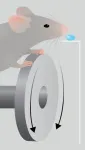
Are mice clever enough to be strategic? Kishore Kuchibhotla, a Johns Hopkins University neuroscientist who studies learning in humans and animals, and who has long worked with mice, wondered why rodents often performed poorly in tests when they knew how to perform well. With a simple experiment, and by acting as “a little bit of a mouse psychologist,” he and his team figured it out. “It appears that a big part of this gap between knowledge and performance is that the animal is engaging in a form of ...

Read the release
Researchers propose groundbreaking framework for future network systems
Science

Researchers propose groundbreaking framework for future network systems

In a new study published in Engineering, Academician Wu Jiangxing’s research team unveils a theoretical framework that could revolutionize the landscape of network systems and architectures. The paper titled “Theoretical Framework for a Polymorphic Network Environment,” addresses a fundamental challenge in network design—achieving global scalability while accommodating the diverse needs of evolving services. For decades, the quest for an ideal network capable of seamlessly scaling across various dimensions has remained elusive. The team, however, has identified a critical barrier known as the “impossible service-level ...

Read the release
Science

Climb stairs to live longer

Athens, Greece – 26 April 2024: Climbing stairs is associated with a longer life, according to research presented today at ESC Preventive Cardiology 2024, a scientific congress of the European Society of Cardiology (ESC).1 “If you have the choice of taking the stairs or the lift, go for the stairs as it will help your heart,” said study author Dr. Sophie Paddock of the University of East Anglia and Norfolk and Norwich University Hospital Foundation Trust, Norwich, UK. “Even brief bursts of physical activity have beneficial health impacts, and short bouts of stair climbing should be an achievable target to integrate into ...

Read the release
From the original Press-News collection. Issuers of news releases are responsible for the accuracy of their content.