THE ORIGINAL COLLECTION · SINCE 2010

Science
press releases.

Research announcements from universities, hospitals and scientific institutions. Explore the stories, people and discoveries behind the headlines.

Original publication datesPage 343
FIND A STORY

Find a past release.

Dates and source material belong to the original release.

Read our research explainers

Browse the collection · original publication order

Science

Organic fields increase pesticide use in nearby conventional fields, but reduce it in organic neighbors

Expanding organic cropland can lead to increased pesticide use in surrounding conventional fields while reducing pesticide use on nearby organic fields, according to a study based in a leading U.S. crop-producing region. The findings provide insight into overlooked environmental impacts of organic agriculture and suggest that clustering organic fields could reduce pesticide use at the landscape scale. Organic agricultural practices are designed to have less negative local environmental impacts than other forms of intensive agriculture. However, the ...

Read the release
How butterflies choose mates: gene controls preferences
Science

How butterflies choose mates: gene controls preferences

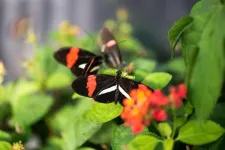
Tropical Heliconius butterflies are well known for the bright colour patterns on their wings. These striking colour patterns not only scare off predators – the butterflies are poisonous and are distasteful to birds – but are also important signals during mate selection. A team led by evolutionary biologist Richard Merrill from LMU Munich, in cooperation with researchers from the Universidad del Rosario in Bogotá (Colombia) and the Smithsonian Tropical Research Institute (Panama), has now exploited the diversity of warning patterns of various Heliconius species to investigate the genetic foundations of these preferences. ...

Read the release
Mysterious exporter for brassinosteroid first identified
Science

Mysterious exporter for brassinosteroid first identified

When you are reading this article, there are multiple hormones working diligently inside your body to stabilize your health status. Same as human beings, it is impossible for plants to grow and reproduce without being regulated by phytohormones. One of the phytohormones is the Brassinosteroid (BR) hormones, also named as the sixth phytohormone. According to a study published in Science on March 22, 2024, researchers led by Prof. SUN Linfeng from the Division of Life Sciences and Medicine of the University of Science and Technology ...

Read the release
World’s first N-channel diamond field-effect transistor
Science

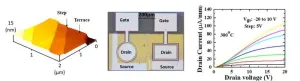
World’s first N-channel diamond field-effect transistor

1. A NIMS research team has developed the world’s first n-channel diamond MOSFET (metal-oxide-semiconductor field-effect transistor). The developed n-channel diamond MOSFET provides a key step toward CMOS (complementary metal-oxide-semiconductor: one of the most popular technologies in the computer chip) integrated circuits for harsh-environment- applications as well as the development of diamond power electronics. 2. Semiconductor diamond has outstanding physical properties such as ultra wide-bandgap energy of 5.5 eV, high carriers mobilities, ...

Read the release
Science

Natural molecule found in coffee and human body increases NAD+ levels, improves muscle function during ageing

A research consortium led by Nestlé Research in Switzerland and the Yong Loo Lin School of Medicine, National University of Singapore (NUS Medicine) made a recent discovery that the natural molecule trigonelline present in coffee, fenugreek, and also in the human body, can help to improve muscle health and function. In an international collaboration among the University of Southampton, University of Melbourne, University of Tehran, University of South Alabama, University of Toyama and University of Copenhagen, the work builds on a previous collaborative ...

Read the release
Researchers name prehistoric amphibian ancestor discovered in Smithsonian collection after Kermit the Frog
Science

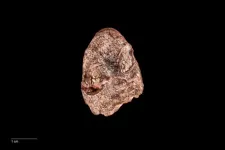
Researchers name prehistoric amphibian ancestor discovered in Smithsonian collection after Kermit the Frog

Scientists have uncovered the fossilized skull of a 270-million-year-old ancient amphibian ancestor in the collection of the Smithsonian’s National Museum of Natural History. In a paper published today, March 21, in the Zoological Journal of the Linnean Society, the team of researchers described the fossil as a new species of proto-amphibian, which they named Kermitops gratus in honor of the iconic Muppet, Kermit the Frog. According to Calvin So, a doctoral student at the George Washington University and the lead author on the new paper, naming the new creature after the beloved frog character, who was created ...

Read the release
Science

Entanglements of humpback whales in fish farms rare – and naivety could be to blame

The first study of humpback whale entanglements in B.C. aquaculture facilities in PLOS One found eight over 13 years, with the curiosity of young whales a potential contributing factor. A rare occurrence Entanglements are one of several threats to humpbacks. The eight occurred from 2008 to 2021 at seven fish farms, with five animals successfully released and three deaths. The entanglements accounted for less than six per cent of all entanglements in B.C. Approximately 7,000 animals return to B.C. waters annually. Most whales became entangled between the predator and containment nets on fish farms. In five cases, experienced ...

Read the release
Opto-RANK: A light switch for osteoclasts
Science

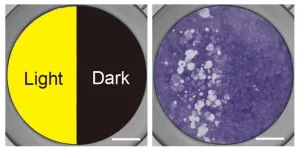
Opto-RANK: A light switch for osteoclasts

Tokyo, Japan – Drinking milk helps your bones grow big and strong; but what if direct exposure to light could help too? Now, researchers from Japan report that lighting up bone tissue could help treat bone disease. In a study published last month in Scientific Reports, researchers from Tokyo Medical and Dental University (TMDU) have revealed that a treatment approach based on light could help activate bones to repair themselves. Bones are constantly being remodeled through the action of osteoclasts, which break down bone tissue, and osteoblasts, which create new bone tissue. ...

Read the release
In-situ observation of nanoscale heat propagation
Science

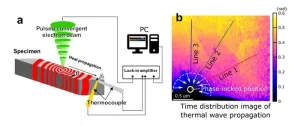
In-situ observation of nanoscale heat propagation

1. A NIMS research team has developed a technique that enables the nanoscale observation of heat propagation paths and behavior within material specimens. This was achieved using a scanning transmission electron microscope (STEM) capable of emitting a pulsed electron beam and a nanosized thermocouple—a high-precision temperature measurement device developed by NIMS. 2. Public interest in energy conservation and recycling has grown considerably in recent years. This change has inspired scientists to develop next-generation materials/devices capable of controlling and utilizing heat with a high degree of precision, including thermoelectric devices able to ...

Read the release
Recent advances and perspectives of covalent organic frameworks for alkali-ion batteries
Science

Recent advances and perspectives of covalent organic frameworks for alkali-ion batteries

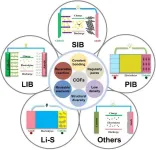
They published their work on Mar. 15th in Energy Material Advances. "It is highly necessary to design highly conductive and high-performance materials for application in alkaline ion batteries," said paper author Xijun Xu, associate Professor at the College of Chemical Engineering and Light Industry, Guangdong University of Technology. "In recent years, with the development of large-scale power systems such as electric vehicles, the demand for secondary batteries has gradually shifted towards high power and low cost. Furthermore, in light of the increasing energy and environmental concerns, the exploration of green and renewable ...

Read the release
Research team identifies genetic contribution to the composition of the microbiome around maize roots
Science

Research team identifies genetic contribution to the composition of the microbiome around maize roots

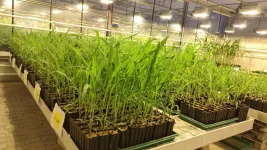
In order for plants to grow, they absorb water and nutrients through their roots. In doing so, they rely on tiny helpers: bacteria and fungi in particular are found in a thin layer around the roots. These microbes also ward off organisms that are harmful to the plant, just as the "microbiome" in the human gut helps determine whether we fall ill or stay healthy. An international research team led by the University of Bonn and with the participation of the IPK Leibniz Institute has now demonstrated on maize plants that the genetic make-up of the host plant has a significant influence on the composition of the root microbes. "It was shown ...

Read the release
Science

The irony of smoking to stay thin: smoking increases belly fat

The worry of gaining weight is a common excuse for smokers not to quit. A new study published today in the scientific journal Addiction has found that both starting smoking and lifetime smoking may increase abdominal fat, especially visceral fat: the unhealthy fat deep inside the abdomen that is linked to a higher risk of heart disease, diabetes, stroke, and dementia. Smokers tend to have lower body weights than non-smokers, but they also have more abdominal fat, and more abdominal visceral fat. Visceral fat is hard to see; you can have ...

Read the release
Science

Healing eyes with contact lenses

A cross-disciplinary University of Waterloo team has developed a new contact lens material that could act as a bandage for corneal wounds while releasing drugs in a controlled manner to help the eye heal faster. Typically, corneal abrasion patients spend seven to 10 days wearing a clear, oxygen-permeable bandage contact lens, often instilled with eyedrops containing antibiotics. However, the one-time antibiotic application makes it difficult to ensure enough drugs stay on the eye for sustained treatment. “It’s a targeted-release drug delivery ...

Read the release
Excess temperatures cause low flocking concerns
Science

Excess temperatures cause low flocking concerns

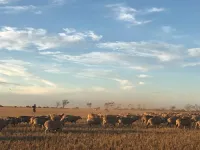
High temperatures during critical periods of the reproductive cycle of sheep result in 2.1 million fewer lambs produced in Australia each year, costing sheep farmers an estimated $97 million annually. The work, funded by Meat and Livestock Australia and conducted by a transdisciplinary team of researchers from the University of Adelaide and South Australian Research Development Institute (SARDI), found that days above 32°C during the week of mating caused the significant loss of potential lambs. Published in Nature Food, the study found annual losses of potential lambs would increase to 2.5 million if median global warming increased ...

Read the release
The maize ZmCPK39-ZmKnox2 module regulates plant height
Science

The maize ZmCPK39-ZmKnox2 module regulates plant height

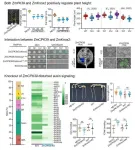
This study was led by Professor Mingliang Xu (College of Agronomy and Biotechnology, China Agricultural University, Beijing, China). Through phylogenic analysis, the authors identified a gene encoding a calcium-dependent protein kinase, ZmCPK39, as a candidate gene for plant height regulation in maize. The function of ZmCPK39 in controlling plant height has been verified using gene editing technology. Compared to the wild-type ND101, knockout of ZmCPK39 significantly reduced plant height by 40%. The authors further ...

Read the release
Science

How neural inhibition could reduce alcohol use

LA JOLLA, CA—Neuroscientists at Scripps Research have found that inhibiting neurons involved in the body’s stress response may reduce alcohol consumption in people who have both post-traumatic stress disorder (PTSD) and alcohol use disorder (AUD)—even if they still experience trauma-related anxiety. The findings were published March 21 in Molecular Psychiatry. These discoveries are helping untangle the complex role that stress and trauma play in neurological disorders like PTSD and AUD, while also informing the development of new treatment options for people who experience both these conditions simultaneously. “Traumatic ...

Read the release
Science

The Lancet: Dramatic declines in global fertility rates set to transform global population patterns by 2100

Embargoed access to the paper and contact details for authors are available in Notes to Editors at the end of the release. By 2050, over three-quarters (155 of 204) of countries will not have high enough fertility rates to sustain population size over time; this will increase to 97% of countries (198 of 204) by 2100. Pronounced shifts in patterns of livebirths are also predicted, with the share of the world’s live births nearly doubling in low-income regions from 18% in 2021 to 35% in 2100; and sub-Saharan Africa accounting for one in every two children born on the planet by 2100. In low-income settings with higher fertility rates, better access to contraceptives and female education ...

Read the release
Science

NHS needs 32 billion cash injection to recover shortfall and help tackle current crisis

The NHS needs an immediate cash injection of around £8.5bn a year over the next four years to make up a £32bn shortfall in funding and help tackle the current crisis, especially in areas such as waiting times, access to primary care, workforce and capital investment, say experts in the second report of The BMJ Commission on the Future of the NHS. John Appleby and colleagues argue that, while the government’s recent spring budget funding pledges are a start, they “certainly will not make up the significant shortfall that the NHS ...

Read the release
New study highlights troubling trends in midlife mortality in the US and UK
Science

New study highlights troubling trends in midlife mortality in the US and UK

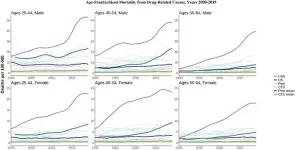
A new study by researchers at the Leverhulme Centre for Demographic Science (LCDS) and Princeton University reveals that US working-age adults are dying at higher rates than their peers in high-income countries; the UK is also falling behind. The study is published today in the International Journal of Epidemiology. Using annual mortality data from the World Health Organization Mortality Database, the study compared trends in midlife mortality for adults aged 25-64 years between 1990 and 2019 across 15 major causes of death in 18 high-income countries, ...

Read the release
Science

Nudging the public’s thirst for draught alcohol-free beers could significantly reduce alcohol-associated harms, new study finds

Making alcohol-free beer more widely available on draught in pubs and bars may help people switch from alcoholic to alcohol-free beer, a new study published in Addiction today [21 March], has found. Pubs and bars taking part in the University of Bristol-led trial saw an increase in sales of healthier non-alcoholic draught beer. In partnership with Bristol City Council (BCC), researchers from the University’s Tobacco and Alcohol Research Group (TARG) recruited 14 pubs and bars across the city that were willing to change the drinks that they offered on draught for a limited period. Previous research by the same group, using an online experiment as a proxy for real-world behaviour, ...

Read the release
Millions are at risk using high arsenic water for cooking
Science

Millions are at risk using high arsenic water for cooking

Around 32 per cent of the world's population live in countries that do not adhere to the World Health Organisation’s recommendations on safe limits of arsenic in drinking water Rice is already known to contain more inorganic arsenic than other cereals Cooking rice with water containing more than 10 µg L-1 (parts per billion) inorganic arsenic amplifies the risk of arsenic exposure Long-term exposure to inorganic arsenic in water can cause serious health problems such as cancers, diabetes and pulmonary and cardiovascular diseases Rice is one of the major cereal crops ...

Read the release
TLI investigator Dr. Nicholas Jenzjowsky receives NIH/NIAID grant to investigate the neural regulation of asthma
Science

TLI investigator Dr. Nicholas Jenzjowsky receives NIH/NIAID grant to investigate the neural regulation of asthma

In a significant stride for respiratory medicine, Lundquist Institute (TLI) investigator Nicholas Jendzjowsky, PhD, has been awarded a prestigious grant from the National Institute of Health/National Institute of Allergy and Infectious Diseases (NIH/NIAID). This grant, totaling $298,800, not only underscores TLI's commitment to pioneering research and excellence in respiratory medicine and exercise physiology but also recognizes Dr. Jendzjowsky's expertise and the importance of his research. The ...

Read the release
Science

Doctors’ pay in England has declined by 25% since 2008

Doctors’ pay in England has declined by 25% since 2008 Independent analysis shows doctors’ salary erosion far outstrips other UK workers Doctors describe how they struggle to afford everyday essentials Trainee eye surgeon quit after worry over gas bill As doctors in England enter their 13th month of industrial action, an independent analysis of their pay confirms that the real terms value of their salaries has declined by a quarter in the 15 years since their pay was frozen. The analysis – conducted for The BMJ by the Office of Health Economics (OHE), an independent health economics research organisation – found that across ...

Read the release
NIH grant funds research on work-related asthma among nurses
Science

NIH grant funds research on work-related asthma among nurses

A researcher at the University of Arizona Mel and Enid Zuckerman College of Public Health received a $750,000 National Institutes of Health grant to study the asthma risks associated with the use of cleaning and disinfecting products among nurses. Cleaning processes in health care facilities involve an inherent “risk-risk tradeoff.” Increased use of cleaning and disinfection products leads to increased work-related asthma risks and simultaneously a decrease in occupational-infection risks. Preliminary survey data indicate that nurses are generally willing to increase infection risks to maintain lower asthma risks if they think they will recover. “Translating ...

Read the release
Science

Research suggests how turbulence can be used to generate patterns

The turbulent motion of a tumbling river or the outflow from a jet engine is chaotic: that is, it contains no obvious pattern. But according to a new study, regular patterns can emerge from the turbulent motion of fluids. What you need is an intriguing property called “odd viscosity” that arises under certain conditions, such as when the particles in the fluid all spin in the same direction. Though it’s a specialized circumstance, there are many contexts in nature where a version of this effect may exist, such as in the ...

Read the release
From the original Press-News collection. Issuers of news releases are responsible for the accuracy of their content.