THE ORIGINAL COLLECTION · SINCE 2010

Science
press releases.

Research announcements from universities, hospitals and scientific institutions. Explore the stories, people and discoveries behind the headlines.

Original publication datesPage 362
FIND A STORY

Find a past release.

Dates and source material belong to the original release.

Read our research explainers

Browse the collection · original publication order

Pollinator's death trap turns into nursery
Science

Pollinator's death trap turns into nursery

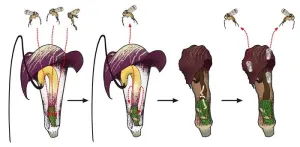
In a group of plants that is famous for luring its pollinators into a death trap, one species offers its flowers as a nursery in exchange. The Kobe University discovery blurs the line between mutualism and parasitism and sheds light on the evolution of complex plant-insect interactions. Many plants rely on animals for pollination and most offer rewards for the service. Some plants, however, deceive their pollinators, and a famous example is the genus Arisaema. “It is famous as the only plant that achieves pollination at the expense of the pollinator's life,” says Kobe University biologist SUETSUGU Kenji, who is an expert on plant pollination ecology. The plant uses ...

Read the release
Why two prehistoric sharks found in Ohio got new names
Science

Why two prehistoric sharks found in Ohio got new names

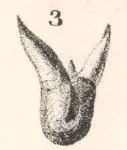
COLUMBUS, Ohio – Until recently, Orthacanthus gracilis could have been considered the “John Smith” of prehistoric shark names, given how common it was. Three different species of sharks from the late Paleozoic Era – about 310 million years ago – were mistakenly given that same name, causing lots of grief to paleontologists who studied and wrote about the sharks through the years and had trouble keeping them apart. But now Loren Babcock, a professor of earth sciences at The Ohio State University, has finished the arduous task of renaming two of the three sharks – and in the process rediscovered a wealth ...

Read the release
Poorly coiled frog guts help scientists unravel prevalent human birth anomaly
Science

Poorly coiled frog guts help scientists unravel prevalent human birth anomaly

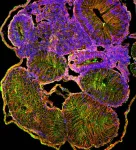
How does our intestine, which can be at least 15 feet long, fit properly inside our bodies? As our digestive system grows, the gut tube goes through a series of dramatic looping and rotation to package the lengthening intestine. Failure of the gut to rotate properly during development results in a prevalent, but poorly understood, birth anomaly called intestinal malrotation. Now, in a study published in the journal Development, scientists from North Carolina State University have uncovered a potential cause of this life-threatening condition. Intestinal malrotation affects 1 in 500 births but the underlying causes are not well understood. ...

Read the release
This tiny, tamper-proof ID tag can authenticate almost anything
Science

This tiny, tamper-proof ID tag can authenticate almost anything

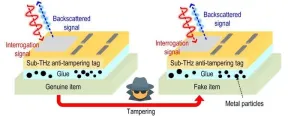
A few years ago, MIT researchers invented a cryptographic ID tag that is several times smaller and significantly cheaper than the traditional radio frequency tags (RFIDs) that are often affixed to products to verify their authenticity. This tiny tag, which offers improved security over RFIDs, utilizes terahertz waves, which are smaller and travel much faster than radio waves. But this terahertz tag shared a major security vulnerability with traditional RFIDs: A counterfeiter could peel the tag off a genuine item and reattach it to a fake, and the authentication system would be none the wiser. The researchers have now surmounted ...

Read the release
Science

Imageomics poised to enable new understanding of life

Embargoed until 1:30 p.m. ET, Saturday Feb. 17, 2024 DENVER – Imageomics, a new field of science, has made stunning progress in the past year and is on the verge of major discoveries about life on Earth, according to one of the founders of the discipline. Tanya Berger-Wolf, faculty director of the Translational Data Analytics Institute at The Ohio State University, outlined the state of imageomics in a presentation on Feb. 17, 2024, at the annual meeting of the American Association for the Advancement of Science. “Imageomics ...

Read the release
Scientists try out stone age tools to understand how they were used
Science

Scientists try out stone age tools to understand how they were used

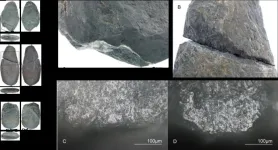
Tokyo, Japan – Researchers from Tokyo Metropolitan University crafted replica stone age tools and used them for a range of tasks to see how different activities create traces on the edge. They found that a combination of macroscopic and microscopic traces can tell us how stone edges were used. Their criteria help separate tools used for wood-felling from other activities. Dated stone edges may be used to identify when timber use began for early humans. For prehistoric humans, improvements in woodworking technology were revolutionary. While Paleolithic (early stone age) artifacts point to the use of wood for simple tools such as spears ...

Read the release
Science

Hope Foundation announces Goodman for Inaugural Meyskens Lecture

The Hope Foundation for Cancer Research, the public charity supporting SWOG Cancer Research Network, has recently established the Frank and Linda Meyskens Annual Endowed Lectureship on Advances in Cancer Prevention. Since the early 1980’s, Dr. Meyskens has been a leader in the recognition, development, and clinical usage of Prevention in the management of cancer. Frank and Linda have directed the development of this lectureship to advance the explosion of knowledge that is expanding opportunities to engage Prevention in personalized medicine, including early detection and genetically ...

Read the release
Science

NIH trial data underpins FDA approval of omalizumab for food allergy

Today’s Food and Drug Administration approval of a supplemental biologics license for the monoclonal antibody omalizumab (Xolair) highlights the vital role of the National Institutes of Health-supported research that underpins the FDA decision. FDA has approved omalizumab for the reduction of allergic reactions, including anaphylaxis, that may occur with an accidental exposure to one or more foods in adults and children aged 1 year and older with food allergy. People taking omalizumab still need to avoid exposure to foods to which they are allergic. Omalizumab previously received FDA approval ...

Read the release
Science

New study analyzes link between digit ratio and oxygen consumption in footballers

The efficiency of oxygen supply to tissues is a factor in the severity of important diseases such as Covid-19 and heart conditions. Scientists already know that the relationship between the length of a person’s index and ring fingers, known as the 2D:4D ratio is correlated with performance in distance running, age at heart attack and severity of Covid-19. Now Swansea University digit ratio expert Professor John Manning has been working with colleagues to look more closely at the subject. Their findings have just been published by the prestigious American Journal of Human ...

Read the release
Entrepreneurship on the periphery: between precarious work and the search for a meaningful life
Science

Entrepreneurship on the periphery: between precarious work and the search for a meaningful life

Understanding how the poor deal with the effects of the economic crisis into which Brazil plunged in 2014 was the aim of the research project “The crisis seen from the periphery: struggle for social mobility in the frontiers of (i)legality” conducted by Leonardo de Oliveira Fontes with FAPESP’s support (19/13125-2 and 21/13970-4). An article published in the International Journal of Urban and Regional Research is one of the results of the investigation. Fontes is currently a professor in the Department of Sociology ...

Read the release
Towards more efficient catalysts
Science

Towards more efficient catalysts

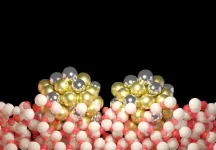
Researchers from the Harvard John A. Paulson School of Engineering and Applied Sciences (SEAS), Harvard Department of Chemistry & Chemical Biology, and Utrecht University have reported on a previously elusive way to improve the selectivity of catalytic reactions, adding a new method of increasing the efficacy of catalysts for a potentially wide range of applications in various industries including pharmaceuticals, cosmetics and much more. The research is published in ...

Read the release
Science

The ties that bind

Trace metals are nutrient elements, like zinc, that animals and plants need in small amounts to function properly. Animals generally get trace metals in their diets or through environmental exposures, while plants take their trace minerals up from soil. If we get too little, we may experience a deficiency, but the opposite can also be true: too much of a trace metal can be toxic. Scientists believe that up to 50% of the trace metals in soils and urban environments may be bound to the surfaces of mineral grains — rendering the trace metals ...

Read the release
Car fumes, weeds pose double whammy for fire-loving native plants
Science

Car fumes, weeds pose double whammy for fire-loving native plants

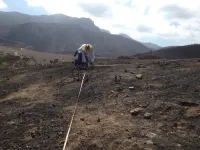
Springtime brings native wildflowers to bloom in the Santa Monica Mountains, northwest of Los Angeles. These beauties provide food for insects, maintain healthy soil and filter water seeping into the ground — in addition to offering breathtaking displays of color. They’re also good at surviving after wildfire, having adapted to it through millennia. But new research shows wildflowers that usually would burst back after a blaze and a good rain are losing out to the long-standing, double threat of city smog and nonnative weeds. A recent study led by Justin Valliere, assistant professor in the UC ...

Read the release
How Chinese migrants in Los Angeles Chinatown gained self-reliance
Science

How Chinese migrants in Los Angeles Chinatown gained self-reliance

In the late 1800s and early 1900s, anti-Chinese sentiment in the United States was high, as working-class laborers in the country viewed Chinese workers as a threat. Prior research has found that during that period, approximately 400,000 Chinese migrants came to the U.S., many of whom went to California to build the Transcontinental Railroad. Following the project's completion, competition for jobs grew tougher, and passage of the Chinese Exclusion Act in 1882 banned Chinese laborers from immigrating to the U.S. But ...

Read the release
Science

ASHG names Amanda Perl as Chief Executive Officer

For Immediate Release: Thursday, February 15, 2024, 3:00pm U.S. Eastern Time Media Contact: Kara Flynn, 202.257.8424, press@ashg.org ROCKVILLE, MD - The American Society of Human Genetics (ASHG) is excited to announce the selection of Amanda Perl as the organization’s next Chief Executive Officer. Perl has served in numerous association leadership positions with deep experience in strategic planning, membership, publishing, communications, and society operations, as well as meetings and conferences. “ASHG is delighted to welcome Amanda, a seasoned association executive, to the team,” said ASHG President Bruce D. Gelb, MD. “We are confident ...

Read the release
Science

Unearthed: Why zebra go first in body-size-dependent grazing succession in the Serengeti

Why do Serengeti zebra, wildebeest, and gazelle – all sharing limited food resources – follow the same migratory routes, one after another, in a body-size dependent way? This longstanding question has now been evaluated by researchers who used novel data to show how a balance of species interactions and ecological factors regulate this process. They say competition pushes zebra ahead of the wildebeest, and wildebeest then eat plants in a way that facilitates development of newer growth the trailing gazelle like. “Our results highlight a balance between facilitative and competitive forces,” the authors say. Large seasonal migrations are a ...

Read the release
MSU, Carnegie Science introduce a big new idea with the help of tiny plankton
Science

MSU, Carnegie Science introduce a big new idea with the help of tiny plankton

Researchers at Michigan State University and the Carnegie Institution for Science have developed a model that connects microscopic biology to macroscopic ecology, which could deepen our understanding of nature’s laws and create new opportunities in ecosystem management. Reporting in the journal Science on Feb. 16, the team showed how microscopic relationships in plankton — such as between an organism’s size and nutrient consumption — scales up to predictably affect food webs. “Using data that other researchers have measured at the microscale about these organisms, our model can predict what’s happening at the scale of whole ecosystems,” said Jonas ...

Read the release
Science

Keeping telomerase in check

The natural ends of chromosomes appear alarmingly like broken DNA, much as a snapped spaghetti strand is difficult to distinguish from its intact counterparts. Yet every cell in our bodies must have a way of differentiating between the two because the best way to protect the healthy end of a chromosome also happens to be the worst way to repair damaged DNA. Consider the enzyme telomerase, which is responsible for maintaining protective telomeres at the natural ends of chromosomes. Were telomerase to seal off a broken strand of DNA with a telomere, it would prevent further repair of that break and delete essential genes. Now, a new study in Science describes how cells avoid ...

Read the release
Science

Studies with more diverse teams of authors get more citations

Diverse research is more impactful in the business management field, with female influence growing stronger in the past decade, finds a new study from the University of Surrey. The study analysed all articles published in the last 10 years (January 2012 to December 2022) in the influential Journal of Management Studies. The empirical analysis examined three key aspects of teams’ diversity: Internationality (how international is mix of authors), Interdisciplinarity (how many different fields of study they come from), Gender ...

Read the release
Science

Scientific report reveals livestock as the key factor in cheatgrass spread

For Immediate Release Contact: Erik Molvar, Western Watersheds Project, 307-399-7910 Roger Rosentreter, Bureau of Land Management, Botanist (Retired), 208-991-8815 Don Mansfield, Emeritus Professor of Biology, College of Idaho, 208-871-8170 Scientific Report Reveals Livestock Grazing as the Key Factor in Cheatgrass Spread HAILEY, Ida. (February 15, 2024) – A scientific report released today illuminates the causes of cheatgrass spread and compares the effectiveness ...

Read the release
NRL discovers two-dimensional waveguides
Science

NRL discovers two-dimensional waveguides

WASHINGTON – The U.S. Naval Research Laboratory (NRL), in collaboration with Kansas State University, announce the discovery of slab waveguides based on the two-dimensional material hexagonal boron nitride. This milestone has been reported in the journal Advanced Materials. Two-dimensional (2D) materials are a class of materials which can be reduced to the monolayer limit by mechanically peeling the layers apart. The weak interlayer attractions, or van der Waals attraction, allows the layers to be separated via the so-called ...

Read the release
Shuffling the deck for privacy
Science

Shuffling the deck for privacy

By integrating an ensemble of privacy-preserving algorithms, a KAUST research team has developed a machine-learning approach that addresses a significant challenge in medical research: How to use the power of artificial intelligence (AI) to accelerate discovery from genomic data while protecting the privacy of individuals.[1] “Omics data usually contains a lot of private information, such as gene expression and cell composition, which could often be related to a person’s disease or health status,” says KAUST’s Xin Gao. “AI models trained on this data – particularly deep learning models – have the potential to retain private ...

Read the release
Root microbes may be the secret to a better tasting cup of tea
Science

Root microbes may be the secret to a better tasting cup of tea

You’d think the complex flavor in a quality cup of tea would depend mainly on the tea varieties used to make it. But a study appearing in the journal Current Biology on February 15 shows that the making of a delicious cup of tea depends on another key ingredient: the collection of microbes found on tea roots. By altering that assemblage, the authors showed that they could make good-quality tea even better. “Significant disparities in microbial communities, particularly nitrogen metabolism-related microorganisms, were identified in the roots of tea plants with varying qualities through ...

Read the release
Science

Winners of 4th annual Rising Black Scientists Awards announced

Cell Press, Cell Signaling Technology (CST), and the Elsevier Foundation are proud to announce the winners of the 4th annual Rising Black Scientists Awards: Jaye Wilson of Yale University, Kevin Brown Jr. of California State University San Marcos, Senegal Mabry of Cornell University, and Akorfa Dagadu of the Massachusetts Institute of Technology. This year had the greatest number of submissions thus far, with the winners being selected from a pool of more than 350 applicants from across the life, health, physical, earth, environmental, and data sciences. Essays from the winners and honorees appear in the journals Cell and ...

Read the release
Do sugar-free candy and gum give you gas? Researchers think they know why
Science

Do sugar-free candy and gum give you gas? Researchers think they know why

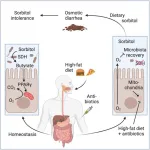
(SACRAMENTO, Calif.) — Researchers at UC Davis have identified changes in the gut microbiome that can result in an inability to digest sorbitol. Sorbitol, a sugar alcohol, is used in sugar-free gum, mints, candy and other products. It is also found naturally in apricots, apples, pears, avocadoes and other foods. At high levels, sorbitol can cause bloating, cramps and diarrhea. For some people, even a small amount causes digestive upset, a condition known as sorbitol intolerance. A new study with mice found that taking antibiotics, combined with a high-fat diet, reduced the number of Clostridia gut microbes, which can break down sorbitol. ...

Read the release
From the original Press-News collection. Issuers of news releases are responsible for the accuracy of their content.