THE ORIGINAL COLLECTION · SINCE 2010

Space
press releases.

Research announcements from universities, hospitals and scientific institutions. Explore the stories, people and discoveries behind the headlines.

Original publication datesPage 19
FIND A STORY

Find a past release.

Dates and source material belong to the original release.

Read our research explainers

Browse the collection · original publication order

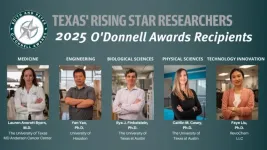
Top five rising star Texas researchers named in 2025 Edith and Peter O’Donnell Awards by TAMEST
Space

Top five rising star Texas researchers named in 2025 Edith and Peter O’Donnell Awards by TAMEST

Identifying novel therapeutic strategies and making fundamental discoveries related to small cell lung cancer. Creating environmental and sustainable solutions for lithium-ion battery technology. Improving the safety and efficacy of gene editing and understanding the mechanisms of DNA repair to potentially cure diseases. Discovering the most distant and massive galaxies that have reshaped our understanding of early Universe star formation and supermassive black holes. Pioneering geochemical fingerprinting technology to optimize energy production processes. These are the breakthroughs ...

Read the release
Space

A new discovery about the source of the vast energy in cosmic rays

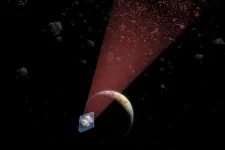
Ultra-high energy cosmic rays, which emerge in extreme astrophysical environments—like the roiling environments near black holes and neutron stars—have far more energy than the energetic particles that emerge from our sun. In fact, the particles that make up these streams of energy have around 10 million times the energy of particles accelerated in the most extreme particle environment on earth, the human-made Large Hadron Collider. Where does all that energy come from? For many years, scientists believed it came from ...

Read the release
Astronomers find the smallest main-belt asteroids ever detected
Space

Astronomers find the smallest main-belt asteroids ever detected

The majority of the known asteroids orbit within the main asteroid belt located between Mars and Jupiter at an average distance from Earth of about 250 millions kilometers. Since the discovery of the first asteroid in 1801, nearly 750.000 of them have already been numbered, mainly in the last decade thanks to the many optical surveys searching the sky every clear nights. Most of these asteroids are larger than 1 kilometer, the largest one, Vesta, at about 530 km in diameter, while many millions of smaller ones are expected. While these look huge numbers, the total mass of all the asteroids combined is less than that of Earth's Moon. Sometimes, these asteroids ...

Read the release
MIT astronomers find the smallest asteroids ever detected in the main belt
Space

MIT astronomers find the smallest asteroids ever detected in the main belt

The asteroid that extinguished the dinosaurs is estimated to have been about 10 kilometers across. That’s about as wide as Brooklyn. Such a massive impactor is predicted to hit Earth rarely, once every 100 million to 500 million years. In contrast, much smaller asteroids, about the size of a bus, can strike Earth more frequently, every few years. These “decameter” asteroids, measuring just tens of meters across, are more likely to escape the main asteroid belt and migrate in to become near-Earth objects. ...

Read the release
Space

Webb telescope’s largest study of universe expansion confirms challenge to cosmic theory

New observations from the James Webb Space Telescope suggest that a new feature in the universe—not a flaw in telescope measurements—may be behind the decadelong mystery of why the universe is expanding faster today than it did in its infancy billions of years ago. The new data confirms Hubble Space Telescope measurements of distances between nearby stars and galaxies, offering a crucial cross-check to address the mismatch in measurements of the universe’s mysterious expansion. Known as the Hubble tension, the discrepancy remains unexplained even by the best cosmology models. “The ...

Read the release
NASA’s Hubble takes the closest-ever look at a quasar
Space

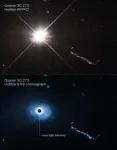
NASA’s Hubble takes the closest-ever look at a quasar

Astronomers have used the unique capabilities of NASA's Hubble Space Telescope to peer closer than ever into the throat of an energetic monster black hole powering a quasar. A quasar is a galactic center that glows brightly as the black hole consumes material in its immediate surroundings. The new Hubble views of the environment around the quasar show a lot of "weird things," according to Bin Ren of the Côte d'Azur Observatory and Université Côte d'Azur in Nice, France. "We've got a few blobs of different sizes, and a mysterious L-shaped filamentary structure. This is all within 16,000 light-years of the black hole." Some ...

Read the release
Rapid surge in global warming mainly due to reduced planetary albedo
Space

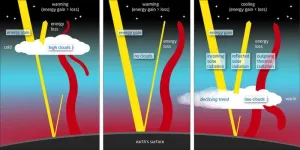
Rapid surge in global warming mainly due to reduced planetary albedo

Rising sea levels, melting glaciers, heatwaves at sea – 2023 set a number of alarming new records. The global mean temperature also rose to nearly 1.5 degrees above the preindustrial level, another record. Seeking to identify the causes of this sudden rise has proven a challenge for researchers. After all, factoring in the effects of anthropogenic influences like the accumulation of greenhouse gases in the atmosphere, of the weather phenomenon El Niño, and of natural events like volcanic eruptions, can account for a major portion of the warming. But doing so still leaves a gap of roughly 0.2 degrees Celsius, which has never been satisfactorily ...

Read the release
Astronomers witness the in situ spheroid formation in distant submillimetre-bright galaxies
Space

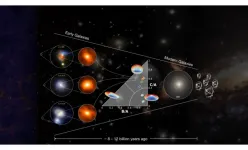
Astronomers witness the in situ spheroid formation in distant submillimetre-bright galaxies

An international team of researchers including The University of Tokyo Kavli Institute for the Physics and Mathematics of the Universe (Kavli IPMU, WPI) has found evidence showing that old elliptical galaxies in the universe can form from intense star formation within early galaxy cores. This discovery will deepen our understanding of how galaxies evolved from the early Universe, reports a new study in Nature. Galaxies in today’s Universe are diverse in morphologies and can be roughly divided into two categories: younger, disk-like spiral galaxies, ...

Read the release
Astronomers close to solving mystery of how universe’s giant galaxies formed
Space

Astronomers close to solving mystery of how universe’s giant galaxies formed

Astronomers say they are close to solving an intergalactic mystery about the creation of the universe's biggest galaxies which has puzzled experts for decades. Scientists have discovered the birth sites of gigantic elliptical galaxies which they claim offer new clues about how they were formed. The creation of these ancient galaxies, which look like bulging footballs compared to our flat disk-like Milky Way, remains a mystery to astrophysicists. But now academics from the University of Southampton, working with experts across the world, ...

Read the release
Planetary boundaries: Confronting the global crisis of land degradation; Potsdam institute report opens UNCCD COP 16
Space

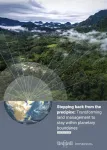
Planetary boundaries: Confronting the global crisis of land degradation; Potsdam institute report opens UNCCD COP 16

Riyadh, Saudi Arabia – A major new scientific report charts an urgent course correction for how the world grows food and uses land in order to avoid irretrievably compromising Earth’s capacity to support human and environmental wellbeing. Produced under the leadership of Prof. Dr. Johan Rockström at the Potsdam Institute for Climate Impact Research (PIK) in collaboration with the UN Convention to Combat Desertification (UNCCD), the report is launched as nearly 200 UNCCD member states kick off their COP 16 summit ...

Read the release
Space

Wistar Institute scientists identify important factor in neural development

PHILADELPHIA — (Nov. 26, 2024) — The Wistar Institute’s Alessandro Gardini, Ph.D., and lab have shed new light on how certain biological processes determine the development of neural cells. Their findings on a molecular “bridge” complex demonstrate a new level of detail in the understanding of early neural development — which is fundamental for the further understanding of neurodevelopmental syndromes. The new paper, “The enhancer module of integrator controls cell identity and early neural fate commitment” was published in the journal, Nature Cell Biology. “By achieving a better understanding of how the nervous system develops ...

Read the release
Final data and undiscovered images from NASA’s NEOWISE
Space

Final data and undiscovered images from NASA’s NEOWISE

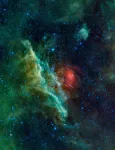
While NASA’s NEOWISE telescope ended its journey through space on Nov. 1, 2024, the team at IPAC, a science center at Caltech, was working on one further gift from the prolific mission. The final data release from NEOWISE was released to the astronomy community just two weeks later, on Nov. 14, encompassing over 26 million images and nearly 200 billion sources detected by the telescope. And today, IPAC is releasing six new images from the mission’s archival data as a tribute to this landmark project, available here: https://www.astropix.org/link/3b2x NEOWISE ...

Read the release
H.E.S.S. collaboration detects the most energetic cosmic-ray electrons and positrons ever observed
Space

H.E.S.S. collaboration detects the most energetic cosmic-ray electrons and positrons ever observed

The Universe teems with extreme environments, ranging from the very coldest temperatures to the highest energy sources possible. As a consequence, extreme objects such as supernova remnants, pulsars and active galactic nuclei are capable of emitting charged particles and gamma rays with incredibly high energies, so high that they exceed the energy produced by the nuclear fusion in stars by several orders of magnitude. The gamma rays detected on Earth tell us a great deal about these sources, since they travel through space undisturbed. However, in the case of charged particles, ...

Read the release
Space

Novel supernova observations grant astronomers a peek into the cosmic past

COLUMBUS, Ohio – An international team of researchers has made new observations of an unusual supernova, finding the most metal-poor stellar explosion ever observed. This rare supernova, called 2023ufx, originated from the core collapse of a red supergiant star, exploded on the outskirts of a nearby dwarf galaxy. Results of the study showed that observations of both this supernova and the galaxy it was discovered in are of low metallicity, meaning they lack an abundance of elements heavier than hydrogen or helium. Since the metals produced within supernovae ...

Read the release
Ancient hot water on Mars points to habitable past: Curtin study
Space

Ancient hot water on Mars points to habitable past: Curtin study

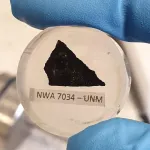
New Curtin University-led research has uncovered what may be the oldest direct evidence of ancient hot water activity on Mars, revealing the planet may have been habitable at some point in its past. The study analysed a 4.45 billion-year-old zircon grain from the famous Martian meteorite NWA7034, also known as Black Beauty, and found geochemical ‘fingerprints’ of water-rich fluids. Study co-author Dr Aaron Cavosie from Curtin’s School of Earth and Planetary Sciences said the discovery opened up new avenues for understanding ancient Martian hydrothermal systems associated ...

Read the release
2 MILLION mph galaxy smash-up seen in unprecedented detail
Space

2 MILLION mph galaxy smash-up seen in unprecedented detail

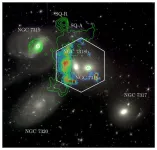
A massive collision of galaxies sparked by one travelling at a scarcely-believable 2 million mph (3.2 million km/h) has been seen in unprecedented detail by one of Earth's most powerful telescopes. The dramatic impact was observed in Stephan's Quintet, a nearby galaxy group made up of five galaxies first sighted almost 150 years ago. It sparked an immensely powerful shock akin to a "sonic boom from a jet fighter" – the likes of which are among the most striking phenomena in the Universe. Stephan's Quintet represents "a galactic crossroad where past collisions between galaxies ...

Read the release
Astronomers take the first close-up picture of a star outside our galaxy
Space

Astronomers take the first close-up picture of a star outside our galaxy

“For the first time, we have succeeded in taking a zoomed-in image of a dying star in a galaxy outside our own Milky Way,” says Keiichi Ohnaka, an astrophysicist from Universidad Andrés Bello in Chile. Located a staggering 160 000 light-years from us, the star WOH G64 was imaged thanks to the impressive sharpness offered by the European Southern Observatory’s Very Large Telescope Interferometer (ESO’s VLTI). The new observations reveal a star puffing out gas and dust, in the last stages before it becomes a supernova. “We discovered an ...

Read the release
Space

Astronauts found to process some tasks slower in space, but no signs of permanent cognitive decline

A stay in space exerts extreme pressures on the human body. Astronauts’ bodies and brains are impacted by radiation, altered gravity, challenging working conditions, and sleep loss – all of which could compromise cognitive functioning. At the same time, they are required to perform complex tasks, and minor mistakes can have devastating consequences. Little is known, however, about whether astronauts’ cognitive performance changes while in space. Now, working with 25 astronauts who spent an average of six month on the International Space Station (ISS), researchers in the US have examined changes in a wide range of cognitive performance domains. ...

Read the release
Space

New DESI data shed light on gravity’s pull in the universe

A University of Texas at Dallas physicist and his international colleagues in the Dark Energy Spectroscopic Instrument (DESI) collaboration are engaged in a multiyear data-gathering mission to try to answer one of the most puzzling observations in astrophysics: Why does the expansion of the universe appear to be accelerating? Competing theories have attempted to explain this observation. One is that dark energy is somehow pushing galaxies apart. A second theory posits that gravity, the attractive force that in local environments like the solar system draws objects together, works differently at large cosmological scales and needs to be modified to explain cosmic ...

Read the release
The Wistar Institute and Cameroon researchers reveals HIV latency reversing properties in African plant
Space

The Wistar Institute and Cameroon researchers reveals HIV latency reversing properties in African plant

A collaboration between The Wistar Institute and the University of Buea in Cameroon has uncovered the mechanisms for a medicinal plant with anti-HIV potential in Croton oligandrus Pierre & Hutch, a species of African tree that has been used in traditional healing in Cameroon to treat a variety of diseases and conditions including cancers and diabetes. The research team — a collaboration between Fidele Ntie-Kang, Ph.D., an Associate Professor of Pharmaceutical Sciences at the University of Buea and the Director of the University of Buea Centre for Drug Discovery, and Ian Tietjen, Ph.D., Assistant Professor and Education Director of Global Studies & ...

Read the release
Astronomers discover first pairs of white dwarf and main sequence stars in clusters, shining new light on stellar evolution
Space

Astronomers discover first pairs of white dwarf and main sequence stars in clusters, shining new light on stellar evolution

Astronomers at the University of Toronto (U of T) have discovered the first pairs of white dwarf and main sequence stars – “dead” remnants and "living" stars – in young star clusters. Described in a new study published in The Astrophysical Journal, this breakthrough offers new insights on an extreme phase of stellar evolution, and one of the biggest mysteries in astrophysics. Scientists can now begin to bridge the gap between the earliest and final stages of binary star systems – two stars that orbit a shared center of gravity – to further our understanding of how stars form, how galaxies evolve, and how most elements ...

Read the release
NASA awards SwRI $60 million contract to develop next-generation coronagraphs
Space

NASA awards SwRI $60 million contract to develop next-generation coronagraphs

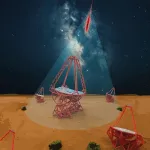
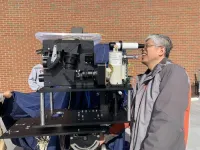
Southwest Research Institute has won a $60 million contract to build three coronagraphs for the National Oceanic and Atmospheric Administration (NOAA). SwRI’s novel Space Weather Solar Coronagraph (SwSCOR) is NOAA’s next-generation instrument to provide early detection and characterization of Earth-directed coronal mass ejections (CMEs). CMEs are huge bursts of coronal plasma threaded with intense magnetic fields ejected from the Sun over the course of several hours. CMEs arriving at Earth can generate geomagnetic storms, which can cause anomalies in and disruptions ...

Read the release
We finally know where black holes get their magnetic fields: Their parents
Space

We finally know where black holes get their magnetic fields: Their parents

Black holes are one of the most enigmatic stellar objects. While best known for swallowing up their surroundings into a gravity pit from which nothing can escape, they can also shoot off powerful jets of charged particles, leading to explosive bursts of gamma rays that can release more energy in mere seconds than our sun will emit in its entire lifetime. For such a spectacular event to occur, a black hole needs to carry a powerful magnetic field. Where this magnetism comes from, however, has been a long-standing ...

Read the release
NASA Goddard Lidar team receives Center Innovation Award for Advancements
Space

NASA Goddard Lidar team receives Center Innovation Award for Advancements

NASA researchers Guan Yang, Jeff Chen, and their team received the 2024 Innovator of The Year Award at the agency’s Goddard Space Flight Center in Greenbelt, Maryland, for their exemplary work on a lidar system enhanced with artificial intelligence and other technologies. Like a laser-based version of sonar, lidar and its use in space exploration is not new. But the lidar system Yang and Chen’s team have developed — formally the Concurrent Artificially-intelligent Spectrometry and Adaptive Lidar System (CASALS) — can produce higher resolution data within a smaller space, significantly increasing efficiency compared to current models. The ...

Read the release
Space

Resilience index needed to keep us within planet’s ‘safe operating space’

EMBARGOED: NOT FOR RELEASE UNTIL FRIDAY 15 NOVEMBER 2024 AT 11:00 ET (15:00 UK TIME). Researchers are calling for a ‘resilience index’ to be used as an indicator of policy success instead of the current focus on GDP. They say that GDP ignores the wider implications of development and provides no information on our ability to live within our planet’s ‘safe operating space’. In a paper published today [15 November] in the journal One Earth, researchers from the University of Southampton, UCL ...

Read the release
From the original Press-News collection. Issuers of news releases are responsible for the accuracy of their content.