THE ORIGINAL COLLECTION · SINCE 2010

Technology
press releases.

Research announcements from universities, hospitals and scientific institutions. Explore the stories, people and discoveries behind the headlines.

Original publication datesPage 124
FIND A STORY

Find a past release.

Dates and source material belong to the original release.

Read our research explainers

Browse the collection · original publication order

Carbon-based sensors are poised to facilitate a seamless human-machine interface
Technology

Carbon-based sensors are poised to facilitate a seamless human-machine interface

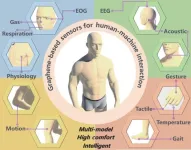
Interaction between machines and humans is paramount to the development of the new technologies of the metaverse, which are designed to augment the human experience through cloud computing and extended reality (XR). Graphene, a two-dimensional carbon material, has emerged as an ideal candidate for wearable sensor technology, paving the way for a new era of seamless human-machine interaction (HMI). A team of material scientists led by Tian-Ling Ren from Tsinghua University in Beijing, China recently outlined the state of graphene-based HMI sensor technology ...

Read the release
Technology

Artificial intelligence may help predict – possibly prevent – sudden cardiac death

Research Highlights: Predicting sudden cardiac death may be possible using artificial intelligence (AI) to analyze medical information in electronic health records, according to preliminary research conducted by researchers in France. Researchers analyzed electronic health records from 25,000 people who had died suddenly and 70,000 people hospitalized for cardiac arrest who did not die in Paris, France and Seattle, Washington and used AI to build personalized health equations that identified each person’s risk of dying from sudden cardiac arrest. Additionally, the researchers were able to develop a customized risk profile of each ...

Read the release
Video technology could transform how scientists monitor changes in species evolution and development
Technology

Video technology could transform how scientists monitor changes in species evolution and development

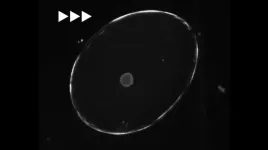
Scientists have made a major breakthrough in the study of species evolution, and provided further evidence that state-of-the-art visual technology can be used to track the tiniest changes in different organisms’ development. New research used a combination of robotic video microscopes and computer vision to measure all of the observable characteristics of embryos of three different species. These measurements were recorded as spectra of energy and, through this, scientists were able to compare shifts between species alongside previously documented differences in the timing of discrete developmental ...

Read the release
Technology

HAARP artificial airglow may be widely visible in Alaska

Alaskans and visitors may be able to see an artificial airglow in the sky created by the High-frequency Active Auroral Research Program during a four-day research campaign that starts Saturday. Scientists from the University of Alaska Fairbanks, Cornell University, University of Colorado Denver, University of Florida and Georgia Institute of Technology will conduct a variety of experiments at the UAF-operated research site. The experiments will focus on the ionosphere, the region of the atmosphere between about 30 and 350 miles ...

Read the release
The little things matter: Chemists develop new sensor for microvolume pH detection
Technology

The little things matter: Chemists develop new sensor for microvolume pH detection

Measuring the pH of substances gives us vital clues about the world around us, such as identifying contaminated water or checking the toxicity of medical or cosmetic products. Often, only small amounts of samples are available, but monitoring the variation in pH in these miniscule volumes matters. For example, identifying pH changes within tiny volumes of fluid from single cells can help in the detection of ovarian cancer. However, the current methods for measuring pH are mainly for bulk solutions and are not sensitive enough or are too fragile to measure small volumes on a commercial scale. In a recent study published in Microchimica ...

Read the release
The USTC realizes In situ electron paramagnetic resonance spectroscopy using single nanodiamond sensors
Technology

The USTC realizes In situ electron paramagnetic resonance spectroscopy using single nanodiamond sensors

Teams led by Prof. DU Jiangfeng, Prof. SHI Fazhan and Prof. KONG Fei from the University of Science and Technology of China (USTC) of the Chinese Academy of Sciences (CAS) used the Nitrogen-Vacancy (NV) center inside a single nanodiamond for quantum sensing to overcome the problem of random particle rotation. The study was published on Oct. 7th in Nature Communications. It is an important goal to detect and analyze molecules under physiological in situ conditions in the field of life sciences. Only by observing biomolecules under this condition can we reveal conformation changes when they realize physiological functions. Thanks to its high sensitivity, good biocompatibility, and ...

Read the release
Knot-inspired optical sensors for slip detection and friction measurement in dexterous robotic manipulation
Technology

Knot-inspired optical sensors for slip detection and friction measurement in dexterous robotic manipulation

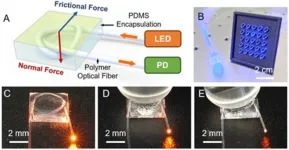
A new publication from Opto-Electronic Advances, 10.29026/oea.2023.230076 discusses knot-inspired optical sensors for slip detection and friction measurement in dexterous robotic manipulation. Hands possess an awe-inspiring ability to perceive friction forces with remarkable accuracy, all thanks to the mechanical receptors nestled within skin. This natural gift allows objects to be handled deftly and tools to be wielded effortlessly, infusing daily life with a delightful flexibility. But what if this tactile prowess could be unlocked in robots? Imagine a world where robots possess the uncanny ability to detect and understand friction and slip, just ...

Read the release
Technology

Wearable devices may prevent astronauts getting 'lost’ in space

The sky is no longer the limit — but taking flight is dangerous. In leaving the Earth’s surface, we lose many of the cues we need to orient ourselves, and that spatial disorientation can be deadly. Astronauts normally need intensive training to protect against it. But scientists have now found that wearable devices which vibrate to give orientation cues may boost the efficacy of this training significantly, making spaceflight slightly safer. “Long duration spaceflight will cause many physiological and psychological stressors which will make astronauts very susceptible to spatial disorientation,” ...

Read the release
Can AI help boost accessibility? These researchers tested it for themselves
Technology

Can AI help boost accessibility? These researchers tested it for themselves

Generative artificial intelligence tools like ChatGPT, an AI-powered language tool, and Midjourney, an AI-powered image generator, can potentially assist people with various disabilities. These tools could summarize content, compose messages or describe images. Yet the degree of this potential is an open question, since, in addition to regularly spouting inaccuracies and failing at basic reasoning, these tools can perpetuate ableist biases. This year, seven researchers at the University of Washington conducted a three-month autoethnographic study — drawing on their own experiences as people with and without disabilities — to test AI tools’ utility for accessibility. Though ...

Read the release
Optical-fiber based single-photon light source at room temperature for next-generation quantum processing
Technology

Optical-fiber based single-photon light source at room temperature for next-generation quantum processing

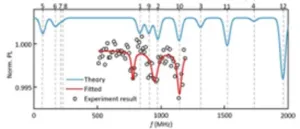
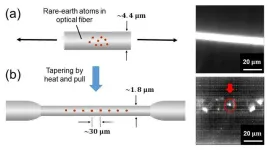
Quantum-based systems promise faster computing and stronger encryption for computation and communication systems. These systems can be built on fiber networks involving interconnected nodes which consist of qubits and single-photon generators that create entangled photon pairs. In this regard, rare-earth (RE) atoms and ions in solid-state materials are highly promising as single-photon generators. These materials are compatible with fiber networks and emit photons across a broad range of wavelengths. Due to their wide spectral range, optical fibers ...

Read the release
TU Delft researchers discover new ultra strong material for microchip sensors
Technology

TU Delft researchers discover new ultra strong material for microchip sensors

Researchers at Delft University of Technology, led by assistant professor Richard Norte, have unveiled a remarkable new material with potential to impact the world of material science: amorphous silicon carbide (a-SiC). Beyond its exceptional strength, this material demonstrates mechanical properties crucial for vibration isolation on a microchip. Amorphous silicon carbide is therefore particularly suitable for making ultra-sensitive microchip sensors. The range of potential applications is vast. From ultra-sensitive microchip sensors and advanced solar ...

Read the release
What a “2D” quantum superfluid feels like to the touch
Technology

What a “2D” quantum superfluid feels like to the touch

Researchers from Lancaster University in the UK have discovered how superfluid helium 3He would feel if you could put your hand into it. The interface between the exotic world of quantum physics and classical physics of the human experience is one of the major open problems in modern physics. Dr Samuli Autti is the lead author of the research published in Nature Communications. Dr Autti said: “In practical terms, we don’t know the answer to the question ‘how does it feel to touch quantum physics?’ “These experimental conditions are extreme and the techniques complicated, but I can now tell ...

Read the release
AI trained to identify least green homes by Cambridge researchers
Technology

AI trained to identify least green homes by Cambridge researchers

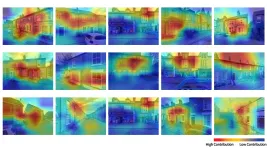
University of Cambridge media release First of its kind AI-model can help policy-makers efficiently identify and prioritize houses for retrofitting and other decarbonizing measures. FOR IMMEDIATE RELEASE Model identified ‘hard to decarbonize’ houses with 90% precision and additional data will improve this. Model trained with open source data including from energy performance certificates, and street and aerial view images. It could be used anywhere in the world. Model can even identify specific parts of houses losing most heat, including roofs and windows. ‘Hard-to-decarbonize’ (HtD) houses are responsible ...

Read the release
New “injectable tissue prosthesis coupled with closed-loop bioelectronic system” to aid in damaged muscle/nerve regeneration and robot-assisted rehabilitation
Technology

New “injectable tissue prosthesis coupled with closed-loop bioelectronic system” to aid in damaged muscle/nerve regeneration and robot-assisted rehabilitation

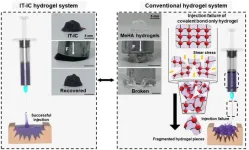
In a recent publication in the journal Nature, researchers from the Institute of Basic Science (IBS) in South Korea have made significant strides in biomaterial technology and rehabilitation medicine. They've developed a novel approach to healing muscle injury by employing “injectable tissue prosthesis” in the form of conductive hydrogels and combining it with a robot-assisted rehabilitation system. Let’s imagine you are swimming in the ocean. A giant shark approaches and bites a huge ...

Read the release
Do physical connections improve the control and performance of robot swarms?
Technology

Do physical connections improve the control and performance of robot swarms?

In nature, swarms can accomplish amazing things. Schools of fish can more efficiently find food and migrate. Flocks of birds can confuse predators. Bees, ants, and termites can work together to feed, defend and build their colonies. Robotics researchers have long been trying to harness this ability to explore environments, capture objects and build structures using robot swarms. “But the problem of how do we efficiently control all those robots is still unsolved,” says David Saldaña, an assistant professor ...

Read the release
UTSA researchers develop energy-efficient AI with $2 million NSF grant
Technology

UTSA researchers develop energy-efficient AI with $2 million NSF grant

Fidel Santamaria, a professor in the UTSA College of Sciences’ neuroscience, developmental and regenerative biology department, received a $2 million grant through the National Science Foundation’s Emerging Frontiers in Research and Innovation (EFRI) program to develop new artificial intelligence (AI) applications in the most energy-efficient manner yet. For machine-learning tools to analyze new data, they must first sort data into various categories. For example, if a tool is sorting photos by color, then it needs to recognize which photos are red, yellow or blue to accurately classify them. While this is an easy chore for a human, the task presents a ...

Read the release
Technology

Human input boosts citizens’ acceptance of AI and perceptions of fairness, study shows

Increasing human input when AI is used for public services boosts acceptance of the technology, a new study shows. The research shows citizens are not only concerned about AI fairness but also about potential human biases. They are in favour of AI being used in cases when administrative discretion is perceived as too large. Researchers found citizens' knowledge about AI does not alter their acceptance of the technology. More accurate systems and lower cost systems also increased their acceptance. Cost and accuracy of technology ...

Read the release
Technology

New techniques efficiently accelerate sparse tensors for massive AI models

Researchers from MIT and NVIDIA have developed two techniques that accelerate the processing of sparse tensors, a type of data structure that’s used for high-performance computing tasks. The complementary techniques could result in significant improvements to the performance and energy-efficiency of systems like the massive machine-learning models that drive generative artificial intelligence. Tensors are data structures used by machine-learning models. Both of the new methods seek to efficiently exploit what’s ...

Read the release
Technology

Hey, Siri: Moderate AI voice speed encourages digital assistant use

UNIVERSITY PARK, Pa. — Voice speed and interaction style may determine whether a user sees a digital assistant like Alexa or Siri as a helpful partner or something to control, according to a team led by Penn State researchers. The findings reveal insights into the parasocial, or one-sided, relationships that people can form with digital assistants, according to the researchers. They reported their findings in the Journal of Business Research. “We endow these digital assistants with personalities and human characteristics, and it impacts how we interact with the devices,” said Brett Christenson, assistant clinical professor of marketing at Penn State and first author ...

Read the release
Technology

NYU Tandon cuts a rug with new 3D video technology

A groundbreaking research project spearheaded by NYU Tandon School of Engineering will bring cutting-edge immersive three-dimensional (3D) video to dance education, making learning the art form more available to a diverse range of students. The project, supported by a new $1.2 million four-year grant from the National Science Foundation, aims to make Point-Cloud Video (PCV) technology suitable for streaming onto standard Internet-connected devices. Developed over the past decade, PCV is a type of highly-detailed 3D video that allows viewers to “move” within an immersive video environment, observing objects and scenes from any angle or distance as if they ...

Read the release
Researchers observe wolves hunting and killing sea otters and harbor seals on Alaska’s Katmai coast
Technology

Researchers observe wolves hunting and killing sea otters and harbor seals on Alaska’s Katmai coast

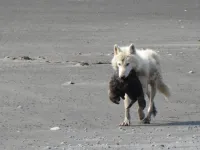
CORVALLIS, Ore. – Firsthand observations of a wolf hunting and killing a harbor seal and a group of wolves hunting and consuming a sea otter on Alaska’s Katmai coast have led scientists to reconsider assumptions about wolf hunting behavior. Wolves have previously been observed consuming sea otter carcasses, but how they obtain these and the frequency of scavenging versus hunting marine prey is largely unknown. Scientists at Oregon State University, the National Park Service and Alaska Department of Fish and Game are beginning to change that with a paper just published ...

Read the release
Anesthesia technology precisely controls unconsciousness in animal tests
Technology

Anesthesia technology precisely controls unconsciousness in animal tests

If anesthesiologists had a rigorous means to manage dosing, they could deliver less medicine, maintaining exactly the right depth of unconsciousness while reducing postoperative cognitive side effects in vulnerable groups like the elderly. But with myriad responsibilities for keeping anesthetized patients alive and stable, as well as maintaining their profoundly unconscious state, anesthesiologists don’t have the time without the technology. To solve the problem, researchers at The Picower Institute for Learning and Memory ...

Read the release
Technology

Surrey researchers use AI to make mobile networks more efficient

A new artificial intelligence (AI) model, developed by the University of Surrey, could help the UK's telecommunications network save up to 76% in network resources compared to the market's most robust Open Radio Access Network (O-RAN) system – and improve the environmental sustainability of mobile networks by using less energy. In a study published in the journal IEEE Transactions on Network Service Management, Surrey researchers detail how it is possible to save bandwidth by mathematically modelling the network and using AI to find the best ...

Read the release
DGIST develops an artificial intelligence model for effectively removing biases in a dataset
Technology

DGIST develops an artificial intelligence model for effectively removing biases in a dataset

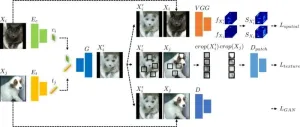
□ Daegu Gyeongbuk Institute of Science and Technology (DGIST), led by President Yang Kuk, announced on September 6, 2023 (Wednesday) that the research team of Professor Sang-hyun Park at the Department of Robotics and Mechatronics Engineering had developed a new image translation model that could effectively reduce biases in data. In the process of developing an artificial intelligence (AI) model using images collected from different sources, contrary to the user’s intention, data biases may occur because of various factors. The developed model can remove data biases despite the absence of information on such factors, thereby ...

Read the release
Technology

Late not great – imperfect timekeeping places significant limit on quantum computers

New research from a consortium of quantum physicists, led by Trinity College Dublin’s Dr Mark Mitchison, shows that imperfect timekeeping places a fundamental limit to quantum computers and their applications. The team claims that even tiny timing errors add up to place a significant impact on any large-scale algorithm, posing another problem that must eventually be solved if quantum computers are to fulfil the lofty aspirations that society has for them. It is difficult to imagine modern life without clocks to help organise our daily schedules; with a digital clock in every person’s smartphone or watch, we ...

Read the release
From the original Press-News collection. Issuers of news releases are responsible for the accuracy of their content.