THE ORIGINAL COLLECTION · SINCE 2010

Technology
press releases.

Research announcements from universities, hospitals and scientific institutions. Explore the stories, people and discoveries behind the headlines.

Original publication datesPage 125
FIND A STORY

Find a past release.

Dates and source material belong to the original release.

Read our research explainers

Browse the collection · original publication order

A Google Slides extension can make presentation software more accessible for blind users
Technology

A Google Slides extension can make presentation software more accessible for blind users

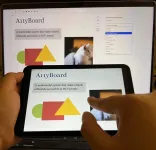
Screen readers, which convert digital text to audio, can make computers more accessible to many disabled users — including those who are blind, low vision or dyslexic. Yet slideshow software, such as Microsoft PowerPoint and Google Slides, isn’t designed to make screen reader output coherent. Such programs typically rely on Z-order — which follows the way objects are layered on a slide — when a screen reader navigates through the contents. Since the Z-order doesn’t adequately convey how a slide is laid out in two-dimensional space, slideshow software can be inaccessible to people with disabilities. A team led by researchers ...

Read the release


Technology

Virtual cognitively enhanced tai chi program improves cognition and executive function in older adults with mild cognitive impairment

Embargoed for release until 5:00 p.m. ET on Monday 30 October 2023 Annals of Internal Medicine Tip Sheet @Annalsofim Below please find summaries of new articles that will be published in the next issue of Annals of Internal Medicine. The summaries are not intended to substitute for the full articles as a source of information. This information is under strict embargo and by taking it into possession, media representatives are committing to the terms of the embargo not only on their own behalf, but also ...

Read the release
NYU Abu Dhabi researchers reveal how common desert shrub efficiently harvests water from the air
Technology

NYU Abu Dhabi researchers reveal how common desert shrub efficiently harvests water from the air

Abu Dhabi, UAE, October 2023: A team of scientists, led by Post-Doctoral Associate Marieh Al-Handawi and Professor of Chemistry Panče Naumov from NYU Abu Dhabi’s Smart Materials Lab and NYU Abu Dhabi Institute’s Center for Smart Engineering Materials (CSEM) has revealed the mechanism a desert plant native to the United Arab Emirates uses to capture moisture from the desert air in order to survive. The identification of this unique mechanism, in which the plant excretes salts to extract and condense water onto the surface of its leaves, has the potential to inspire ...

Read the release
Technology

Department of Energy announces $11.4 million for research on quantum information science for fusion energy sciences

WASHINGTON, D.C. - Today, the U.S. Department of Energy (DOE) announced $11.4 million for six projects in quantum information science (QIS) with relevance to fusion and plasma science. The Fusion Energy Sciences (FES) program supports fundamental research to expand the understanding of matter at very high temperatures and densities and to build the scientific foundation needed to develop a fusion energy source. The QIS portfolio within FES supports research opportunities outlined in the 2018 Fusion Energy Sciences Roundtable on Quantum Information Science report. It includes science and technology thrusts where QIS might have a transformative impact on FES ...

Read the release
Helping robots assess risk
Technology

Helping robots assess risk

“For robots to achieve true autonomy in the future, they must be able to assess risks before making decisions,” says Nader Motee (pictured below), a professor of mechanical engineering and mechanics in Lehigh University's P.C. Rossin College of Engineering and Applied Science. Motee recently received a nearly $680,000 grant from the Office of Naval Research to develop a novel, multi-stage, perception-based control paradigm that will essentially help robots assess risk, and ultimately make autonomous systems safer and more efficient. We humans conduct ...

Read the release
Powder engineering adds AI to the mix
Technology

Powder engineering adds AI to the mix

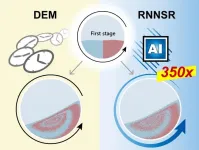
Imagine a world without powders. It may sound exaggerated, but our daily lives are intricately connected to powders in various ways from foods, pharmaceuticals, cosmetics to batteries, ceramics, etc. In all these industries, powder mixing is an important unit operation where different types of powders are mixed to achieve uniformity. However, it can be difficult to predict what conditions are optimal to achieve the desired uniformity as the process often relies on trial and error as well as engineers’ expertise. Numerical ...

Read the release
Robot space maintenance based on human arm dynamics
Technology

Robot space maintenance based on human arm dynamics

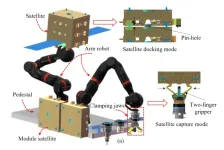
On-orbit assembly has become a crucial aspect of space operations, where the manipulator frequently and directly interacts with objects in a complex assembly process. The traditional manipulator control has limitations in adapting to diverse assembly tasks and is vulnerable to vibration, leading to assembly failure. To address this issue, Researchers at Beijing Institute of Technology propose a human-like variable admittance control method based on the variable damping characteristics of the human arm. This method can effectively increase the safety, robustness, ...

Read the release
Technology

New battery technology could lead to safer, high-energy electric vehicles

University of Maryland researchers studying how lithium batteries fail have developed a new technology that could enable next-generation electric vehicles (EVs) and other devices that are less prone to battery fires while increasing energy storage. The innovative method, presented in a paper published Wednesday in the journal Nature, suppresses the growth of lithium dendrites—damaging branch-like structures that develop inside so-called all-solid-state lithium batteries, preventing firms from broadly commercializing the promising technology. But this new design for a battery “interlayer,” led by Department of Chemical and Biomolecular Engineering ...

Read the release
Technology

Underwater robot finds new circulation pattern in Antarctic ice shelf

ITHACA, N.Y. – More than merely cracks in the ice, crevasses play an important role in circulating seawater beneath Antarctic ice shelves, potentially influencing their stability, finds Cornell University-led research based on a first-of-its-kind exploration by an underwater robot. The remotely operated Icefin robot’s climb up and down a crevasse in the base of the Ross Ice Shelf produced the first 3D measurements of ocean conditions near where it meets the coastline, a critical juncture known as the grounding zone. The robotic survey revealed a new circulation pattern – a jet funneling water sideways through the crevasse – in addition to rising and sinking currents, ...

Read the release
AI can alert urban planners and policymakers to cities’ decay
Technology

AI can alert urban planners and policymakers to cities’ decay

By April Toler More than two-thirds of the world’s population is expected to live in cities by 2050, according to the United Nations. As urbanization advances around the globe, researchers at the University of Notre Dame and Stanford University said the quality of the urban physical environment will become increasingly critical to human well-being and to sustainable development initiatives. However, measuring and tracking the quality of an urban environment, its evolution and its spatial disparities is difficult due to the amount of on-the-ground data needed to capture these patterns. To address the issue, Yong Suk Lee, assistant professor of technology, ...

Read the release
New parallel hybrid network achieves better performance through quantum-classical collaboration
Technology

New parallel hybrid network achieves better performance through quantum-classical collaboration

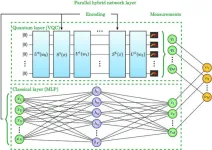
Building efficient quantum neural networks is a promising direction for research at the intersection of quantum computing and machine learning. A team at Terra Quantum AG designed a parallel hybrid quantum neural network and demonstrated that their model is "a powerful tool for quantum machine learning." This research was published Oct. 9 in Intelligent Computing, a Science Partner Journal. Hybrid quantum neural networks typically consist of both a quantum layer — a variational quantum circuit — and a classical layer — a deep learning neural network called a multi-layered perceptron. This special architecture enables them to learn complicated patterns and relationships ...

Read the release
Technology

$1.5 million DOD grant will create virtual reality test to assess TBI in the field

One of the most common injuries sustained by military personnel in recent conflicts has been traumatic brain injury, or TBI. In response to this, and the fact that military operations are increasingly being conducted by small teams in far-flung areas, researchers in the University of Arizona College of Medicine – Tucson’s Department of Psychiatry are working on a portable virtual reality system to assess TBI in the field. Psychiatry professor William “Scott” Killgore, PhD, and his team in the Social, ...

Read the release
Technology

Robot stand-in mimics movements in VR

Media Note: Pictures of VRoxy can be viewed and downloaded here: https://cornell.box.com/v/VRoxyrobotproxy ITHACA, N.Y. – Researchers from Cornell and Brown University have developed a souped-up telepresence robot that responds automatically and in real-time to a remote user’s movements and gestures made in virtual reality. The robotic system, called VRoxy, allows a remote user in a small space, like an office, to collaborate via VR with teammates in a much larger space. VRoxy represents the latest in remote, robotic embodiment. Donning a VR headset, a user has access to two view modes: Live mode shows an immersive image of the ...

Read the release
Major milestone achieved in new quantum computing architecture
Technology

Major milestone achieved in new quantum computing architecture

Coherence stands as a pillar of effective communication, whether it is in writing, speaking or information processing. This principle extends to quantum bits, or qubits, the building blocks of quantum computing. A quantum computer could one day tackle previously insurmountable challenges in climate prediction, material design, drug discovery and more. A team led by the U.S. Department of Energy’s (DOE) Argonne National Laboratory has achieved a major milestone toward future quantum computing. They have extended the coherence time for their novel type of qubit to an impressive 0.1 milliseconds — nearly a thousand times better than the previous record. “Rather ...

Read the release
A superatomic semiconductor sets a speed record
Technology

A superatomic semiconductor sets a speed record

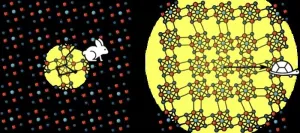
Semiconductors—most notably, silicon—underpin the computers, cellphones, and other electronic devices that power our daily lives, including the device on which you are reading this article. As ubiquitous as semiconductors have become, they come with limitations. The atomic structure of any material vibrates, which creates quantum particles called phonons. Phonons in turn cause the particles—either electrons or electron-hole pairs called excitons—that carry energy and information around electronic devices to scatter in a matter of nanometers and femtoseconds. This means that energy is lost in the form of heat, and that information transfer has ...

Read the release
Technology

A new “species” of legal subject: AI-led corporate entities, requiring interspecific legal frameworks

For the first time in human history, say Daniel Gervais and John Nay in a Policy Forum, nonhuman entities that are not directed by humans – such as artificial intelligence (AI)-operated corporations – should enter the legal system as a new “species” of legal subject. AI has evolved to the point where it could function as a legal subject with rights and obligations, say the authors. As such, before the issue becomes too complex and difficult to disentangle, “interspecific” legal frameworks need to be developed by which AI can be treated as legal subjects, they write. Until now, the legal system has been univocal ...

Read the release
New quantum effect demonstrated for the first time: Spinaron, a rugby in a ball pit
Technology

New quantum effect demonstrated for the first time: Spinaron, a rugby in a ball pit

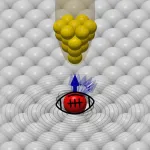
Extreme conditions prevail in the Würzburg laboratory of experimental physicists Professor Matthias Bode and Dr. Artem Odobesko. Affiliated with the Cluster of Excellence ct.qmat, a collaboration between JMU Würzburg and TU Dresden, these visionaries are setting new milestones in quantum research. Their latest endeavor is unveiling the spinaron effect. They strategically placed individual cobalt atoms onto a copper surface, brought the temperature down to 1.4 Kelvin (–271.75° Celsius), and then subjected them to a powerful external magnetic field. “The magnet we use costs half a million euros. It’s not something that’s widely available,” explains ...

Read the release
Technology

TUM professor develops energy-saving AI chip

The basic idea is simple: unlike previous chips, where only calculations were carried out on transistors, they are now the location of data storage as well. That saves time and energy. “As a result, the performance of the chips is also boosted,” says Hussam Amrouch, a professor of AI processor design at the Technical University of Munich (TUM). The transistors on which he performs calculations and stores data measure just 28 nanometers, with millions of them placed on each of the new AI chips. The chips of the future will have to be faster and more efficient than earlier ones. Consequently, ...

Read the release
Asian American Engineer of the Year goes to Sandia Labs computer scientist
Technology

Asian American Engineer of the Year goes to Sandia Labs computer scientist

ALBUQUERQUE, N.M. — Tian Ma, a distinguished computer engineer in research and development at Sandia National Laboratories, has been honored as a 2023 Asian American Engineer of the Year by the Chinese Institute of Engineers-USA. Each year, CIE recognizes exceptional Asian American engineers who demonstrate strong technical skills, leadership abilities and a commitment to public service. Previous recipients of this award include Nobel laureates and astronauts. Ma’s expertise in data analysis and processing has propelled him to national recognition as an expert in detection algorithms and tracking systems. His journey ...

Read the release
Technology

Fungi used in food production could lead to new probiotics

Washington, D.C. — Many fungus strains have been used and selected by the food industry for their capacities to ferment, produce flavors or produce heterologous molecules. According to a new study, 2 fungi used to produce food products have potential probiotic effects on gut inflammation. The study, published in mSystems, a journal of the American Society for Microbiology, demonstrates a possible new way to develop new probiotics. “There is much to learn by studying the role of the ...

Read the release
Technology

Study aims to include truckers when redefining trucking in the age of automated vehicles

AMHERST, Mass. — Last year, trucks moved 73%—11.5 billion tons—of the freight in the U.S., making trucks—and truckers—crucial to the U.S. economy. With automation in trucking projected to grow 22% over the next 10 years, a team of University of Massachusetts Amherst researchers has received a grant to explore how automation will affect the role of American long-haul truckers. An interdisciplinary group of researchers led by Shannon Roberts, associate professor of mechanical and industrial engineering, has been awarded nearly $2 million over four years by the National Science Foundation’s (NSF) Future of Work Program. “We know ...

Read the release
Deep learning speeds up galactic calculations
Technology

Deep learning speeds up galactic calculations

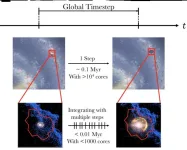
Supernovae, exploding stars, play a critical role in the formation and evolution of galaxies. However, key aspects of them are notoriously difficult to simulate accurately in reasonably short amounts of time. For the first time, a team of researchers, including those from The University of Tokyo, apply deep learning to the problem of supernova simulation. Their approach can speed up the simulation of supernovae, and therefore of galaxy formation and evolution as well. These simulations include the evolution of the chemistry which led to life. When you hear about deep learning, you might think of the latest app that sprung up ...

Read the release
Technology

AWE launching to space station to study atmospheric waves via airglow

NASA’s Atmospheric Waves Experiment, or AWE, mission is scheduled to launch to the International Space Station in November 2023, where it will make use of a natural, ethereal glow in Earth's sky to study waves in our planet's atmosphere. Built by Utah State University’s Space Dynamics Laboratory in North Logan, Utah, AWE will be mounted on the exterior of the space station. From this perch, AWE will stare down toward Earth, tracking undulations in the air known as atmospheric gravity waves (AGWs). Primarily ...

Read the release
JMIR Infodemiology call for papers theme issue on misinformation and generative AI
Technology

JMIR Infodemiology call for papers theme issue on misinformation and generative AI

JMIR Infodemiology Editor-in-Chief: Tim Ken Mackey, MAS, PhD welcomes submissions to a special theme issue “Exploring the Intersection Between Health Information, Disinformation, and Generative AI Technologies.” JMIR Infodemiology, currently indexed in PubMed Central, PubMed, Scopus, DOAJ, and CABI, is a peer-reviewed premier journal in the field of infodemiology, health information, data science, and misinformation and is inviting submissions from different disciplines of health communication, public health, informatics, data science, social ...

Read the release
Technology

Birmingham rare earth magnet recycling technology selected as a Minerals Security Partnership project

A Principals’ meeting of the Minerals Security Partnership (MSP) has confirmed that HyProMag Ltd, which uses a technology developed by the University of Birmingham’s Magnetic Materials Group has been selected as one of the projects that will help to develop responsible critical mineral supply chains. Formed in 2022 by 14 governments, the Mineral Security Partnership (MSP) aims to ensure adequate supplies of minerals such as rare earths to meet net zero-carbon goals. It aims to support public and private sector investments building diverse, secure, and responsible global critical minerals supply chains. HyProMag was one ...

Read the release
From the original Press-News collection. Issuers of news releases are responsible for the accuracy of their content.