THE ORIGINAL COLLECTION · SINCE 2010

Technology
press releases.

Research announcements from universities, hospitals and scientific institutions. Explore the stories, people and discoveries behind the headlines.

Original publication datesPage 57
FIND A STORY

Find a past release.

Dates and source material belong to the original release.

Read our research explainers

Browse the collection · original publication order

Technology

New computer model can predict the length of a household's displacement in any U.S. community after a disaster

HERNDON, Va., February 25, 2025 -- One of the human impacts of natural hazards is household displacement. Destructive floods, wildfires, earthquakes and hurricanes often force people to leave their homes -- some briefly, others for months or indefinitely. Most disaster risk assessments, used by insurance companies, government agencies, development banks, and academic researchers to predict the potential future impacts of natural hazards, fail to account for hardships incurred by household displacement. Instead, they focus on direct ...

Read the release

Enhancing lithium-ion battery performance with roll-to-roll compatible flash process technology
Technology

Enhancing lithium-ion battery performance with roll-to-roll compatible flash process technology

A world-first technology has been developed by introducing a roll-to-roll compatible flash process into secondary battery electrode manufacturing, significantly suppressing the performance degradation of thick electrodes. This breakthrough presents a new possibility of reducing battery costs by minimizing inactive materials and simplifying the manufacturing process while increasing energy density and capacity, making batteries smaller and lighter. The Korea Institute of Machinery and Materials (President Seog-Hyeon Ryu, hereinafter referred to as KIMM), an institute under the jurisdiction of the Ministry of Science and ICT, has developed an electrode activation technology utilizing an ...

Read the release
Technology

Simulating scientists: New tool for AI-powered scientific discovery

Named LLM4SD (Large Language Model 4 Scientific Discovery), the new AI system is an interactive Large Language Model (LLM) tool which can carry out basic steps of scientific research i.e. retrieve useful information from literature and develop hypotheses from data analysis. The tool is freely available and open source. When asked, the system is also able to provide insights to explain its results, a feature that is not available for many current scientific validation tools. LLM4SD was tested with 58 separate research tasks relating to molecular properties across four different scientific domains: physiology, physical chemistry, biophysics and quantum mechanics. Lead ...

Read the release
Toward high electro-optic performance in III-V semiconductors
Technology

Toward high electro-optic performance in III-V semiconductors

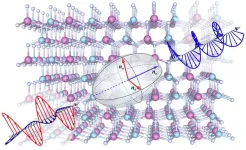
(Santa Barbara, Calif.) — From integrated photonics to quantum information science, the ability to control light with electric fields — a phenomenon known as the electro-optic effect — supports vital applications such as light modulation and frequency transduction. These components rely on nonlinear optical materials, in which light waves can be manipulated by applying electric fields. Conventional nonlinear optical materials such as lithium niobate have large electro-optic response but are ...

Read the release
From scraps to sips: Everyday biomass produces drinking water from thin air
Technology

From scraps to sips: Everyday biomass produces drinking water from thin air

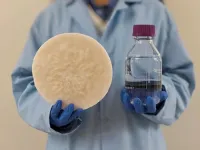
Discarded food scraps, stray branches, seashells and many other natural materials are key ingredients in a new system that can pull drinkable water out of thin air developed by researchers from The University of Texas at Austin. This new “molecularly functionalized biomass hydrogels” system can convert a wide range of natural products into sorbents, materials that absorb liquids. By combining these sorbents with mild heat, the researchers can harvest gallons of drinkable water out of the atmosphere, even in dry conditions. “With ...

Read the release
Submersible robot surfs water currents
Technology

Submersible robot surfs water currents

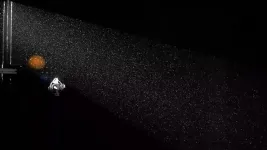
An autonomous underwater vehicle can propel itself efficiently by using the energy in nearby water currents. Underwater and aerial vehicles must make their way through a complex environment of gusts and currents, fighting against many flows as they attempt to stay on course. Peter Gunnarson and John O. Dabiri designed an underwater robot that makes use of these flows to cut down on the energy needed to travel, “surfing” vortices to make its way to its destination. The palm-sized robot, CARL, was equipped with an onboard inertial measurement unit, ten motors to allow movement in all three axes, and a simple but effective algorithm: if ...

Read the release
Modifying graphene with plasma to produce better gas sensors
Technology

Modifying graphene with plasma to produce better gas sensors

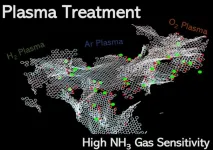
Gas sensing technologies play a vital role in our modern world, from ensuring our safety in homes and workplaces to monitoring environmental pollution and industrial processes. Traditional gas sensors, while effective, often face limitations in their sensitivity, response time, and power consumption. To account for these drawbacks, recent developments in gas sensors have focused on carbon nanomaterials, including the ever-popular graphene. This versatile and relatively inexpensive material can provide exceptional sensitivity ...

Read the release
Robots learn how to move by watching themselves
Technology

Robots learn how to move by watching themselves

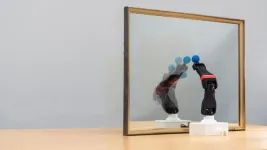
New York, NY—Feb. 25, 2025— By watching their own motions with a camera, robots can teach themselves about the structure of their own bodies and how they move, a new study from researchers at Columbia Engineering now reveals. Equipped with this knowledge, the robots could not only plan their own actions, but also overcome damage to their bodies. "Like humans learning to dance by watching their mirror reflection, robots now use raw video to build kinematic self-awareness," says study lead author Yuhang Hu, a doctoral student at the Creative Machines Lab at Columbia University, directed by Hod Lipson, James and Sally Scapa Professor of Innovation and chair of the Department ...

Read the release
Non-destructive image sensor goes beyond bulkiness
Technology

Non-destructive image sensor goes beyond bulkiness

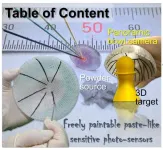
While photo-thermoelectric (PTE) sensors are potentially suitable for testing applications, such as non-destructive material-identification in ultrabroad millimeter-wave (MMW)–infrared (IR) bands, their device designs have primarily employed a single material as the channel. In general, PTE sensors combine photo-induced heating with associated thermoelectric (TE) conversion, and the employment of a single material channel regulates the utilization of devices by missing the opportunity for fully utilizing their fundamental parameters. ...

Read the release
HikingTTE: a deep learning approach for hiking travel time estimation based on personal walking ability
Technology

HikingTTE: a deep learning approach for hiking travel time estimation based on personal walking ability

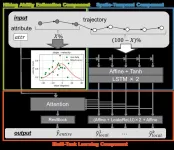
At the University of Electro-Communications, a research team led by Mizuho Asako, Yasuyuki Tahara, Akihiko Ohsuga, and Yuichi Sei has developed a new deep learning model called "HikingTTE" that significantly improves hiking travel time estimation. Hiking is popular worldwide, but accidents still occur when hikers underestimate the time needed to reach their destination. This model could help reduce mountain accidents and improve hiker safety by providing more accurate travel time predictions. Previous hiking travel time estimation methods often use the relationship between slope (uphill or downhill) and walking speed. However, these ...

Read the release
Technology

Beehive sensors offer hope in saving honeybee colonies

A UC Riverside computer science team has developed a sensor-based technology that could revolutionize commercial beekeeping by reducing colony losses and lowering labor costs. Called the Electronic Bee-Veterinarian, or EBV, the technology uses low-cost heat sensors and forecasting models to predict when hive temperatures may reach dangerous levels. The system provides remote beekeepers with early warnings, allowing them to take preventive action before their colonies collapse during extreme hot or cold weather or when the bees cannot regulate their hive temperature because of disease, pesticide exposure, food shortages, or other stressors. ...

Read the release
ECMWF – Europe’s leading centre for weather prediction makes forecast data from AI model available to all
Technology

ECMWF – Europe’s leading centre for weather prediction makes forecast data from AI model available to all

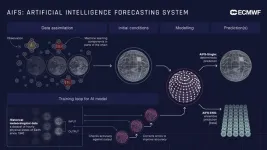
Embargo: 25 February 2025 00.01 AM GMT ECMWF – Europe’s leading centre for weather prediction makes forecast data from AI model available to all A newly operational model, known as the Artificial Intelligence Forecasting System (AIFS), has been launched by the European Centre for Medium-Range Weather Forecasts (ECMWF), an intergovernmental centre and leader in numerical weather prediction. For many measures including tropical cyclone tracks, the AIFS outperforms state-of-the-art physics-based models, with gains ...

Read the release
Technology

NCSA awarded funding to continue AI-focused NSF REU program

The National Center for Supercomputing Applications received funding from the U.S. National Science Foundation (NSF) to renew its annual Research Experience for Undergraduates (REU) program, the Future of Discovery: Training Students to Build and Apply Open Source Machine Learning Models and Tools (FoDOMMaT). Housed in NCSA’s Center for Artificial Intelligence Innovation (CAII), the 10-week on-site experience brings about 10 undergraduate students each year from a variety of academic backgrounds to the University of Illinois Urbana-Champaign campus to engage in cutting-edge machine learning and deep learning projects, developing ...

Read the release
ETRI to collaborate on semiconductor technology with US Argonne National Laboratory
Technology

ETRI to collaborate on semiconductor technology with US Argonne National Laboratory

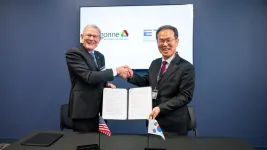
Korean researchers will begin collaborating in earnest with the U.S. Department of Energy’s (DOE) Argonne National Laboratory (ANL) on semiconductor technology research. Electronics and Telecommunications Research Institute (ETRI) announced on Jan. 6 (local time) that it has agreed to establish a mutual cooperation system to develop semiconductor technologies with Argonne National Laboratory in Illinois, USA. ETRI has possessed the technology to develop and manufacture silicon detectors for high-energy particle detectors since the early 2000s ...

Read the release
Scented wax melts may not be as safe for indoor air as initially thought, study finds
Technology

Scented wax melts may not be as safe for indoor air as initially thought, study finds

As traditional candles burn, they can contribute to indoor air pollution by emitting volatile compounds and smoke, which may pose inhalation risks. Scented wax melts are often marketed as safer alternatives to candles because they’re flame- and smoke-free. But in a study in ACS’ Environmental Science & Technology Letters, researchers describe how aroma compounds released from the melted wax can react with ozone in indoor air to form potentially toxic particles. Previous research has shown that scented wax melts emit more airborne scent compounds than traditional candles. The ...

Read the release
Technology

Underwater mics and machine learning aid right whale conservation

ITHACA, N.Y. –Using underwater microphones and machine learning (ML), Cornell University researchers have developed a new method to estimate North Atlantic right whale numbers — offering a potentially safer and more cost-effective way to monitor this critically endangered species. Their study, published in Endangered Species Research, demonstrates how microphones combined with ML and traditional aerial survey methods can help track right whale populations in Cape Cod Bay, a crucial feeding ground where the whales gather each spring. To track this endangered species, researchers rely on costly and dangerous ...

Read the release
Technology

Digital screen time and nearsightedness

About The Study: In this systematic review and dose-response meta-analysis, a daily 1-hour increment in digital screen time was associated with 21% higher odds of myopia (nearsightedness) and the dose-response pattern exhibited a sigmoidal shape, indicating a potential safety threshold of less than 1 hour per day of exposure, with an increase in odds up to 4 hours. These findings can offer guidance to clinicians and researchers regarding myopia risk. Corresponding Author: To contact the corresponding author, Young Kook Kim, PhD, email md092@naver.com. To access the embargoed study: Visit our For The Media website at this link https://media.jamanetwork.com/ (doi:10.1001/jamanetworkopen.2024.60026) Editor’s ...

Read the release
Microcomb chips help pave the way for thousand times more accurate GPS systems
Technology

Microcomb chips help pave the way for thousand times more accurate GPS systems

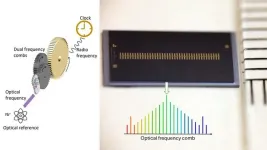
Optical atomic clocks can increase the precision of time and geographic position a thousandfold in our mobile phones, computers, and GPS systems. However, they are currently too large and complex to be widely used in society. Now, a research team from Purdue University, USA, and Chalmers University of Technology, Sweden, has developed a technology that, with the help of on-chip microcombs, could make ultra-precise optical atomic clock systems significantly smaller and more accessible – with significant benefits for navigation, autonomous vehicles, and geo-data monitoring. Today, our mobile phones, computers, ...

Read the release
Technology

Bioinspired robot collectives that can act like solids or fluids on demand

Inspired by the cooperation of cells in tissues, researchers have developed a robotic collective system capable of transitioning between rigid and solid structures that can also support hundreds of times its own weight. The advancement overcomes a core challenge in the development of so-called “robotic materials” – cohesive networks of individual robotic units that function as a single dynamic, adaptive structure. Realizing these systems presents a fundamental challenge: this “material” must at once be strong and stiff enough to support loads, ...

Read the release
Technology

High-performance computing at a crossroads

High-performance computing (HPC) systems – advanced computing ensembles that harness deliver massive processing power – are used for a range of applications, and the demand for them has increased with the rise of generative artificial intelligence (AI). However, for both traditional uses and to advance the power of AI, technical advances in HPC are greatly needed, say Ewa Deelman and colleagues in a Policy Forum. “With international competition for leadership in computing intensifying, without a renewed commitment, ...

Read the release
A special collection to highlight recent advances in air pollution complex research in China
Technology

A special collection to highlight recent advances in air pollution complex research in China

Air pollution is a global environmental problem with serious impacts on human health, climate change, and ecological systems. In China, rapid development in the last several decades has led to a drastic increase in coal consumption and the number of vehicles. As a result, air pollution in China is complicated by the coexistence of high concentrations of primary and secondary trace gases and aerosol particles from multiple sources. Air pollution complex is a term used to characterize the formation mechanisms of air pollution, and was first proposed by Professor Xiaoyan Tang in 1997. A better understanding of these complex mechanisms is critical for meeting the urgent societal ...

Read the release
Technology

Forcing UK creatives to ‘opt out’ of AI training risks stifling new talent

The UK government should resist allowing AI companies to scrape all copyrighted works unless the holder has actively “opted out”, as it puts an unfair burden on up-and-coming creative talents who lack the skills and resources to meet legal requirements. This is according to a new report from University of Cambridge experts in economics, policy and machine learning, who also argue the UK government should clearly state that only a human author can hold copyright – even when AI has been heavily involved. A collaboration between three Cambridge initiatives – ...

Read the release
Princeton Chemistry demonstrates high-performance Sodium-ion cathode towards new battery technology
Technology

Princeton Chemistry demonstrates high-performance Sodium-ion cathode towards new battery technology

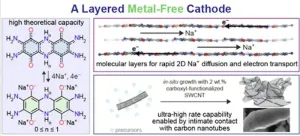
For decades, scientists have sought ways to counter our dependence on lithium-ion batteries. These traditional, rechargeable batteries energize today’s most ubiquitous consumer electronics – from laptops to cell phones to electric cars. But raw lithium is expensive and is often sourced through fragile geopolitical networks. This month, Princeton University’s Dincă Group announces an exciting alternative that relies on an organic, high-energy cathode material to make sodium-ion batteries, advancing the likelihood that this technology will find commercialization with safe, cheaper, more sustainable components. While scientists ...

Read the release
A miniature swimming robot inspired by marine flatworms
Technology

A miniature swimming robot inspired by marine flatworms

Swimming robots play a crucial role in mapping pollution, studying aquatic ecosystems, and monitoring water quality in sensitive areas such as coral reefs or lake shores. However, many devices rely on noisy propellers, which can disturb or harm wildlife. The natural clutter in these environments – including plants, animals, and debris – also poses a challenge to robotic swimmers. Now, researchers in the Soft Transducers Lab and the Unsteady flow diagnostics laboratory in EPFL’s School of Engineering, and at the Max Planck Institute for Intelligent Systems, have developed ...

Read the release
New sensor can take any gas and tell you what’s in it
Technology

New sensor can take any gas and tell you what’s in it

Expert sommeliers can take a whiff of a glass of wine and tell you a lot about what’s in your pinot noir or cabernet sauvignon. A team of physicists at CU Boulder and the National Institute of Standards and Technology (NIST) have achieved a similar feat of sensing, only for a much wider range of substances. The group has developed a new laser-based device that can take any sample of gas and identify a huge variety of the molecules within it. It is sensitive enough to detect those molecules at minute concentrations all the way down to parts per trillion. ...

Read the release
From the original Press-News collection. Issuers of news releases are responsible for the accuracy of their content.