Vacuum in optical cavity can change material’s magnetic state without laser excitation
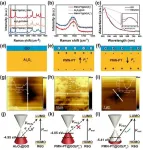
Researchers in Germany and the USA have produced the first theoretical demonstration that the magnetic state of an atomically thin material, α-RuCl3, can be controlled solely by placing it into an optical cavity. Crucially, the cavity vacuum fluctuations alone are sufficient to change the material’s magnetic order from a zigzag antiferromagnet into a ferromagnet. The team’s work has been published in npj Computational Materials. A recent theme in material physics research has been the use of intense laser light to modify the properties ...
Read the release