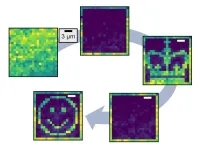
The world's fastest electron microscope
Electron microscopes give us insight into the tiniest details of materials and can visualize, for example, the structure of solids, molecules or nanoparticles with atomic resolution. However, most materials in nature are not static. They constantly interact, move and reshape between initial and final configurations. One of the most general phenomena is the interaction between light and matter, which is omnipresent in materials such as solar cells, displays or lasers. These interactions are defined by electrons pushed and pulled around by the oscillations of light, and the dynamics are extremely fast: light waves oscillate at attoseconds, the billionth of a billionth ...
Read the release