Element creation in the lab deepens understanding of surface explosions on neutron stars
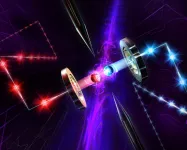
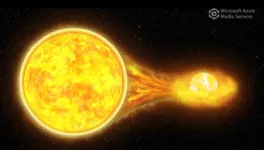
Led by Kelly Chipps of the Department of Energy’s Oak Ridge National Laboratory, scientists working in the lab have produced a signature nuclear reaction that occurs on the surface of a neutron star gobbling mass from a companion star. Their achievement improves understanding of stellar processes generating diverse nuclear isotopes. “Neutron stars are really fascinating from the points of view of both nuclear physics and astrophysics,” said ORNL nuclear astrophysicist Kelly Chipps, who led a study published in Physical Review Letters. “A deeper understanding of their dynamics may help reveal the cosmic ...
Read the release